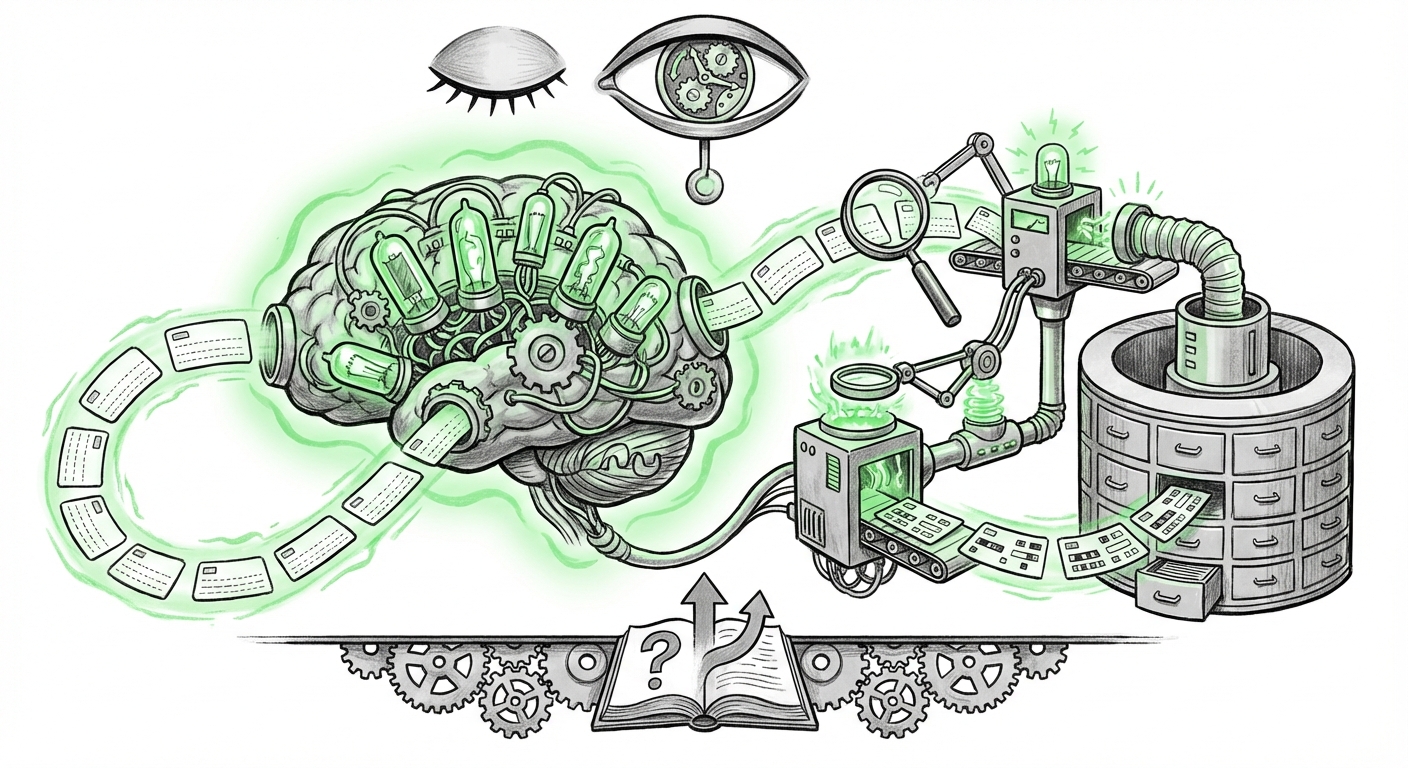
NVIDIA NeMo AutoModel: How Faster Transformer Fine-Tuning Will Change AI Development
Something quiet but important happened in the world of artificial intelligence on June 24, 2026. NVIDIA introduced NeMo AutoModel, a tool built to accelerate the fine-tuning of transformer models. On the surface, that sounds like a small plumbing update, the kind of thing only machine learning engineers get excited about. But look closer, and it points to a much bigger shift in how AI gets built, who gets to build it, and how fast the whole industry moves.
Fine-tuning is the step where a general-purpose AI model gets shaped into something specialized. It's how a model learns your company's tone of voice, your legal language, your medical vocabulary, or your customer support style. For years, this step has been one of the biggest pain points in AI work. It's slow, it's expensive, and it demands deep technical skill. NeMo AutoModel is a direct attack on that problem, and the ripple effects could touch nearly every business that wants to use AI.
The Fine-Tuning Bottleneck Nobody Talks About
Here's the part of the AI story that rarely makes headlines. Training a giant model from scratch gets all the attention, but most companies never do that. They take an existing model, one that already understands language reasonably well, and adjust it for a specific job. That process is called fine-tuning, and it's where the real-world value of AI usually gets created.
The trouble is that fine-tuning is fiddly. Different models have different structures. Different tasks need different setups. Engineers spend days wrestling with memory limits, batch sizes, learning rates, and dozens of small settings that can make or break a run. A single wrong choice can waste hours of expensive compute, and finding the right combination often feels more like guesswork than science.
This is the hidden tax on AI adoption. Big tech companies can afford teams of specialists to fight through it. A hospital, a law firm, or a mid-sized manufacturer usually can't. The result is a gap, the organizations with the most to gain from custom AI are often the ones least equipped to build it.
What NVIDIA NeMo AutoModel Actually Changes
The name tells you a lot. Auto is the key word. NeMo AutoModel is designed to take the manual labor out of preparing transformers for fine-tuning. Rather than forcing engineers to hand-tune every setting for every model, it automates the setup so that getting a model ready to train becomes a far more streamlined process.
That matters for three reasons:
- Speed. Removing manual configuration steps means projects that once took days of preparation can move forward much faster. Faster cycles mean more experiments, and more experiments mean better final models.
- Accessibility. When the tooling handles the hard parts, the skill barrier drops. Teams without deep transformer expertise can still get results, which widens who can participate in AI development.
- Consistency. Automated pipelines reduce human error. Fewer mistakes means less wasted compute, and compute is the single largest cost in most fine-tuning budgets.
The timing is telling. In 2026, the AI world has moved past the question of whether models work and into the question of how to make them work for specific purposes. The frontier has shifted from raw capability to practical customization. Tools that smooth that path are no longer nice-to-haves. They're the backbone of the next wave.
Why Automation Is the Real Story
Step back from the specific tool for a moment, and a pattern emerges. Across the AI industry, the biggest gains are coming not from bigger models but from better tooling around them. The companies winning mindshare right now are the ones reducing friction, making it easier to train, deploy, monitor, and refine AI systems.
This mirrors what happened in software decades ago. Early programmers wrote everything by hand. Then came frameworks, libraries, and automated build tools, and suddenly a single developer could do what once took a team. AI is walking that same road, just at a much faster pace. NeMo AutoModel is one more step toward the idea that building custom AI should feel less like black magic and more like standard engineering.
For NVIDIA, this is also a strategic play. The company's business grows when more people train more models. Every tool that lowers the barrier to fine-tuning expands the pool of customers who need compute. Making fine-tuning easy isn't charity, it's market expansion. But that doesn't make it any less transformative for the people using it.
What This Means for Businesses
If fine-tuning gets faster and simpler, the practical consequences for companies are substantial.
Custom AI Becomes a Realistic Option
A mid-sized business that once ruled out building its own model because of cost and complexity may now find it within reach. That could mean a customer support model trained on a decade of chat logs, a compliance tool tuned to a specific regulatory environment, or an internal assistant that truly understands a company's products. The gap between "AI as a generic service" and "AI as a tailored asset" is closing.
Product Cycles Get Shorter
When fine-tuning becomes routine, iteration becomes routine. Companies can test a new idea, train a model, evaluate it, and adjust, all within a timeframe that fits normal product development. That changes AI from a long-term research bet into a normal part of the business roadmap.
Cost Structures Shift
Cheaper, faster fine-tuning means less compute burned per experiment. For organizations watching their AI budgets closely, that's a direct saving. It also changes the math on projects that were previously shelved because they couldn't be justified financially.
The Talent Equation Changes
When tooling handles the hardest technical work, the rare and expensive transformer specialist becomes less of a bottleneck. That's good news for organizations outside the tech hubs, and it may ease some of the pressure on AI salaries and hiring.
The Risks and Limits Worth Watching
None of this arrives without caveats, and it's worth being honest about them.
- Automation can hide problems. When a pipeline handles the details, engineers may not notice subtle issues in their training data or evaluation. Convenience can quietly reduce scrutiny.
- Homogenization. If everyone uses the same automated paths, models may start to look alike, reducing the diversity of approaches that drives innovation.
- Ecosystem lock-in. Tools tied to a specific hardware and software stack can be efficient and convenient, but they also shape choices downstream. Companies should think about how much they want to depend on a single vendor's way of doing things.
- Responsibility doesn't automate. Faster fine-tuning doesn't solve questions about bias, safety, privacy, or appropriate use. If anything, making it easier to build models makes those questions more urgent, not less.
What Comes Next
If the trend holds, the next 18 to 24 months will bring a wave of smaller, specialized models built by organizations that never had the capability before. Expect to see fine-tuning woven into the standard toolkit of ordinary software teams, the way databases and cloud services are today. Expect serious competition from other platform providers racing to offer similar automation. And expect the definition of "AI company" to blur, as every company that uses AI well starts to look a little like one.
The deeper shift is philosophical as much as technical. For years, the story of AI was about a handful of labs pushing the boundaries of scale. The next chapter is about millions of organizations shaping those foundations into something useful for their own corner of the world. Tools like NeMo AutoModel are what make that possible. They are the scaffolding for a world where custom AI isn't a research project, it's a normal business decision.
Actionable Insights: What to Do Now
Here's how to turn this development into practical movement.
- Pick one high-value task and test it. Don't try to fine-tune everything at once. Choose a single process where a tailored model would clearly beat a general one, and run a small experiment.
- Audit your data now. Fine-tuning is only as good as the examples you feed it. Clean, well-labeled, representative data is the real competitive advantage, and it takes time to prepare.
- Measure before and after. Set a clear baseline for accuracy, speed, and cost so you can prove the value of customization rather than assuming it.
- Build evaluation into the workflow. Test for bias, safety, and edge cases as part of every training run, not as an afterthought.
- Keep your options open. Automation tools are powerful, but design your work so you can move between platforms if your needs change.
- Train your people, not just your models. A few hours of team education on how fine-tuning works goes a long way toward using these tools wisely.
The Bottom Line
NVIDIA NeMo AutoModel is a tool, not a revolution on its own. But tools like this are how revolutions actually happen, quietly, one removed bottleneck at a time. Fine-tuning has long been the gatekeeper standing between a company and its own custom AI. Each advance that lowers that gate brings us closer to a world where AI is shaped locally, by the people who understand the problem best. That's a future worth paying attention to, and it's arriving faster than most people expect.