OpenEnv and Agentic RL: Why the Open Source Community Is Betting Big on Training Environments
On June 8, 2026, something quiet but important happened in the world of artificial intelligence. The open source community threw its weight behind OpenEnv, a shared effort to build open environments for agentic reinforcement learning. It did not make the same noise as a flashy new chatbot or a giant model launch. But it may matter just as much, or more.
Here is the short version of why. The AI industry has spent years obsessed with models, bigger, faster, smarter. Yet the thing that actually turns a smart model into a useful worker is the training environment it practices in. OpenEnv is an attempt to make those practice grounds open, shared, and standard. If that works, it changes who gets to build powerful AI agents, and how fast.
What Is Agentic RL, and Why Does It Need Open Environments?
Most people know AI as something you chat with. You type, it answers. That is fine for writing emails, but it is not enough for real work. Real work involves doing things: booking a flight, debugging code, running a store, negotiating a refund, filing a report. AI that does things is what the industry calls an agent.
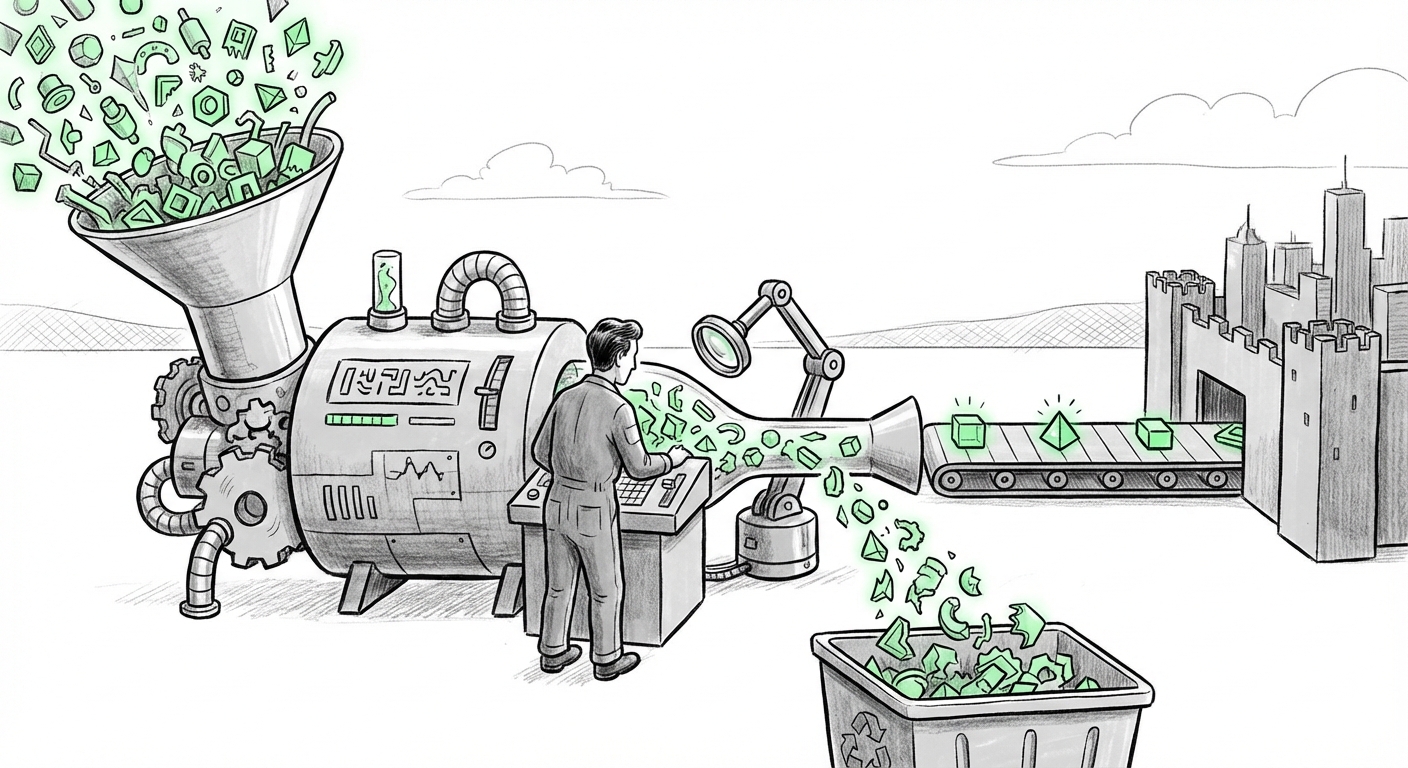
To build an agent, you cannot just show it text and hope for the best. You have to let it try, fail, and try again. That process is called reinforcement learning, or RL. The AI takes actions inside a simulated world, gets feedback, did that work or not?, and slowly learns better behavior. The simulated world is the environment.
This is the part most people miss. A model without a good environment is like a student without a classroom, a textbook, or a teacher. It has raw ability but nowhere to practice. And building those classrooms has been the hidden bottleneck in agentic AI.
Why? Because good environments are expensive and hard to make. Someone has to write software that mimics a real task, complete with rules, tools, side effects, and scoring. Do it badly and the agent learns to cheat the test instead of doing the job. Do it well and the agent becomes genuinely capable. Until now, most of the best environments were locked inside big labs, kept private as a competitive edge.
Why the Open Source Community Is Rallying Behind OpenEnv
OpenEnv is a push to change that. The idea is simple: build a shared, open set of environments that anyone can use, inspect, and improve. Instead of every team rebuilding the same simulations from scratch, they contribute to a common pool.
That might sound like a small technical convenience. It is not. It is a structural shift, and it mirrors what open source has already done to other parts of the AI stack.
Think about how the last decade went. Open model weights and open tools let thousands of small teams compete with a handful of giants. Open datasets let researchers everywhere test ideas that used to be gatekept. Each time the community made a layer open, innovation sped up and costs fell. Environments are the next layer waiting for that treatment.
The community support behind OpenEnv signals three things:
- Shared pain. Many teams hit the same wall, they need realistic, reliable environments and cannot build them alone.
- Shared gain. An environment that one team improves benefits everyone, like a road that more drivers help maintain.
- Shared standards. If environments follow common rules, agents trained in one place can be tested in another. That makes results comparable and trust easier to build.
Standards matter more than they sound. Right now, it is hard to know if one lab's agent is truly better than another's, because they trained and tested in different worlds. A common environment layer makes claims checkable. That is how a field grows up.
Why Environments, Not Models, Are the New Battleground
We are entering a phase where raw model intelligence is becoming less of a differentiator. Many capable models are available, and the gap between the best and the rest narrows with each cycle. So what separates a great agent from a mediocre one?
Three things: the quality of its training environments, the quality of its feedback, and the quality of its tools. OpenEnv directly targets the first two.
This flips an old assumption. For years, the leaderboard was about model size and benchmark scores. Going forward, the more telling question may be: who has the richest, most realistic practice worlds? A company that owns a great simulated hospital, warehouse, or codebase has an edge that a bigger model cannot easily copy.
There is a second flip too. Open environments lower the cost of entry. A two-person startup with a smart idea for an agent no longer needs millions in compute and a year of environment-building just to test the concept. It can start from shared foundations and specialize. That widens the field of who gets to compete.
What This Means for Businesses
If open environments become the norm, the practical effects for companies are concrete.
1. Faster, cheaper agent development
Teams will spend less time rebuilding simulations and more time solving their actual problem. Time to a working agent drops. Budgets stretch further. Pilots that used to die in the research phase can reach production sooner.
2. Easier comparison and less risk
When agents are trained and tested in shared worlds, buyers can compare them fairly. That reduces the guesswork in procurement. It also makes it easier to spot a vendor whose agent looks great in a demo but falls apart on real tasks.
3. A new kind of contribution economy
Companies that build strong internal environments will face a choice: keep them secret, or open them and gain reputation, talent, and influence. History suggests many will do both, open the general-purpose pieces, guard the ones tied to their unique advantage.
4. Specialization becomes the winning move
If the basics are open to everyone, advantage shifts to domain depth. The firm that understands insurance claims, hospital workflows, or supply chains deeply can turn that knowledge into a superior environment, and therefore a superior agent.
What It Means for Society and Workers
The bigger story is about power and access. When the tools for training capable agents are open, more people can build them. That includes small businesses, universities, nonprofits, and independent developers, not just well-funded labs.
That is good for competition and good for choice. But it also raises real questions.
Agents trained in simulated worlds will increasingly take actions in the real one. They will send messages, move money, and make decisions that affect people. Open environments make capability easier to spread, which means safety practices must spread just as fast. If testing grounds are open but guardrails are not, we get speed without protection.
There is also the labor question. As agents get better at multi-step work, some tasks will shift from people to software. History says new roles appear as old ones change, but the transition is rarely smooth for everyone caught in it. The rise of open agent training makes that transition faster, which makes planning for it more urgent, not less.
The Risks and Open Questions
OpenEnv is not a guaranteed win. Several things could go wrong.
- Weak environments teach bad habits. If a simulation is too simple, agents learn shortcuts that fail in reality. Quality control is everything.
- Fragmentation. Open efforts can splinter into competing standards, defeating the purpose of a shared layer.
- Free-riding. If everyone uses the commons but few contribute, the pool stagnates.
- Safety drift. Open capability without open safety norms could outpace oversight.
- Measurement gaps. If environments are open but evaluation is sloppy, the field could chase impressive-looking but hollow results.
None of these are dealbreakers. They are design problems, and the community now has a reason to solve them together.
Actionable Insights: How to Prepare
Whether you are a developer, a business leader, or just paying attention, here is what to do with this shift.
- Start with the task, not the model. Before picking an AI tool, define the exact job you want an agent to do. That clarity is the raw material for any environment.
- Document your workflows. The steps, rules, and edge cases in your business are exactly what a training environment needs. Writing them down turns hidden knowledge into an asset.
- Experiment with shared foundations. Prototype on open environments before building custom ones. You will learn what your agent really needs.
- Invest in evaluation. Ask vendors how their agents were trained and tested. Push for results in worlds that resemble yours, not just curated demos.
- Contribute if you can. Teams that help shape open standards gain influence over the direction the whole field takes.
- Keep a safety lens. As agents do more, set clear limits on what they can act on without human review.
The Road Ahead
The backing of OpenEnv by the open source community is a signal about where the real work is heading. The excitement is moving from "how smart is the model?" to "how well can it practice, and in whose world?"
That reframing is healthy. It puts the focus on outcomes, what agents can actually do, and on the infrastructure that makes those outcomes possible. It also spreads opportunity. When the practice grounds are open, the ability to train a capable agent is no longer reserved for a handful of players.
The winners in the next phase of AI will likely be the ones who combine strong models, rich environments, sharp evaluation, and clear safety rules. OpenEnv speaks to the middle two. The community is betting that shared worlds will produce better agents, faster, for more people. Given how the open source story has played out so far in AI, that is a bet with a strong track record.
For businesses, the message is simple: the ability to describe your work clearly, and to test agents against it honestly, is becoming a competitive skill. For everyone else, the message is that the age of AI that does things is arriving faster because the doors to its training grounds are being opened. The question now is not whether agents will take on real work. It is who gets to build them, and how carefully we teach them.