Sakana AI's New Long-Context Technique: Why It Matters for the Future of AI
Ask anyone who builds with large language models what frustrates them most, and you will hear the same answer over and over: the model forgets. You paste in a long contract, a stack of research papers, or a month of customer emails, and the model starts strong. Then somewhere in the middle, it drifts. It misses a detail it read ten minutes ago. It contradicts itself. It quietly ignores the part of the document you actually care about.
This is the long-context problem, and it is one of the biggest roadblocks standing between today's AI and the AI that businesses actually want to deploy. Sakana AI's new technique directly targets this problem. And while the technical details matter to engineers, the bigger story is what a solved long-context problem unlocks for everyone else.
Why Long Context Is the Hardest Problem in AI Right Now
Context is the working memory of a language model. It is everything the model can "see" at once when it answers you, your question, the documents you gave it, and the conversation so far. For years, the race was about making that window bigger. Bigger windows meant models could read more without losing the thread.
But bigger is not the same as better. Anyone who has worked with a very large context window knows the dirty secret: models do not use the whole window evenly. Information at the very start and the very end tends to get attention. The middle gets fuzzy. Researchers sometimes describe this as the model "losing things in the middle."
That matters because real work is not a short question. Real work looks like:
- A 200-page legal agreement that needs a single risky clause flagged
- Three years of financial filings that need to be compared line by line
- An entire codebase that needs to be understood before a change is made
- A full customer support history that needs to be summarised without missing a complaint
When the model glosses over the middle, the output looks confident but is quietly wrong. That is arguably more dangerous than a model that simply says "I don't know."
What Sakana AI's New Technique Changes
Sakana AI's new technique is aimed squarely at the problems of long-context LLM tasks, the tasks where the input is long, the details matter, and the model's attention is the bottleneck. The significance is not simply that it stretches the window further. It is that it addresses how the model handles long inputs in the first place.
To understand why this is a big deal, it helps to separate two ideas that often get mashed together:
Capacity versus attention
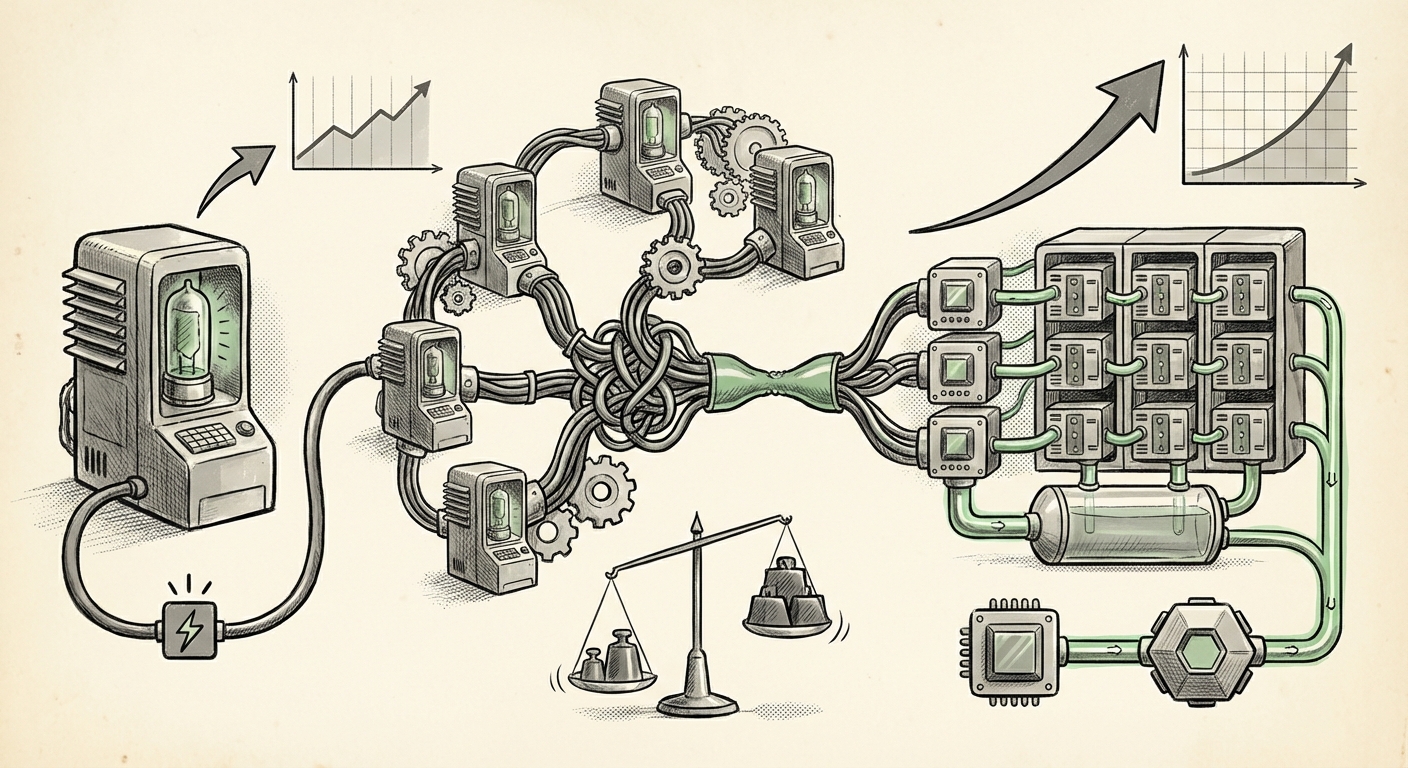
Capacity is how much text fits in the window. Attention is how well the model uses what is in there. The industry spent years pushing capacity upward. But capacity without attention is like giving someone a library and watching them read only the first and last pages of every book.
A technique that improves how a model handles long-context tasks is valuable because it attacks the root cause. It is not about cramming in more words. It is about making the model actually use the words it already has.
Why this hits differently at scale
There is also a cost dimension. Long inputs are expensive. Every additional token the model has to process costs money and time. A model with a huge window that is cheap to run is a very different product from one that is technically capable but financially painful in production.
That combination, better use of long input, at a workable cost, is what makes long-context breakthroughs commercially important rather than just academically interesting.
Why This Matters More Than Another Bigger Model
The AI world loves a headline about a new frontier model. But for most businesses, the more useful progress is happening in the plumbing: efficiency, reliability, and the ability to handle real workloads without falling apart.
Long-context handling sits at the centre of that. Here is why it matters more than a marginal jump in raw reasoning scores:
- It removes a workaround. Today, teams break documents into chunks, summarise each chunk, then summarise the summaries. Every step loses information. A model that genuinely handles long input can skip that lossy pipeline.
- It enables agentic workflows. AI agents that plan, act, and check their own work need memory. They need to remember what they did ten steps ago. Long-context handling is the foundation of that memory.
- It changes what can be automated. Tasks that involve reading a lot, audits, due diligence, compliance review, research, have been off-limits for automation because the reading was unreliable. Fix the reading, and the whole task becomes automatable.
- It raises the value of existing data. Companies are sitting on archives of documents, tickets, and reports that no model could digest. Long-context handling turns that archive into an asset.
The Business Case: What Long Context Unlocks
When long-context handling gets reliable, the practical changes arrive fast. Here is where the near-term impact lands.
1. Document-heavy industries get a real upgrade
Legal, insurance, healthcare administration, banking compliance, and government work all revolve around long documents where a single missed line is a real problem. A model that reads carefully changes the economics of reviewing them. Instead of reading everything first and using AI second, teams can put AI on the first pass.
2. Software development becomes more contextual
Developers already use AI to write code. The limitation is that the model often does not understand the surrounding system. A model that can hold a larger portion of a codebase in mind produces changes that fit, rather than changes that compile but break something three files away.
3. Research and analysis speed up
Analysts who spend days pulling together a picture from dozens of sources can compress that work into hours. The value is not just speed. It is being able to ask questions of the whole body of material at once, instead of reading it sequentially and hoping you remember the right part.
4. Customer and operational memory improves
Support teams deal with customers who have history. A model that can hold a full relationship, every past ticket, every promise made, delivers service that feels informed instead of repetitive.
Actionable Insights: What Teams Should Do Now
You do not need to wait for the technology to mature before preparing for it. Here are concrete steps.
- Audit your long-document workflows. Find the places where humans currently read a lot of text before making a decision. Those are your highest-value candidates.
- Stop over-engineering chunking. If you built an elaborate summarise-then-summarise pipeline, ask whether it is still necessary as long-context handling improves. Simpler systems are cheaper to maintain and lose less information.
- Test on your own documents, not benchmarks. Public tests rarely reflect your messy PDFs and inconsistent formatting. Build a small internal evaluation set from real work.
- Measure cost per task, not cost per token. A model that uses a long window efficiently may be cheaper overall than one that needs five chained calls to do the same job.
- Keep a human in the loop for high-stakes reading. Better long-context handling reduces errors. It does not eliminate them. Design review steps in proportion to the risk of being wrong.
The Risks and Open Questions
It would be dishonest to present a breakthrough in long-context handling as a clean win with no caveats. A few things deserve watching.
Confident wrongness is still wrongness. When a model reads more, it sounds more authoritative. If it still misses the middle, the failure is harder to spot, not easier. Verification tools become more important, not less.
Privacy and data boundaries get blurrier. The more context a system holds, the more sensitive information sits inside a single working memory. Teams will need clear rules about what is allowed into a context window and what must stay out.
Evaluation is behind. The industry does not yet have great ways to prove that a model handled a long input well, rather than just plausibly. Expect this to be an active area of work.
Efficiency gains can hide in different places. A technique that helps one kind of long task may not help another. Real-world testing matters more than broad claims.
What to Watch Next
Three signals will tell us whether long-context progress is real and durable.
First, watch whether long-context improvements arrive alongside cost reductions. Progress that is technically impressive but financially impractical will not reach production.
Second, watch the agent space. Agents are the clearest test of long-context handling, because they depend on memory across many steps. If agents get noticeably more reliable, the underlying context handling has improved.
Third, watch the workflow tools. When mainstream document, legal, and coding tools quietly start handling much larger inputs without special setup, the technology has crossed from research into product.
The Bigger Picture
We are moving out of the era where the main question about AI was "how smart is it?" and into an era where the main question is "how much can it hold?" That shift sounds modest. It is not.
Intelligence without memory is a party trick. You can impress someone for a minute, but you cannot hand over a real job. Long-context handling is what turns a clever model into a dependable colleague. It is the difference between an AI that answers a question and an AI that understands a situation.
Sakana AI's new technique addresses exactly that gap. The problems of long-context LLM tasks, losing the middle, breaking under scale, costing too much to run, are the problems that have kept AI out of the most valuable work. Solving them does not just make models better. It makes a whole category of work possible that simply was not before.
For businesses, the practical takeaway is straightforward. The AI tools that win the next few years will not be the ones with the flashiest demo. They will be the ones that can read everything you give them, remember what matters, and do it at a price that makes sense. Long context is the quiet foundation under all of that, and it is finally getting the attention it deserves.
TLDR: Long-context tasks are where large language models most often fail, they lose details in the middle of long inputs, which makes document-heavy work unreliable. Sakana AI's new technique targets those long-context problems directly, aiming at how models handle long inputs rather than just how much they can hold. If it holds up in production, it unlocks reliable AI for legal review, compliance, coding, research, and agentic workflows, and it lets teams retire the lossy summarise-then-summarise pipelines they rely on today. Watch for cost efficiency alongside capability, stronger agents, and everyday tools quietly handling much bigger inputs. The winners in AI's next phase will be the systems that can read everything, remember what matters, and stay affordable.