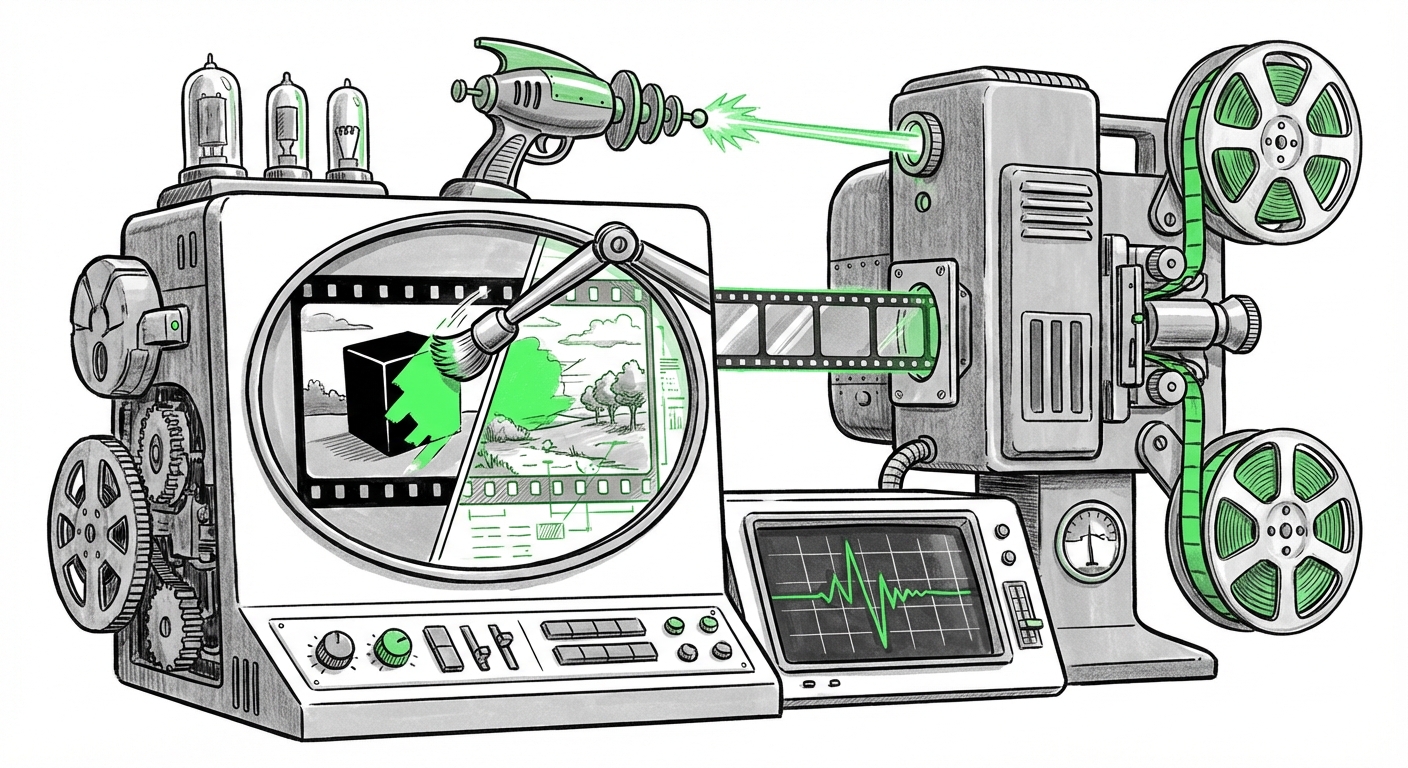
VASPO Explained: The Self-Distillation Method That Lets AI Teach Itself Better
Something important is happening in AI research right now, and it is not about making models bigger. It is about making them smarter at learning from themselves. A newly published method called VASPO: Self-Distillation with Privileged Value Estimation, released on October 15, 2026, sits right at the center of that shift. The name sounds technical, but the idea behind it is one of the most practical questions in AI today: how do you squeeze more learning out of the training process without adding more human labels, more data, or more money?
If you run a business, build software, or just follow AI news, this matters more than it might first appear. The next wave of AI progress will not come only from bigger models. It will come from better training methods, clever ways to get a model to improve itself after the initial build. VASPO is a strong signal of where that wave is heading.
What VASPO Actually Is
Let us break the name down, because every word in it carries meaning.
Self-distillation, in plain English
Distillation is a common technique where a large, powerful model teaches a smaller, faster one. The big model acts like a teacher. The small model is the student. The student learns to copy the teacher's answers, and in doing so, it often performs better than it would if it had trained on its own.
Self-distillation flips that idea inward. Instead of one model teaching another, the model teaches itself. It compares its own stronger outputs, or its own internal knowledge, against its weaker ones, and pushes itself toward the better version. Think of a student who writes an essay, studies an expert's feedback, then rewrites the essay using what they learned. Nobody new entered the room. The improvement came from within.
The appeal is obvious. Self-distillation does not require a separate teacher model, which means less computing power, less memory, and fewer moving parts. It is cheaper and simpler. The hard part has always been figuring out what the model should learn from, where the reliable "better answer" comes from when the model is grading its own homework.
Privileged value estimation, in plain English
In machine learning, privileged information means knowledge you have during training that you will not have when the model is actually running in the real world. It is like a driving instructor who can see the road ahead from the passenger seat. The student driver cannot see around the corner, but the instructor can. That extra view is a privilege, available while learning, gone during the real test.
A value estimator is a helper that predicts how good a situation is. In reinforcement learning, the branch of AI where a system learns by trying things and getting rewards, this helper is often called a critic. It does not act. It judges. It looks at where things stand and estimates how much reward is likely to come next.
Here is the problem: critics are useful during training and usually thrown away afterward. All that judgment gets discarded because the running model has no use for it in production.
VASPO's core idea, based on how the method is named and framed, is to stop throwing that judgment away. It uses the privileged value estimate, that training-time-only insight about how good things really are, as a teaching signal, then distills it back into the model itself. The critic's knowledge gets absorbed by the student. The model learns to make better decisions on its own, without needing the critic standing next to it at runtime.
Put those two halves together and you get a method that lets a model improve its own behavior using information it can only access during training, then carry that improvement forward permanently.
Why This Is a Much Bigger Deal Than It Sounds
For years, the AI industry has followed a simple playbook: more data, more parameters, more compute equals better results. That playbook still works, but the returns are getting expensive. Training runs cost enormous amounts of money and electricity. High-quality human data is running out in many domains. Every company is now asking the same question: how do we keep improving without multiplying the bill?
Methods like VASPO are one answer. They attack the problem from the training side rather than the size side. Instead of buying a bigger brain, you teach the existing brain more efficiently.
This fits a clear pattern across recent AI research. The field is moving from scaling up to learning better. Reinforcement learning, self-play, self-critique, and now self-distillation with privileged signals all point the same direction: models that generate their own learning signal and improve with less human hand-holding.
That shift has real consequences. A method that removes the need for a separate teacher model cuts compute costs. A method that extracts more value from each training run shortens development cycles. A method that converts a throwaway critic into permanent model skill raises the ceiling on what one training run can achieve.
The Economics of Training Are Changing
Consider what it costs to build a top-tier AI system today. You need massive clusters of specialized chips, weeks or months of training time, enormous electricity, and teams of highly paid experts. Anything that improves learning efficiency by even a modest margin translates into serious money at that scale.
Self-distillation methods matter here because they reduce the number of components in the pipeline. Fewer components means fewer failure points, less engineering overhead, and lower inference costs if the final model ends up leaner. For companies that rent AI capacity rather than own it, those savings pass straight through to the bottom line.
There is a second economic effect that often gets overlooked. When training techniques become more efficient, the gap between the biggest labs and everyone else narrows. Techniques that were once locked behind billion-dollar budgets become reproducible by well-funded startups and university teams. VASPO-style ideas spread quickly because they are methods, not hardware. You cannot easily buy your way around a smart algorithm, but you can copy one.
What This Means for Businesses
Most companies will never train a foundation model from scratch. That is fine. The VASPO trend still affects them in concrete ways.
- Cheaper specialized models. As efficient self-training methods mature, custom models tuned to a specific industry, legal review, medical coding, manufacturing quality control, become more affordable to build and maintain.
- Faster improvement cycles. Models that learn from their own training signals can be updated and refined more quickly, which means your AI tools get better on a shorter timeline.
- Lower inference bills. Distillation generally produces leaner models that cost less to run. If your product calls an AI model millions of times a month, this is not a rounding error.
- More reliable reasoning. Value estimation is fundamentally about judging which path leads to a good outcome. Better value judgment translates into AI that makes fewer poor decisions on multi-step tasks.
The practical takeaway for business leaders is straightforward. You do not need to understand the math. You do need to understand that the cost curve for capable, specialized AI is bending downward, and that applications which did not make financial sense last year may make sense soon.
What This Means for Society
Self-improving training methods raise both promise and concern.
On the promise side, cheaper and more efficient AI means wider access. Tools that help with education, translation, medical triage, and accessibility can reach more people when the underlying models cost less to run. Efficiency is a form of democratization.
On the concern side, techniques where a model generates its own learning signal carry a known risk: the model can reinforce its own mistakes. If the privileged value estimate is wrong, the model happily learns the wrong lesson. This is why the "privileged" part of VASPO matters. The teaching signal must come from somewhere genuinely more informed than the model's own guesses, otherwise self-distillation becomes self-deception at scale.
That is a governance question as much as a technical one. As models depend less on human-curated data and more on their own internal signals, the ability to audit where the learning came from becomes critical. Companies deploying these systems will need clear records of what shaped their models, both for regulators and for their own risk management.
Actionable Insights: What to Do Now
- Watch the efficiency story, not just the capability story. Track how new training methods lower the cost per unit of AI performance. That number drives what becomes possible.
- Revisit shelved AI projects. If you rejected an AI use case because of cost, run the numbers again in six months. Methods like VASPO exist precisely to move that math.
- Ask vendors how models are trained. Understanding whether a model relies on self-generated signals helps you judge reliability and auditability.
- Invest in small, specialized models. Distillation techniques favor compact, task-focused systems over giant general ones for many business problems.
- Build evaluation habits early. The better models get at teaching themselves, the more you need independent testing to catch errors they cannot see in themselves.
Open Questions Worth Watching
VASPO is a method, not a finished revolution. Several questions will determine how far this approach goes.
How well does it hold up on long, multi-step tasks where small errors compound? Does the gain from privileged value estimation shrink as base models get stronger? Can the approach be stacked with other efficiency techniques, or does it compete with them? And most importantly, how do you verify that a self-distilled model learned the right thing rather than just a more confident version of what it already believed?
These are the questions the next round of research will answer. The direction of travel, however, is clear.
The Road Ahead
The most important AI story of the next few years may not be a headline-grabbing model release. It may be a quiet accumulation of training techniques that make every model cheaper, faster, and more capable than the one before it. VASPO, self-distillation with privileged value estimation, belongs to that quieter but more consequential category.
Its core insight is elegant: the knowledge a model builds during training should not be thrown away when training ends. Let the model keep what it learned from its own best judgment. Let it carry that judgment into the real world.
For anyone building with AI, the message is simple. The era of winning purely by spending more is fading. The era of winning by learning smarter is here. Methods like VASPO are how that era gets built, one efficient, self-teaching model at a time.