Producer Prices Ran Hot and Stocks Still Rose: What That Split Signal Means for the AI Boom
On October 15, 2026, a new reading on producer price inflation landed, and it came in much hotter than expected. Producer prices track what businesses pay for the things they buy: energy, parts, raw materials, freight, equipment, and services. When that number runs hot, it usually means cost pressure is building somewhere in the supply chain before it ever reaches a shopper's receipt.
Normally, that kind of surprise is bad news for stocks. Higher inflation can push interest rates higher, and higher rates make future profits worth less today. But this time, stocks climbed anyway.
That split, hot inflation data, rising stock market, is the real story. And a big part of the explanation runs straight through artificial intelligence. AI is now large enough to show up in the cost data, and it is changing how investors read inflation reports. Understanding that link matters for anyone building, buying, or budgeting for AI in the year ahead.
Why Producer Prices Matter More Than They Used To
Consumer prices get the headlines. Producer prices are quieter but often earlier. They show what companies pay before they decide what to charge.
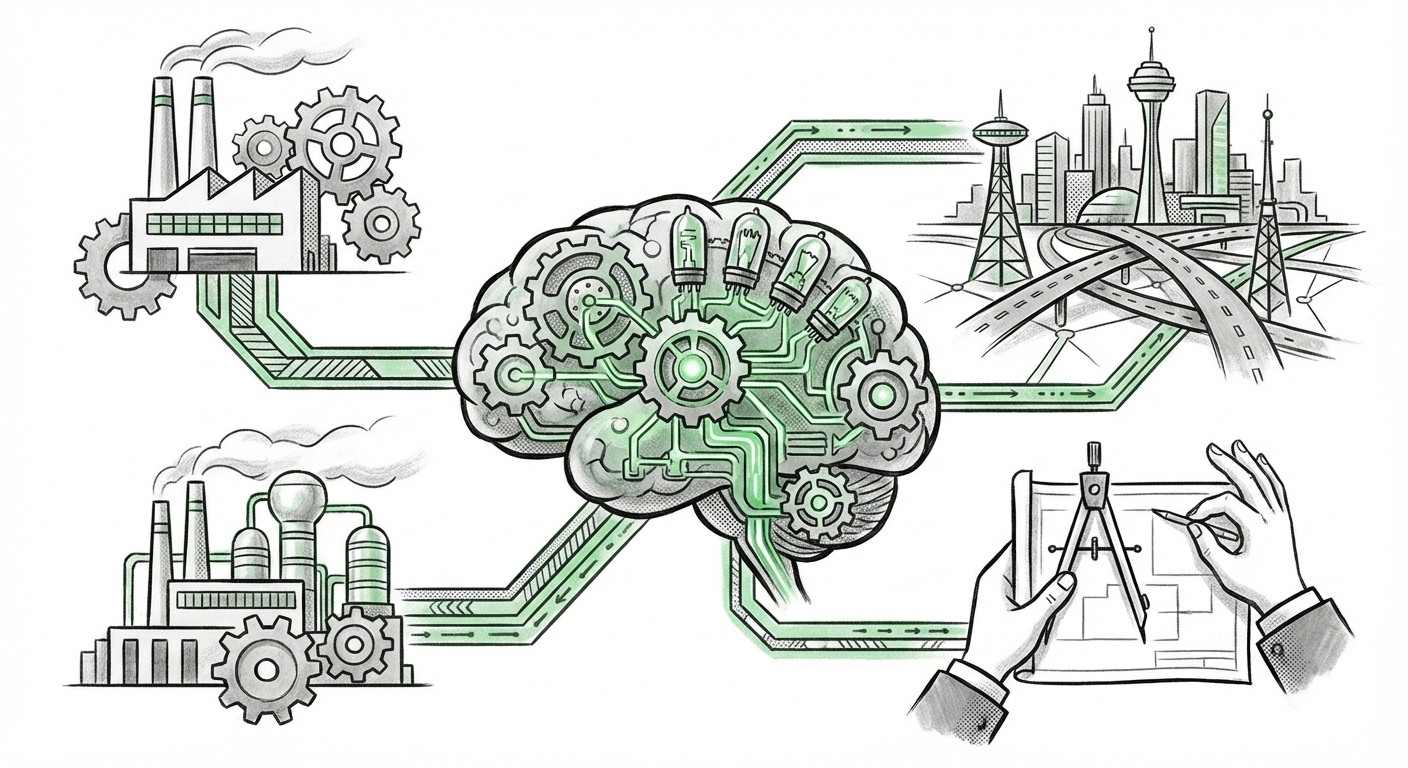
For most of the past decade, producer prices drifted along in the background. Factories were efficient, energy was cheap enough, and global shipping worked smoothly. That calm has ended. The current AI buildout is one of the largest industrial spending waves in modern history. It pulls on electricity, transformers, turbines, cooling systems, advanced chips, construction crews, concrete, land, and water, all at the same time.
When demand for those things spikes, prices for those things rise. And when prices for those things rise, they show up in producer price data. So a hot producer price report is no longer just a story about oil or freight. It can be a story about the physical cost of building intelligence.
The Two-Way Street Between AI and Inflation
AI cuts both ways on inflation, and that is exactly why the market's reaction was so mixed.
Side one: AI pushes costs up
Training and running large AI systems takes enormous amounts of computing power. That means data centers, and data centers are heavy industrial projects. They need:
- Electricity in volumes that strain local grids.
- Specialized hardware with long lead times and tight supply.
- Heavy equipment and skilled labor that are already in short supply.
- Cooling and water systems that add engineering complexity.
- Land and permits in regions that suddenly look very attractive.
Each of those is a cost line. When many companies chase the same limited supply of power, chips, and trained electricians, prices go up. That upward pressure is measurable, and it is showing up in the production pipeline.
Side two: AI pushes costs down
At the same time, AI is a productivity tool. It writes code, drafts documents, answers customer questions, reviews contracts, sorts data, and automates repetitive work. When a company does more with the same headcount, its cost per unit falls. Multiply that across an economy and you get disinflation, slower price growth, not faster.
That tension is the heart of the current moment. Investors looked at a hot inflation print and asked a simple question: is this a lasting cost problem, or a temporary buildout bump that productivity will eventually offset? Their answer, for now, was that the growth story still wins.
Why Stocks Shrugged It Off
Markets are forward-looking. A hot inflation reading tells you what already happened. Stock prices reflect what investors think will happen next. Several things can explain why equities rose despite the data.
First, inflation surprises are not all alike. A jump driven by one-off bottlenecks in a narrow set of goods is easier to look past than broad, across-the-board price gains. If the heat is concentrated in buildout-related categories tied to AI infrastructure, investors may treat it as a sign of demand, not decay.
Second, strong demand is not a bad headline. Cost pressure from a construction boom looks a lot like evidence that the boom is real. For companies selling into that boom, it can read as a positive signal about revenue ahead.
Third, the market may be betting on the productivity side of the ledger. If AI delivers meaningful efficiency gains over the next several years, some of today's cost pressure should fade on its own. Investors who believe that story are willing to hold through an ugly data point.
Fourth, AI spending is now large enough to shape the broader economy. When capital flows into data centers, power, and chips at this scale, it creates jobs, orders, and revenue across many industries. That activity gives the market something to hold onto, even when the inflation news is unpleasant.
What This Means for the Future of AI
The hot producer price print points to a shift in what the AI race is actually about. For the past few years, the contest was mostly about models, talent, and chips. Going forward, it is increasingly about physical constraints: power, land, cooling, and supply chains.
That changes the winners. Companies that locked in long-term electricity agreements early have an edge. Companies that design efficient models, doing more with less compute, gain an advantage when energy and hardware get expensive. Companies that can deploy AI where the data already sits, rather than moving it across the world, save on both cost and complexity.
It also raises the stakes on timing. AI infrastructure is a long-duration investment. You spend today and earn for years. When inflation runs hot and the cost of money stays elevated, those long payback periods get harder to justify. Every project has to clear a higher bar. That does not stop the buildout, but it does force discipline: fewer vanity projects, more focus on workloads that clearly pay for themselves.
The Practical Playbook for Businesses
If producer costs stay sticky, here is what that means in practice for teams deploying AI right now.
1. Build energy cost into every AI business case
Power is no longer a rounding error. Any AI project proposal should include realistic energy assumptions, and should be stress-tested against higher prices. If the project only works with cheap power, it is a fragile project.
2. Choose efficiency on purpose
Bigger models are not automatically better. Smaller, specialized models often handle a specific job at a fraction of the cost. Route the easy requests to cheap models and save the expensive ones for the hard cases. This one design choice can cut operating costs dramatically.
3. Lock in what you can
Long-term contracts for power, hardware capacity, or cloud commitments reduce exposure to spot price spikes. They also trade flexibility for predictability, a reasonable trade when input costs are volatile.
4. Measure AI like you measure any other investment
Track hours saved, tickets deflected, error rates reduced, and revenue influenced. When money gets more expensive, vague enthusiasm stops being enough. Numbers win budget.
5. Watch the second-order effects
Data centers raise local electricity demand, which can affect household bills and community relations. Companies that plan for this early, through grid investment, transparency, and local engagement, avoid expensive delays later.
The Bigger Picture: A New Kind of Inflation Report
Something structural has changed. Producer price reports used to be a window into factories, fuel, and freight. Now they are also a window into the intelligence economy. When AI expansion drives demand for power and equipment, that pressure lands in the same data series economists have watched for decades.
This creates a strange feedback loop. Strong AI investment can look like inflation. Inflation can slow AI investment by raising borrowing costs. Slower investment can cool prices, and then the cycle restarts. Understanding that loop is becoming a core skill for investors, executives, and policymakers alike.
For society, the implications are just as real. Cheaper intelligence could lower the cost of healthcare admin, customer service, legal review, and education support. But the buildout itself has a physical footprint: land, water, and electricity that communities have to live with. The question is no longer whether AI will reshape the economy. It is whether the physical costs of that reshaping are managed well enough to keep the benefits widely shared.
What to Watch Next
- Future producer price readings. Is the heat broad or narrow? Narrow is easier to absorb.
- Energy and grid announcements. New power deals signal how serious the constraint really is.
- Earnings commentary on input costs. When companies start flagging power and hardware prices, the story has gone mainstream.
- Efficiency breakthroughs. Cheaper inference is the strongest disinflationary force AI can offer.
- Rate expectations. Long-duration projects live and die by the cost of capital.
Conclusion
A hotter-than-expected producer price report and a rising stock market look like a contradiction. They are not. They are two halves of the same story: an economy where AI is now big enough to move costs, and where investors still believe the productivity payoff will eventually outweigh the price paid to get there.
The lesson for anyone working with AI is straightforward. The easy phase, where the only question was whether the technology works, is over. The harder phase is about cost, power, efficiency, and proof. Those who treat AI as an infrastructure decision, not just a software decision, will be the ones still standing when the next inflation report lands.