Apple's 'Minions' Tech Turns Idle Macs Into an AI Data Center, Here's Why That Changes Everything
For the last few years, the story of artificial intelligence has been a story about buildings. Massive, power-hungry buildings filled with specialized chips, humming away in remote industrial parks, owned by a handful of very large companies. If you wanted to run serious AI, you rented time inside one of those buildings. That was the deal.
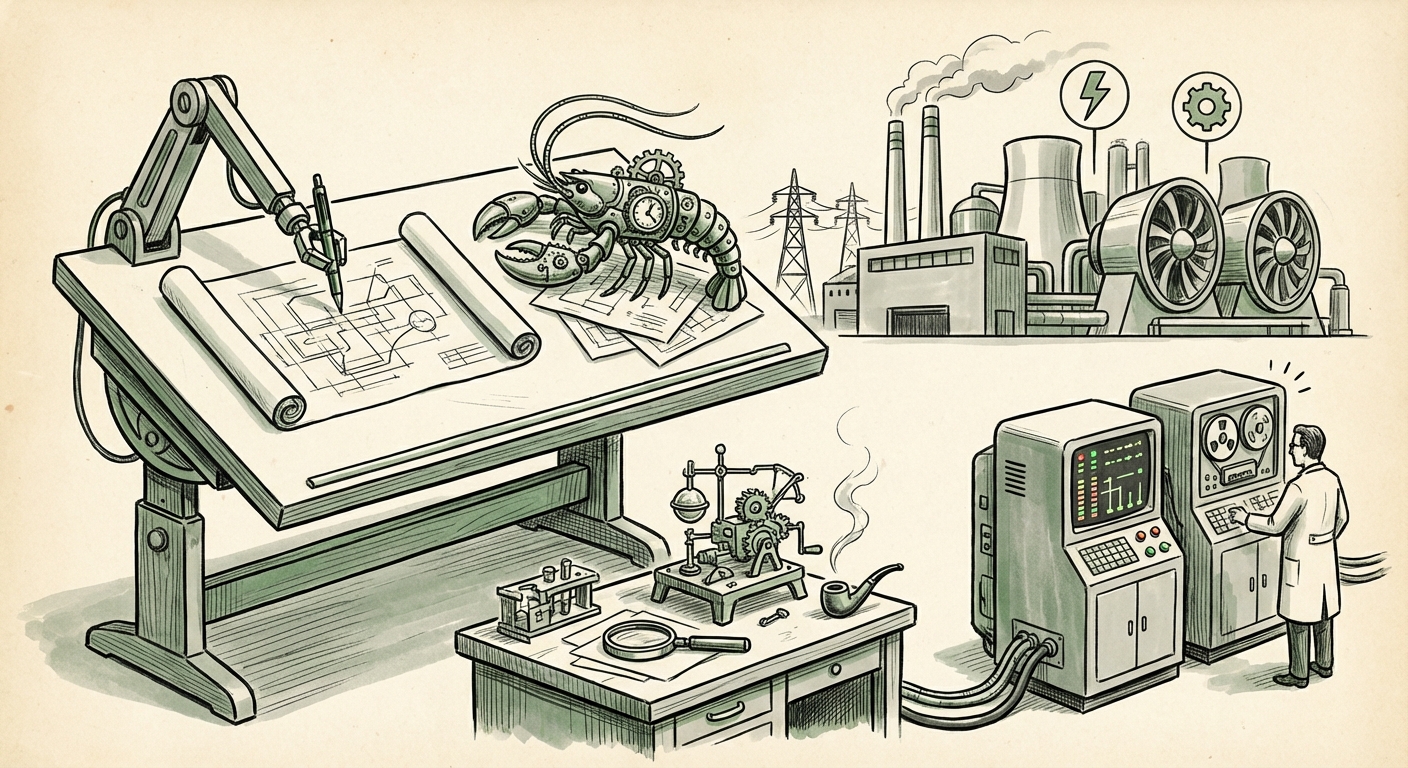
Apple's new "Minions" technology breaks that deal. Instead of sending AI work to a distant data center, Minions turns idle Macs into an AI data center. The machines are already sitting on desks, in classrooms, in studios, and in spare bedrooms. Most of the time, they are doing nothing. Minions points them at AI workloads instead.
It sounds like a small engineering trick. It is not. It is a signal that the next phase of AI will not be about who can build the biggest building. It will be about who can best use the computers that already exist.
What Apple's 'Minions' Actually Represents
The core idea behind Minions is simple to describe: take a large pool of Macs that are idle, and treat them as one shared source of computing power for AI. Rather than one giant machine, you get thousands, or millions, of smaller machines working together.
This is a well-known concept in computer science. Researchers have been linking ordinary computers together to solve hard problems for decades. What makes Minions different is the moment we are in. AI is now the most valuable computing workload on Earth, and it is also the most expensive. Anything that lowers the cost of running AI changes who gets to build it.
There is also a hardware story underneath. Modern Macs are not weak machines. They are capable of running real AI models locally, not just connecting to a server. That matters, because a distributed system only works if the individual pieces are actually useful on their own.
The Bigger Trend: Compute Is Moving Back Toward People
For a decade, the tech industry pushed everything into the cloud. Your photos, your documents, your software, your thinking, all of it went to someone else's computer. AI accelerated that push, because AI needed so much power that only a few companies could afford to run it.
Minions points in the opposite direction. It says: the computers are already here, distributed across the world, and they are underused.
This is part of a broader shift that has been building for a while. Three forces are pushing in the same direction:
- Cost pressure. Cloud AI is expensive, and the bill scales with usage. Idle hardware that you already own is, by comparison, nearly free to use.
- Privacy demands. Businesses and governments increasingly do not want sensitive data leaving their buildings. Running AI locally solves a problem that no contract can fully solve.
- Hardware abundance. The world is flooded with capable machines. Using them is cheaper than buying more.
Minions sits right at the intersection of all three.
Why Idle Hardware Is the AI Industry's Hidden Goldmine
Think about the average office. Dozens of Macs sit on desks. Their owners use them for email, documents, design work, and video calls. Outside of working hours, and often during working hours too, they are mostly sitting still. The fans are quiet. The processors are bored.
Multiply that across a company, a school district, or a country, and the amount of unused computing power is staggering. It is a resource that has been hiding in plain sight, and until now there was no easy way to put it to work on AI.
This is the real insight behind Minions: the AI industry has been fighting over a scarce resource while an enormous amount of capacity sat unused in the room next door.
What This Means for Businesses
If the Minions model works at scale, the practical implications for organizations arrive fast.
1. A new way to think about AI budgets
Most companies currently treat AI as a subscription or a metered cloud expense. That model has a virtue, you pay for what you use, and a vice, the bill is unpredictable and grows with success. Distributed computing on hardware you already own flips that logic. The cost is largely fixed in advance, because the machines were already bought.
2. Private AI becomes realistic
The strongest argument for running AI on your own machines is not price. It is control. When data never leaves the building, legal, compliance, and security teams stop being the bottleneck. For industries built on sensitive information, healthcare, finance, law, government, that is often worth more than any discount.
3. IT departments get a new job
This is the part that will decide whether Minions-style computing succeeds inside companies. A fleet of Macs used as an AI data center is a fleet that must be managed, scheduled, secured, and monitored. Power settings, update policies, and security rules all have to be rethought. IT teams will move from handing out laptops to running a small internal utility.
4. Small players get a seat at the table
One of the quiet problems with AI is that the entry price keeps rising. If distributed computing makes meaningful AI capacity available without a giant capital budget, it opens the door for smaller companies, research groups, and public institutions. That is a genuine shift in who gets to participate.
The Energy and Sustainability Angle
There is a second reason this story matters, and it is easy to miss. Building a new data center is not just expensive, it is environmentally costly. Land, construction, cooling, and above all electricity. The world has been adding AI capacity faster than it has been adding clean power to run it.
Using hardware that already exists has a very different footprint. The manufacturing emissions are already spent. The machines are already plugged in. If they can do useful AI work during hours when they would otherwise idle, the marginal cost in energy and carbon is far lower than spinning up new capacity.
For companies with public sustainability commitments, this could become one of the more attractive arguments for distributed AI. It is not a complete answer, the work still uses electricity, but it is a materially better starting point than building something new.
What Could Go Wrong
Honest analysis requires naming the risks, and there are several.
- Security. A distributed network of Macs is a distributed attack surface. If one machine in the pool is compromised, the whole system needs to contain the damage.
- Reliability. People close laptops, unplug machines, and walk out the door. Software built for this model has to tolerate constant churn.
- Consistency of results. Machines differ. Getting reliable, repeatable answers from a mixed pool of hardware is a hard engineering problem.
- Ownership and consent. Whose machine is it, and who decides what work it does? Companies and individuals will want clear answers, especially about power use, noise, and data.
- Hype risk. Distributed computing has a long history of impressive demos and disappointing rollouts. The concept is sound; the execution is where projects die.
None of these are dealbreakers. All of them are the reason the next year or two will be about execution rather than announcement.
Actionable Insights: What to Do Now
Whether you run a company, manage a team, or just care about where AI is heading, there are practical steps worth taking today.
- Audit your idle capacity. Find out how many machines you own, how powerful they are, and how much of the day they sit unused. Most organizations have never measured this.
- Start with the lowest-risk workload. Do not begin with your most sensitive or most critical AI job. Begin with something internal, reversible, and easy to measure.
- Write the rules before you deploy. Decide in advance who can use the pool, what data is allowed on it, and what happens when a machine leaves.
- Model the total cost of ownership, not just the cloud bill. Include management time, security tooling, and support. The savings may still be large, but only if you count honestly.
- Watch the developer ecosystem. The technology matters less than whether tools, frameworks, and documentation make it easy for ordinary teams to use. That is the real leading indicator.
- Think about policy early. If your organization has sustainability, privacy, or procurement rules, distributed AI may need new language in all three.
The Bigger Picture: AI's Future Is Distributed
Here is the most important takeaway. Minions is not really a story about Apple. It is a story about a shift in the shape of AI infrastructure.
For the past few years, AI has been centralized by necessity. Only a few organizations could afford the machines. That centralization shaped everything: who built the models, who set the rules, who captured the value, and who got left out.
Distributed computing loosens that grip. It does not eliminate the giants, the largest models will still live in the largest data centers, and that is unlikely to change soon. But a huge amount of real, useful, everyday AI work does not need a supercomputer. It needs a computer, and there are already billions of those.
The most likely future is a mix. Big centralized training runs at one end. Distributed, private, local inference at the other. Minions is a strong signal that the second half of that picture is finally being taken seriously.
What remains to be seen is whether this becomes a genuine structural change or a clever feature that most people never notice. The answer will not come from a press release. It will come from whether ordinary teams, a year from now, find that their AI bills went down and their control went up.
If that happens, the question will stop being "who has the biggest data center" and start being "who is best at using what they already have." That is a much more interesting question, and a much more competitive one.