Netflix Just Replaced Its Top Content Job, Here's What That Means for AI in Streaming
Netflix is changing the person in charge of what you watch. Chief Content Officer Bela Bajaria is leaving the company, and Peter Rice, a former Disney and Fox executive, is stepping into the role. He starts October 26.
On the surface, this is a leadership story. A big job changes hands. A new name sits at the top of the content org chart.
But look closer, and there is a bigger question hiding inside this headline. The job of deciding what gets made, what gets promoted, and what gets cut is now one of the most data-heavy jobs in entertainment. And data-heavy jobs are exactly where artificial intelligence is changing the rules fastest.
So what does a content leadership shake-up tell us about where AI is heading in streaming, and in every business that lives or dies by what it recommends to customers? Quite a lot, actually.
The Leadership Change, Explained Simply
Here is what we know. Bela Bajaria, the executive who ran Netflix's content operation, is departing. Peter Rice, who previously held senior roles at Disney and Fox, takes over. His start date is October 26.
That is the factual core. No product announcements, no strategy memos, no promises about what comes next. And that silence is worth paying attention to.
When a company swaps out its top content executive, it is usually signaling something. It could be a shift in taste. It could be a shift in spending. It could be a shift in how decisions get made, from gut feel to spreadsheets, or from spreadsheets to models.
We should not assume which one it is. But we can look at the forces pressing on that seat, because those forces are not going away.
Why Content Decisions Have Become AI Decisions
Think about what a modern content chief actually does all day. They do not just pick shows. They allocate money across thousands of possible projects. They decide which titles get big marketing pushes. They decide which markets get local-language investment. They decide when to release something so it does not compete with something else in the same catalog.
Each of those decisions used to rest mostly on human judgment and experience. Today, each one can be informed by patterns pulled from viewing data, search behavior, and engagement signals at a scale no person could read.
That is where AI enters the room. Not as a screenwriter. As a decision-support system.
In practical terms, this looks like:
- Forecasting, models that estimate how many people will watch a title, and for how long, before a single dollar is spent on production.
- Greenlighting support, ranking thousands of pitches against historical performance patterns so executives can focus attention where it counts.
- Release timing, figuring out the best window for a launch so titles do not cannibalize each other.
- Marketing allocation, deciding which trailer, thumbnail, or clip will pull in which audience segment.
- Localization, subtitling, dubbing, and adaptation at a speed and cost that was impossible a few years ago.
None of these replace the executive. They change what the executive spends their time on. Less guessing. More choosing between well-framed options.
The Real Shift: From Taste to Systems
Here is the part that matters for anyone running a business, not just a streaming service.
For decades, the top creative job was a taste job. You had instincts. You bet on them. You were right often enough to keep your seat.
Taste has not stopped mattering. But it is now surrounded by systems. The people who succeed in these roles increasingly need to be bilingual, fluent in creative judgment and comfortable with models, dashboards, and experiments.
That is a hiring signal. When a company brings in a leader with a background spanning multiple large entertainment organizations, it is often buying operational range: the ability to run a complex machine, not just pick winners.
And complex machines are exactly what AI is good at helping to run.
AI Is Not Replacing Creatives, It Is Rewiring the Pipeline
There is a lot of fear that AI will simply write the shows. That is the wrong thing to watch.
The more realistic and more immediate change is in the pipeline around the creative work:
- Development: scripts get summarized, compared, and scored against audience segments before a human reads them closely.
- Production: scheduling, budgeting, and visual effects work get compressed by automation tools.
- Post-production: editing assistants, audio cleanup, and subtitle generation run faster and cheaper.
- Distribution: artwork, thumbnails, and clips get personalized per viewer or per region.
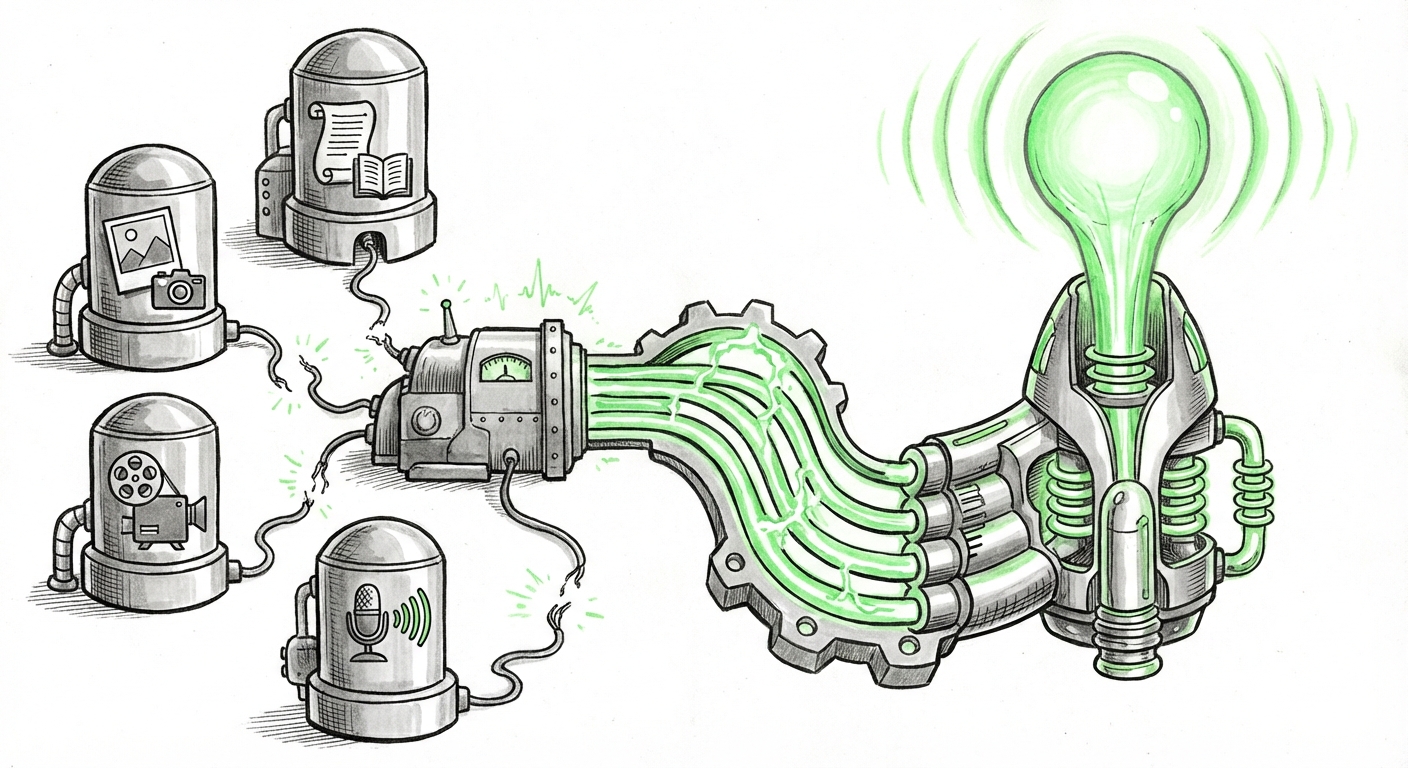
- Discovery: recommendation systems decide what a viewer sees first, arguably the single most powerful creative decision in the entire business.
Notice something. The last item on that list is not a side feature. For a streaming service, the recommendation is the shelf. If the shelf is built by a model, then the model is doing the most important programming job in the company.
That is why content leadership and AI strategy are no longer separate conversations. They are the same conversation.
The Money Angle: AI as a Margin Story
Every major media company faces the same math problem. Content costs a lot. Subscriber growth is harder to find. So the pressure shifts to efficiency.
AI shows up in three budget lines at once:
First, production costs. Tools that speed up editing, translation, and effects reduce the cost per finished hour.
Second, marketing costs. Generating dozens of variations of a campaign asset and testing them automatically is far cheaper than producing a handful by hand.
Third, decision costs. Bad bets are expensive. Better forecasting means fewer of them. Even a small improvement in hit rate compounds across a slate of hundreds of titles.
Put those together and AI stops being a technology project. It becomes a margin strategy. That is the kind of thing a new content chief inherits on day one, whether they asked for it or not.
What This Means for Other Industries
If you do not run a streaming service, do not tune out. The pattern repeats almost everywhere.
Replace "content chief" with "head of merchandising," "chief marketing officer," or "head of product." The job description is shifting in the same direction. Leaders are being asked to combine human judgment with machine-scale pattern recognition.
Three lessons stand out:
1. The decision layer is where AI pays off first
Most companies chase flashy generative features. The bigger returns often come from improving the decisions you already make every day, what to stock, what to promote, what to build, what to kill.
2. Data quality is a leadership issue, not an IT issue
Models are only as good as the signals feeding them. If your data is messy or siloed, no amount of clever tooling fixes it. That is a job for the top of the org chart.
3. Human taste becomes a differentiator, not a casualty
When everyone has access to the same models, the edge comes from knowing which questions to ask and which outputs to trust. Judgment gets more valuable, not less, because it is applied to better inputs.
The Risks Nobody Should Skip
There are real dangers in leaning harder on AI in content businesses, and they deserve plain language.
Homogenization. If every decision is optimized against past performance, you get more of what already worked. That can slowly drain the originality that made the platform worth paying for in the first place.
Feedback loops. A recommendation system shapes what people watch. What people watch shapes what gets made. What gets made shapes the next recommendation. Left unchecked, this loop can narrow a catalog without anyone deciding to narrow it.
Trust and transparency. Creative workers want to know how decisions about their work are being made. Audiences increasingly care too. Companies that cannot explain their systems will face friction, from talent, from regulators, and from subscribers.
Overconfidence in models. A forecast is not a fact. It is a probability. Treating it as a verdict is how organizations make confident mistakes.
The fix is not to slow down. It is to keep humans in the loop at the points where taste, ethics, and long-term brand value actually live.
What to Watch Next
Leadership changes are early signals. They tell you where attention and budget will flow before the products show up.
Over the coming months, the questions worth asking are straightforward:
- Does the new content leadership lean harder into data-driven greenlighting, or push back toward creative risk-taking?
- Do AI tools get positioned as cost savers, creative aids, or both?
- How do talent and creators react to changes in how their work is evaluated?
- Does personalization deepen, or does the company invest in broader, more surprising discovery?
None of these have obvious answers yet. But the direction of travel across the industry is clear. The companies that win the next decade of streaming will be the ones that figure out how to let machines handle scale while humans handle meaning.
The Bigger Picture
A single executive change does not determine the future of AI in entertainment. But it does mark a moment. The content seat is no longer purely a creative seat. It is a systems seat. The person in it has to understand audiences, algorithms, and the economics that connect them.
Peter Rice starts October 26. What he inherits is not just a slate of shows. It is a decision machine, part human, part model, that determines what hundreds of millions of people will watch next.
How he tunes that machine will say a lot about where the whole industry goes. And it will say a lot about how AI quietly becomes the operating system of modern business, not by replacing people, but by changing what the people at the top are actually deciding.