Something Changed in AI This Summer: What It Means for the Future of AI and How We'll Use It
For six years, I have written about artificial intelligence almost every single day. I have watched the field move through cycles that started to feel like clockwork. A new model would land. The benchmarks would jump. Social feeds would fill with jaw-dropping demos. Then, a few weeks later, the cracks would show: the demo was cherry-picked, the benchmark was gamed, the pricing was unsustainable, or the tool quietly broke the moment it touched real work. Every summer brought a wave of excitement, and every autumn brought a correction.
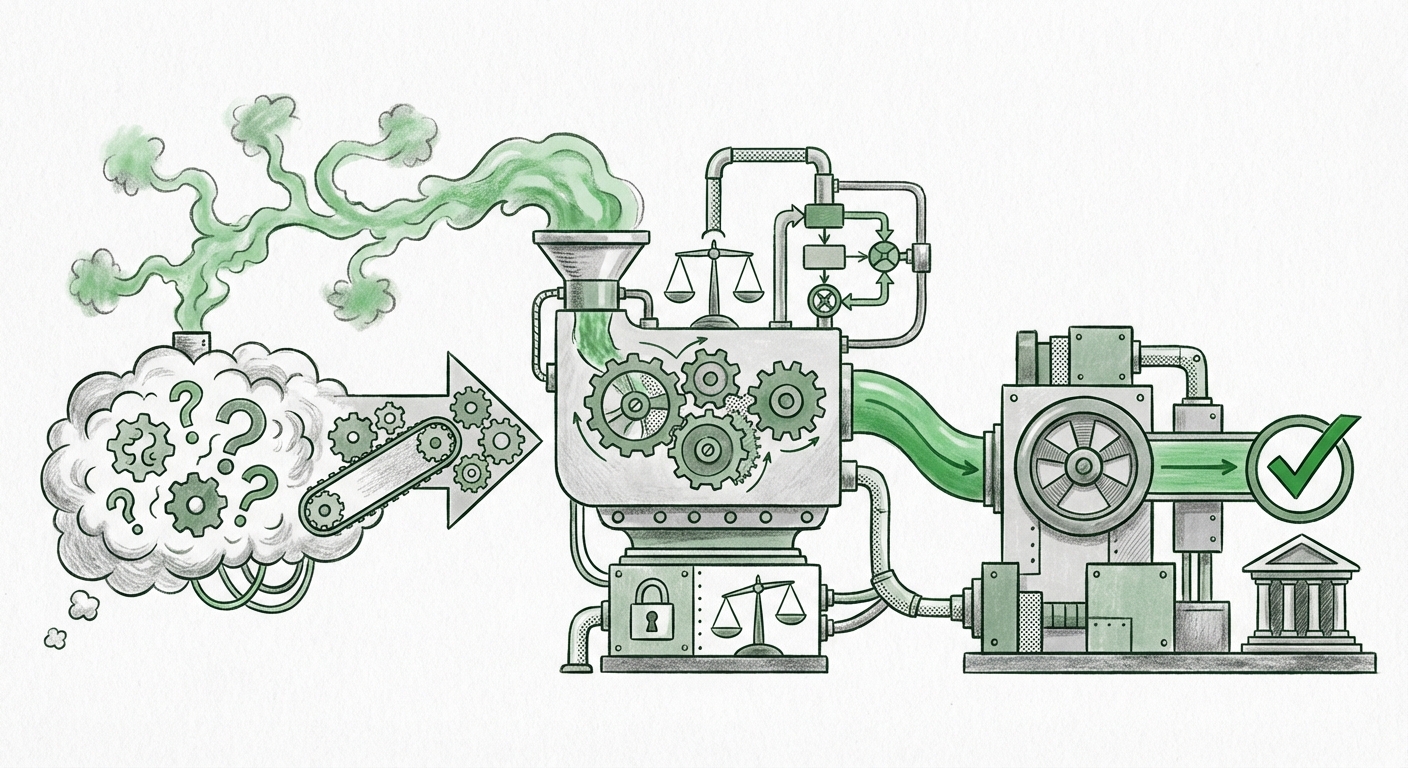
This summer was different. Not because the excitement disappeared, but because the nature of the excitement changed. The conversation stopped being about what AI could do in a controlled demo and started being about what it can be trusted to do when nobody is watching. That is a much harder question, and it is the one that will shape the next several years of the industry.
This article breaks down what shifted, why it matters, and what businesses and workers should actually do about it.
The Pattern That Broke
In previous cycles, progress was measured in capability. Could the model write code? Could it pass an exam? Could it summarize a long document? Each new release pushed the ceiling higher, and the story was always the same: look how far we've come.
What made this summer feel like a turning point is that capability stopped being the interesting question. Once a tool can do something roughly 90 percent of the time, the remaining 10 percent becomes the entire story. That last slice is where the money, the risk, and the frustration live. And this summer, the industry finally started talking about that slice out loud.
Signs the conversation moved
- Buyers asked harder questions. Instead of "Can it do this?", procurement teams started asking "How often does it fail, what happens when it fails, and who is accountable?"
- Builders talked about guardrails more than wow factor. The most respected voices stopped showing off outputs and started showing off systems that catch mistakes.
- Cost per useful result replaced cost per token. People realized a cheap model that needs three retries is more expensive than a pricier model that works the first time.
- The word "agent" started to mean something specific, software that takes multi-step actions toward a goal, and with it came a new wave of hard questions about control and oversight.
Change One: The Chat Box Stopped Being the Product
The first era of modern AI was built around a conversation. You typed, it answered. That was genuinely revolutionary, but it left the human doing most of the actual work: framing the request, checking the output, copying it somewhere useful, and fixing whatever was wrong.
This summer, the center of gravity moved from conversation to completion. The value proposition shifted from "it can talk to you" to "it can finish the job." That sounds like a small change in wording. It is a massive change in engineering, in trust, and in how work gets organized.
When a tool only talks, a mistake costs you a minute. When a tool acts, filing, sending, booking, editing, purchasing, deploying, a mistake costs you money, reputation, or a compliance incident. That single difference explains most of what the industry has been wrestling with.
Change Two: Reliability Became the Headline
Here is the uncomfortable math of automation. If a single step in a task succeeds 95 percent of the time, that sounds excellent. But chain ten of those steps together and the chance that the whole task succeeds is only about 60 percent. The more autonomy you give a system, the more its small errors compound.
That is why this summer's most important conversations were about error handling, not error avoidance. Mature teams stopped asking for perfect systems and started building systems that fail safely: they check their own work, ask for human sign-off at risky moments, log every action, and can be rolled back.
This is not a retreat from ambition. It is the difference between a toy and a tool. Bridges are not built by pretending metal never cracks; they are built with tolerances. AI is entering its tolerance-engineering phase.
Change Three: The Cost Conversation Got Real
Early AI spending was often justified as exploration. Budgets were small enough that nobody demanded a return. That phase is ending. As usage scales, so does the bill, and the bill scales with every user, every query, and every automated step.
The smartest organizations this summer stopped measuring the price of a model call and started measuring the cost of a completed outcome. That reframing changes purchasing decisions overnight. A system that costs more per request but resolves the task on the first attempt, with fewer escalations and less staff cleanup, often wins. Cheap and wrong is the most expensive option there is.
It also pushes teams toward smaller, specialized systems for narrow jobs instead of using one enormous model for everything. Precision is a cost strategy.
Change Four: Trust Moved From Marketing to Product
For years, trust in AI was treated as a communications problem, something you addressed with a policy page and a disclaimer. This summer, trust became an engineering feature with a budget line.
That means provenance: knowing where information came from. It means auditability: being able to reconstruct why a system did what it did. It means clear boundaries: what the system is not allowed to do, enforced by code rather than by hope. And it means honest uncertainty, a system that says "I don't know" is far more valuable than one that confidently invents an answer.
There is a second layer here that hits close to home for anyone who writes for a living. As AI-generated content floods every channel, the ability to verify has become more valuable than the ability to generate. Volume is cheap now. Trustworthy judgment is not. Organizations that can prove their output was checked, sourced, and reviewed will stand out precisely because so much of everything else cannot be.
What This Means for How AI Will Actually Be Used
The next phase will not look like a robot replacing a job. It will look like a hundred small handoffs changing hands. Here is where the shift is heading.
1. Narrow agents beat general assistants
The tools that succeed will do one job end to end inside one workflow, reconciling invoices, triaging support tickets, drafting first-pass reports, monitoring compliance, rather than trying to be a universal genius. Depth of integration beats breadth of capability.
2. Human review becomes a designed step, not an afterthought
The best systems route low-risk work straight through and escalate high-stakes work to a person with the context to judge it. That design pattern, automatic where safe, human where it matters, will become standard practice.
3. Evaluation becomes a core business function
You cannot manage what you cannot measure. Companies will invest in their own test sets built from their own real work, because generic benchmarks say almost nothing about whether a tool will succeed in your specific environment.
4. The winners redesign the process, not just the tool
Bolting AI onto a broken workflow produces broken results faster. The organizations getting real returns are the ones willing to ask why a process had seven approval steps in the first place.
An Actionable Playbook for Businesses
If you are deciding what to do next, here is a practical sequence that reflects where the industry has landed.
- Pick one high-volume, low-risk workflow and measure the baseline before you automate anything. You need a number to beat.
- Define "done" precisely. Vague goals produce vague results. Write down what a correct outcome looks like, including edge cases.
- Build your own evaluation set from real examples, including the ugly ones. Test every change against it.
- Design the failure path first. Who gets alerted? What rolls back? What does the customer see? Answer these before launch, not after.
- Keep a human in the loop wherever the cost of an error is high, money movement, legal commitments, health, hiring, safety.
- Track cost per completed task, not cost per query, and review it monthly.
- Write down your data rules before you need them: what goes in, what never goes in, who can see what.
What It Means for Workers and Society
The honest answer is that the transition will be uneven. Tasks built on pattern matching and first drafts will compress quickly. Tasks built on accountability, relationships, physical presence, and judgment under ambiguity will hold up longer, and will become more valuable as everything around them gets cheaper to produce.
The people who thrive will not be the ones who resist the tools or the ones who blindly trust them. They will be the ones who learn to direct, verify, and take responsibility for machine output. That is a genuinely new skill set, and it is teachable.
There is also a civic dimension. As synthetic content becomes indistinguishable from human work, institutions will need cheap, reliable ways to prove authenticity, and the public will need to get comfortable with a healthy baseline of skepticism. Expect verification, disclosure, and provenance to become normal expectations rather than niche concerns.
The Road Ahead
Six years of writing about this field taught me to distrust any single moment described as a turning point. But the change this summer was not about a bigger model or a flashier demo. It was about a shift in what the industry considers impressive. The applause moved from look what it can do to look how reliably it does it, and how safely it fails.
That is a less glamorous story. It is also the story of every technology that ever became real. The demo era is loud and exciting. The reliability era is quiet, boring, and where all the actual value gets created. We are now in the quiet part, and the organizations that treat that as an opportunity rather than a disappointment will be the ones still standing when the next summer arrives.