The Future of AI: What Comes Next and How Businesses Will Actually Use It
Artificial intelligence has stopped being a science experiment and started being a line item on the budget. That shift sounds small. It is not. When a technology moves from "interesting demo" to "we need this to work on Monday," everything around it changes, how it is bought, how it is secured, how it is measured, and who is held responsible when it gets something wrong.
This article looks at where AI is heading, what that means for the way it will be used, and what businesses and society should be doing right now to get the upside without tripping over the downside.
The Big Shift: From Talking to Doing
For the first years of the current AI wave, the main use case was conversation. You asked a question, a model wrote an answer, and you copied it somewhere useful. That pattern is now expanding. The next phase is AI that takes actions, reading a database, sending an email, filing a ticket, updating a spreadsheet, moving money between systems.
This matters because it changes the risk profile completely. A chatbot that writes a slightly awkward paragraph is a minor annoyance. A system that can log into your tools and change things is a different animal. It can save enormous amounts of time, and it can cause enormous amounts of damage in the same afternoon.
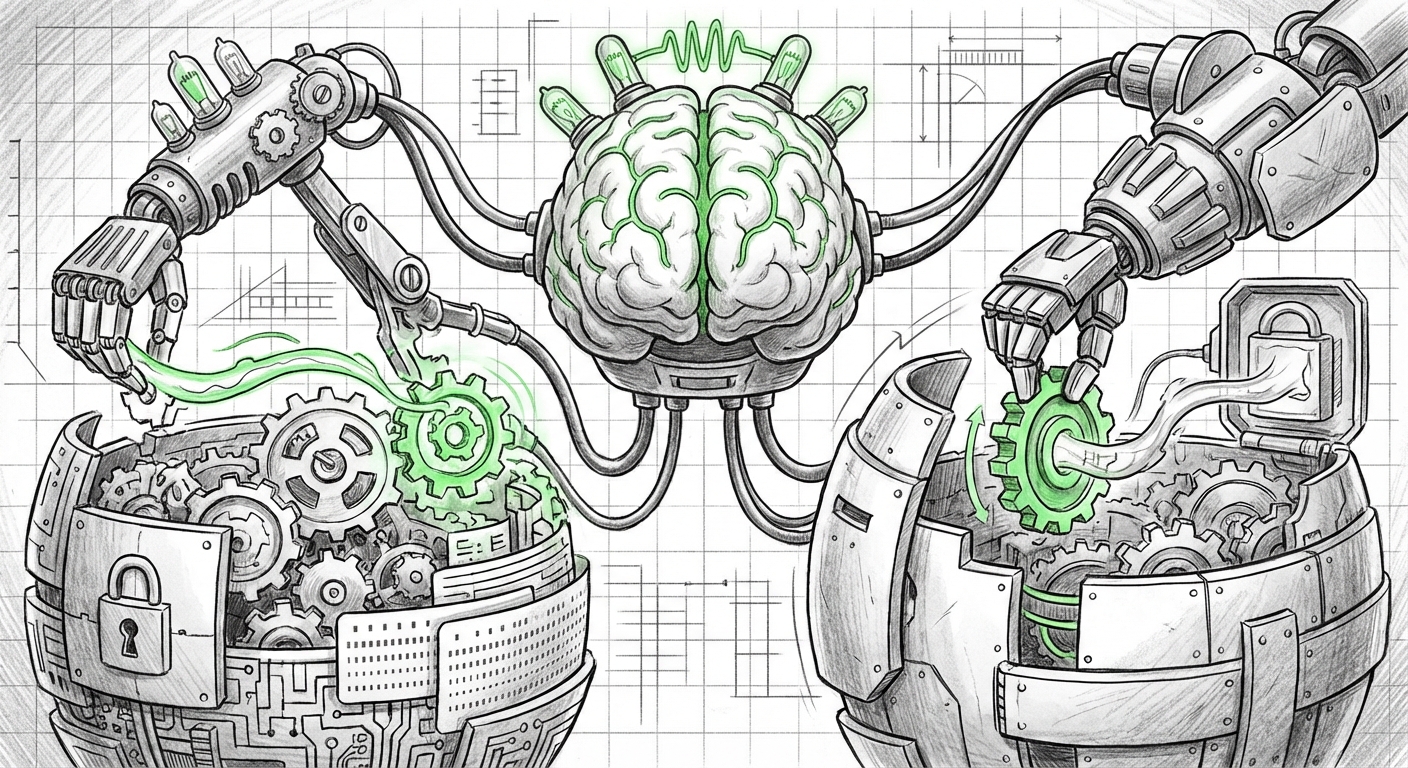
That is why the industry conversation is moving away from "how smart is the model?" and toward "how do we trust the system around the model?" The winning products will not be the ones that score highest on a benchmark. They will be the ones that a cautious IT manager feels safe deploying.
Three Trends Shaping What AI Becomes
1. Reliability is becoming the product
Everyone has gotten used to AI being impressive but occasionally wrong. In consumer settings, that is tolerable. In business settings, it is not. So the focus is shifting to guardrails: systems that check their own work, cite where an answer came from, refuse to act when confidence is low, and hand off to a human when something looks odd.
Think of it like a new employee. You do not hand a brand-new hire the keys to the company bank account on day one. You give them small tasks, you review the work, and you expand their authority as trust builds. AI is following the same path, just much faster.
2. Cost is falling, so usage is spreading
When any technology gets cheaper, it gets used in more places, often in places nobody predicted. The same is true here. As the cost of running AI falls, it stops being something companies reserve for flagship projects and starts getting embedded in ordinary workflows: reviewing contracts, sorting support tickets, drafting first-pass reports, checking code for common mistakes.
The practical result is that AI becomes invisible. It stops being "the AI project" and becomes a feature of the software people already use. That is usually the sign a technology has genuinely arrived.
3. Specialised tools are beating one-size-fits-all
Early on, there was a rush to use a single giant model for everything. Increasingly, the pattern is a mix: large general models for open-ended thinking, smaller focused models for narrow, repetitive, high-volume tasks, and traditional software for anything that needs a guaranteed, exact answer.
A good rule of thumb: use AI for judgement and language, use ordinary code for maths and rules. Companies that blur that line get expensive mistakes.
What This Means for Businesses
The companies that get the most out of AI over the next few years will not be the ones with the flashiest pilots. They will be the ones that did the boring work first.
Pick problems, not tools
Too many organisations start with "we should use AI" and then hunt for something to point it at. The better approach is the reverse: find a process that is slow, repetitive, and easy to measure, then ask whether AI fits. If a task takes a person four hours a week and the output is easy to check, that is a good candidate. If the output is hard to verify and the consequences of an error are severe, it is a bad one, at least for now.
Measure the boring things
Time saved, error rates, cost per task, customer response times, employee satisfaction. If you cannot measure it, you cannot prove it worked, and you will not get the budget to expand it. Pilot projects that never define success criteria almost always quietly die.
Build the human layer
Every AI deployment needs people who know what "good" looks like. Someone has to review outputs, catch drift, and know when to override the machine. That role is not going away, it is becoming one of the most valuable jobs in the building.
Write down the rules
Who is allowed to use which tools? What data can be put in? Who signs off before an AI system touches a customer? What happens when it fails? Organisations that answer these questions in advance move faster, not slower, because their staff are not paralysed by uncertainty.
What This Means for Society
The societal picture is messier than the business one, and it deserves honesty rather than hype in either direction.
Work is changing shape, not disappearing overnight. The tasks most exposed to automation are the routine, text-heavy, and easily-checked ones. The tasks that hold up are those involving physical presence, genuine accountability, negotiation, care, and situations where being human is the point. Jobs are bundles of tasks, and bundles tend to get rearranged rather than deleted, though the rearrangement can still be painful for the people involved.
Trust becomes a public resource. If people cannot tell what is real, what is generated, and who is responsible, everything from news to customer service gets harder. Expect growing pressure for clear labelling, clear accountability, and clear ways to complain when a system gets something wrong.
The skills that matter are shifting. Judging quality, asking good questions, spotting nonsense, and knowing when to stop trusting an output, these are becoming core professional skills, not nice-to-haves. Writing a first draft is getting easy. Knowing whether the draft is any good is not.
The Risks Worth Watching
- Automation of bad processes. If your workflow is broken, AI will help you do the wrong thing faster and at greater scale.
- Silent failure. Systems that are wrong in ways nobody notices are far more dangerous than systems that crash loudly.
- Data sprawl. Sensitive information leaking into tools that were never approved for it remains one of the most common real-world problems.
- Over-reliance. Teams that lose the ability to do a task without the tool are fragile, not efficient.
- Accountability gaps. "The AI did it" is not an answer a customer, regulator, or court will accept.
A Practical Playbook
If you are trying to figure out where to start, here is a sequence that tends to work:
- Map your workflows. List the tasks people do repeatedly. Note which ones are slow, boring, and easy to check.
- Start with an assistant, not an agent. Let AI draft and suggest before you let it act.
- Keep a human in the loop for anything customer-facing, financial, legal, or safety-related.
- Log everything. If you cannot reconstruct why a decision was made, you cannot fix it when it goes wrong.
- Train your people. Not just on how to use the tools, but on how to spot when they are wrong.
- Review quarterly. The tools are changing fast. A policy written a year ago may already be out of date.
The Road Ahead
The most likely future is not a dramatic one. It is a steady one. AI keeps getting cheaper and more capable. It spreads from specialist teams into everyday software. Some jobs change significantly; most jobs change gradually. A handful of organisations gain a real advantage by being disciplined early, while others spend a lot of money learning the same lessons later.
The uncomfortable truth is that the hard part of AI was never the model. It was always the process, the people, and the trust. The organisations that understand this will be the ones still standing when the hype settles and the real work begins.
For anyone building a strategy right now, the best question is not "what can this technology do?" It is "what are we willing to be responsible for?" Answer that honestly, and the rest of the roadmap tends to write itself.