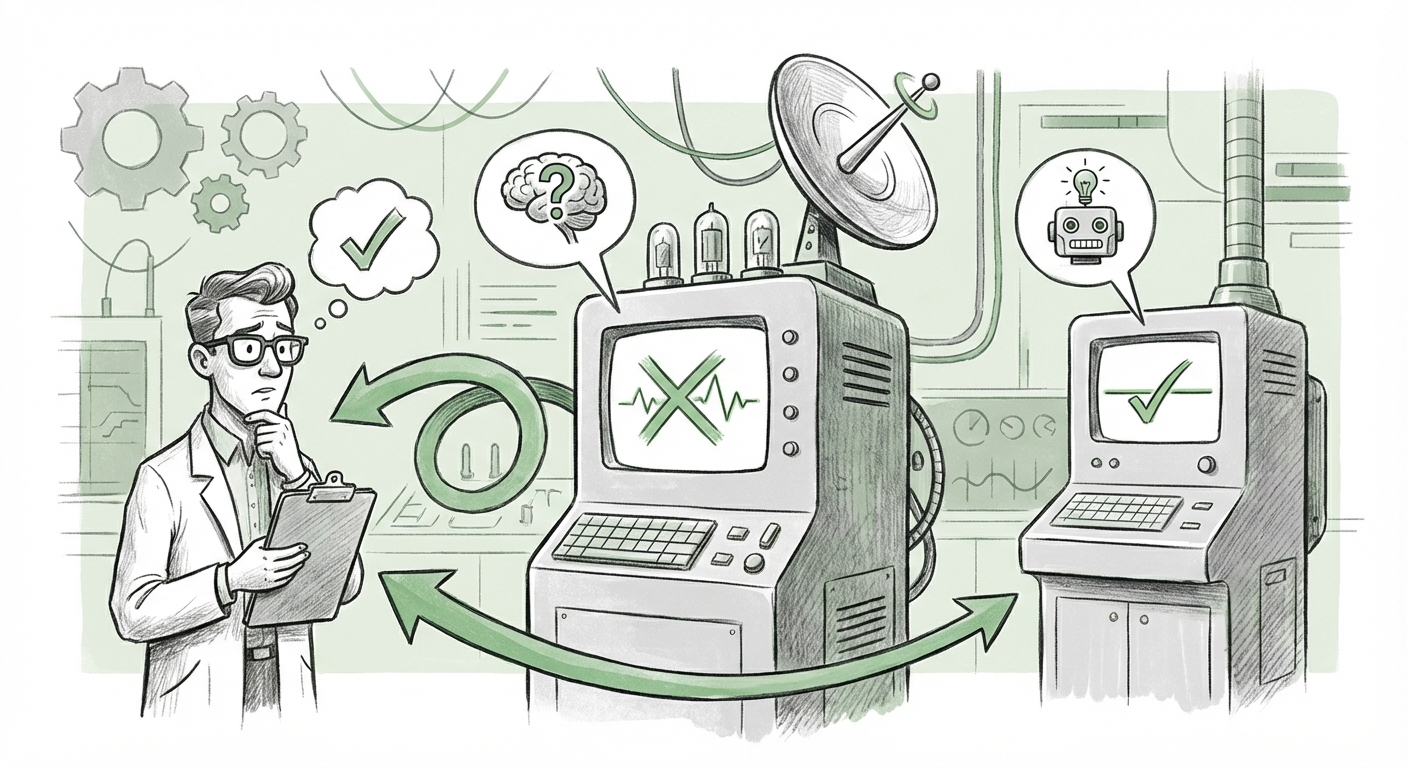
AI Startup Funding Is Cooling: What the Latest 10 Big Rounds Mean for the Future of AI
The latest weekly tally of the ten biggest startup funding rounds tells a story that every founder, investor, and business leader should read carefully. The total spending contracted for the newest batch of AI-driven startups. In plain terms: the biggest checks got smaller, or fewer of them were written, even as artificial intelligence remains the hottest theme in technology.
That might sound like bad news for the AI boom. It is not. It is a sign that the market is growing up. The easy money phase, where a convincing AI demo and a bold vision could unlock a huge round, is giving way to a more disciplined phase. Investors still want AI. They just want proof that it works, that customers will pay for it, and that the business can survive when the hype settles.
This article breaks down what the contraction in AI startup spending really means, why it is happening, and how it will shape the future of AI in business and society. It also gives practical steps for founders, investors, and companies that are buying AI tools today.
The Headline: Less Money, More Discipline
The ten largest funding rounds in the latest weekly batch showed a clear pullback in spending for AI-driven startups. The exact size of the drop matters less than the direction. After months of aggressive capital deployment into anything with an AI label, the market is now separating serious companies from story-driven ones.
This is a classic pattern in technology cycles. First comes the excitement. Then comes the flood of capital. Then comes the correction, where investors tighten their standards. The companies that survive the correction are usually the ones that built real products, real revenue, and real customer relationships.
For AI, this correction is happening while the technology is still very early. That is unusual. Most tech cycles correct after a product has been widely adopted. AI is correcting while enterprises are still running pilots. That tells us investors are forward-looking. They are not waiting for the market to mature before applying pressure. They are applying pressure now to force maturity faster.
Why AI Funding Is Contracting
The Hype Tax Is Over
For a while, the word “AI” acted like a multiplier on startup valuations. A company could raise a large round simply by being in the space. That phase is ending. Investors have seen enough pitches to know that a large language model wrapper is not a moat. They have also seen enough failed pilots to know that enterprise adoption is slower and messier than demos suggest.
The result is a “hype tax” that startups can no longer charge. Investors are asking harder questions: Who is the buyer? What is the budget line? How long does it take to deploy? What happens when a foundation model provider adds your feature to its platform? These questions are healthy. They force founders to build defensible businesses.
Compute Costs Meet Revenue Reality
AI startups face a cost structure that many traditional software startups never had to manage. Training and running models can be expensive. Gross margins can be thin, especially for companies that rely on third-party model providers. When capital was cheap, investors tolerated those costs in exchange for growth. Now they want to see a path to sustainable margins.
That does not mean AI startups cannot be profitable. It means they must be deliberate about where they spend compute. The companies that win will be the ones that use smaller models where possible, fine-tune efficiently, and price their products to reflect the true cost of delivery. The days of “growth at any cost” are being replaced by “growth with a gross margin.”
Investors Want Proof, Not Promises
The latest funding data points to a simple shift: investors are underwriting evidence. They want to see paying customers, not just letters of intent. They want to see retention, not just sign-ups. They want to see a clear return on investment for the buyer, not just a cool technology.
This is especially true for AI-driven startups selling to enterprises. Large companies have been running AI pilots for a while now. Many of those pilots have not scaled. Investors know this, and they are pricing it in. A startup that can show a pilot converting into a multi-year contract is worth more than a startup with ten pilots and no production deployments.
What This Means for the Future of AI
Fewer Generalists, More Specialists
When money is tight, generalist AI companies struggle. A startup that says it can do everything with AI has a hard time proving value in any one area. Specialists, on the other hand, can show deep workflow knowledge, measurable outcomes, and a clear buyer.
Expect the next wave of successful AI startups to look less like “AI platforms” and more like vertical software companies with AI embedded. They will solve a specific problem in healthcare, finance, legal, logistics, or manufacturing. They will speak the language of the buyer. They will integrate with existing systems. They will not try to be everything to everyone.
The Application Layer Becomes the Battleground
As foundation models become more commoditized, value shifts to the application layer. The companies that win will be the ones that own the workflow, the data, and the customer relationship. They will use AI as a feature, not as the whole product.
This is good news for businesses. It means more practical tools that fit into existing processes. It also means more competition, which should drive down prices and improve quality. But it puts pressure on startups to differentiate beyond the model. If your only advantage is access to a model that everyone else can also access, you do not have an advantage.
Consolidation and Strategic Capital
A funding contraction often leads to consolidation. Stronger companies acquire weaker ones. Strategic investors, corporations, sovereign funds, and large institutions, play a bigger role. They bring more than money. They bring distribution, customers, and regulatory knowledge.
For the AI ecosystem, this means fewer independent startups but potentially stronger outcomes. A startup that gets acquired by a larger company can scale faster than one trying to build a sales force from scratch. Founders should not view acquisition as a failure. In a disciplined market, it is often the best path to impact.
Practical Implications for Businesses
If you are a business leader buying AI tools, the funding contraction is actually good news for you. It shifts leverage in your direction. Here is what to expect and how to respond.
- More realistic pricing. Startups need revenue. They are more willing to negotiate on price, offer flexible contracts, and tie fees to outcomes. Use that leverage, but do not squeeze so hard that your vendor cannot support you.
- Greater focus on ROI. Vendors know that buyers are under pressure to justify AI spending. Expect better ROI calculators, pilot programs, and case studies. Demand them. If a vendor cannot show measurable value, walk away.
- Vendor risk is real. A funding contraction means some AI startups will fail or get acquired. Before you sign a multi-year deal, ask about runway, data portability, and exit plans. Avoid deep lock-in with a vendor that might not be around in two years.
- Integration matters more than model quality. The best model in the world is useless if it does not fit your workflow. Prioritize vendors that integrate with your existing systems, respect your data governance rules, and support change management.
Actionable Insights
For Founders
Extend your runway now. If you are raising, assume it will take longer and be harder than you expect. Cut non-essential spending. Focus on the customers and products that generate revenue today. A smaller round at a fair valuation is better than a large round that never closes.
Narrow your focus. Pick one buyer, one problem, and one measurable outcome. Become the obvious choice for that niche. You can expand later. Generalists are struggling in this market. Specialists are getting funded.
Prove ROI with numbers. Build a business case that a CFO would sign. Show cost savings, revenue lift, or risk reduction. If you cannot measure it, you cannot sell it in a disciplined market.
For Investors
Underwrite unit economics, not narratives. The best AI companies will have clear gross margins, efficient customer acquisition, and strong retention. Ask for cohort data. Ask how compute costs scale with usage. Ask what happens if a foundation model provider enters your market.
Look for defensibility beyond the model. Proprietary data, workflow integration, regulatory approvals, and switching costs are stronger moats than model access. Prioritize companies that own something the model cannot replicate.
For Enterprise Buyers
Run disciplined pilots. Define success before you start. Set a timeline. Assign an owner. If the pilot does not hit the metrics, stop. Do not let a pilot become an indefinite science project.
Negotiate for flexibility. Ask for shorter contract terms, usage-based pricing, and data portability. In a buyer’s market, you can get these terms. They protect you if the vendor’s roadmap changes or the company is acquired.
The Road Ahead
The contraction in AI startup spending is not the end of the AI boom. It is the beginning of a more durable phase. The companies that raise money in this environment will be stronger. They will have real customers, real revenue, and real plans for profitability. The investors who write checks will be more engaged and more helpful. The businesses that buy AI will get better tools at better prices.
But there are risks. A funding pullback can slow innovation in areas that need long research timelines. It can also widen the gap between well-funded incumbents and early-stage startups. Policymakers and ecosystem leaders should pay attention. Support for basic research, access to compute, and open standards can help keep the pipeline of new ideas flowing.
For society, the shift toward practical AI is mostly positive. It means fewer flashy demos and more tools that actually help workers, patients, students, and consumers. It means AI companies will have to earn trust by delivering results, not by making promises. That is a healthier relationship between technology and the people who use it.
The message for everyone is simple: the AI market is maturing. The hype is not gone, but it is no longer enough. The future belongs to those who can turn AI into measurable value. That is a harder game, but a better one.