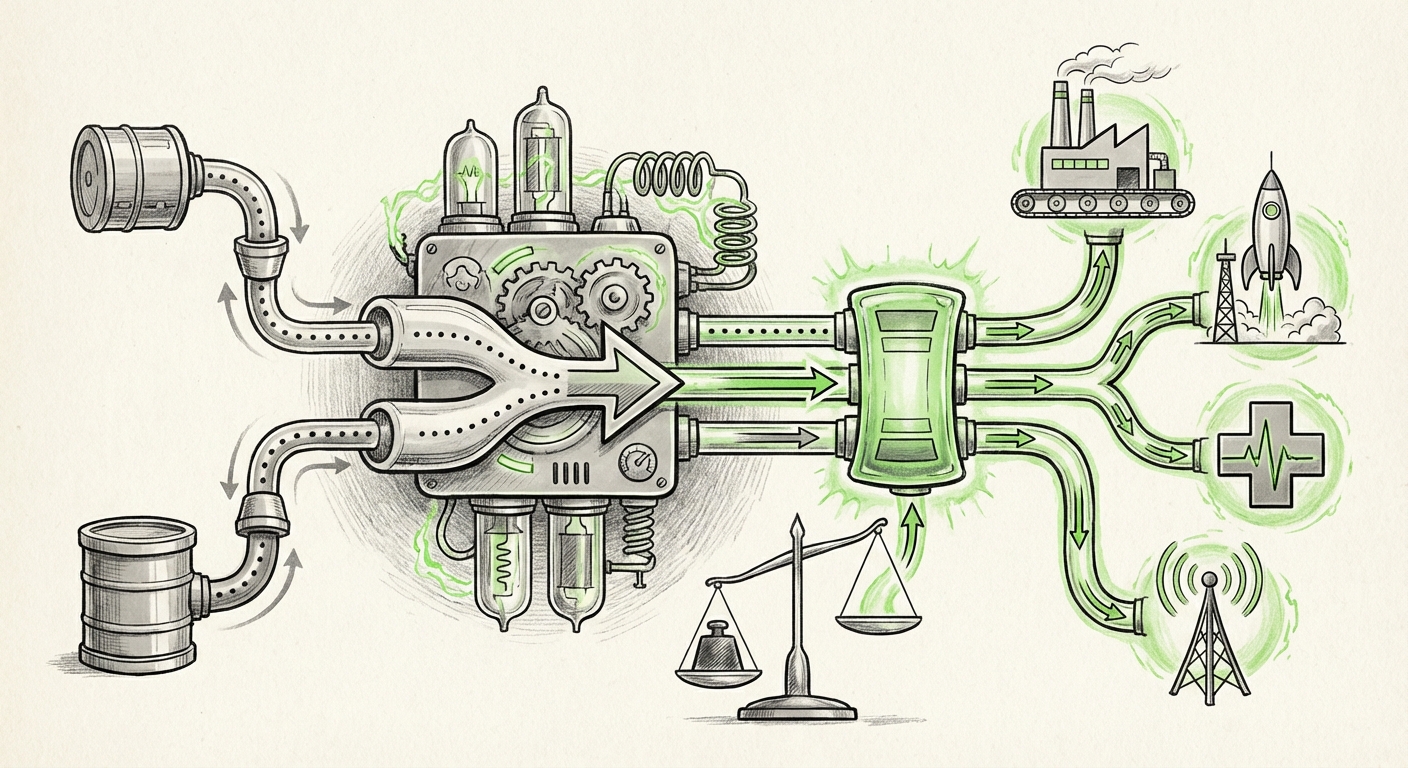
Apple Is Finally Building Its Own Smart Home Devices, What It Means for the Future of AI
Apple is finally making its own smart home devices. That single decision, landing in mid-October 2026, is bigger than a new gadget line. It is a signal about where artificial intelligence is heading next, out of the chatbot window and into the walls, lights, locks, and speakers of your home.
For years, Apple sat on the sidelines of the smart home. It built the software layer, let other companies build the hardware, and watched. Now the company is going vertical. It wants to own the whole stack: the chip, the device, the software, and the AI that ties them together. That is a classic Apple move, and it tells us exactly where the company thinks the next AI battleground is.
This article breaks down what is happening, why it matters, and what it means for the future of AI and how it will be used. Whether you run a business, build software, or just want to know what is coming to your living room, here is what you need to understand.
Why Apple Waited, and Why It Can't Wait Anymore
Apple has never been a company that rushes into a crowded market. It waits, watches, and then ships something polished. The smart home has been messy for a decade. Devices from different brands often refuse to talk to each other. Setup is painful. Voice commands fail at the worst moment. Users buy a smart bulb and a smart plug, get frustrated, and stop there.
That mess was actually the reason to wait. But it is also the reason to move now. The technology that made smart homes feel dumb, the AI layer, has finally caught up. Modern AI models can understand context, remember what happened five minutes ago, and follow a conversation instead of demanding a robotic command each time.
In other words, the bottleneck was never the light bulb. It was the brain. And the brain just got a lot smarter.
When the intelligence layer improves that fast, the hardware layer becomes the bottleneck. Apple's answer is to build both. If you control the chip, the sensor, the microphone, and the model, you can make the whole experience feel instant and reliable. That is something no third-party accessory maker can guarantee on someone else's platform.
From Gadgets to an AI Brain for the Home
The most important shift here is not about hardware at all. It is about what these devices are.
A traditional smart speaker is a command receiver. You say a phrase, it triggers an action. The interaction is short and shallow. The device does not really know you, your routines, or your family.
The next generation is different. Imagine a device in your home that acts less like a remote control and more like a coordinator. It notices that the lights in the kitchen come on at 7 a.m. on weekdays. It knows the difference between "turn it off" when you are watching TV and "turn it off" when you are walking out the door. It can manage several small tasks at once, adjusting the thermostat, dimming lights, locking a door, because one instruction implies the rest.
This is the jump from voice control to ambient intelligence. The AI is always present, mostly silent, and occasionally useful. It works in the background instead of demanding your attention.
That is the real product Apple is chasing. The speaker, the display, the sensor, those are just the body. The AI is the point.
Privacy Becomes a Competitive Weapon
There is a second trend buried in this move, and it may be the most consequential one for the AI industry.
Smart home devices are, by nature, always listening or always watching. That makes them the most privacy-sensitive products a tech company can sell. Cameras in bedrooms. Microphones in kitchens. Sensors that know when you are home and when you are not.
Apple's long-standing pitch is that it handles this differently, by processing more data on the device itself and sending less to the cloud. If the company leans hard into that story with its own hardware, it creates a clear contrast in the market.
Here is why that matters far beyond Apple:
- On-device AI becomes a selling point, not a compromise. For years, cloud models were simply more capable. As smaller models get better, running them locally becomes a genuine feature, faster responses, no network lag, and less data leaving your home.
- Trust becomes a design constraint. Companies that cannot explain where your data goes will lose the living room, the office, and eventually the car.
- Regulation will follow the hardware. As AI moves into physical spaces, the rules about recordings, consent, and data retention get stricter. Building for privacy early is cheaper than retrofitting later.
The lesson for every business watching this: privacy is no longer just a legal department problem. It is a product feature that customers can feel.
Why This Is Bigger Than One Company
When one major player moves into a market, the whole market shifts. Expect three ripple effects.
1. The assistant becomes the operating system
If the AI assistant is what you talk to, it becomes the layer everything else plugs into. The app matters less. The screen matters less. The assistant becomes the thing you actually use, and whoever owns it owns the relationship with the customer.
This is the same dynamic that played out on phones and then in cars. The interface wins. Everything underneath becomes a component.
2. Hardware makers get squeezed, or get specialized
Companies that build smart home gear but not the intelligence layer now face a hard choice: integrate deeply with a major platform and accept the terms, or compete on niche quality and price. There is still room for great hardware. There is much less room for mediocre hardware with a smart label on the box.
3. The home becomes a data environment
A home full of AI devices generates constant signals: motion, temperature, sound, usage patterns, energy draw. Handled well, that data makes life easier and buildings more efficient. Handled poorly, it is a surveillance network with a friendly voice.
Which direction we go depends on choices being made right now, by product teams, by regulators, and by buyers.
What This Means for Businesses: Practical Moves
You do not need to be a hardware company to act on this. Here is what smart teams should be doing.
- Design for voice and ambient input, not just screens. If your product or service requires a tap, ask what the voice-first version looks like. That is where your customers' attention is moving.
- Decide your platform strategy on purpose. Pick where you integrate deeply and where you stay neutral. Drifting into one ecosystem by accident is a costly mistake.
- Audit what your AI sends to the cloud. Every byte you keep on-device is a byte you do not have to explain, secure, or defend in a review.
- Invest in small models. Faster, cheaper, and private. For many tasks, classification, summarization, simple agents, a small model running locally is already good enough.
- Think about reliability as a feature. In a home, a wrong action is not an inconvenience. It is a locked door or a cold house. Trust is earned through consistency, not demos.
For smaller businesses, the near-term opportunity is simpler: the ecosystem will need services, integrations, installation, and support. Big platform shifts always create a long tail of work that the platform owner will never do itself.
What Could Go Wrong
It would be naive to assume this goes smoothly. A few risks stand out.
Interoperability. If each big platform builds its own walled garden of home AI, consumers get confusion instead of convenience. Open standards matter here more than any single product launch.
Over-promising. AI that is right 90% of the time feels magical in a demo and infuriating in a kitchen. Users will forgive a chatbot for being wrong. They will not forgive a device that unlocks the front door by mistake.
Cost and clutter. Homes are already crowded with devices. Adding another gadget only works if it replaces two others or does something genuinely new.
Data creep. The temptation to collect more than necessary will be enormous. The companies that resist it will earn the trust that carries them through the next decade.
The Bigger Picture: AI's Next Battleground Is the Physical World
Step back and the pattern is clear. AI started in research labs, moved into chat windows, then into software tools. The next stop is physical space, homes, offices, stores, factories, cars. Places where AI is not something you open. It is something that is simply there.
That transition changes what "good AI" means. In a chat window, a helpful answer is enough. In a home, the bar is much higher: it has to be fast, private, reliable, and invisible. It has to work when the internet is down. It has to know when to stay quiet.
Apple deciding to build its own smart home devices is a bet that this, not the chatbot, is where the real value ends up. The company is choosing to own the silicon, the sensors, and the intelligence, because that combination is what makes ambient AI feel like a feature instead of a frustration.
For the rest of the industry, the message is straightforward. If your AI strategy stops at a text box, you are building for the last phase of the market. The next phase is spatial, always-on, and deeply personal. The winners will be the ones who figure out how to be helpful without being creepy, and present without being annoying.
The smart home has been the punchline of the tech industry for years. AI may finally be the thing that makes it the main event, and the companies that move now will be the ones writing the rules everyone else has to follow.