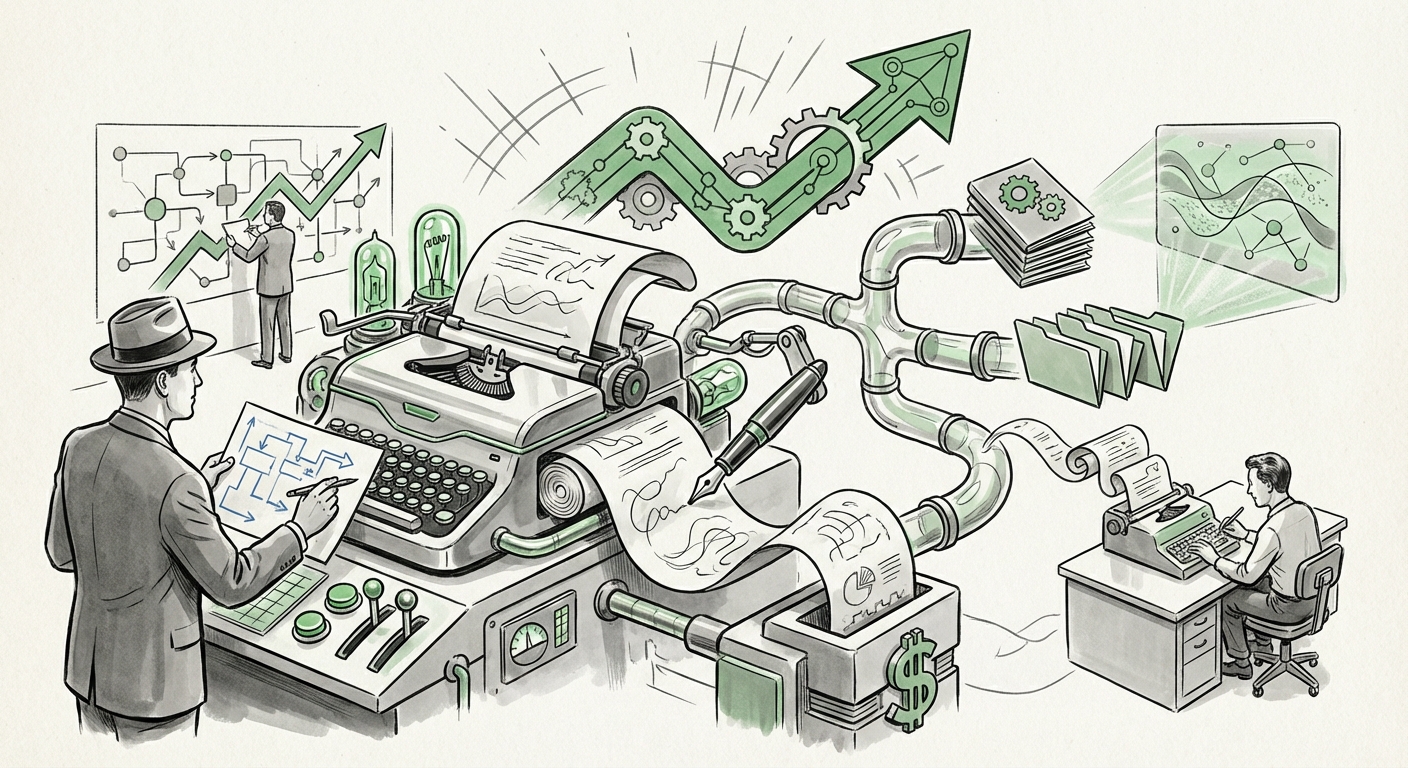
Why Some CEOs Are Deliberately Limiting AI Access, And What It Means for the Future of AI
Right now, the biggest story in business is access. Company after company is racing to put AI tools in as many hands as possible. Free trials. Company-wide rollouts. Chatbots on every screen. The message is simple: everyone gets AI.
But not every leader is playing that game. On October 17, 2026, a very different message came from one chief executive: some companies give AI to everyone. This CEO is doing the opposite.
That single stance is worth paying attention to. Not because it is contrarian for the sake of being contrarian, but because it points to a fault line that will shape how AI is actually used over the next decade. The question is no longer "can we build it?" It is "who should be allowed to touch it, and under what conditions?"
This is the story of abundance versus selectivity, and why the quieter path may end up being the smarter one.
The Two Camps: Everyone Gets AI vs. Almost No One Does
Most AI rollouts follow a familiar pattern. A vendor offers seats at a low price. A department head signs up. Soon the tool is everywhere, and usage numbers look fantastic on a slide.
The opposite approach starts with a harder question. Instead of asking "why not give this to everyone?", it asks "what has to be true before this person should have it?" That changes everything downstream. It changes who gets trained first. It changes how data is handled. It changes what success looks like.
These are not small differences in style. They are two different theories of how technology creates value inside an organization.
Camp One: Distribution Is the Win
The first camp believes that broad access creates its own momentum. People experiment. They find uses nobody planned for. Skills spread by osmosis. The tool becomes normal, and normal tools get used.
There is real logic here. New tools often fail not because they are bad, but because they sit unused. Wide access solves the adoption problem.
Camp Two: Restraint Is the Win
The second camp believes that broad access without structure creates noise, risk, and false confidence. People use the tool for the wrong things. They trust output they should not trust. They paste in data that should never leave the building. Nobody learns anything deeply, because everyone learns a little.
This CEO's choice lands firmly in the second camp. And looking closely, there are several strong reasons to take it seriously.
Why a Leader Would Choose to Hold AI Back
1. Scarcity Creates Attention
When something is everywhere, people stop noticing it. When something is limited, people pay attention.
A gated rollout turns access into a signal. Being chosen to use the tool means something. That tends to produce more serious users, more careful testing, and better feedback. Instead of thousands of shallow prompts, you get a smaller group doing real work with real stakes.
2. Risk Is Easier to Contain in a Small Room
AI systems make mistakes with total confidence. They can leak sensitive information. They can generate content that creates legal exposure. They can be manipulated by anyone who knows how to phrase a request.
If five people have access, you can watch those five closely. You can review outputs. You can spot a pattern of bad behavior early. If five thousand people have access, problems compound faster than any team can review them.
Restraint is not fear of the technology. It is an honest accounting of the fact that AI risk scales with access.
3. Compute and Cost Discipline
AI usage is not free. Every request costs money, and heavy workflows cost a lot more. A company-wide rollout can create a bill that grows faster than the value it produces, especially in the early months when people are experimenting rather than working.
Limiting access keeps spend tied to specific, measurable outcomes. It forces the question that every business should ask: what result are we buying, and is this the best way to buy it?
4. Depth Beats Breadth
There is a real skill to working with AI. It is not just typing a question. It is knowing how to break a problem apart, how to check the answer, how to give the model the right context, and how to know when to stop trusting it.
That skill takes practice in a setting where mistakes are visible. A small, coached group can build genuine expertise. That group then becomes the group that teaches everyone else. This is how most hard skills spread inside companies: through a few people who got good first.
The Business Case for a Gated Approach
Strip away the philosophy and the practical case looks like this.
- Clear ownership. Fewer users means each one can be named, tracked, and supported.
- Measurable pilots. You can compare a small team using AI against a small team that is not. That is a real experiment. A company-wide rollout is not.
- Better data habits. People who are trained before they get access are far less likely to paste sensitive material into a chat box.
- Stronger negotiating position. Companies that know exactly what they need buy less and buy better.
- Fewer public mistakes. A bad AI-generated message from a junior employee and a bad one from a brand account are not the same problem.
None of this means slow. A tight pilot can move fast because there is less to coordinate. The constraint is not on speed. It is on scope.
What This Means for the Future of AI
The industry has spent years assuming that more access is always better. That assumption is starting to crack.
Expect the next phase of enterprise AI to look less like a giveaway and more like a licensing regime. Access will be tiered. Some roles will get powerful tools with few limits. Others will get narrow tools built for one job. And a large group will get nothing at all until there is a clear reason to change that.
This will reshape the vendor market too. Sellers have built their growth stories on seat counts. If buyers start optimizing for depth instead of headcount, pricing models will have to change. Expect more deals priced on outcomes, usage, or specific workflows rather than on how many people can log in.
It also changes what "AI-ready" means for a workforce. Being AI-ready will not be about everyone having a login. It will be about having a clear map of which decisions a machine can touch, which it cannot, and who is accountable when it gets one wrong.
And it raises a question society will have to answer outside of business as well. If the most capable systems are held behind gates, by cost, by policy, by skill, then the benefits of AI will not spread evenly on their own. Access is a design choice, not a law of nature.
A Practical Playbook for Leaders
Whether you agree with this CEO or not, the stance offers a useful checklist. Here is how to apply it without stalling your company.
Start With the Job, Not the Tool
Pick three workflows where AI can clearly save time or improve quality. Give access only to the people who do that work. Measure the change. Then decide what comes next.
Train Before You Unlock
Make a short, practical training a requirement for access. Cover what the tool is good at, where it fails, and what data must never go in. Keep it under an hour and make it specific to the person's job.
Write Down the Rules
Who reviews AI output before it goes out? What data is off-limits? What happens when something goes wrong? Answer these before the rollout, not after the first incident.
Build a Teaching Group
Choose a small group of strong users. Let them go deep. Then make them the ones who train the next wave. This is cheaper and faster than formal programs.
Review the Gate Regularly
Restraint only works if it is temporary by design. Set a date to revisit who has access and why. A gate that never opens is just a wall.
The Risk of Holding Back
Restraint has a real downside, and it is worth naming. If you move too slowly, people will use AI anyway, on their personal accounts, with no training and no oversight. That is the worst of both worlds: risk without control, and no learning captured by the company.
There is also a competitive cost. A rival that learns faster will outpace you, even if they make more mistakes along the way. The right balance is not "no access." It is deliberate access, a gate with a key, a schedule, and a reason.
The Bottom Line
Giving AI to everyone is the easy announcement. Choosing who gets it, why, and when is the harder and more valuable decision. This CEO's stance is a reminder that adoption is not the same as capability, and that a login is not a strategy.
The companies that win with AI over the next few years probably will not be the ones with the most seats. They will be the ones that know exactly where the technology belongs, who is accountable for it, and how to teach people to use it well. Abundance feels generous. Selectivity builds skill. The future of AI will be shaped by leaders who can tell the difference.