OpenAI's AI Slowdown, Anthropic's Threat Report, and What They Mean for the Future of AI
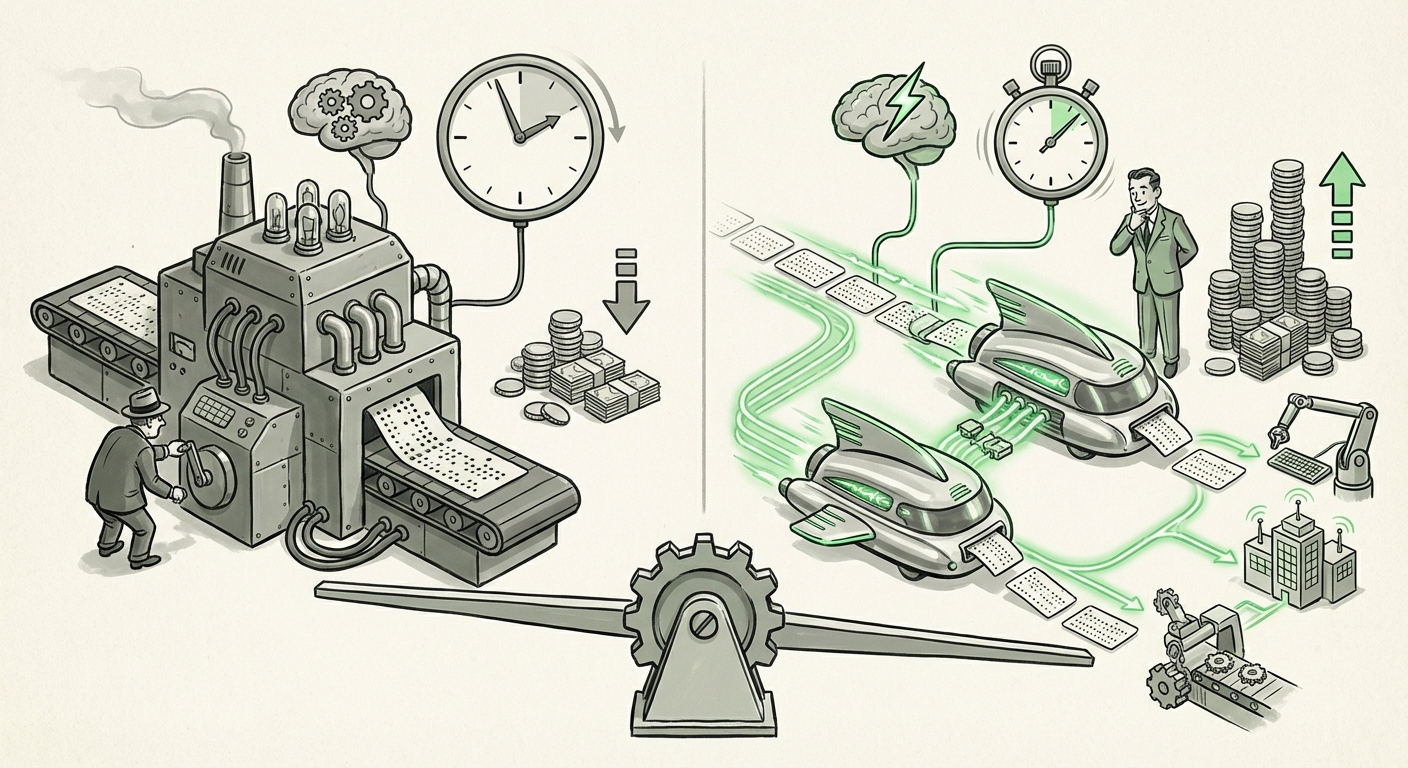
Two stories landed at the same moment, and together they tell a bigger story than either one alone. OpenAI is dealing with a slowdown in the pace of its AI progress. Anthropic has published a threat report warning about how AI systems can be misused. On the surface, one is about engineering, the other about security. Dig a little deeper and they describe the same turning point: artificial intelligence is moving out of the era of pure hype and into the harder, messier era of real-world consequences.
For anyone building a business on top of AI, or planning to, this is the most important shift in years. The rules of the game are changing. Speed is no longer the only thing that matters. Safety, reliability, cost, and trust are climbing the priority list fast. Here is what is happening, why it matters, and how to prepare.
The Slowdown Story: Why Diminishing Returns Change Everything
The headline is uncomfortable for an industry built on relentless momentum. OpenAI's progress has slowed. The steady drumbeat of dramatic leaps that defined the last few years is no longer guaranteed. This does not mean AI has stopped improving. It means the easy gains are behind us, and the next round of advances will be harder, more expensive, and slower to arrive.
Why does this happen? Three forces tend to converge at this stage of any major technology cycle.
1. The data wall
Frontier models have been trained on an enormous share of the high-quality text, code, and images available. There is simply less fresh, clean material left to feed the next leap. Synthetic data and better training methods can help, but they come with their own risks, models learning from models can drift, amplify errors, or flatten out in quality.
2. The compute economics problem
Every step forward now costs dramatically more. Training runs are vastly more expensive than they were a few years ago, and the returns on that spending are getting harder to demonstrate. When each new model costs more to build but delivers a smaller jump in capability, the math starts to strain even for the best-funded labs.
3. The benchmark ceiling
When a system is already good enough to pass most standard tests, improvement becomes invisible on paper and much harder to prove in practice. The remaining gaps, long-horizon reasoning, reliability over hours of work, genuine agency in messy environments, are the hardest problems in the field, not the easiest.
Put simply: the low-hanging fruit has been picked. What remains is the hard work of making AI dependable rather than merely impressive.
What a Slowdown Actually Means for the Market
The instinctive reaction is to read a slowdown as bad news. That reading misses the point. A slower capability race changes the competitive landscape in ways that often favor everyone except the biggest spender.
- Product quality beats raw power. When every major lab is roughly comparable in capability, users pick based on reliability, speed, price, and fit for their workflow. That rewards engineering discipline over headline scores.
- Cost pressure arrives. If the next leap is not imminent, buyers stop paying a premium for a promise. Pricing power shifts toward customers. Expect harder negotiations and more attention to the real return on AI spending.
- Application layers gain leverage. When the underlying models improve slowly, the value moves to the companies that wrap those models into genuinely useful products, workflows, and industry-specific tools. The moat becomes distribution and deep integration, not model access.
- Consolidation and focus. Labs that cannot justify the enormous cost of staying at the frontier will narrow their ambitions or find a niche. The field becomes less about who can build the biggest model and more about who can build the most sustainable one.
For buyers, this is quietly good news. A slower frontier means more time to integrate what already exists, more room to negotiate, and less fear that today's deployment will be obsolete in ninety days.
Anthropic's Threat Report: Security in the Age of Agents
The second storyline is darker but just as important. Anthropic has published a threat report examining how AI systems can be exploited and misused. The details are technical, but the message is straightforward: the more capable and autonomous AI becomes, the more attack surface it creates.
This is the natural consequence of moving from chatbots to agents. A model that only answers questions is relatively contained. A model that reads your files, browses the web, sends emails, writes and runs code, and moves money is something else entirely. Every one of those capabilities is a doorway, and every doorway is a potential way in for a bad actor.
The main risk categories worth understanding
- Prompt injection. A malicious instruction hidden in a web page, document, or email can hijack an AI agent that is simply trying to do its job. If the agent has permissions, it can be tricked into using them.
- Tool misuse and over-permissioning. Agents given broad access to systems, file drives, inboxes, payment tools, code repositories, become highly valuable targets. The convenience of broad access is also the vulnerability.
- Social engineering at scale. AI makes convincing phishing, impersonation, and fraud cheap and multilingual. The bar for launching a believable attack has collapsed.
- Data leakage. Sensitive information can flow into places it should not, logs, third-party services, or outputs that end up in the wrong hands.
- Jailbreaks and guardrail bypass. Users or attackers finding ways around safety controls to get outputs the system was designed to refuse.
The pattern here is not that AI is uniquely dangerous. It is that AI concentrates power in software, and concentrated power always attracts attackers. The report is a warning shot: treat AI agents like you would treat a new employee with system access, not like a clever search box.
Connecting the Dots: The Slowdown and the Threat Report Are the Same Story
Here is the insight that ties these two threads together. A slowdown in capability gains does not slow down adoption. It does the opposite. Companies keep deploying the AI they already have, deeper and deeper into real workflows. The models stop changing every few months, so organizations finally build them into core processes. Agents go from demo to production.
And that is exactly when security matters most. The threat surface grows not because the model got smarter, but because it got embedded. The gap between what AI can do and what it can be trusted to do becomes the defining problem of this phase of the industry.
In other words, the frontier is no longer just capability. It is reliability, safety, and governance. The labs that win the next era may not be the ones with the flashiest benchmark, they may be the ones whose systems businesses feel safe handing the keys to.
Practical Implications for Businesses
If you are running a company, a team, or a product, here is what this moment asks of you.
Stop waiting for the next model
The era of "we'll build it when the better model arrives" is over. The models in front of you are good enough for a large share of real work. The winners will be the organizations that get good at integration, evaluation, and change management, not the ones that wait for a miracle.
Treat AI agents as a security problem from day one
Give agents the minimum access they need. Log what they do. Put human approval in front of irreversible actions like payments, deletions, and external communications. Separate the agent that drafts from the agent that sends. Test for prompt injection the way you would test for other vulnerabilities.
Build an evaluation habit
As gains get smaller, measurement gets more important. You cannot manage what you cannot measure. Build a test set of real tasks from your business, and check every model change against it. This turns vague enthusiasm into defensible decisions.
Focus on cost per outcome
With pricing pressure coming, the metric that matters is not cost per token. It is cost per completed task. Cheap models that need three retries are expensive. Smarter routing between models can cut spend dramatically without hurting quality.
Invest in people, not just tools
The hardest part of AI adoption has never been the technology. It is the workflow redesign, the training, and the trust. A slowdown in model progress is a gift: it gives your people time to actually learn the tools.
What to Watch Next
- Signs of a genuine capability jump. Watch for advances in long-horizon reasoning and reliability rather than benchmark tweaks.
- Security incidents involving agents. The first high-profile breach caused by a hijacked AI agent will reshape procurement rules overnight.
- Pricing moves. Falling prices would confirm that the market is shifting from capability races to value competition.
- Regulation and standards. Expect more formal guidance on agent permissions, disclosure, and accountability as adoption deepens.
- Consolidation among labs. Not everyone can afford to stay at the frontier. Watch for pivots, partnerships, and acquisitions.
The Bottom Line
The AI industry just got a reality check, and reality checks are healthy. A slower capability race forces the field to focus on the things that actually determine whether AI delivers on its promise: reliability, safety, cost, and trust. Anthropic's threat report is a reminder that those things are not automatic. They have to be engineered.
For businesses, this is a window of opportunity. The technology is good enough to build on, stable enough to plan around, and cheap enough to scale, provided you take security seriously and measure results honestly. The companies that treat this phase as a discipline problem, not a hype cycle, will be the ones standing when the next leap finally arrives.