Super-Drug 10 Times Stronger Than Fentanyl Reaches LA: What It Means for AI-Powered Drug Detection
An urgent public health warning has gone out after a super-drug said to be ten times more powerful than fentanyl claimed its first victim in Los Angeles. The alert, issued on October 17, 2026, marks a grim milestone. A substance that potent changes the math on overdose risk. Tiny amounts, amounts too small to see, too small to smell, too small to taste, can kill.
Most coverage of a story like this focuses on the drug itself. But there is a second story underneath it, and that one is about software. The systems that could catch a compound like this before it reaches a street corner, a mail room, or a hospital emergency bay are increasingly run by artificial intelligence. That makes this a public health story and an AI story. Understanding both is the only way to get ahead of what comes next.
What We Know, and Why It Should Worry You
The facts are stark. A drug reported to be ten times stronger than fentanyl has now been linked to a death in Los Angeles. Health officials are treating the case as a warning shot, not an isolated incident. When a substance is that potent, the margin between a dose and a fatal dose becomes razor thin. A pill pressed on a kitchen table, a baggie cut with the wrong powder, a single speck of cross-contamination, any of these can turn a routine night out into an emergency.
For years, fentanyl was the benchmark for "as bad as it gets." A drug ten times stronger resets that benchmark. And here is the part that matters most: the tools we currently use to spot dangerous drugs were built for a slower, less potent, less creative supply chain.
Why a Drug Story Is Really an AI Story
Think about how a dangerous new substance gets found today. Someone dies. A lab runs a test. Weeks later, a report lands on a public health dashboard. By then the batch has already spread.
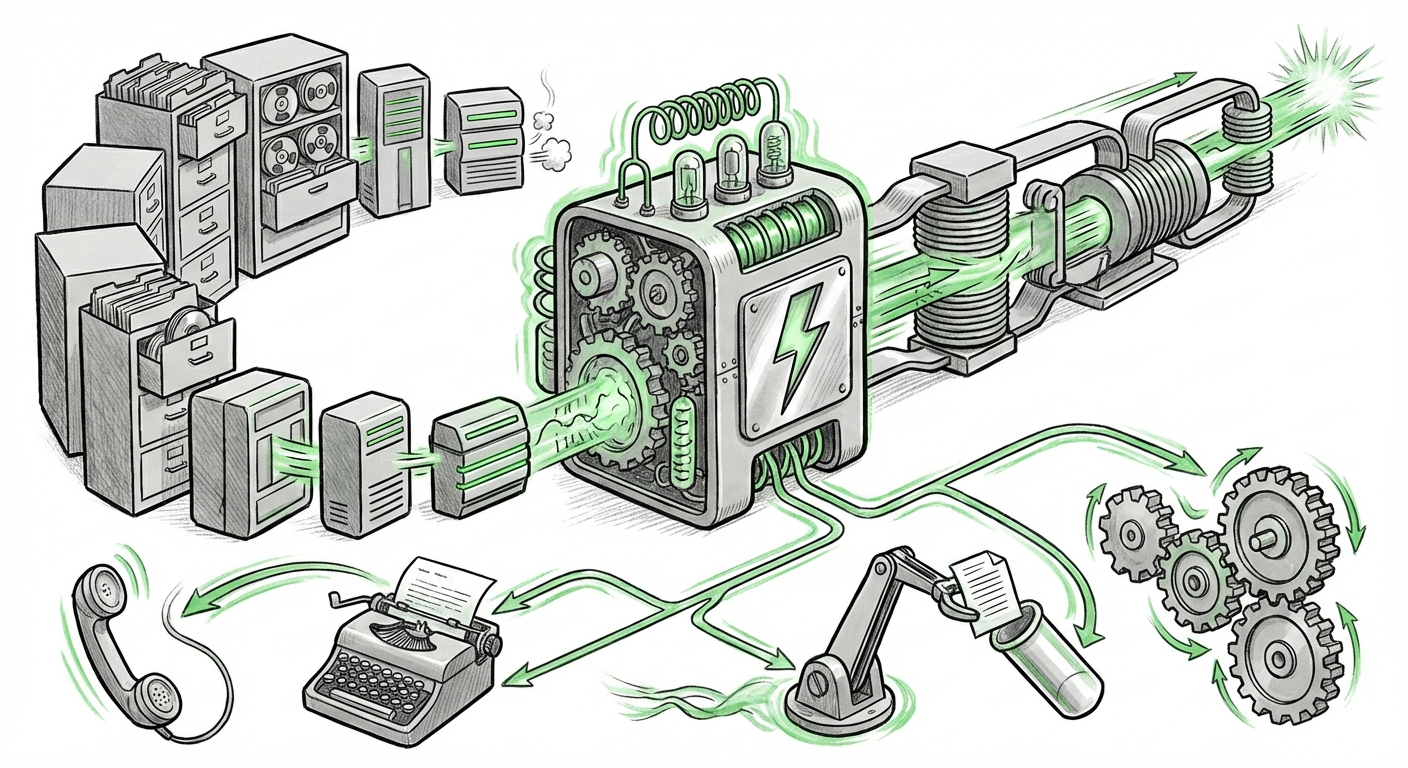
That lag, between the first harm and the first data, is exactly the kind of gap AI is good at closing. Not by magic, and not by replacing chemists or paramedics. By doing the boring, fast, repetitive pattern work that humans cannot do at scale. Reading thousands of lab spectra. Scanning hundreds of thousands of shipping records. Watching emergency call patterns across a city at 3 a.m.
Here is where that plays out in practice.
1. Screening the Mail and the Cargo Stream
Most illicit drugs do not arrive in dramatic busts. They arrive in small parcels, mixed into the enormous flow of everyday commerce. Machine vision systems trained on X-ray and chemical sensor data can flag anomalies in packages far faster than human inspectors. AI risk-scoring can rank which shipments deserve a second look, so that limited human attention goes where it is most needed.
The catch: ultra-potent drugs move in tiny volumes. You do not need a shipping container. A padded envelope is enough. That means detection models have to be tuned for sensitivity, not just throughput, and false positives have real costs for legitimate businesses. Getting that balance right is a design problem, not just a data problem.
2. The Lab Bottleneck Nobody Talks About
Public health labs are the front line of any drug surge, and they are chronically overloaded. When an unknown compound shows up, a technician has to figure out what it is, often by comparing its chemical fingerprint against a library of known substances. If the substance is new, there is no match to find.
This is where machine learning is starting to earn its keep. Models trained on spectral data can predict the structure of an unknown compound from its fingerprint, even when it is not in the library. That can shave days off identification. In an outbreak, days are lives. Every hour a lab saves is an hour a health department gets to push out a warning, seed naloxone into the right neighborhoods, and tell hospitals what to expect.
3. Spotting the Cluster Before the 911 Calls Pile Up
Overdoses rarely happen one at a time. They cluster, same batch, same block, same weekend. AI systems that watch emergency medical data, poison control logs, and wastewater signals can spot those clusters forming in near real time. A spike in a handful of calls across three zip codes might look like noise to a human analyst. To a model trained on historical patterns, it looks like the leading edge of an outbreak.
That early warning is the difference between a public alert on Friday and a public alert on Monday. For a drug this potent, that gap is measured in bodies.
4. Watching the Marketplaces
A growing share of drug sales happens online, on social platforms, in encrypted chat groups, on sites that hide behind layers of obfuscation. Coded language and constantly shifting slang make traditional keyword filters close to useless. Machine learning models that read context, not just words, can catch listings and recruitment posts that older filters miss.
This cuts both ways. The same generative tools that help platforms moderate content can be misused by bad actors to write listings, build storefronts, and move product faster. And beyond the marketplaces, there is a deeper concern: AI-assisted chemistry tools could, in the wrong hands, speed up the search for new compounds that slip past existing tests. That is a governance problem as much as a technical one, and it is not going away.
What AI Cannot Do
It is worth being honest about the limits. No model catches a drug that has not been seen before, at least not right away. No algorithm delivers naloxone or sits with someone in withdrawal. No dashboard undoes a potent supply that is already in circulation.
AI is a speed tool. It shortens the distance between "something bad is happening" and "we know where and what." That is genuinely valuable. But it only pays off if there are people and resources waiting at the other end of the alert, test strips, treatment beds, outreach workers, and honest public messaging. Technology that outruns the public health system it feeds is not progress. It is noise.
What This Means for Businesses
If you run a company, this is not somebody else's problem. Three practical exposures are worth thinking about now.
Workplace Safety and Duty of Care
Any workplace with a mail room, a receiving dock, or a large frontline workforce now has a substance-exposure question. A speck of an ultra-potent powder on a package is a legitimate occupational hazard. Companies need clear handling protocols, protective equipment where appropriate, and training that tells employees what to do if they find something suspicious. The legal and insurance implications of getting this wrong are real.
Logistics and Supply Chain
If your business ships or receives goods, your screening posture matters. That means investing in detection technology and pairing it with human judgment, and being ready for the false-positive problem, where legitimate shipments get flagged. AI screening works best when it is treated as a triage layer, not a verdict.
HR, Benefits, and Support
Employee assistance programs, flexible leave for treatment, and non-punitive reporting cultures all reduce harm. A workforce that is afraid to speak up is a workforce that hides a problem until it becomes a crisis. That is a policy decision, and it is cheaper than the alternative.
Actionable Insights
- Treat detection as a data pipeline, not a gadget. The value comes from connecting lab results, emergency data, and enforcement signals into one loop that actually feeds decisions.
- Fund the lab layer. The most underrated AI win here is faster identification of unknown compounds. It is unglamorous and it saves the most time.
- Keep humans in the loop. Models flag; people decide. Over-automation in a life-or-death context destroys trust fast.
- Set guardrails on dual-use chemistry tools early. The same capability that speeds up legitimate research can speed up misuse. Governance now is cheaper than a cleanup later.
- Update workplace policy this quarter. Mail handling, training, and incident reporting are low-cost moves with high downside protection.
- Demand measurable results from platforms. Ask for removal rates and response times, not press releases.
- Share data across agencies. A model is only as good as the signals it can see. Silos are the biggest technical bottleneck in this space.
The Bigger Picture
Every drug crisis of the last two decades has followed the same shape: a substance gets more potent, the supply gets more unpredictable, and the systems meant to protect people lag behind. Fentanyl taught us that lesson the hard way. A drug ten times stronger, now confirmed in Los Angeles, is the next chapter.
The role of AI in that chapter is not to be the hero. It is to be the early warning system, the thing that turns scattered, faint signals into a clear picture fast enough to act on. That is a modest promise, but it is a real one. The organizations that build those loops now, connecting sensors to labs to hospitals to policy, will be the ones that absorb the next shock instead of being defined by it.
The technology is ready. The question is whether the institutions around it will move at the same speed.