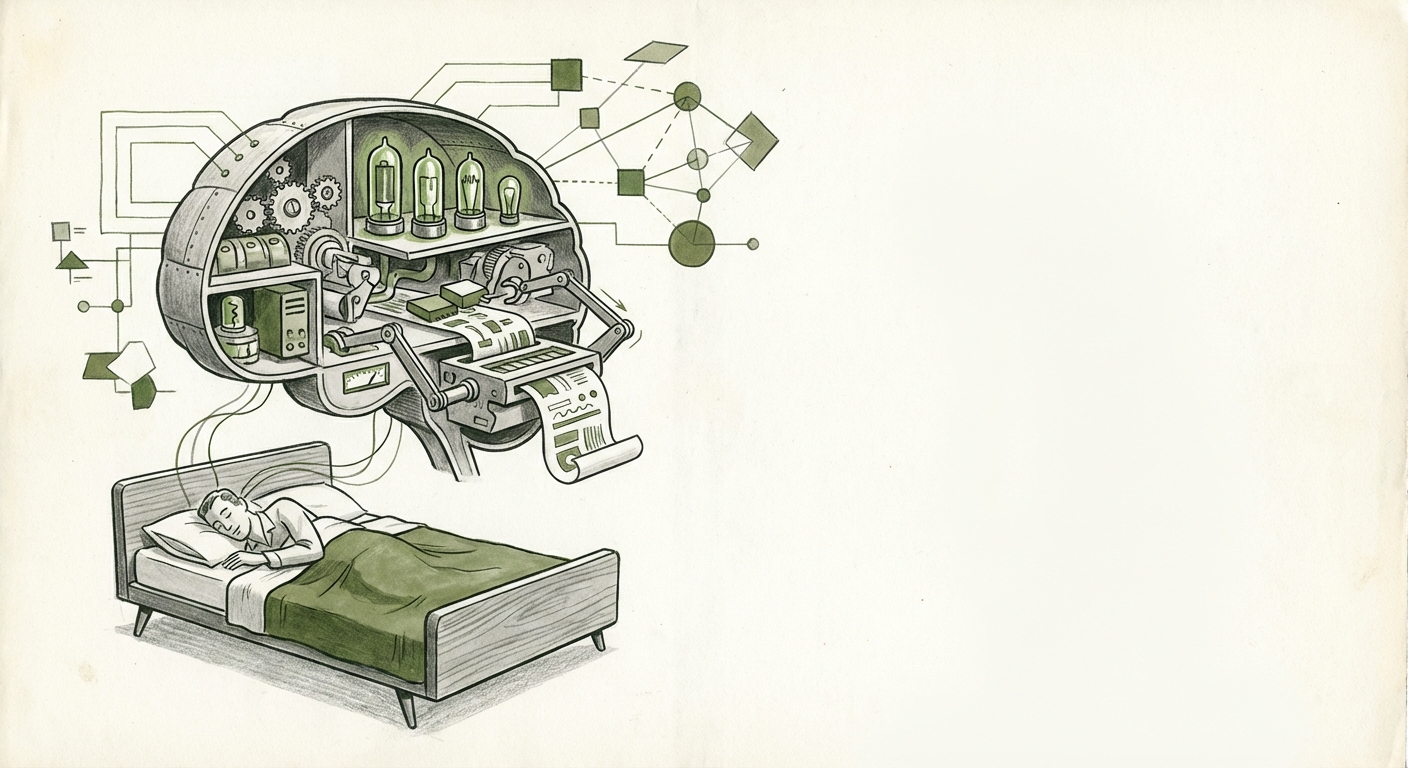
Finally, AI Research You Can Trust: What It Means for the Future of AI
For the last few years, the AI world has had a trust problem. Not a small one, a structural one. Every few weeks a new headline arrives claiming a breakthrough, a leap, a model that "changes everything." And every few weeks, people who actually try to use those results discover that the numbers don't quite hold up when they run the same test. The demo looked great. The paper sounded confident. But the thing didn't survive contact with reality.
That is why the arrival of AI research you can genuinely trust is such a big deal. It sounds boring. It is not. Trustworthy research is the difference between an industry that builds on solid ground and one that builds on sand. It changes what gets funded, what gets shipped, what gets regulated, and what gets believed.
This article breaks down what trustworthy AI research actually looks like, why it took so long to get here, and what it means for the next phase of AI, for builders, for businesses, and for the rest of us.
Why Trust Became the Bottleneck
The AI boom ran on speed. Teams raced to publish, to announce, to claim the top spot on a leaderboard. That race produced real progress, but it also produced a lot of noise.
A few patterns became painfully familiar:
- Results that couldn't be repeated. Someone reports a big gain. Others try the same approach and get something much smaller, or nothing at all.
- Tests that leaked into training. A model performs brilliantly on a benchmark that quietly appeared in its training data. It looks smart. It memorized.
- Cherry-picked examples. The demo shows the best ten outputs instead of the average thousand.
- Missing details. Papers that skip the data, the compute, the settings, or the failure cases, the exact things another researcher needs to check the work.
None of this is unique to AI. Every fast-moving field goes through a messy phase. But AI's mess mattered more, because these systems were being wired into hiring tools, lending decisions, medical triage, customer service, and code that runs in production. When research is shaky, products are shaky. When products are shaky, trust collapses, and once trust collapses, adoption stalls no matter how good the underlying technology is.
So the shift toward research you can actually trust is not an academic tidy-up. It is the moment the field starts acting like an engineering discipline instead of a hype cycle.
What Trustworthy AI Research Actually Looks Like
Trust is not a vibe. It is a set of habits you can check. The research that deserves confidence tends to share a handful of traits.
1. Anyone can reproduce it
The single strongest signal is reproducibility. If a team publishes a result, another independent group should be able to follow the same steps and land in roughly the same place. That means releasing enough detail: the method, the settings, the evaluation setup, and ideally the data or a clear way to rebuild it. Reproducible work is honest work, because it invites people to check.
2. The tests are clean
Good evaluation is paranoid evaluation. Trustworthy research keeps test data separate from training data, uses benchmarks the model has never seen, and reports performance on tasks it wasn't tuned for. It also reports the boring numbers, not just the best case, but the average, the worst case, and how often the system fails.
3. Uncertainty is out in the open
Real science shows its error bars. Trustworthy AI research says "this result varies a lot depending on random seeds" or "this only holds for certain inputs." It flags limitations before a reviewer has to ask. Confidence without caveats is usually a red flag, not a strength.
4. Failures are documented
The most useful part of a good paper is often the section on what went wrong. Where does the model break? Who does it work poorly for? What inputs cause nonsense? Documented failure modes are a gift to anyone who plans to deploy the system, because they map the edge of the safe zone.
5. Independent eyes have looked at it
Peer review is imperfect, but independent scrutiny still catches things a single team misses. Trust grows when results are tested by people who did not build the thing and have no stake in it looking good.
What This Means for the Future of AI
A field that can be trusted changes its own rhythm. Here is what shifts.
Progress gets slower on paper, and faster in practice
When claims have to survive verification, fewer of them get made. The headline count drops. That feels like a slowdown, and some will complain about it. But the gains that do get reported are real, which means the next team can safely build on them instead of wasting a year rediscovering that a result didn't hold. Compounding real progress beats a pile of unverified claims every time.
The scoreboard changes
Leaderboard numbers stop being the whole story. What matters more is how a system performs on messy, real-world tasks, how reliably it behaves, what it costs to run, and where it fails. That is a harder thing to game, and a much better guide for anyone choosing a tool.
Procurement becomes possible
Big organizations move slowly for a reason: they need evidence before they sign contracts. Trustworthy research gives buyers something to point at. Expect AI purchasing to start looking more like buying any other critical infrastructure, with documentation, testing, and accountability attached, rather than a demo and a promise.
Regulation gets a runway
Rules are easier to write when there is something solid to measure. Reliable evaluation methods give regulators a technical foundation instead of a guessing game. That tends to produce rules that are clearer and less arbitrary, better for innovators and safer for the public.
Practical Implications for Businesses
If you run a company that uses or buys AI, this shift hands you leverage. You no longer have to take vendor claims on faith, and you shouldn't. Ask harder questions.
- "How was this tested?" Push for evaluation on data that wasn't part of training. If the answer is vague, treat that as a no.
- "What does it get wrong?" A vendor who can name specific failure modes is far more credible than one who claims there aren't any.
- "Can we check it ourselves?" Ask for a trial on your own data, with your own metrics. Your context is the only benchmark that matters.
- "What's the variance?" A tool that's excellent 70% of the time and useless the rest is a different product than one that's good 95% of the time, even if the averages look the same.
- "Who tested this independently?" Third-party verification is worth more than a glossy case study.
Internally, the same logic applies to your own teams. If you build AI features, adopt the habits of trustworthy research as standard practice: version your data, hold out a real test set, log failure cases, and write down what you know your system can't do. It slows the first release slightly and saves you from a very expensive surprise later.
What It Means for Society
The public does not read AI papers, but the public lives with their consequences. Trustworthy research is how claims about safety, fairness, and reliability become something more than marketing.
When evaluation is honest, the conversation changes from "is this AI amazing?" to "is this AI good enough for this job, and under what conditions?" That is a far more useful debate. It lets people ask concrete questions: Does this system work for everyone, or only for some groups? Is a human checking the output? What happens when it's wrong? Those questions only have answers if the research behind the system is solid enough to answer them.
There is also a quieter benefit: credibility. Every overhyped claim that collapses makes the next real breakthrough harder to sell to a skeptical public. Clean research rebuilds the credibility the field has spent years burning through.
Actionable Insights: What to Do Now
- Treat evidence as a requirement, not a bonus. Before piloting any AI system, ask for reproducible evaluation on held-out data. Make it part of your standard checklist.
- Build your own test set. Even a few hundred real examples from your business will tell you more than any public leaderboard.
- Reward honest reporting inside your company. The person who documents a limitation is more valuable than the one who hides it.
- Watch what happens after the announcement. A claim that survives independent replication is worth ten that don't. Give results time to settle before you rebuild your roadmap around them.
- Separate "impressive" from "dependable." These are different properties, and only one of them keeps your operations running.
What Could Still Go Wrong
Trust is not a finish line. Standards can slip back into marketing once attention moves on. Evaluation can become a checkbox instead of a genuine test. Well-documented research can still be deployed carelessly. And the pressure to ship fast never really disappears, it just changes shape.
The safeguard is culture, not ceremony. Trustworthy research survives only if the people funding it, publishing it, buying it, and building on it keep demanding the same things: show your work, show your failures, and let someone else check.
The Bottom Line
AI research you can trust is not a small technical improvement. It is the moment the field starts to mature, where claims become checkable, progress becomes cumulative, and buying decisions become rational instead of hopeful. The hype will get a little quieter. The results will get a lot more useful. For anyone building on AI, that trade is an easy one to take.