Disney Hires Most of Character.AI's Workforce: What This Means for the Future of AI
Disney has agreed to hire the majority of Character.AI's workforce. That single line, dated October 18, 2026, tells us something big: the most valuable part of an AI company is not always its code, its servers, or its app. Sometimes it is the people who built and ran the thing.
This is not a story about a product being shut down or a brand being folded into a giant media library. It is a story about where AI talent is going, who wants it, and why the companies with the deepest libraries of characters and stories are now racing to own the human teams that know how to make AI feel alive. For anyone building, buying, or using AI, this deal is a preview of the next phase.
The Deal in Plain Terms
What we know is straightforward. Disney has agreed to bring on the majority of Character.AI's employees. Character.AI built a platform where users chat with AI characters, fictional personalities, companions, role-play partners, and it became one of the best-known examples of consumer-facing AI entertainment.
When a major studio hires the bulk of an AI startup's team, it usually signals three things at once:
- Talent is the real asset. A team that has shipped a consumer AI product at scale has learned things you cannot buy in a license, moderation at scale, latency under load, character consistency, user retention, and the strange psychology of people forming bonds with software.
- The buyer wants the capability, not the company. Hiring the people transfers know-how quickly, without waiting years to build a team from scratch.
- The startup's original mission is changing shape. When most of the staff moves, the independent company that was there before is a different organization afterward.
Specifics beyond the staffing agreement, how many people, which roles, what happens to the existing product roadmap, are not part of what has been confirmed. That gap matters, because the open questions are exactly the ones businesses should be asking about their own AI plans.
Why a Studio Wants an AI Character Team
Media companies sit on the world's largest collections of characters people already love. Those characters are the natural raw material for AI conversation, games, education, and interactive storytelling. But owning a beloved character and knowing how to make it talk well are two very different skills.
That is the gap this kind of hiring fills. A studio has the intellectual property, the legal machinery, the marketing reach, and the audience. What it often lacks is a team that has spent years learning the craft of AI conversation design: how to keep a character in voice across a thousand messages, how to handle a user who pushes boundaries, how to make an experience feel warm instead of robotic.
The "acqui-hire" becomes the default exit
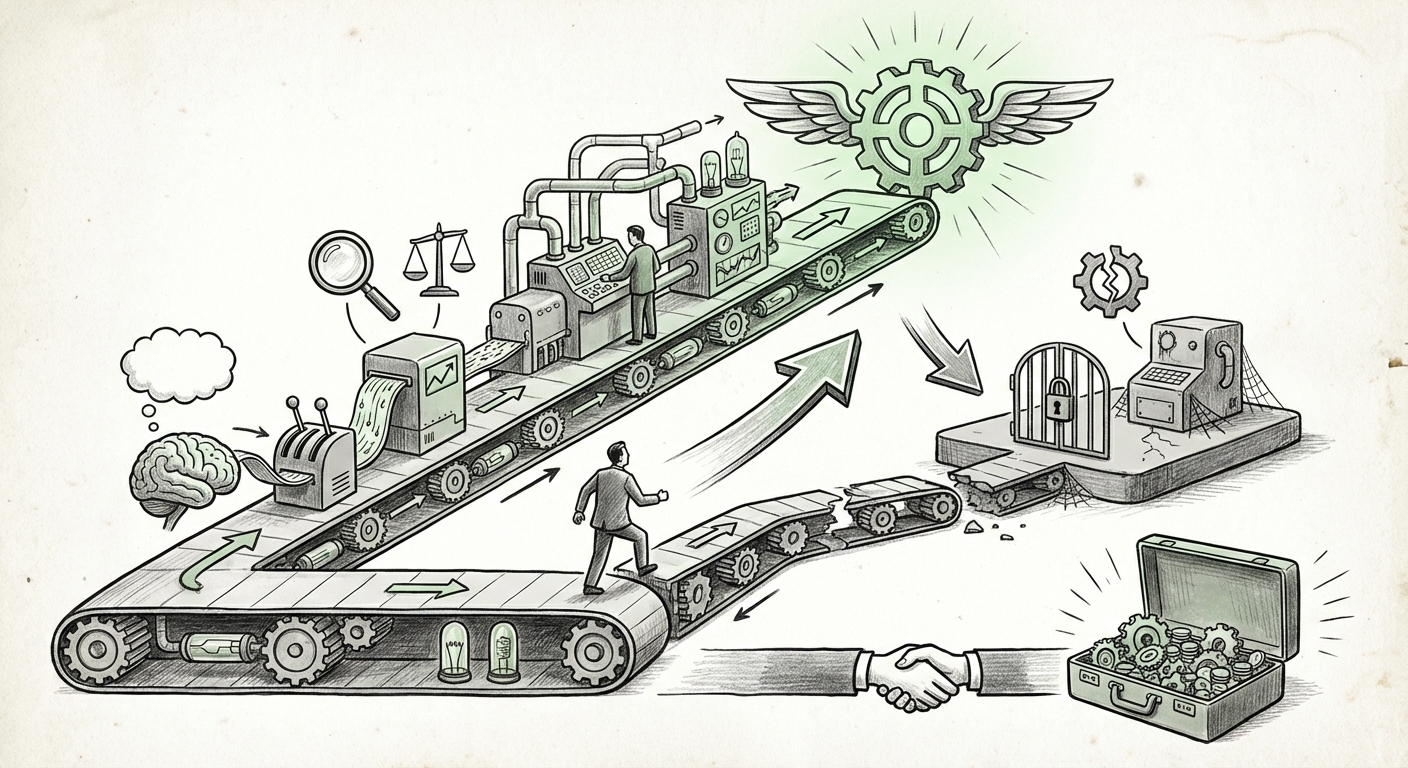
For years, AI startups raised money on the promise of building a standalone business. What is becoming clearer is that many of them will end up as talent pipelines for larger companies. That is not a failure. It is a market signal. The value of a strong applied-AI team is high enough that big companies would rather hire it than grow it.
Founders should plan for this. If your realistic best outcome is a team transfer into a larger organization, then your engineering culture, your documentation, your safety practices, and your ability to hand off a codebase cleanly all become part of your value. The messy startup that "only we understand" is worth less than the disciplined one that a big partner could absorb in a quarter.
The Safety Question Hiding in the Headlines
There is a reason character-based AI is one of the most scrutinized corners of the industry. When people talk to a chatbot that feels like a friend, a crush, or a mentor, the emotional stakes go up. When those users include teenagers, the scrutiny goes up further.
Bringing this capability inside a family-oriented entertainment company changes the risk profile on both sides. On one hand, a large studio has the legal teams, moderation staff, and brand-protection instincts to build safer guardrails. On the other hand, putting emotionally engaging AI characters in front of a massive global audience, many of them young, creates exactly the kind of exposure that regulators and parents are watching for.
Expect the following to become standard practice, not optional extras:
- Age-aware design. Different conversational boundaries, memory limits, and escalation paths for minors versus adults.
- Clear labeling. Users should never be confused about whether they are talking to a person or a character powered by AI.
- Time and dependency safeguards. Prompts, breaks, and warnings for users who show signs of unhealthy attachment.
- Auditable moderation. Logs, review processes, and clear rules for what a character will and will not discuss.
The company that can show it takes these seriously will win trust faster than the one that only ships features.
What This Means for How AI Will Be Used
1. Entertainment becomes a conversation, not a broadcast
The old model was one-way: a studio made a story, you watched it. The new model is two-way. Fans do not just consume a character; they talk to it, and the character responds in a way that feels personal. That shift turns passive audiences into participants and opens new formats, interactive adventures, personalized side stories, character-driven learning, and fan experiences that never replay the same way twice.
For businesses outside entertainment, the lesson travels well. Any brand with a distinctive voice, a sports team, a toy company, a museum, an educational publisher, can now turn that voice into a conversational experience. The question is no longer "can we build a chatbot?" It is "do we have a character worth talking to, and a team that can keep it in character?"
2. Talent is the moat, and it moves
Models are increasingly rented, not owned. Compute is bought. What is hard to replicate is a group of people who have already shipped AI products to millions and learned from the failures. That makes experienced applied-AI teams the scarcest resource in the industry, and it means big companies will keep buying teams instead of building them.
For employees, this is leverage. For small companies, it is a warning: if your best people are your product, retention and equity design matter more than your roadmap slide.
3. IP owners are taking control of the AI layer
When studios license characters to outside AI developers, they give up some control over tone and safety. When they hire the team and build in-house, they keep it. Watch for more rights holders, publishers, sports leagues, toy makers, to move AI character work inside their own walls. That will push independent platforms toward original characters, niche communities, or enterprise tools.
4. The startup playbook is being rewritten
Building a consumer AI app is easier than ever. Building one that survives is not. The winners will be either fast enough to reach huge scale in a defensible niche, or disciplined enough to become an attractive acquisition target for a company that wants the team. Everyone else should plan a lean path to profitability from year one.
Practical Advice for Businesses Watching This Space
Audit your character risk. If you deploy conversational AI with any personality, write down what it will never say, who it should be careful with, and how you will detect problems. Do this before launch, not after a headline.
Buy the team, not just the tool. If AI conversation is core to your business, invest in people who understand the craft. A plug-in vendor can give you a demo. A team gives you judgment.
Treat handoff as a design goal. Clean documentation, clear ownership, and readable code are what make your AI team valuable to a larger partner. Sloppy systems are hard to sell.
Watch the minors question closely. Any product that talks to children will be regulated first and hardest. Designing for the strictest audience from day one saves years of rework.
Expect consolidation to continue. This agreement will not be the last time a big company absorbs an AI team wholesale. Build your strategy around that reality rather than treating it as a surprise.
The Bigger Picture
The most important thing about Disney agreeing to hire the majority of Character.AI's workforce is not the headline number or the org chart. It is the direction of travel. AI is moving out of the lab and into the hands of companies whose real expertise is storytelling, brand, and audience. That is where AI meets culture, and where the effects will be felt by the most people.
It also confirms something the industry has quietly known for a while: the humans are the hard part. Models can be swapped. Products can be rebuilt. A team that has learned how to make AI feel human, and how to keep it safe while doing so, is the asset everyone wants and few can create quickly.
For the rest of us, the takeaway is practical. If you use AI, expect the conversational experiences you encounter to get warmer, more characterful, and more carefully managed. If you build with AI, treat your people as your product. And if you invest in AI, start valuing the teams behind the tools as much as the tools themselves.