The Elizabeth Holmes Documentary Everyone Is Watching, and What It Says About AI's Trust Problem
There is a strange irony at the heart of the documentary You Can See Everything, the Elizabeth Holmes film that has become the thing everyone is talking about right now. The title sounds like a promise of total honesty. A window into the truth. And yet the story it tells is about a company that spent years hiding what was really going on behind a curtain of secrecy, confidence, and beautifully produced demos.
That story is more than a decade old in its details. But the pattern it exposes is not old at all. It is happening again, right now, across the AI industry, and the documentary is landing at exactly the moment when businesses, boards, and ordinary users are being asked to trust systems they cannot see inside.
This is not a story about one founder. It is a story about what happens when storytelling outruns evidence. And in the age of generative AI, that gap has never been easier to create, or more expensive to ignore.
Why a Blood-Testing Story Matters to the AI Industry
On the surface, a documentary about a failed health-tech startup has nothing to do with large language models, copilots, or agents. Look a little closer and the parallels are uncomfortable.
The original promise was simple and magnetic: a revolutionary device that could do in minutes what normally took days. It was a claim that made investors lean in, journalists write glowing profiles, and partners sign deals. The problem was that the machine did not do what the pitch said it did. When outside experts finally got a clear look, the gap between the story and the science collapsed the whole thing.
Now swap the blood test for an AI model. A vendor shows you a demo that writes contracts, answers customers, or reviews medical scans. It looks flawless. It is fast. It is confident. And the people in the room nod along, because challenging it would mean admitting they do not fully understand it.
That is the same room. Only the machine has changed.
Three Patterns That Keep Repeating
If you strip the Theranos story down to its mechanics, you find three patterns that show up in almost every technology hype cycle, and all three are alive in AI today.
1. The demo is not the product
A demo is a performance. It is tightly scripted, carefully staged, and usually run by the person who built the thing. Production is messy. Users ask strange questions. Data is dirty. Networks fail. The gap between a fifteen-minute demo and a two-year deployment is where most technology budgets go to die.
In AI, this gap is wider than usual. A model that amazes you on ten hand-picked prompts can fall apart on the eleventh. Outputs shift between runs. A system that works beautifully in English can break down in a dialect, a legal context, or a noisy call center.
2. The board believes the narrative, not the numbers
Storytelling is a legitimate business skill. Founders have to sell a vision before the product exists, that is how anything new gets funded. The failure mode is when the vision becomes the only evidence anyone asks for. When a board is more fluent in the pitch deck than in the error logs, scrutiny quietly disappears.
This is a live risk with AI. Few executives can read an evaluation report. Fewer still can tell a well-designed benchmark from a marketing slide. That knowledge gap creates a vacuum, and in a vacuum, charisma wins.
3. Secrecy gets sold as competitive advantage
"We can't show you how it works, that's our secret sauce." It sounds reasonable. It is also the sentence that lets problems hide for years. For AI vendors, some secrecy is legitimate, especially around training data and model weights. But when secrecy extends to basic performance claims, accuracy rates, and failure modes, buyers are being asked to trust a black box with their brand on it.
What Makes AI Different, and Harder
Traditional software fails loudly. A button does not work. A page does not load. You know immediately, and you can fix it. AI systems fail quietly. They produce a wrong answer with perfect grammar and total confidence. They hallucinate a citation that looks real. They agree with a false premise because agreeing is what the training rewarded.
That makes AI far harder to audit than a blood-testing device. A machine that gives wrong numbers can be compared against a lab. A model that gives wrong advice has no obvious reference point. You have to build one.
There is also the matter of consistency. Ask the same question twice and you may get two different answers. That is not a bug in every case, it is a property of how these systems generate language, but it makes quality assurance a completely different discipline than traditional software testing. You are no longer checking that a function returns the right value. You are sampling a distribution and hoping the tail is not dangerous.
The Verification Layer: Where Trust Actually Gets Built
Here is the most useful lesson the documentary offers the AI industry: trust is not a feeling, it is a process. The companies that win the next few years will not be the ones with the best story. They will be the ones with the best evidence.
That evidence does not appear by accident. It has to be engineered.
Build an evaluation suite before you buy
Do not evaluate a model on the vendor's prompts. Build your own. Take two hundred real examples from your own business, real customer emails, real support tickets, real documents, and run the system against them. Score the results. Look at the failures, not the average. The average flatters every model; the failures tell you whether you can ship.
Demand transparency where it matters
You do not need to see the weights. You do need to see how the vendor measures quality, what their known failure modes are, how they handle data, and what happens when the model is wrong. A vendor who cannot answer those questions is telling you something important about their maturity.
Keep a human in the loop for high-stakes work
AI is genuinely excellent at drafting, summarizing, triaging, and suggesting. It is far less reliable as a final authority in medicine, law, finance, or safety. The rule of thumb is simple: the higher the cost of being wrong, the more human review the workflow needs.
Instrument production from day one
Most AI failures are invisible until a customer complains. Log model outputs. Track thumbs-down rates. Sample conversations weekly. Set a threshold that triggers a review. If you cannot measure how your AI is performing today, you have no idea whether it will perform tomorrow.
Have a kill switch and the courage to use it
Every deployment needs an owner, a rollback plan, and a written definition of what "too wrong" looks like. The organizations that survive high-profile AI failures will be the ones that shut things down early, cheaply, and without a fight.
The Bigger Shift: AI Auditing Becomes an Industry
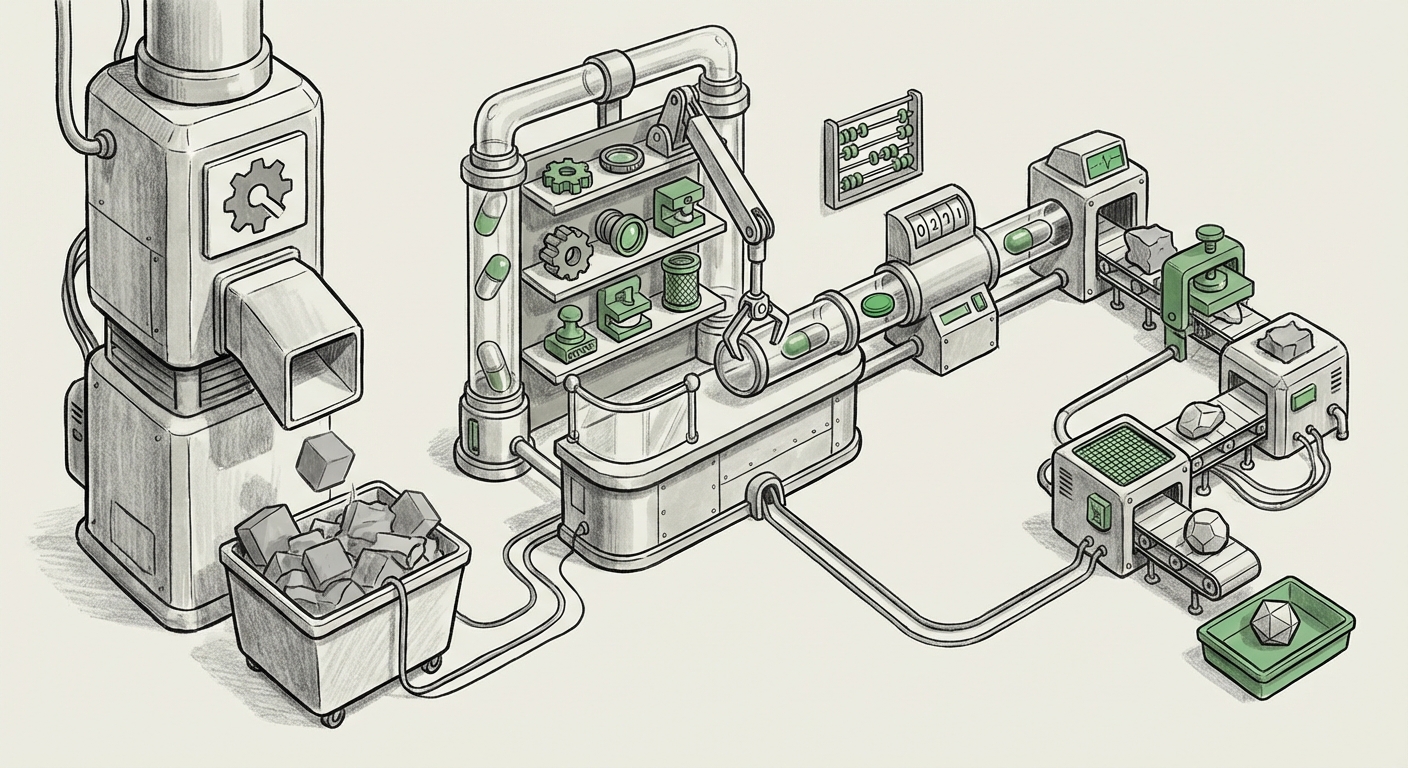
Look past this one documentary and a larger trend is forming. The AI market is splitting into two layers. The first layer builds models. The second layer checks them, evaluating, red-teaming, monitoring, watermarking, and certifying.
That second layer is where a lot of the durable value will sit. Every industry that scaled fast eventually grew an inspection culture: food safety, aviation, finance, cybersecurity. AI is heading the same way, not because regulators are forcing it, but because businesses keep getting burned by systems they could not verify.
Buyers are starting to ask for the equivalent of a safety data sheet. Procurement teams want to know which model version is running, what data it saw, how it was tested, and what it does when it is unsure. Vendors who answer those questions clearly will win deals faster than vendors with a slightly better benchmark.
What This Means for Society
There is a second, more human reason this story resonates. People are tired of being told that something works and finding out later that nobody checked. That fatigue is now pointed squarely at AI.
Surveys and public debate keep circling the same theme: the public is not really afraid of AI being powerful. They are afraid of AI being oversold and under-verified, that a system will make a decision about a loan, a job application, a medical referral, or a criminal case, and no one will be able to explain why.
The antidote is not fewer AI tools. It is more visible evidence. The companies that treat explainability and testing as core features, not compliance chores, will build the kind of trust that takes years to earn and minutes to lose.
Practical Takeaways
- Treat every demo as a hypothesis. Write down what you saw, then design a test that could prove it wrong.
- Ask the uncomfortable question early. "What percentage of the time is this wrong, and how do you know?"
- Build your own benchmark set. Real data beats polished sample data every time.
- Fund the boring work. Evaluation, logging, and monitoring are not glamorous, but they are the difference between a pilot and a disaster.
- Train your leadership. Executives do not need to build models, but they need enough fluency to challenge a claim.
- Reward people who surface bad news. The warning signs usually exist long before the collapse. The culture decides whether anyone speaks up.
Conclusion: Show Your Work
The most striking thing about You Can See Everything is not the story it retells. It is the timing. We are in the middle of the largest deployment of a genuinely uncertain technology in modern business history, and the main thing standing between AI and a similar reckoning is whether the people building and buying it are willing to be examined.
The future of AI will not be decided by who has the flashiest model. It will be decided by who can prove their system works, who can say clearly where it fails, and who can be trusted when the demo ends and reality begins.
The title of that documentary is a good standard for the whole industry. Not because everything should be visible to everyone, but because everything important should be visible to someone whose job is to check.