HoloTab by HCompany: What an AI Browser Companion Means for the Future of AI
HCompany has introduced HoloTab, and it comes with a simple, telling tagline: your AI browser companion. That phrase does a lot of work. It is not "an AI search engine." It is not "a chatbot in a sidebar." It is a companion, which means it is supposed to be with you while you work, not somewhere you go and then leave.
That small wording shift points to something much bigger than one product. It signals where the whole AI industry is heading next: out of the chat box and into the tools people already live in every day. And no tool matters more than the web browser.
This article breaks down what HoloTab represents, why the browser has become the most important battleground in AI right now, and what businesses and everyday users should do about it.
Why the Browser Became the Front Door for AI
Think about where your real work happens. Not in a single app, in a browser. Your email. Your calendar. Your documents. Your bank. Your company's project tracker. Your research. Most people spend their whole day moving between tabs, and each tab holds a different piece of the puzzle.
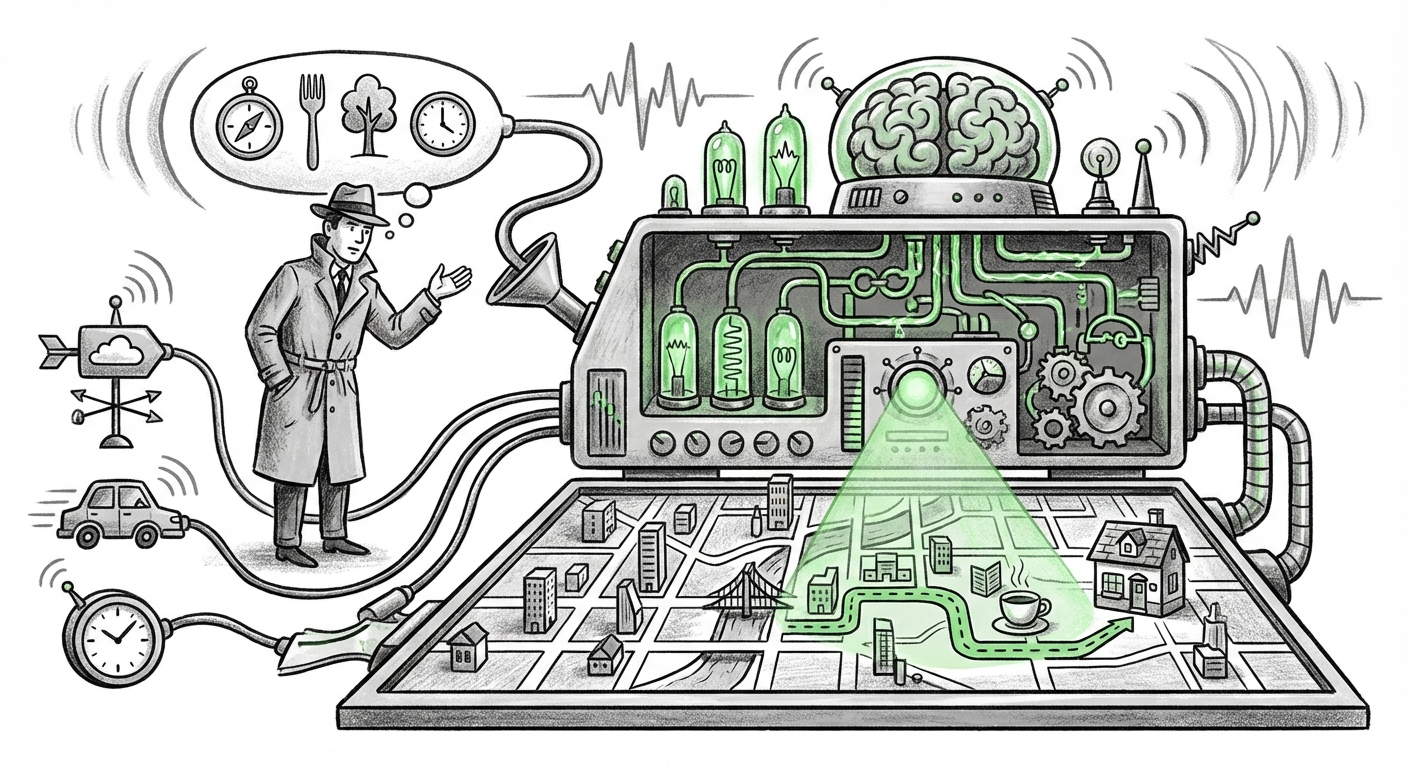
That makes the browser the richest place to put an AI assistant. A standalone chatbot only knows what you paste into it. An AI that lives inside the browser can see the page you are on, the task you are midway through, and the thing you were about to look up. That context is the difference between a tool that needs constant instructions and one that can actually help.
The industry has spent the last few years learning this lesson the hard way. Chatbots are impressive in demos but easy to forget in real life, because switching to a separate window is friction. Friction is where adoption dies. HoloTab's framing, a companion, not a destination, is an attempt to remove that friction entirely.
From "Chat" to "Companion": The Agentic Shift
The most important change in AI over the past two years is not that models got smarter. It is that they started to do things instead of just say things. This is the move from assistants to agents.
An assistant answers. An agent acts. It opens the page, fills the form, compares the options, drafts the reply, and checks the result. When that capability is placed inside a browser, a place that already has your logins, your session state, and your open tasks, the number of things an AI can do on your behalf grows dramatically.
That is the promise HoloTab is gesturing at, and it is the direction the entire category is moving. A "browser companion" is a bet that the next generation of AI will be judged not by how well it writes a paragraph, but by how much of your clicking it can take off your hands.
Three layers of a good browser companion
- Context: It understands what is on the page and what you are trying to do on it.
- Memory: It carries what it learned from earlier in your session, and earlier in the week, so you are not repeating yourself.
- Action: It can take steps in the browser, not just talk about them.
Products will rise or fall on how well they combine these three. Context without action is a smarter search box. Action without context is a dangerous robot. Companions that get all three right will feel less like software and more like a competent colleague sitting next to you.
What This Means for the Future of AI
1. The interface disappears into the workflow
For years, the default AI experience was a text box on a blank page. The next phase is the opposite: AI with no obvious interface at all, woven into whatever you are already doing. HoloTab's positioning is a clear early signal of this. Expect "open a chat with the AI" to feel as dated as opening a separate app to check the weather.
This matters because it changes what "using AI" even means. It stops being a task you set aside time for and becomes a background capability, always present, quietly useful, called on only when needed.
2. The browser becomes the most valuable real estate in tech
If the browser is where AI meets the user, then control of the browser becomes control of the relationship. That is why so much energy is flowing into this layer. Whoever owns the companion owns the moment of decision, which product gets recommended, which answer gets surfaced, which task gets automated.
For HCompany, launching a dedicated companion is a way to claim a piece of that relationship without having to build an entire browser from scratch. It is a targeted play at the highest-value layer of the stack.
3. Personal AI gets a memory and an identity
A companion that follows you across tabs accumulates something a chatbot never had: a long-running picture of how you work. Used well, that is enormously valuable, better suggestions, fewer repeated explanations, real personalization. Used carelessly, it is a privacy problem in a trench coat. The industry's next big policy fight will be about who holds that memory and what they are allowed to do with it.
4. Websites will be built for two audiences
Once AI agents start browsing on people's behalf, every website has two visitors: the human and the agent. Pages optimized only for human eyes, dense menus, pop-ups, multi-step checkouts, will become a competitive disadvantage. Expect a new design discipline: making sites that agents can read, trust, and complete tasks on. This is the natural successor to search engine optimization, and it will reshape marketing budgets within a few years.
Practical Implications for Businesses
HoloTab itself is one product, but the trend it represents touches nearly every company. Here is where the impact will be felt first.
Discovery and marketing shift again
If people ask a companion to "find me the best option," the companion, not the user, decides which links get opened. Brands that relied on grabbing attention with a flashy page will need to make sure their information is clear, structured, and easy for an AI to summarize accurately. Being findable is no longer enough; you have to be quotable and correct when an AI repeats you.
Software must be agent-friendly
Internal tools and customer portals built for human clicking may break or confuse an AI companion. Companies should start asking a new question in every product review: could a smart assistant complete this task on a customer's behalf, safely? If the answer is no, that is now a gap in the customer experience, not just an engineering detail.
Security and permission models need a rethink
An AI acting inside your browser is acting with your credentials. That raises the stakes on permission design. Businesses should plan for a world where employees use AI companions daily, and should set clear rules about what those companions are allowed to touch, especially in finance, HR, and legal workflows.
Training and job design
The most valuable skill is shifting from "doing the task" to "directing and checking the thing that does the task." Teams will need light, practical training on how to write good instructions, verify outputs, and know when to stop trusting automation. This is less about deep technical skill and more about good judgment.
Practical Implications for Society
For everyday users, the upside is obvious: less busywork. Comparing insurance plans, filling out forms, rescheduling a flight, tracking down a document, these are exactly the chores a browser companion is built for, and they eat hours of ordinary people's lives.
The risks are equally clear, and they are mostly about trust:
- Over-reliance. If the companion always answers, people may stop checking. The skill of noticing when an AI is confidently wrong becomes essential.
- Permission creep. Convenience comes from access. The more a companion can do, the more it must be trusted with.
- Manipulation risk. A tool that shapes what you see while you browse has real power over your choices. Clear labeling and user control are not optional extras.
- The access gap. Paid AI companions could widen the divide between people who have a digital helper and people who do not. Free tiers and public access will matter.
What to Watch Next
- Does the companion act, or just suggest? Read-only assistance is safe but limited. Real action is where the value is, and where the risk is.
- How is memory handled? Can you see it, edit it, delete it? That is the clearest signal of whether a company respects users.
- Where do the boundaries sit? Which sites and tasks the companion refuses to touch will reveal a lot about its design philosophy.
- How do publishers and merchants respond? If AI companions change how traffic arrives, expect pushback, partnerships, and new standards.
Actionable Next Steps
For business leaders
- Audit your main customer journeys and ask whether an AI agent could complete them without confusion.
- Clean up your product and pricing information so an AI can summarize it correctly.
- Write a short internal policy on AI companions in the workplace, what they may access, and what needs human sign-off.
- Assign one person to track this category. It will move fast.
For everyday users
- Try a companion on a low-stakes task first, research, comparison, drafting, before trusting it with anything financial.
- Check the settings for what it remembers and what it can access.
- Keep verifying. Speed is the benefit; judgment is still yours.
Conclusion: The Companion Is the Next Platform
HoloTab is a single launch, but it lands on a much larger story. The AI industry has spent years trying to get people to come to it. The next phase is about going to where people already are, and there is no place people are more than the browser.
That is why "your AI browser companion" is more than a tagline. It is a description of the next platform shift. The winners in this phase will not be the companies with the biggest models. They will be the ones that earn a place beside the user, task after task, tab after tab, and prove they can be trusted with what they see there.
The browser has been a window on the web for thirty years. HoloTab and the products that follow are turning it into something more active: a place where the web starts working for you. How well that goes will depend less on the technology than on the trust we choose to place in it.