Identifying Interactions at Scale for LLMs: The Key to Trustworthy AI
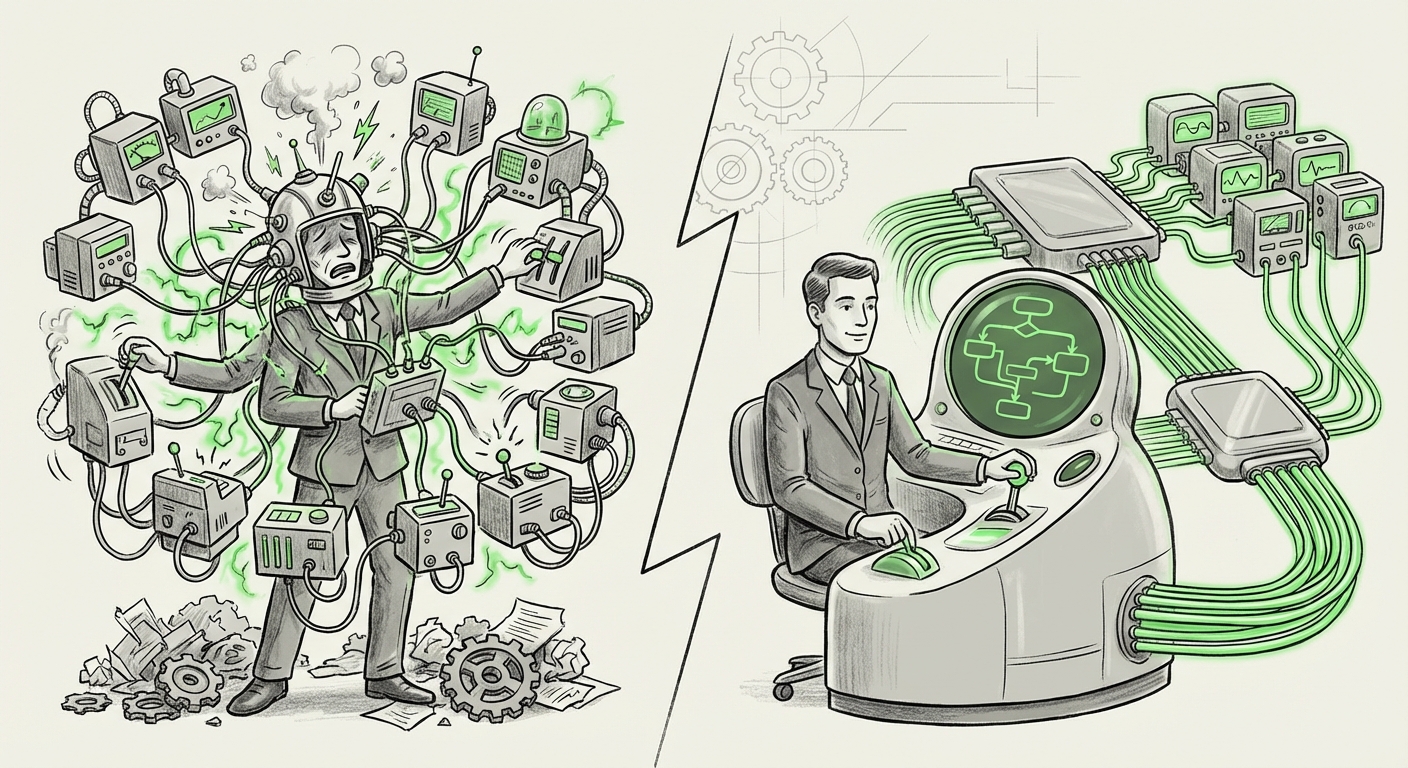
Large language models (LLMs) have moved from research labs into everyday business tools. They write emails, answer customer questions, and even help doctors and lawyers. But there is a hidden problem. These models are so complex that small changes in what you ask them can cause huge, unpredictable changes in what they say. A new focus on identifying interactions at scale for LLMs is emerging as the critical next step for making AI reliable, safe, and useful for everyone.
In March 2026, the conversation around LLM evaluation and interpretability is shifting. Instead of just measuring overall accuracy or fluency, researchers and engineers are now asking: How do different parts of an input, words, phrases, context, examples, interact to shape the model’s output? And can we find these interactions fast enough to keep up with models that have billions or trillions of parameters? This article breaks down what this trend means, why it matters, and how businesses can prepare.
The Hidden Complexity of LLM Interactions
Imagine you ask an LLM: “Write a short story about a robot that learns to paint.” The model produces something creative and coherent. Now change one word: “Write a short story about a robot that learns to paint badly.” The output might be completely different, maybe the robot becomes a tragic figure rather than a success. That single word “badly” interacted with the rest of the prompt to flip the meaning. In simple systems, effects add up. In LLMs, effects multiply and combine in surprising ways.
These are called interactions. In statistics, an interaction happens when the effect of one variable depends on the level of another. For LLMs, interactions can occur between words in a prompt, between different prompt components (instructions, examples, formatting), between the model’s internal features, or even between the model and the context of its use. At small scale, you can test many combinations by hand. At the scale of modern LLMs, where a single prompt can have thousands of tokens and the model has hundreds of billions of parameters, manual testing is impossible.
Identifying interactions at scale means building automated methods to find which combinations of inputs cause unexpected, risky, or valuable behaviors. Without this, we are flying blind. A model might work perfectly in testing but fail in production because a customer’s phrasing triggers a hidden interaction. Or a safety filter might be bypassed by a clever combination of words that individually seem harmless.
Why Scale Changes Everything
Scaling up LLMs has given us remarkable capabilities. But it has also created a combinatorial explosion of possible interactions. Consider a prompt with just 10 binary features (e.g., “polite vs. rude,” “short vs. long,” “formal vs. casual”). That yields over 1,000 combinations. With 20 features, it’s over a million. Modern prompts have far more than 20 meaningful features, and the model’s internal representations add many more dimensions.
At the same time, the consequences of missing an interaction are growing. LLMs are now used in high-stakes areas: healthcare triage, legal document review, financial advice, and autonomous customer service. A single undetected interaction could lead to harmful advice, biased decisions, or security breaches. Regulators are starting to demand evidence that AI systems are tested for edge cases and combinatorial risks. Identifying interactions at scale is no longer a nice-to-have, it is becoming a compliance and safety requirement.
The good news is that new techniques are making it possible. Instead of brute-force testing every combination, researchers are using ideas from causal inference, feature attribution, and active learning. They build statistical models of how features interact, then strategically sample the most informative combinations. Some methods use the LLM itself to generate diverse test cases, then analyze patterns of failure. Others probe the model’s internal neurons to see which features co-activate. The goal is the same: find the dangerous or valuable interactions before they cause harm.
Methods for Identifying Interactions at Scale
While no single method solves everything, several approaches are converging to make interaction detection practical for real-world LLM deployments.
1. Combinatorial Testing with Smart Sampling
Traditional software testing uses combinatorial methods to cover pairs or triples of features. For LLMs, we can adapt these ideas. Instead of testing all possible prompts, we identify key dimensions (tone, topic, format, persona) and generate a small set of prompts that cover all pairwise interactions. Then we use the model’s outputs to flag surprising results. This is much more efficient than random testing and can be automated.
2. Feature Attribution and Shapley Values
Feature attribution methods assign credit to each part of an input. Shapley values, borrowed from game theory, can estimate the contribution of each word or phrase. When two features have a synergy (their combined effect is greater than the sum of individual effects), that’s an interaction. At scale, approximations and sampling make Shapley-style analysis feasible for LLM prompts.
3. Internal Probing and Sparse Autoencoders
Inside an LLM, features are represented as patterns of neuron activations. Sparse autoencoders can break down these activations into human-interpretable features. By tracking which features fire together, researchers can identify internal interactions. For example, a “sarcasm” feature might interact with a “politeness” feature to produce unexpected rudeness. This helps in debugging and safety monitoring.
4. Automated Red-Teaming and Adversarial Search
Red-teaming, deliberately trying to make a model fail, can be scaled with search algorithms. Instead of hand-crafting attacks, an automated system explores combinations of prompt elements to find those that trigger harmful outputs. The system learns from each attempt, focusing on promising regions of the interaction space. This is especially useful for finding jailbreaks or bias triggers.
These methods are not perfect, but they represent a major shift. The field is moving from “test a few examples” to “systematically map the interaction landscape.” And as models get larger, the methods must get smarter, not just faster.
What This Means for Businesses
For companies using LLMs, identifying interactions at scale has direct practical value. Here’s how different teams can benefit.
Product and Engineering Teams
When you deploy an LLM-powered feature, you need to know how it behaves across the full range of customer inputs. Interaction detection helps you find edge cases before your users do. For example, a customer support bot might work well for simple questions but fail when a user combines a complaint with a request for a refund in an unusual way. By systematically testing interactions, you can fix these issues early, reducing costly escalations and brand damage.
Safety and Compliance Teams
Regulators increasingly expect AI systems to be tested for combinatorial risks. Showing that you have used interaction detection methods can be part of your safety case. It also helps you avoid discriminatory outcomes: bias often emerges from interactions between demographic cues and other prompt features. Identifying these interactions allows you to mitigate them before they affect real people.
Data and MLOps Teams
Interaction detection generates valuable data. By logging which combinations cause failures, you can build better evaluation sets and fine-tuning datasets. Over time, you create a “map” of your model’s weaknesses and strengths. This map can be used to monitor model drift and to decide when to retrain or add guardrails.
Business Leaders
At a strategic level, understanding interactions helps you assess risk. You can ask: What is the probability that our LLM will produce a harmful output in a high-stakes scenario? How much testing is enough? Interaction analysis provides a quantitative basis for these decisions, moving AI governance from guesswork to evidence.
Societal Implications
The ability to identify interactions at scale is not just a technical convenience. It has broader consequences for how society adopts AI.
Trust and Transparency. When companies can explain that they have systematically searched for dangerous interactions, public trust grows. People are more willing to use AI systems that are demonstrably tested for complex edge cases. Conversely, high-profile failures caused by missed interactions, like a chatbot giving harmful advice due to a rare phrasing, can set back adoption for years.
Fairness and Bias. Many biases are interaction effects. A model might treat a name differently only when combined with a certain profession or tone. Identifying these interactions is essential for building fair systems. Without scalable interaction detection, bias audits will remain superficial.
Security. Adversaries can exploit interactions to bypass safety filters. For example, combining two harmless phrases might unlock a harmful response. By mapping interactions, defenders can patch vulnerabilities before they are widely exploited. This is an ongoing arms race, but scalable detection gives defenders a fighting chance.
Innovation. Not all interactions are bad. Some combinations produce surprisingly creative or useful outputs. By identifying positive interactions, businesses can design prompts and products that leverage the model’s full potential. This turns interaction analysis into a source of competitive advantage, not just risk mitigation.
Actionable Insights
So what should you do today? Here are concrete steps for organizations at any stage of LLM adoption.
- Start with a risk assessment. List the key dimensions of your prompts (tone, topic, format, user intent, etc.). Identify which combinations are most critical for safety and performance. You don’t need to test everything, focus on high-impact interactions.
- Adopt a combinatorial testing mindset. Use pairwise or three-way testing to cover interactions efficiently. Free and open-source tools exist for generating test suites. Even simple scripts can help you find surprising failures.
- Invest in automated evaluation pipelines. Build systems that generate diverse prompts, run them through your LLM, and automatically flag anomalous outputs. Use clustering and visualization to spot interaction patterns.
- Collaborate with interpretability researchers. If you have in-house ML teams, encourage them to explore internal feature interactions. Sparse autoencoders and probing techniques are becoming more accessible.
- Document your interaction testing. Keep records of which interactions you tested, what you found, and how you mitigated risks. This is valuable for compliance and for continuous improvement.
- Stay updated. The methods for identifying interactions at scale are evolving quickly. Follow research on causal inference, active learning, and LLM interpretability. What is impractical today may be routine in six months.
The shift toward scalable interaction detection is a sign of maturity in the AI field. We are moving past the honeymoon phase of “look what LLMs can do” and into the hard work of “make sure they do it reliably.” Companies that embrace this work will be the ones that build lasting trust with users and avoid the pitfalls of unpredictable AI.
Conclusion
Identifying interactions at scale for LLMs is not just another research topic. It is the foundation for safe, fair, and effective AI deployment. As models grow more powerful, the space of possible interactions grows exponentially. Manual testing cannot keep up. We need automated, intelligent methods to map this space, and we need them now.
The good news is that the tools and techniques are emerging. Combinatorial testing, feature attribution, internal probing, and automated red-teaming are coming together to make interaction detection practical. Businesses that adopt these methods will gain a competitive edge through higher reliability and lower risk. Society will benefit from AI systems that are more transparent and trustworthy.
The future of AI will not be built on bigger models alone. It will be built on a deeper understanding of how those models respond to the infinite variety of human input. Identifying interactions at scale is the key that unlocks that understanding. The organizations that master it will lead the next wave of AI innovation, and do so responsibly.