Build Full Campaigns With AI: Why End-to-End Campaign Creation Is the Next Big Shift
For the last couple of years, most people have used AI in marketing the same way they use a spell-checker: one small task at a time. Write me a headline. Fix this email. Give me ten social posts. Each request is tiny, separate, and a human has to glue the pieces together afterward.
That era is ending. The conversation has moved to something much bigger, using AI to build entire campaigns, from the first idea to the finished assets, as one connected workflow instead of a pile of disconnected prompts. That was the core message of a recent deep-dive session on building full campaigns with AI, and it marks a real turning point in how these tools will be used.
Here is what that shift looks like, why it matters, and what businesses should do about it right now.
From One-Off Prompts to Whole Campaigns
The old way of using AI was task-first. You had a job, you opened a chat window, you asked for help, you copied the answer, and you went back to your other tools. The AI never knew your brand, your audience, or what you had already made. Every request started from zero.
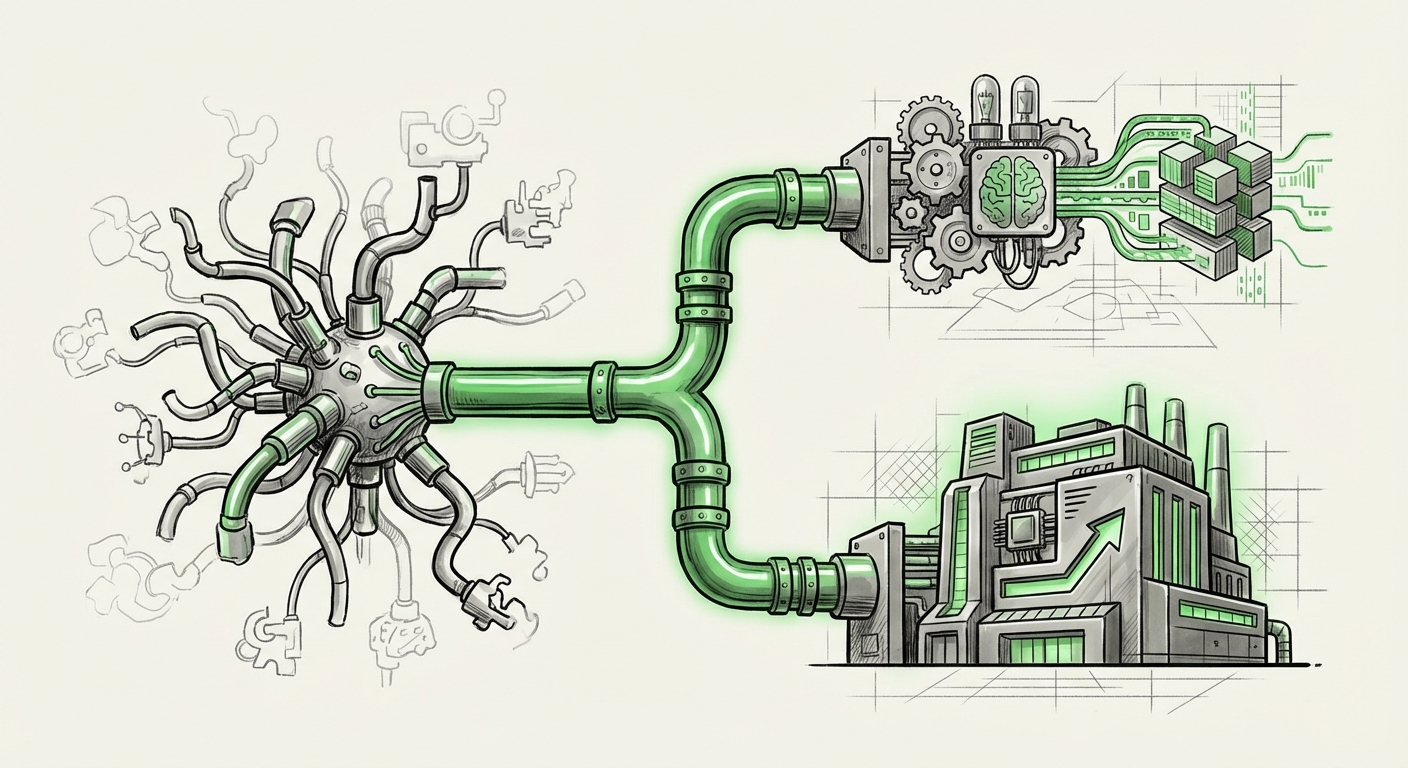
Building a full campaign with AI is different. It is campaign-first. You start with a brief, a product, a goal, an audience, a budget, a timeline. The AI then works through the whole chain: research and positioning, messaging pillars, channel plans, asset creation for each channel, and variations for testing. The output is not one clever paragraph. It is a connected set of materials that all say the same thing in the same voice.
The difference sounds small. It is not. A single asset is a time-saver. A full campaign is a change in how work gets organized.
What "Full Campaign" Actually Means in Practice
The most useful way to think about this is as a series of stages that used to be separate jobs, now stitched together by a single AI workflow:
- Brief and strategy. The AI helps sharpen the goal, define the audience, and choose the angle, turning a vague request into a clear plan.
- Message architecture. A core promise is set, with supporting proof points, and then adapted for different audiences without losing the thread.
- Channel adaptation. The same idea is reshaped for email, landing pages, social posts, video scripts, and paid ads, each in the format that channel actually needs.
- Asset production. Copy, visuals, and structure get generated together, so the words and the images match.
- Variation and testing. Multiple versions are produced on purpose, so teams can test instead of guessing.
- Review and handoff. Everything comes back to humans for approval, editing, and publication.
When these stages live in one workflow, the campaign stays consistent. That is the real prize. Most marketing failures are not caused by bad individual assets. They are caused by assets that do not match, the ad promises something the landing page never mentions, or the email sounds like a different company than the social post.
The Orchestration Layer Is the New Battleground
Look closely at where the value is moving. Generating text or images is becoming cheap and ordinary. What is still hard, and therefore valuable, is orchestration: keeping context, brand rules, and goals alive across dozens of steps and handoffs.
This is why the most important question about any AI marketing tool is no longer "how good is its writing?" It is "how well does it remember?" Does it hold the brand voice across ten assets? Does it know the audience changed halfway through? Can it keep a campaign plan intact when one piece is edited?
For the AI industry, this points toward systems built around persistent context and structured workflows rather than single-turn chat. The winning products will look less like a text box and more like a project workspace, one that happens to be powered by a model.
The Human Role Doesn't Disappear, It Moves Upstream
There is a natural worry when AI can produce a whole campaign: does the marketer still have a job? The honest answer is that the job changes shape.
When production gets faster, the bottleneck moves. It moves to judgment, deciding what is worth saying, which audience matters most, what the brand should never do, and which of twenty variations is actually good. Those are the tasks that get more important, not less.
In practical terms, teams shift from making to directing and editing. The people who thrive will be the ones who can write a sharp brief, spot a weak idea quickly, and enforce standards. Prompting well is a small skill. Briefing well is the durable one.
Practical Implications for Businesses
1. Speed changes the planning calendar
If a full campaign can be drafted in hours instead of weeks, then the old habit of planning one big campaign per quarter starts to look slow. Teams can test more ideas, retire losers faster, and keep winning messages running longer. The risk is that volume outruns quality, which makes review discipline essential.
2. Brand consistency becomes a system, not a style guide
A PDF brand guide sitting in a shared drive does nothing for an AI workflow. What matters is encoded rules: voice, banned phrases, approved claims, visual constraints. Companies that invest in making those rules explicit and machine-readable will get far better output than those that rely on reminders in chat.
3. Small teams gain big-team capability
This is probably the most significant effect for the wider economy. A solo founder or a two-person marketing team can now produce the range of assets that used to require a full agency roster. That does not eliminate agencies, it changes what clients pay them for. Strategy, taste, and accountability become the product; raw production becomes a commodity.
4. The review layer is where risk lives
AI-generated campaigns can confidently produce claims that are wrong, off-brand, or legally risky. Every workflow needs a human checkpoint before anything goes public. The organizations that handle this well will treat AI output as a draft from a fast junior teammate, useful, but never published unread.
What This Signals About the Future of AI
The jump from "write my post" to "build my campaign" is a preview of a much broader pattern. Across law, software, finance, and design, the same arc is appearing: AI starts as a helper for single tasks, then becomes a coordinator of multi-step work.
That has three consequences worth watching:
- Value shifts to the workflow. The model is only one part of the system. Memory, structure, integrations, and approval steps determine whether AI is actually useful day to day.
- Interfaces get simpler as systems get smarter. Users should not need to manage a dozen prompts. They should state a goal and review an outcome.
- Trust becomes the limiting factor. Capability is arriving faster than confidence. The organizations that win will be the ones that build clear, repeatable ways to check AI work rather than simply generating more of it.
It also raises a question that will follow every industry: when producing a campaign becomes easy, what becomes scarce? The answer is attention, originality, and trust. AI can multiply output. It cannot manufacture a reason for someone to care.
An Actionable Playbook
If you want to move from scattered AI use to full-campaign building, start here:
- Write your brief template first. Before touching any tool, define the fields every campaign brief must contain: goal, audience, single core message, proof points, tone, and constraints.
- Codify your brand rules. Create a short, explicit list of what good sounds like and what is forbidden. Keep it in front of the AI at every step.
- Map your channels honestly. List each channel you actually publish to and the format each one needs. Do not generate assets for channels you will never use.
- Build the human checkpoint in from day one. Decide who approves what, and never let speed skip that step.
- Test in small batches. Run one campaign end-to-end with AI assistance, compare it to your usual process, and measure time saved and quality lost or gained.
- Keep a library of what worked. Feed winning messages back into future briefs so the system gets sharper over time.
Conclusion
The move toward building full campaigns with AI is more than a productivity story. It is a signal that these tools are growing up, from clever assistants into coordinators of real work. That shift will reward teams who invest in clear briefs, encoded brand rules, and disciplined review, and it will expose teams who treat AI as a faster way to make more noise.
The technology is becoming capable enough to run the whole campaign. The harder question, as always, is whether the people using it have something worth saying, and the judgment to know the difference.