A Thousand Drones and a Strained U.S.-Ukraine Alliance: What It Means for the Future of AI
Two stories landed at the same moment this week, and they are really one story. The first is a number: roughly a thousand drones launched in a single wave. The second is a mood: an alliance between the United States and Ukraine that is visibly under strain. On the surface, one is a battlefield statistic and the other is diplomacy. Underneath, both are about the same thing, who controls the software that decides what a machine does when no human is fast enough to intervene.
That is why this is not just a war story. It is the clearest preview we have of how artificial intelligence will be used in the real world over the next decade: in swarms, at speed, at low cost, and inside political relationships that can fray faster than the technology can be governed.
What Actually Happened, and Why It Matters
The headline event was a mass drone attack on a scale that would have seemed implausible just a few years ago. A thousand drones is not a military maneuver in the traditional sense. It is a logistics exercise, a manufacturing statement, and a software demonstration all at once. Launching that many machines requires factories, supply chains, trained operators, and, critically, coordination systems that can keep hundreds of moving objects from colliding, drifting off course, or being jammed into uselessness.
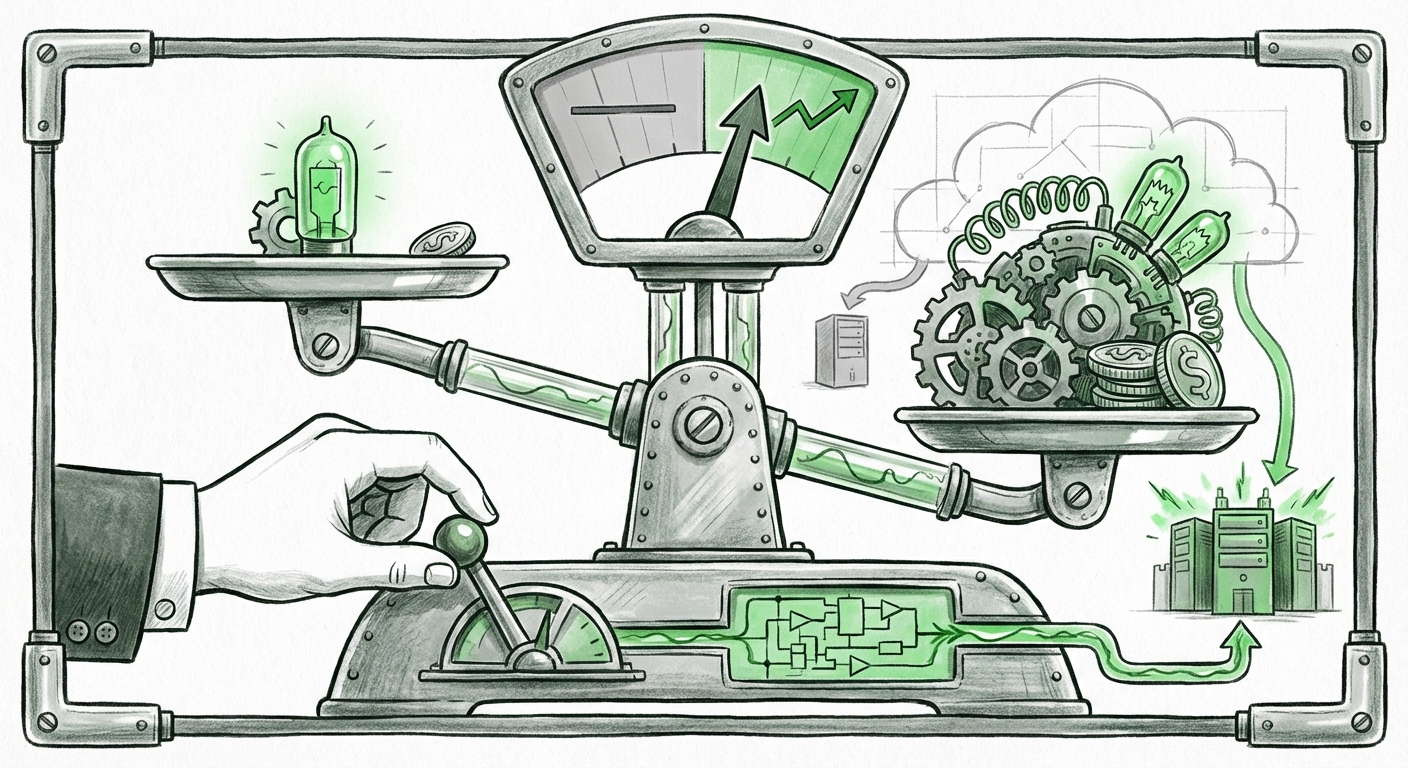
At the same time, the U.S.-Ukraine relationship is showing real tension. Support that once flowed smoothly is now subject to negotiation, conditionality, and public friction. That matters for AI because modern defense technology does not live in a warehouse. It lives in a relationship. Software updates, satellite data, targeting intelligence, and cloud infrastructure are all forms of ongoing support. When the relationship wobbles, so does the technology that depends on it.
Put simply: the drones are the visible part. The alliance is the invisible infrastructure holding them up. Both are being stress-tested in public.
Why a Thousand Drones Is Really an AI Story
A single drone flown by a single person is a remote-controlled aircraft. A thousand drones flying together is something else entirely. At that scale, human control shifts from flying to supervising, and supervision is where AI earns its place.
1. Coordination moves from people to algorithms
No human can track a thousand moving objects in real time and reassign them mid-flight. That job goes to software that can plan routes, avoid collisions, adjust to losses, and spread attention across a target area. This is the same class of problem that self-driving fleets and warehouse robotics solve, just with higher stakes.
2. Autonomy fills the gap when signals fail
Drones depend on radio links, and radio links are the first thing an opponent attacks. Jamming turns a clever machine into a falling object. The response is to push decision-making onto the device itself, so that when the connection dies, the drone can still complete a mission or return home safely. That is a pure AI problem: perception, navigation, and decision-making running on a small, cheap, power-constrained chip.
3. Cost flips the economics
Expensive platforms demand expensive protection. Cheap ones demand volume. Once a machine costs little enough to be treated as expendable, the winning strategy becomes manufacturing and iteration speed rather than precision craftsmanship. That is a software industry mindset applied to hardware, ship fast, learn from field data, update the model, repeat.
4. The data flywheel spins in public
Every flight generates sensor data. Every failure generates a lesson. In a conflict zone, that feedback loop runs at a pace no laboratory can match. This is the uncomfortable core of the story: some of the most valuable autonomous-systems data in the world is being generated in an active war, and the organizations that capture it will set the pace for everyone else.
The Alliance Strain Is a Technology-Governance Problem
It is tempting to read the diplomatic friction as a purely political story. It is not. Modern AI-enabled defense depends on continuous, permissioned access to foreign technology, chips, cloud services, satellite imagery, and software updates. That creates a new kind of leverage, and a new kind of vulnerability.
Three consequences follow:
- Technology dependence becomes diplomatic dependence. A country that cannot update its own software or source its own chips has a permanent seat at someone else's negotiating table.
- Export controls become the main AI policy tool. The most consequential AI decisions being made by governments today are not about research ethics. They are about who is allowed to buy which chips and use which models.
- Allies start building redundancy. When support looks conditional, partners invest in domestic production. Expect every serious military and every serious government to want its own model, its own chip supply, and its own satellite layer.
The lesson for anyone outside defense is blunt: AI capability is never purely technical. It sits inside supply chains and political relationships, and it can be interrupted.
What This Means for the Future of AI
The thousand-drone moment points to four shifts that will shape the next several years of AI development well beyond the battlefield.
Edge AI becomes the main event
For a decade, the story of AI was giant models in giant data centers. The next chapter is small models on small devices that must work with no connection, no cloud, and no second chance. Swarms make this urgent. So do farms, mines, ports, delivery fleets, and disaster response. The engineering constraints are the same everywhere: limited power, limited compute, and no tolerance for latency.
Multi-agent systems get real-world stress tests
A drone swarm is a multi-agent system. So is a fleet of delivery robots, a grid balancing algorithm, or a trading desk. The hard problems are identical: how do agents share a limited space, avoid conflicts, handle the failure of one member, and stay on mission when conditions change? Defense work is currently the harshest test lab for these questions. The answers will migrate into commercial software within a few product cycles.
Human oversight becomes a design requirement, not a slogan
The harder autonomy gets, the louder the question of accountability becomes. Expect regulation to focus less on what models can do and more on who is responsible when they do it. That means audit logs, kill switches, documented decision boundaries, and clear chains of human authority. Companies building agents today should assume these will be mandatory, not optional.
Cheap autonomy reshapes risk for everyone
When a capable autonomous machine costs about as much as a laptop, the barrier to misuse drops. That applies to state actors, non-state groups, and lone individuals. Critical infrastructure operators, power grids, airports, data centers, water systems, should treat low-cost aerial autonomy as a standard item on their threat model, not an exotic one.
Practical Implications for Businesses
Most organizations reading this are not building weapons. But the same forces are reshaping ordinary operations.
- Audit your AI supply chain. Do you know which models, chips, and cloud providers your critical systems depend on? Do you know what happens if one becomes unavailable or restricted? Most companies cannot answer this. That is a board-level risk.
- Design for degraded connectivity. If your AI depends on a live cloud connection to function, it is fragile. Increasingly, the valuable work happens on-device.
- Plan for agent governance now. As you deploy AI agents that take actions rather than just answer questions, build the audit trail and override mechanisms before you need them.
- Watch defense procurement for signals. Defense buyers are the most demanding customers in technology: performance under attack, zero tolerance for failure, and long support horizons. What they adopt today tends to reach mainstream industry within a few years.
- Treat manufacturing speed as a strategy. The thousand-drone story is a production story as much as an AI story. Software companies that learn to iterate hardware quickly will have an edge in robotics, agriculture, logistics, and inspection.
The Honest Limits
It is easy to over-read a headline like this. Swarms are not magic. They are jammed, they are shot down, they fail in bad weather, and their effectiveness depends heavily on intelligence and planning that humans still supply. Autonomy in the field is narrower than autonomy in a demo. And the political friction that makes this story interesting also makes it uncertain, alliances shift, and technology programs shift with them.
What is not uncertain is the direction. The cost of autonomous capability is falling fast, the coordination problem is being solved in software, and the governance questions are arriving before the answers. That combination is what makes this moment worth paying attention to far beyond the conflict itself.
The Bottom Line
One thousand drones is not the story. The story is that a nation can now field a thousand autonomous machines, run the coordination in software, and depend on an ally's technology to keep it all working, while that alliance is under visible strain. That is a preview of the AI decade: capability that scales faster than the institutions built to manage it, and infrastructure that carries political weight whether we like it or not.
For technologists, the takeaway is to build for the edge, for degraded conditions, and for accountability. For business leaders, the takeaway is that AI is now a supply-chain and geopolitical question, not just an engineering one. For everyone else, the takeaway is simpler: the machines are getting cheaper and more capable, and the rules are still being written.