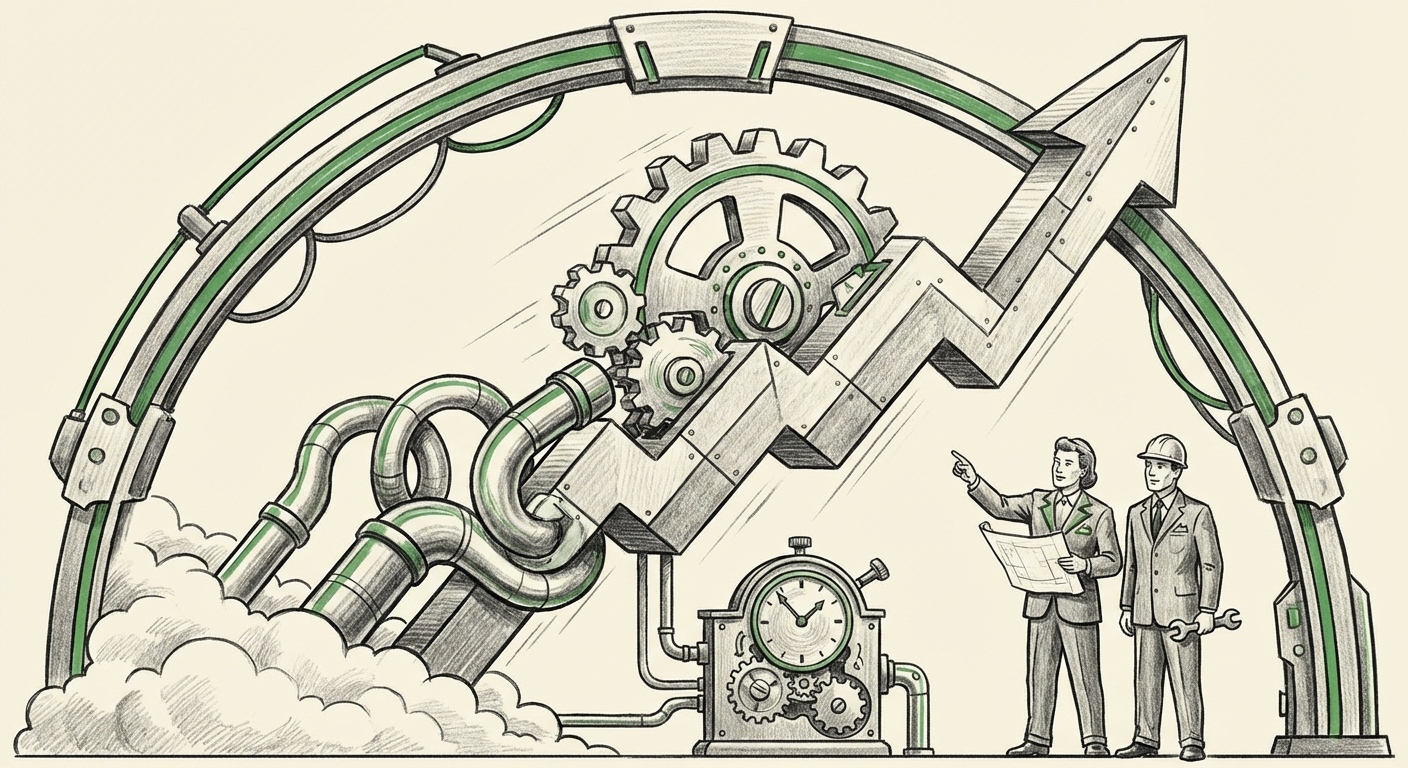
AI Agents Generating UIs on the Fly: The Future of Web Apps Explained
Imagine opening a web app and watching it build itself as you use it. No more fixed menus, static forms, or one-size-fits-all dashboards. Instead, an AI agent creates the interface in real time, adapting to what you need right now. That is the promise behind a growing idea in tech: AI agents that generate user interfaces on the fly. This concept is moving from science fiction into serious discussion among developers and business leaders. It could change how we build software, how we interact with computers, and how companies compete.
In late 2026, the question is no longer if AI can help write code. Tools already do that. The new question is whether AI can design and build the entire user experience, buttons, layouts, forms, and flows, without a human designer touching every screen. If that happens, web apps will feel less like fixed products and more like living services that reshape themselves around each user. This article breaks down what that future could look like, what it means for businesses, and how to prepare.
The Big Shift: From Fixed Screens to Live Interfaces
Today, most web apps are built from a fixed set of screens. A designer creates a layout. A developer writes the code. Then everyone uses the same interface, maybe with slight changes for mobile or dark mode. This model has worked for decades because it is predictable, testable, and easy to maintain. But it has limits. Users have different needs, different devices, and different levels of expertise. A single interface often forces people to adapt to the software instead of the software adapting to them.
AI agents that generate UIs on the fly flip that model. Instead of a fixed screen, the app uses an AI agent to understand what you are trying to do. Then it builds the interface it thinks you need. For example, if you ask for a sales report, the agent might create a dashboard with charts, filters, and tables on the spot. If you are on a phone, it might simplify the layout. If you are a new user, it might add helpful tips. If you are an expert, it might strip things down to the essentials. The interface becomes dynamic, a response to your intent rather than a pre-built page.
This is different from current AI coding assistants. Those tools help developers write code faster, but the final UI is still fixed after deployment. An AI agent that generates UIs at runtime works for the end user directly. It makes decisions about design, layout, and interaction in real time. That is a much bigger change, and it raises new questions about control, quality, and trust.
How Would AI Agents Generate UIs on the Fly?
The technical path is still being explored, but the basic idea is clear. An AI agent would sit between the user and the app’s data and services. It would take input, text, voice, clicks, or context like device type or time of day, and decide what interface to show. To do that, it would need several capabilities.
- Understanding intent: The agent must figure out what the user wants, even if the request is vague. This is where large language models and other AI systems come in. They can parse natural language and infer goals.
- Choosing components: The agent needs a library of approved UI parts, buttons, forms, charts, tables, and rules for when to use each one. It would pick the right mix for the task.
- Arranging the layout: It would decide where things go, how much space they take, and how they flow on different screen sizes. This requires an understanding of design principles and accessibility.
- Generating code or configuration: The agent might output HTML, CSS, and JavaScript directly. Or it might produce a configuration that a rendering engine turns into a UI. Either way, the result must be safe and reliable.
- Checking quality: Before showing the UI, the agent must run checks for security, accessibility, performance, and brand consistency. This is a critical step that cannot be skipped.
In practice, this could look like a chat with your software. You say, “Show me last quarter’s sales by region, but only for products I manage.” The agent builds a custom view with the right filters and charts. You then say, “Add a comparison to last year,” and the UI updates instantly. No developer needed. No waiting for a new release. The interface becomes a conversation.
This does not mean every app will be built from scratch on every click. More likely, AI agents will use a mix of pre-built patterns and on-the-fly generation. A company might define a design system and a set of safe components. The agent then assembles them in new ways based on the user’s needs. That keeps quality high while still allowing flexibility.
What This Means for Businesses
For companies, the ability to generate UIs on the fly could be a major competitive advantage. Here are the main opportunities.
Faster Prototyping and Iteration
Today, building a new feature or screen can take weeks. Designers create mockups, developers write code, and testers check the result. With AI-generated UIs, teams can describe what they want and see a working interface in minutes. That speeds up experimentation. Companies can test many more ideas with less effort. The best ones can be refined and hardened later.
Personalization at Scale
Most personalization today is limited to recommendations or simple layout changes. AI-generated UIs could go much further. Each user could get an interface that matches their role, skill level, and context. A customer support agent might see a dense, data-rich screen. A new customer might see a simple, guided flow. The same app adapts to both. This could improve satisfaction and reduce training time.
New Product Categories
This technology could enable entirely new kinds of software. Imagine an app that has no fixed screens at all, just a goal and an AI agent that builds whatever you need. Such “adaptive software” could be useful in fields like data analysis, project management, or customer service. Companies that master this approach could create products that feel magical compared to traditional apps.
Cost and Resource Shifts
If AI can generate common interfaces, businesses may need fewer front-end developers for routine work. But they will need more people who can design guardrails, test AI outputs, and manage quality. The mix of skills will change. Companies should start thinking about how to retrain teams and hire for new roles like “AI UI reviewer” or “prompt designer.”
Challenges and Risks
The vision is exciting, but it comes with serious challenges. Ignoring them could lead to bad user experiences, security breaches, or legal problems.
Security
AI-generated code is still code. It can have bugs or vulnerabilities. If an agent builds a UI that exposes sensitive data or allows unauthorized actions, the results could be disastrous. Companies will need strong guardrails. The agent should only use approved components and follow strict security rules. Every generated UI should be checked before it reaches a user.
Reliability and Quality
AI models can make mistakes. They might choose the wrong chart type, misplace a button, or create a confusing layout. In a fixed UI, these errors are caught in testing. In a dynamic UI, they could appear in real time. Businesses will need automated checks and human oversight. They may also need to limit how much the AI can change, at least at first.
Accessibility
Websites must be usable by people with disabilities. AI-generated UIs must follow accessibility standards, such as proper contrast, keyboard navigation, and screen-reader support. An AI agent might not know these rules unless it is trained and constrained. Companies must build accessibility into the agent’s instructions and test the results.
Trust and Transparency
Users may be confused if the interface changes unexpectedly. They might wonder why a button moved or why a new field appeared. Businesses need to explain what the AI is doing and give users control. A simple “Why am I seeing this?” option could help. Trust is hard to earn and easy to lose.
Governance and Accountability
If an AI-generated UI causes a problem, say, a customer misses a payment because the button was hidden, who is responsible? The company, the AI provider, or the team that set up the agent? Clear policies and audit trails will be essential. Regulators may also take an interest, especially in finance and healthcare.
Practical Insights for Leaders
So what should business and technology leaders do now? Here are some actionable steps.
- Start small and internal: Test AI-generated UIs on low-risk internal tools first. For example, let an agent build dashboards for your data team. Learn what works and what breaks before exposing customers to it.
- Build a component library: Give the AI a set of approved, tested UI parts. This reduces risk and keeps the brand consistent. The agent can mix and match, but only within safe boundaries.
- Invest in testing and monitoring: Set up automated checks for security, accessibility, and performance. Monitor how generated UIs perform in the real world. Be ready to roll back if something goes wrong.
- Train your teams: Developers, designers, and product managers need to understand how to work with AI agents. That includes prompt writing, quality review, and knowing when to say no.
- Create clear policies: Define what the AI can and cannot do. Who approves changes? How are errors handled? What data can the agent use? Write these rules down and enforce them.
- Focus on user experience: The goal is not to generate UIs for their own sake. The goal is to make software easier and more useful. Keep users in the loop and measure satisfaction.
The Future of AI and Human-Computer Interaction
Stepping back, the idea of AI agents generating UIs on the fly points to a bigger trend. For decades, humans have had to learn how software works. We memorize menus, remember where buttons are, and adapt to fixed workflows. AI could reverse that. Software could learn how humans work and shape itself around our needs. That is a profound shift in human-computer interaction.
In the future, we may not think of “screens” at all. We may simply state our goals, and the AI will build whatever interface helps us achieve them. That could make technology more accessible to people who are not tech-savvy. It could also make us more productive. But it will require careful design to keep people in control and to avoid chaos.
The most likely outcome is a hybrid. AI agents will handle routine layout and personalization. Humans will set the rules, design the core experience, and step in when something goes wrong. Developers will not disappear, but their work will change. They will become architects of systems that build themselves.
Conclusion
AI agents that generate UIs on the fly are not here yet, but the pieces are coming together. The technology is promising, and the business benefits are real. Faster prototyping, deep personalization, and new kinds of adaptive software could give early adopters a serious edge. But the risks are equally real. Security, quality, accessibility, and trust cannot be afterthoughts. Companies that move too fast without guardrails could harm their users and their brands.
The smart approach is to experiment responsibly. Start with internal tools, build strong foundations, and keep humans in the loop. Watch this space closely. The future of web apps may not be a fixed set of screens. It may be a conversation with an AI that builds exactly what you need, right when you need it. That future is worth preparing for today.