Congo's Ebola Outbreak Reaches an Eighth Province, and It's a Wake-Up Call for AI in Public Health
An outbreak that stays in one place is a tragedy. An outbreak that keeps moving is a warning. Congo's fast-moving Ebola outbreak has now spread to an eighth province, a milestone that tells us something important: the disease is outrunning the systems built to contain it.
For years, the promise of artificial intelligence in public health has been filed under "promising but early." Outbreak response was seen as a place where machine learning might someday help, once the data got cleaner and the models got better. That "someday" is now. When a virus crosses province lines faster than response teams can mobilize, the tools that shorten the gap between noticing a problem and acting on it stop being nice-to-have experiments. They become the difference between a contained flare-up and a regional crisis.
This is a story about epidemiology, but it is also a story about information. And information is exactly where AI is strongest, and weakest.
Why a Moving Outbreak Is an Information Problem
Ebola is not easy to catch. It spreads through direct contact with the bodily fluids of someone who is sick. That means containment depends on things that sound simple but are brutally hard in practice: finding cases fast, tracing everyone they touched, isolating the sick, and getting protective equipment and care to the right places before the chain of transmission extends.
Every one of those steps runs on data. Who is sick? Where? Who did they contact? Which health facility has gloves, IV fluids, and trained staff? Which road is passable in the rainy season? Which community trusts the response team enough to report a case instead of hiding it?
When an outbreak reaches a new province, it usually means one of those information links broke. A case went undetected long enough to travel. A contact list was incomplete. A clinic had no way to flag an unusual cluster of fevers. The virus didn't outsmart anyone. It moved through the gaps in a system that was already stretched thin.
That is the exact shape of problem AI was built for, messy, high-volume, time-sensitive pattern-finding under uncertainty.
Where AI Is Already Earning Its Place
Outbreak Detection From Weak Signals
Long before an official case count rises, there are hints: a spike in clinic visits for fever, a change in how people search for symptoms online, a cluster of unexplained deaths in a district health register. AI systems that scan local health reports, community radio transcripts, and clinic logs can flag anomalies that a human analyst, buried in paperwork, might miss for weeks.
The value here is not replacing epidemiologists. It's giving them a shorter starting line. A model that surfaces "this district looks unusual" three days earlier buys three days of investigation, testing, and isolation. In Ebola response, days are the whole ballgame.
Genomic Tracking and Variant Watch
Sequencing machines produce enormous amounts of raw genetic data. AI tools help assemble and compare genomes quickly, showing whether cases in a new province are linked to a known chain of transmission or represent a separate spillover. That distinction changes the response entirely, one calls for tighter contact tracing, the other for investigating a new animal-to-human exposure route.
Diagnostics at the Edge
Lab capacity is scarce, and samples travel slowly. AI-assisted reading of rapid diagnostic tests, and computer vision tools that help frontline workers interpret results correctly without a specialist present, extend scarce expertise into places it cannot physically reach. A community health worker with a phone and a well-trained model is not a lab, but they are far better than nothing.
Supply Chain and Logistics
Getting PPE, vaccines, and mobile lab equipment to a remote province involves forecasting demand, routing around broken infrastructure, and deciding what to stock where before anyone knows where the next cluster will appear. These are classic optimization problems, and modern AI planning tools handle them far better than spreadsheets. The same forecasting engines retailers use to stock shelves can decide which clinic gets the last pallet of gloves.
Modeling the Path Forward
Epidemic models have existed for decades, but AI-driven approaches can incorporate far more variables, mobility patterns, population density, seasonal travel, vaccination coverage, community behavior, and update as new data arrives. The output isn't a prophecy. It's a set of scenarios that help decision-makers choose where to deploy limited resources.
The Hard Parts Nobody Puts in the Demo
If the technology is this promising, why isn't every outbreak contained? Because the bottleneck is rarely the model. It's everything around it.
Data That Arrives Late, or Not at All
A model trained on clean hospital records will struggle in a province where cases are reported on paper, by radio, or not reported at all. Many of the most valuable AI tools in outbreak response are built to tolerate missing and messy data, but there are limits.
The Last Mile of Trust
An alert is only useful if someone acts on it. In communities with painful histories of outside intervention, a recommendation from an algorithm carries no more authority than a recommendation from a stranger. Successful deployments pair AI with local health workers and community leaders who can explain, translate, and reassure. Technology without trust is just noise with a dashboard.
Fragmented Systems
Detection tools, lab systems, and logistics platforms often don't talk to each other. The real unlock isn't a better model; it's interoperability, the unglamorous work of making data flow between systems so a positive test automatically triggers contact tracing and resupply.
Accountability
When an AI system flags the wrong district, or misses one, someone has to be responsible. Public health agencies need clear rules for human oversight before they hand real authority to automated systems. Deploying AI in an outbreak is not a technical decision. It's a governance decision.
What This Means for Businesses and Institutions
The lessons here travel well beyond epidemiology. Any organization that manages risk across many locations faces the same core challenge: detecting a fast-moving problem before it becomes expensive.
- Early warning beats perfect prediction. Systems that flag anomalies early, even imperfectly, create more value than systems that promise accuracy but arrive too late to act on.
- Messy data is the default, not the exception. Build for incomplete inputs from day one. Tools that only work with pristine data will fail exactly when you need them most.
- Adoption is a people problem. The teams closest to the problem need to understand and trust the tool. That means training, transparency, and a feedback loop, not just a rollout email.
- Interoperability is the multiplier. A detection tool that can't trigger a response is a report, not a system.
- Governance is not optional. Decide in advance who reviews automated flags, how errors get corrected, and how decisions are documented.
Actionable Steps for Organizations Building or Buying These Tools
1. Start with the decision, not the model. Ask what action the output will trigger. If no one can name the action, the model isn't ready.
2. Measure time-to-action, not accuracy alone. The most important metric in outbreak response is how much faster the right people learn the right thing.
3. Design for degraded conditions. Test your systems with missing data, slow connections, and overworked users. That is the real operating environment.
4. Pair every automated signal with a human owner. Someone must be accountable for what happens next.
5. Invest in local capacity. The strongest AI deployments in fragile settings are the ones where local staff can maintain and adapt the tool after the outside team leaves.
The Bigger Picture
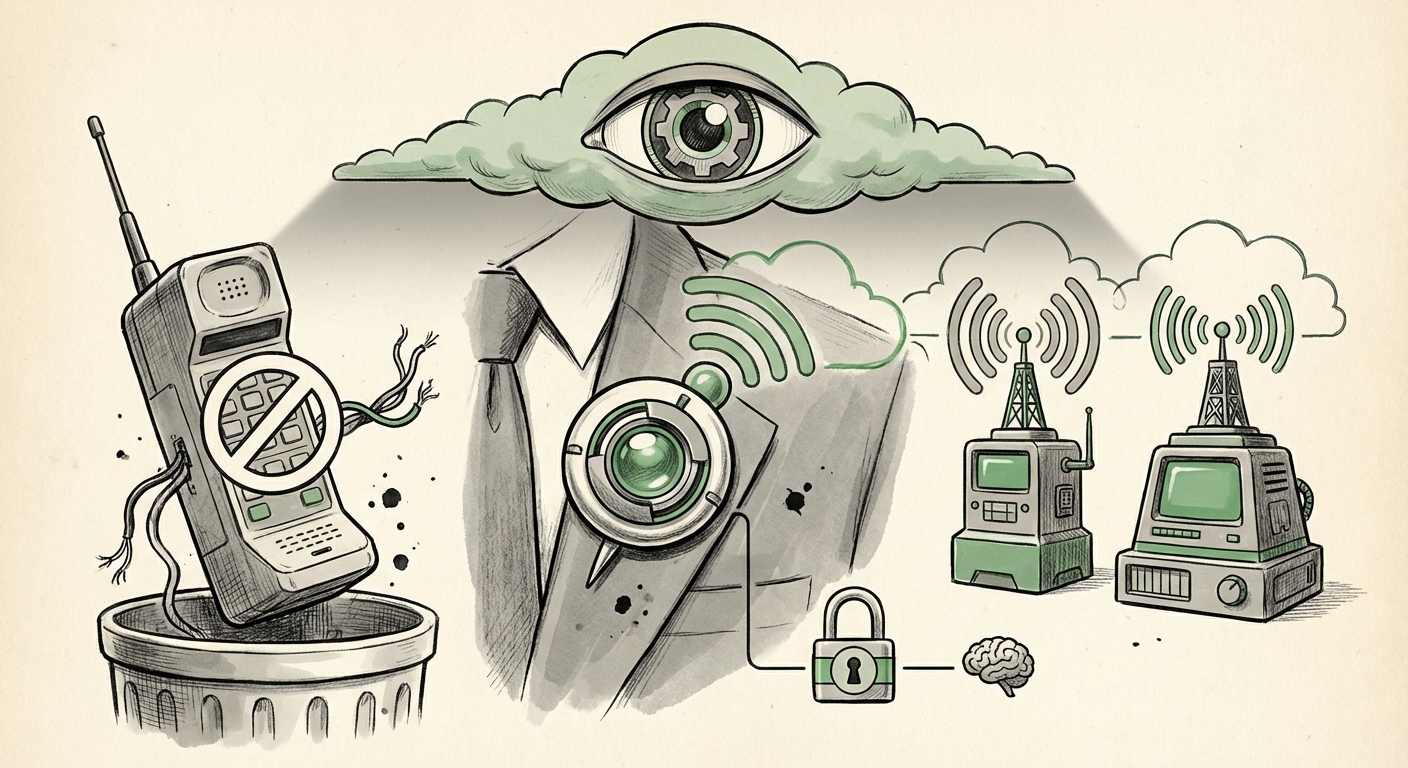
An outbreak reaching an eighth province is a reminder that pathogens do not respect administrative boundaries, and neither should the intelligence systems we build to track them. The future of AI in public health is not a single brilliant model. It is a nervous system: sensors at the clinic level, analytics in the middle, and decision-makers at the top who can act on what they learn.
We are closer to that than many people realize. The tools exist. The gap is in coordination, trust, and the willingness to invest in unglamorous plumbing between systems. Every outbreak that spreads further than it should is a signal that the information loop is still too slow.
The lesson of a fast-moving outbreak is not that AI will save us. It's that speed matters, information matters, and the organizations that shorten the distance between a signal and a response will be the ones that hold the line, in public health, and in every field where risk moves faster than bureaucracy.