Granite Embedding Multilingual R2: The Small Open Model That Could Change Global AI Search
Something important just happened in the world of AI, and it did not involve a giant chatbot or a flashy image generator. A new embedding model called Granite Embedding Multilingual R2 has arrived. It is open, it is multilingual, it handles long documents, and it is small enough to run almost anywhere. The model is released under the Apache 2.0 license, which means businesses can use it freely. It supports a 32K context window. And it claims the best retrieval quality among models under 100 million parameters. Those facts may sound technical, but they point to a much bigger shift in how AI will be built and used.
For years, the AI conversation has focused on bigger and bigger models. More parameters, more data, more computing power. But the release of Granite Embedding Multilingual R2 signals a different path. Small, specialized, open models are becoming powerful enough to handle serious work. And when those models are multilingual and free to use, they open doors for companies and communities that could never afford the biggest AI systems.
What Is an Embedding Model, and Why Should You Care?
An embedding model is the quiet workhorse behind many AI applications. It turns text into a list of numbers, called a vector. That vector captures the meaning of the text. Once text becomes numbers, computers can compare meanings quickly. This is how AI systems find relevant documents, group similar ideas, and answer questions using your own data.
Think of it this way: if you ask a search engine a question, an embedding model helps the system understand what you mean, not just what words you typed. If you use an AI assistant that reads your company files, an embedding model helps it find the right file. If you build a recommendation system, an embedding model helps it match people with content. Embeddings are the foundation of modern search, retrieval-augmented generation (RAG), and many other AI tools.
So a better embedding model is not just a technical upgrade. It makes every AI system that relies on search and retrieval smarter, faster, and cheaper. And a multilingual embedding model makes those systems work across languages.
Multilingual Matters More Than Ever
Most businesses today operate in more than one language. A customer support team may handle English, Spanish, and Japanese. A legal department may review contracts in French and German. An e-commerce company may sell to buyers on three continents. Until recently, building a multilingual search system meant stitching together separate models or paying for expensive translation steps. That added cost, delay, and complexity.
Granite Embedding Multilingual R2 changes that equation. It is built to understand many languages in one model. That means a company can build a single search index for documents in different languages. A user can ask a question in one language and find an answer in another. A support agent can search a knowledge base that spans languages without extra tools.
This is a big deal for global access. It lowers the barrier for organizations that serve diverse communities. A small nonprofit, a local government, or a startup in a multilingual region can now build AI-powered search that works for the people it serves. When powerful multilingual AI is open and free to use, it helps close the gap between large tech companies and everyone else.
32K Context: Longer Documents, Fewer Headaches
The 32K context window is another important feature. In simple terms, context window means how much text the model can look at in one go. A 32K context can hold a long document, such as a contract, a product manual, a research paper, or a full customer support thread. Many older embedding models had much smaller windows, so developers had to chop documents into small pieces. That process, called chunking, can lose meaning. A sentence cut in half may not make sense on its own.
With a 32K context, developers can keep more of a document together. That can lead to better retrieval. For example, a legal team searching for a clause about payment terms can find it even if the answer is spread across a long agreement. A support team can search a full troubleshooting guide without breaking it into tiny fragments. The result is less engineering work and more accurate answers.
Of course, a long context window does not solve every problem. Good document design still matters. But having 32K to work with gives teams more flexibility. It reduces the need for complex pre-processing and makes it easier to build systems that understand long-form content.
The Power of Being Small: Sub-100M Parameters
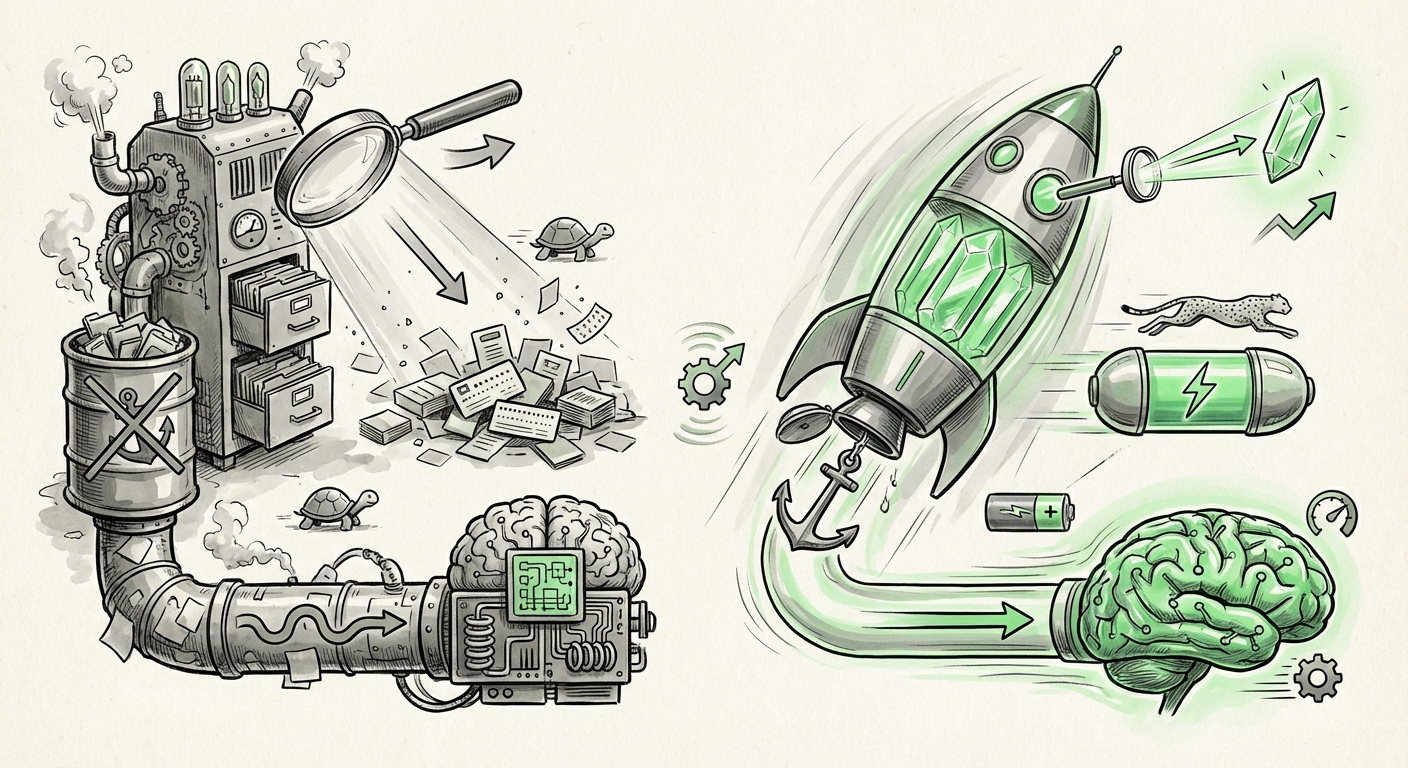
Granite Embedding Multilingual R2 is designed to be small, under 100 million parameters. In the world of large language models, that is tiny. But for an embedding model, small can be a major advantage. Small models are faster. They use less memory. They cost less to run. They can run on a single server, a laptop, or even a device at the edge.
This matters for real-world deployment. A large model may be impressive in a demo, but if it is expensive and slow, it is hard to use in production. A small model that delivers strong retrieval quality can be used at scale. A company can embed millions of documents without blowing its budget. A mobile app can search locally without sending data to the cloud. A hospital can keep sensitive records on-premises while still using AI search.
The claim of best retrieval quality among sub-100M models is significant. It suggests that small models are no longer a compromise. They can compete on the task that matters most for search and RAG: finding the right information. This is part of a broader trend. AI is moving toward specialized models that are fit for purpose, not just massive general models that try to do everything.
Apache 2.0: Open Means Business
The Apache 2.0 license is one of the most business-friendly open-source licenses. It allows companies to use, modify, and distribute the software, including for commercial purposes. It does not force companies to share their own code. It provides legal clarity. For an embedding model, this is a big deal.
Open licensing removes vendor lock-in. A company can download the model, fine-tune it on its own data, and run it wherever it wants. It can embed the model into its products without asking permission. It can avoid the unpredictable costs of usage-based APIs. That freedom is especially valuable for startups and small businesses that need to control costs.
Open models also create healthier ecosystems. Researchers can study them. Developers can improve them. Companies can build on them. When a strong multilingual embedding model is open, the whole AI community benefits. It speeds up innovation and makes advanced AI more accessible. In a world where AI is becoming infrastructure, open licensing is a safeguard against concentration of power.
What This Means for RAG and Enterprise Search
Retrieval-augmented generation, or RAG, is one of the most practical AI patterns today. It combines a large language model with a search system. The search system finds relevant documents, and the language model uses them to answer a question. The quality of RAG depends heavily on the embedding model. If the search step fails, the answer will be wrong.
Granite Embedding Multilingual R2 is well suited for RAG. Its multilingual support means a single RAG system can work across languages. Its 32K context means it can handle longer documents. Its small size means it can run efficiently at scale. Its open license means companies can deploy it without heavy legal or financial friction.
Imagine a global customer support system. A customer writes in Portuguese. The RAG system searches a knowledge base that includes English, Spanish, and Portuguese articles. The embedding model finds the right article across languages. The language model writes an answer in Portuguese. That is a real improvement over systems that only work in one language.
Or imagine a legal team reviewing thousands of contracts. The embedding model indexes long agreements. A lawyer asks a question about liability clauses. The system finds the relevant sections across documents and languages. The lawyer gets answers faster and misses less.
Actionable Insights for Teams
- Test it on your own data. General claims are useful, but retrieval quality depends on your documents. Run a small pilot with real queries before committing.
- Use the long context wisely. Try embedding larger sections of documents to reduce chunking errors. But still check that your search results make sense.
- Build multilingual from the start. If your business serves multiple languages, use one multilingual model instead of separate systems. It is simpler and often cheaper.
- Consider on-premises or edge deployment. A sub-100M model is small enough to run in more places. This can help with privacy, latency, and cost.
- Take advantage of the open license. Fine-tune the model on your domain language. You can customize it without asking for permission or paying per-call fees.
The Bigger Picture: Where AI Is Heading
The release of Granite Embedding Multilingual R2 points to several trends that will shape the future of AI. First, small models are getting better. We are moving past the idea that only giant models can do useful work. Specialized models trained for specific tasks can be more efficient and more practical. Second, open models are becoming competitive. Companies no longer have to choose between open and capable. They can have both. Third, multilingual AI is becoming normal. As AI spreads around the world, it must work for people who do not speak English. Open multilingual models make that possible.
These trends have real consequences for society. When powerful AI tools are open and small, more people can build with them. A developer in a small country can create a local-language search engine. A school can build a multilingual study assistant. A hospital can search patient records without sending data to a foreign cloud. The benefits of AI become less concentrated.
There are still challenges. Small models may not match the largest models on every task. Open models require responsible use. Multilingual models may perform unevenly across languages. Teams need to evaluate carefully. But the direction is clear: AI is becoming more accessible, more efficient, and more global. Granite Embedding Multilingual R2 is a strong example of that direction.
Conclusion
Granite Embedding Multilingual R2 is not the loudest AI release you will see this year. It is not a chatbot that writes poetry or a video generator that makes movies. But it may be one of the most useful. It brings together multilingual support, long context, small size, and an open Apache 2.0 license. That combination makes it a practical building block for search, RAG, and enterprise AI.
For businesses, the message is simple: you do not need the biggest model to get real value from AI. You need the right model, deployed well. For the wider world, the message is hopeful: open, small, multilingual AI can bring advanced tools to more people and more places. The future of AI will not just be bigger. It will be smarter, more open, and more inclusive. Granite Embedding Multilingual R2 is a sign of that future arriving.