OpenAI DevDay 2026: What "Dots" and ChatGPT's Agent OS Mean for the Future of AI
Every year, the AI industry waits for one event to tell it where the next twelve months are heading. On September 30, 2026, that event was DevDay, and the message was hard to miss. The two names on everyone's screen were "Dots" and ChatGPT's Agent OS. One is a fresh product name. The other is a much bigger idea: turning ChatGPT from a chatbot you talk to into an operating layer that runs things for you.
Together, they mark a real turning point. For the past few years, the big question about AI was, "How smart is the model?" In 2026, the question has changed to, "What can it actually do on its own?" That shift sounds small. It is not. It changes how software gets built, how work gets assigned, and who is accountable when something goes wrong.
DevDay 2026: Two Names, One Direction
DevDay is a developer event, which matters. It is not a marketing show for the general public, it is a room full of people who build things. So the themes chosen for DevDay tend to preview what the next wave of apps will look like.
This year, those themes were Dots and the Agent OS. Full technical details are still being absorbed by the developer community, and documentation will settle the specifics in the weeks ahead. But the direction is already clear enough to analyze, and it points in a single direction: agents that act, not just answer.
What is "Agent OS"?
The phrase "Agent OS" is doing a lot of work. An operating system, in the traditional sense, is the layer that manages memory, files, apps, and permissions so that everything else can run. An Agent OS applies that idea to AI agents.
In plain terms: instead of you opening five apps and doing five tasks, you describe an outcome. The agent layer decides which tools to use, in what order, with what data, and under what limits. It manages memory across sessions, connects to outside services, handles long-running jobs, and asks for permission when it hits something sensitive.
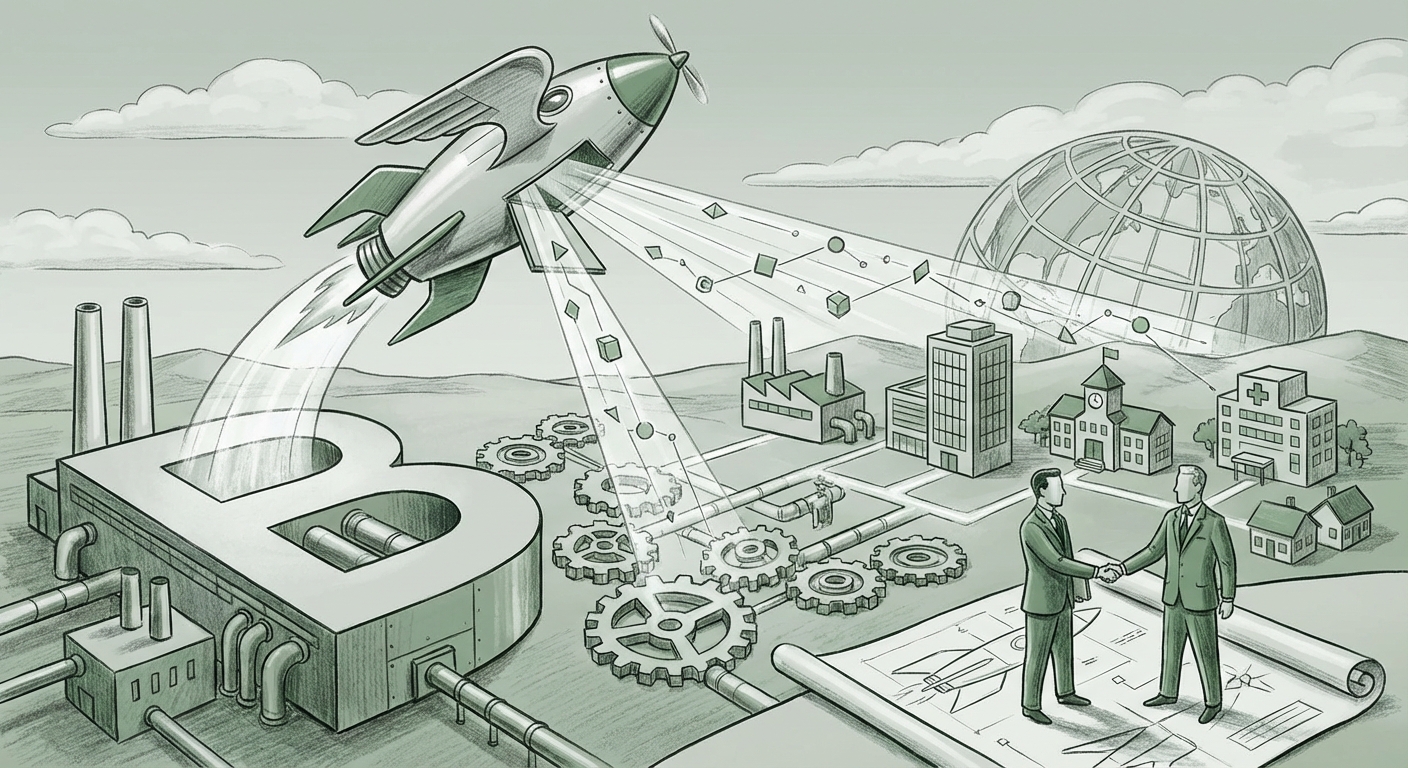
That is a fundamentally different product from a chat box. A chat box is a destination you visit. An operating layer is something that runs underneath everything else.
Why This Is Bigger Than a Feature Launch
Here is the core shift. For most people, AI so far has been a conversation. You type, it replies. The value depends on how well you prompt and how fast you copy the answer somewhere useful.
Agents change the unit of value from the answer to the finished task. That is a much harder problem, and it is where the entire industry has been heading. Building an "OS" layer is the natural next step, because doing real tasks requires the boring plumbing: memory, permissions, tool access, scheduling, error recovery, and audit trails.
Whoever owns that plumbing owns a lot. That is the strategic point. A model can be swapped. An operating layer, once it is where your workflows live, is very hard to replace.
What "Dots" Might Signal
"Dots" is the more mysterious of the two names. It reads like a product name rather than a technical term, short, memorable, and easy to say out loud. In naming terms, that usually means one of two things: either it is a consumer-facing feature designed to spread quickly, or it is a building block that developers will say a thousand times a day.
Either way, the choice of a plain, friendly name is itself a signal. It suggests the company wants this to feel simple. That fits the Agent OS story: if agents are going to be everywhere, the pieces they are made of need to feel approachable, not intimidating.
Watch for how "Dots" connects to the agent layer. If it turns out to be a way of linking small pieces of work together, connecting tasks, tools, or steps, then the name makes sense, and the two announcements are really one announcement. Until the documentation lands, that remains an open question worth tracking.
The Chatbot-to-Operating-Layer Shift
Think about the last time you used a smartphone. You did not think about the operating system. It just handled things: saved your place, remembered your logins, told apps what they were allowed to touch. That invisible competence is what made the phone useful.
An Agent OS is aiming for the same invisible competence in AI. Three things have to work for that to happen:
- Memory that persists. An agent that forgets your context every session is a tool. An agent that remembers is a coworker.
- Tools that connect. Real tasks live in real software, calendars, documents, databases, inboxes. The OS layer has to reach them.
- Trust that scales. Permission controls, clear logs, and the ability to stop a running job are not nice-to-haves. They are the price of entry.
That third item is where most agent projects stall today. It is also where an "OS" framing becomes genuinely useful, because operating systems are, at heart, permission machines.
What This Means for Businesses
For business leaders, the practical question is not "should we use agents?" It is "which processes are ready for agents, and which are not?"
The processes that are ready share a shape: they are repetitive, rule-based, digital end to end, and easy to check afterward. Invoice matching. Report assembly. Ticket routing. Data cleanup. First-draft anything. These are tasks where a mistake is annoying but not catastrophic, and where a human can review the output quickly.
The processes that are not ready are the opposite: high-stakes, ambiguous, or full of exceptions. Hiring decisions. Medical calls. Anything involving money moving out the door without a second look.
There is also a quieter implication. If the agent layer becomes the place where workflows live, then switching costs rise fast. Companies that build their operations on top of one agent OS may find it as sticky as their cloud provider or their CRM. That is worth thinking about before you commit, not after.
A Practical Playbook
Here is what teams can do right now, without waiting for full documentation:
- Write down your processes. An agent cannot run a workflow that only exists in someone's head. Documenting steps is the single highest-value prep work.
- Map your tools. List every system a task touches. The gaps between systems are where agents fail.
- Pick one boring task. Start with something low-risk and high-volume. Learn the failure modes cheaply.
- Build the review habit now. Decide who checks agent output before it ships. Do this before you need it.
- Keep an exit ramp. Avoid lock-in you cannot unwind. Prefer open interfaces where you can get them.
- Train people on supervision, not prompting. The skill that matters in an agent world is judging and correcting work, not writing clever prompts.
What It Means for Society
When AI moves from answering to acting, the stakes change. A wrong answer is an inconvenience. A wrong action is a consequence.
That is why the "OS" framing deserves attention from people outside tech. Operating systems are regulated, audited, and expected to be safe by default. If AI agents are going to sit at that layer, they will face the same expectations, permission prompts, activity logs, clear boundaries on what they can touch without asking.
There is also a labor story here, and it is more nuanced than "jobs disappear." The tasks most exposed to agents are the connective tissue of knowledge work, the copying, chasing, formatting, and following up. Those tasks are rarely anyone's whole job, but they are a large share of everyone's day. The realistic near-term effect is a change in what people spend their hours on, not an instant change in headcount.
The Risks Worth Watching
No honest analysis would skip the problems. Agents that act create three new categories of risk.
- Compounding errors. A small mistake early in a multi-step task can grow into a large one by the end. Long chains need checkpoints.
- Permission creep. The more an agent can touch, the more damage a flaw can do. Broad access should be earned, not granted by default.
- Accountability gaps. If an agent does something wrong, the answer "the AI did it" is not going to satisfy a customer, a regulator, or a court.
None of these are reasons to stop. They are reasons to design carefully, and to insist that the tools you adopt show their work.
What to Watch Next
Three things will tell us whether this is a real platform shift or a clever rebrand.
First, developer adoption. If builders start shipping agents that run for hours without hand-holding, the OS framing is earned. If demos stay demos, it is not.
Second, the permission model. How much can an agent do before a human has to say yes? That single design choice will shape how fast enterprises move.
Third, interoperability. An agent OS that connects cleanly to the rest of a company's software becomes infrastructure. One that does not becomes another silo.
The Bottom Line
DevDay 2026 will likely be remembered less for any single feature and more for the framing. By putting an "Agent OS" at the center of the story, the message is that AI's next chapter is about doing, not chatting. "Dots" is the wildcard, a name that hints at something simple, connected, and built to be said out loud.
For businesses, the takeaway is not to rush. It is to get ready: document your processes, know your tools, and build review habits now, while the stakes are low. For everyone else, the takeaway is simpler. The AI conversation is ending. The AI execution layer is beginning, and the rules for it are still being written.