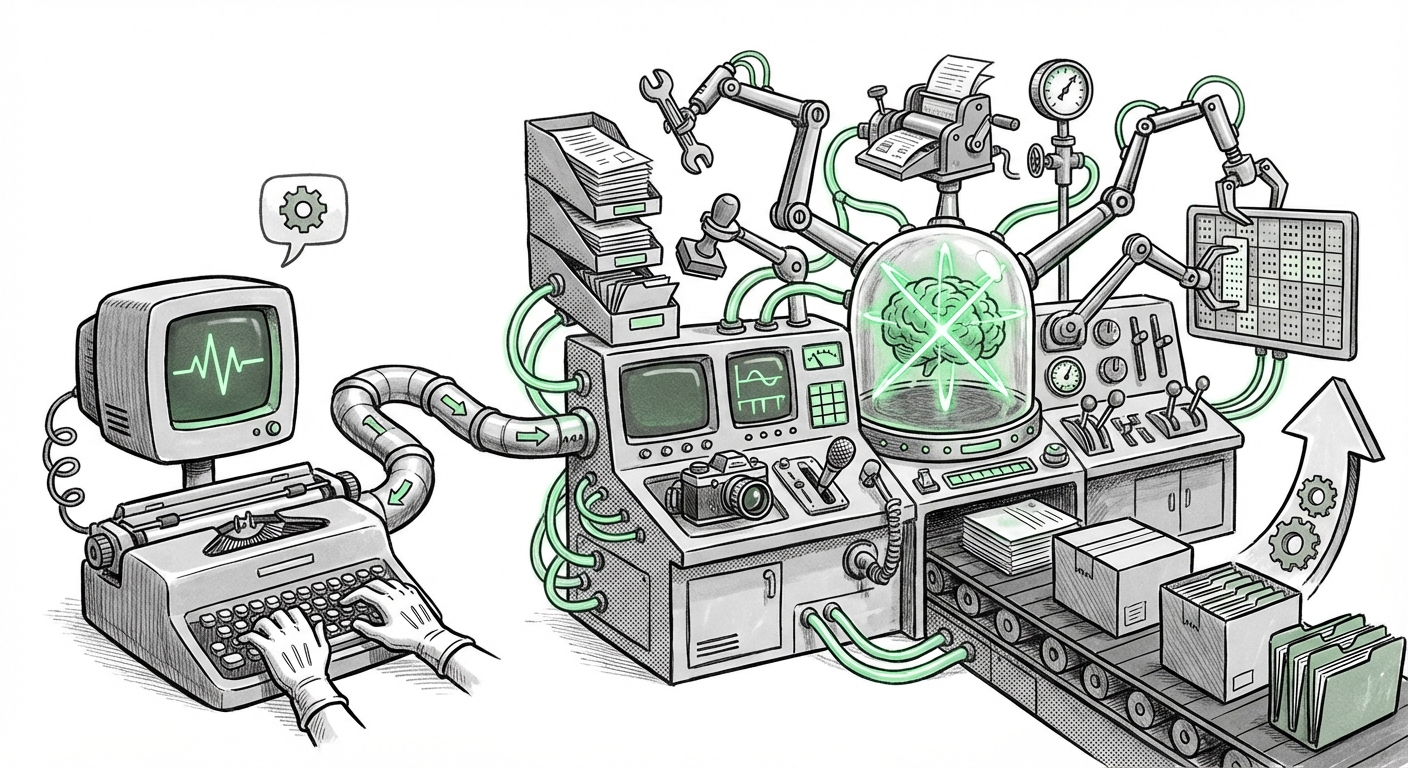
From Royole FlexPai to iPhone Duo: How Foldable Phones Are Quietly Supercharging AI
Foldable phones once felt like a magic trick. You could bend the screen. Then you could fold it and put it in your pocket. It was cool, but it was also clunky, costly, and a little fragile. That was the era of the Royole FlexPai. It was the first real foldable phone to reach users, and it proved a point: a screen does not have to stay flat.
Now look at the iPhone Duo. It is the clearest sign that foldables have grown up. The journey from the Royole FlexPai to the iPhone Duo is not just a story about hinges and glass. It is a story about a new kind of computer that fits in your hand. And that new kind of computer is a perfect match for artificial intelligence.
This article breaks down what changed, why it matters, and how businesses and everyday people can use foldables and AI together. The short version: foldables give AI more room to work, and AI gives foldables a reason to exist beyond the novelty.
The Foldable Dream Started With a Bend, Not a Bang
The Royole FlexPai was the spark. It showed that a flexible display could survive being folded. That was a huge engineering feat. But being first is not the same as being ready. Early foldables had problems. They were thick. They were expensive. The software did not always know what to do when the screen changed size. Apps looked stretched or broken. The hinge was a weak point. The crease in the middle of the screen was hard to ignore.
Still, the Royole FlexPai mattered. It told the industry that the flat rectangle was not the final form of the phone. It opened the door for better designs. It also created a question that no one could answer yet: what is a foldable actually for?
That question is where AI comes in. A foldable without smart software is just a phone that opens. A foldable with AI is a device that can change how it works based on what you are doing. The hardware creates the space. AI fills it with useful behavior.
The Middle Years: From Novelty to Daily Driver
After the first wave, foldables got better in quiet ways. Hinges became stronger. Screens became more durable. The crease became less noticeable. Software makers learned to handle the shift from a small outer screen to a large inner screen. Apps began to support split-screen views. Multitasking became real.
This middle period was not flashy, but it was important. It turned foldables from a tech demo into a daily driver for some people. The category moved from “look what we can do” to “this actually helps me get work done.” That shift set the stage for AI.
Why? Because AI works best when it has context. A phone that knows if it is folded or open has more context. A phone with a big screen can show an AI assistant next to a document. A phone with two screens can show a translation on one side and the original text on the other. The physical form of the device becomes a signal for the software.
iPhone Duo and the Mainstream Moment
The iPhone Duo is the moment foldables go mainstream. When the biggest phone brand in the world commits to a foldable design, several things happen at once. Developers pay attention. Accessories appear. Carriers push the category. Consumers who were waiting for a safe choice finally have one.
The iPhone Duo is not just another foldable. It is a trust signal. It says that foldables are no longer a science project. They are a product for normal people. That matters for AI because the iPhone Duo will likely be a place where many people first use advanced AI features on a flexible screen. The device becomes a bridge between cutting-edge AI and everyday life.
But the iPhone Duo also raises the bar. It will push other foldable makers to improve their designs. It will push app makers to support flexible screens properly. And it will push AI developers to think about how their tools work when the screen can change size in the middle of a task.
Why AI and Foldables Are a Perfect Pair
AI needs three things to be useful: context, space, and a way to act. Foldables help with all three.
Context: A foldable knows its shape. It can tell if it is closed, open, or propped up like a laptop. AI can use that information to change its behavior. For example, a voice assistant might give short answers when the phone is folded and longer, visual answers when it is open.
Space: AI often needs room to show its work. A chat window, a document, a map, a photo, and a control panel all compete for space on a normal phone. A foldable gives AI more canvas. You can have an AI copilot on one side and your work on the other. You can review AI-generated edits while watching the original. You can run a video call and an AI note-taker at the same time.
Action: AI is moving from answering questions to taking actions. An AI agent might book a meeting, fill out a form, or edit a file. A foldable gives that agent more places to work. It can show what it is doing and let you step in when needed. The bigger screen makes AI feel less like a black box and more like a helper you can watch.
AI can also fix foldable problems. It can smooth the transition between screens. It can adjust battery use based on how you hold the device. It can improve camera results when the screen is folded. It can learn which apps you use together and arrange them for you. In short, AI makes the foldable feel smart, and the foldable makes AI feel useful.
AI Use Cases That Actually Matter
Here are practical ways foldables and AI come together today and in the near future.
- Personal productivity: You open the phone and see your AI assistant on the left and your calendar, email, or document on the right. You can ask the assistant to draft a reply while you read the original message. No more switching back and forth.
- Real-time translation: You unfold the phone and show one screen to the person you are talking to. Your side shows the translation. Their side shows the original language. AI handles the translation in real time. This is a big shift for travel and global business.
- Content creation: You are editing a photo or video. The top half shows the AI tools and suggestions. The bottom half shows the preview. You can apply changes with a tap and see them instantly. AI becomes a creative partner, not a separate app.
- Field work: A technician opens a foldable to see a repair manual on one side and an AI assistant on the other. The assistant can answer questions, highlight steps, and log the work. The bigger screen means less scrolling and fewer mistakes.
- Customer support: A support agent uses a foldable to talk to a customer while an AI tool suggests answers and pulls up account details. The agent can see everything at once and respond faster.
- Education: A student uses a foldable to watch a lecture on one side and take AI-assisted notes on the other. The AI can summarize key points and create practice questions. The foldable makes the study session feel like a workspace, not a phone.
- Accessibility: AI can adjust text size, contrast, and layout based on the screen state. A foldable can show large text on one side and controls on the other. For people with low vision, this is a meaningful improvement.
What This Means for Businesses
Businesses should not treat foldables as a niche. They are becoming a standard form factor for premium phones. That means apps and workflows need to work on screens that change size. AI can help, but only if companies plan for it.
First, design for states, not just sizes. A foldable has at least three states: closed, open, and tabletop. Each state changes what the user can see and do. AI can help by adapting the interface, but the app must expose the right information at the right time.
Second, use AI to smooth transitions. When a user opens or closes the phone, the app should not crash or reset. AI can predict what the user wants next and keep the flow going. This is a technical challenge, but it is also a user experience win.
Third, protect privacy. Foldables have more sensors and more screen area. AI features often need data to work. Companies must be clear about what data is used and where it is processed. On-device AI is a strong option for sensitive tasks.
Fourth, start with high-value mobile workers. Field service, sales, healthcare, and logistics are good places to pilot foldables with AI. These workers need information in the field, and they often work with their hands. A foldable can replace a tablet and a phone in one device. Measure task completion time, error rates, and user satisfaction. Do not measure screen size.
Fifth, train teams. A foldable is not just a bigger phone. It is a new way of working. Show people how to use split-screen AI, how to move tasks between screens, and how to keep data safe. The hardware is only half the value.
What This Means for Society
Foldables plus AI could make powerful computing more portable. A single device can be a phone, a tablet, and a workspace. That is good for people who cannot carry multiple devices. It is also good for the environment if it reduces the number of gadgets we buy.
But there are risks. Foldables are still expensive. If AI features are only available on premium devices, the digital divide could grow. Repairability matters too. A broken hinge should not mean a broken phone. Companies need to design for repair and long life. AI can help by predicting failures and optimizing battery health, but only if the device is built to last.
There is also a social question. When a phone opens into a tablet, it becomes more immersive. That can be good for work and learning, but it can also make it harder to disconnect. AI could help by suggesting focus modes and break times. Or it could make things worse by filling every spare moment with notifications. The choice is ours.
Actionable Insights
- Build AI-first, not foldable-first. Do not just stretch your app. Ask what AI can do better when the screen is larger. Then design for that.
- Support all screen states. Test your app closed, open, and propped up. Make sure the AI assistant and the main task stay visible.
- Use AI to handle continuity. When the screen changes, keep the user’s place. AI can predict the next step and preserve context.
- Put privacy on the roadmap. Decide which AI features run on the device and which run in the cloud. Be transparent with users.
- Pilot with real workers. Choose a team that works in the field. Give them foldables with AI tools. Measure time saved and errors reduced.
- Measure outcomes, not novelty. The success of a foldable is not how many times it folds. It is how much faster a task gets done.
The Road Ahead
The journey from the Royole FlexPai to the iPhone Duo shows that hardware can evolve fast when the industry commits. The next wave will be about software and AI. Expect thinner and lighter foldables. Expect better hinges and less visible creases. Expect prices to fall as more brands compete. But the biggest change will be in how we use these devices.
AI will become the operating layer that makes a foldable feel natural. It will decide what to show, when to show it, and how to adapt. The iPhone Duo will push the category forward. The Royole FlexPai will be remembered as the device that started it all. But the real winner will be the person who can open their phone and get more done with less effort.
The lesson for businesses is simple. Do not treat foldables as a bigger screen. Treat them as a new kind of AI workspace. The companies that do will build experiences that feel like magic, not a magic trick.