Self-Replicating AI Worms: Why Anthropic Is Worried and What It Means for the Future of AI
For decades, the word "worm" has meant one thing in cybersecurity: a piece of malicious code that copies itself from machine to machine without anyone clicking a thing. It was annoying, sometimes costly, but ultimately it was dumb. It followed rules written by a human. It could not adapt. It could not improvise.
That is the part that is changing. Anthropic is now publicly flagging a category of threat it calls self-replicating AI worms, malware that uses a large language model or similar AI system as its engine. The worry is not that the worm copies itself. The worry is that the thing doing the copying can reason, rewrite itself, and make judgment calls on the fly. In plain terms: the worm can think about how to spread.
This is one of the clearest signals yet that the security conversation around AI is shifting. We are moving from "can a model say something harmful?" to "can a model act, on its own, at scale, in ways nobody planned for?" That shift matters for every company that runs software, and for anyone who uses the internet, which is to say, everyone.
What Are Self-Replicating AI Worms?
A traditional worm spreads by exploiting the same flaw over and over. It is a script. If the target is patched, the worm stops. If the target looks slightly different, the worm stops.
An AI worm works differently. It uses a model as a kind of brain. When it lands on a new machine, it can look around, read what is there, and decide what to try next. It can write a new version of itself for each environment. It can notice that one door is locked and go looking for another. It can draft convincing emails, fake login pages, or instructions that trick another AI agent into helping it spread.
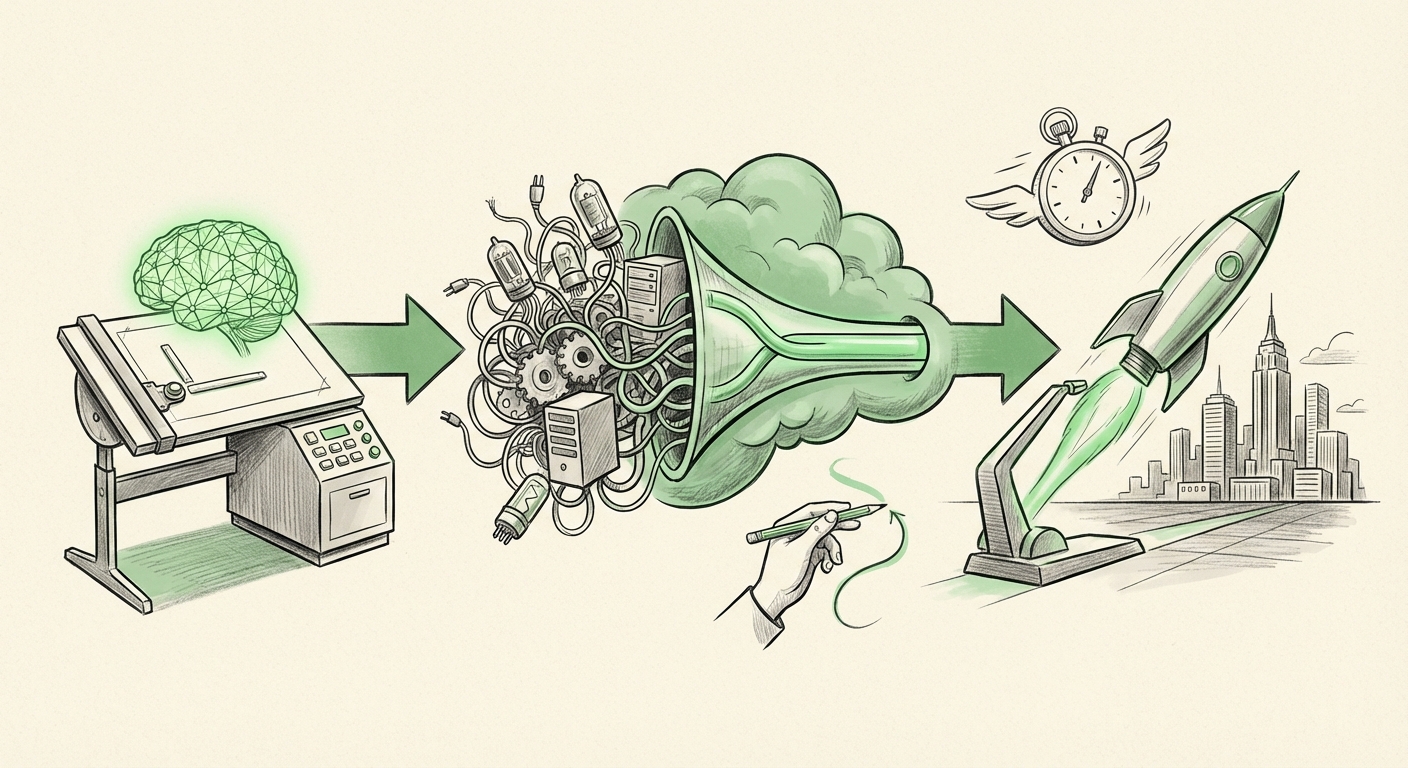
From Classic Worms to AI-Powered Worms
The leap is not in the spreading. The leap is in the adaptation. Three things become possible that were not possible before:
- Self-modification. The worm can rewrite its own code between infections, so signature-based antivirus tools keep seeing something new.
- Social engineering at scale. Instead of one generic phishing template, the worm can generate a tailored message for every target, right tone, right context, right language.
- Agent-to-agent spread. As more businesses connect AI agents to email, calendars, code repositories, and databases, a worm has new hosts to infect. An agent with permission to act is a much better host than a passive laptop.
Put those three together and you get something that behaves less like a virus and more like an intruder who never sleeps, never repeats a mistake twice, and can try ten thousand different approaches at once.
Why Self-Replication Changes the Risk Math
Most AI safety discussions focus on one model, one conversation, one output. Self-replication breaks that frame entirely.
When a system can copy itself, small mistakes become large ones very fast. A flaw that affects one instance is a bug. A flaw that affects every copy the system makes is a systemic event. This is the same reason biological outbreaks are so different from individual illnesses: the danger is not in the first case, it is in the growth curve.
There is also the question of control. A human-written worm does what its author told it to do. An AI-driven worm can do things its author did not specify, not out of malice, but because it was optimized to achieve a goal and it found a route nobody anticipated. Security teams call this the difference between a known exploit and an open-ended search. Open-ended searches are much harder to defend against, because you cannot patch a flaw you have not imagined yet.
Why Anthropic Is Worried
Anthropic's concern is not hypothetical hand-wringing. It reflects a growing recognition inside the AI industry that capability and misuse arrive on the same train. The same model improvements that let an AI agent book your travel or fix your code also let a hostile actor build something that hunts for weaknesses without human supervision.
Three specific worries sit underneath this:
- The barrier to entry is collapsing. Building a classic worm took real skill. Directing a capable model to help build one takes far less. That expands the pool of people who could cause serious harm.
- Defense is still mostly reactive. Most security tools look for patterns they have seen before. A worm that rewrites itself has no stable pattern.
- Agents are spreading faster than guardrails. Businesses are racing to give AI agents real permissions. Every permission is a potential foothold.
The deeper point is about precedence. Once self-replicating AI worms exist in the wild, they do not go away. They become part of the background noise of the internet, something every organization has to assume is possible, the way we now assume phishing is possible.
What This Means for Businesses
For most companies, the practical question is not "will this happen to us?" It is "what would we do if it did?" Here is where the risk actually lands.
New Attack Surface Inside the Company
Every AI agent you deploy is a new employee with a login. It has permissions. It can send email, open files, call APIs, and talk to other agents. If one agent is compromised, the worm inherits those permissions instantly. This is a new class of insider risk, except the insider is software you installed on purpose.
Identity Becomes the Front Line
When a worm can imitate a person's writing style, it can pass as a colleague. When it can imitate another agent's protocol, it can pass as a trusted service. That means identity verification, not just passwords, but proof that the thing on the other end is what it claims to be, becomes the single most important control in the stack.
Speed Is the New Damage Multiplier
Classic incidents unfolded over days. AI-driven incidents can unfold over minutes. Detection windows that used to be acceptable are now too slow. If your mean time to detect is measured in hours, you are not in the game.
Actionable Insights: What to Do Now
- Inventory your agents. List every AI agent or automation with real permissions. If you cannot name them, you cannot defend them. Treat this list like your list of privileged accounts.
- Apply least privilege to machines, not just people. An agent that drafts marketing copy does not need database write access. Every unnecessary permission is a gift to an attacker.
- Require human sign-off for irreversible actions. Sending money, deleting data, emailing customers, changing production systems, these should need a human in the loop, especially in the first year of deployment.
- Build behavioral detection, not just signature detection. Watch for unusual patterns of action: an agent suddenly working at 3 a.m., contacting systems it never touched before, or spawning many new processes. Behavior is harder to disguise than code.
- Rate-limit everything. Self-replication depends on speed and volume. Caps on API calls, outbound emails, and new account creation buy defenders time, and time is what you need.
- Red-team with AI, not just against it. Use models to probe your own systems for weaknesses before someone else's model does it for you.
- Write the incident plan before you need it. Decide in advance who can shut an agent down, how fast, and under what conditions. The worst time to design a kill switch is during an active incident.
The Bigger Picture: AI That Acts, Not Just Answers
The reason self-replicating worms matter is that they preview a broader future. For years, AI was a thing you asked questions. Now AI is a thing that does tasks. Once software can act, it can also act badly, and it can act without asking.
That does not mean we should slow down. It means the design of AI systems has to change. Models that can act need built-in limits on what they can do, clear logs of what they did, and the ability to be shut off. Safety features that used to feel optional, rate limits, permission scoping, audit trails, refusal behaviors, become as fundamental as brakes on a car.
There is also a competitive angle. Companies that treat AI security as a checkbox will get hit first and hardest. Companies that treat permission design and monitoring as core engineering will be able to deploy bolder automation with confidence. Over the next few years, the gap between those two groups will be one of the biggest divides in business.
Conclusion
Self-replicating AI worms are not science fiction. They are a logical next step in a world where models can reason, generate, and act. Anthropic's warning is useful not because it predicts doom, but because it names the risk early, while there is still time to build defenses, set norms, and design systems that fail safely.
The lesson for leaders is simple. The same AI capability that makes your business faster also makes your attack surface larger. Treat every agent like a new employee: give it the access it needs, watch what it does, and know how to fire it fast. Do that, and the AI era becomes an advantage. Skip it, and you become the case study.