Heavy Drones Now Rescue Wounded Soldiers: What the First Combat Evacuation Means for AI
For years, the story of drones in war has been a story about destruction. Small flying machines spot targets. Bigger ones drop explosives. Cheap kamikaze units slam into tanks. The drone has been a weapon first, and everything else second.
That changed in October 2026. Ukrainian forces say they used a heavy drone to evacuate a wounded soldier for the first time. Not to strike. Not to spy. To carry a hurt human being out of harm's way.
It is a single event. But it points to something much bigger. It is the moment unmanned systems crossed from taking life to saving it, and that shift has huge lessons for how artificial intelligence will be used in the years ahead.
The Milestone: When a Machine Became a Stretcher
Battlefield evacuation has always been one of the most dangerous jobs in war. When a soldier goes down, someone has to go get them. That someone is usually a medic, a stretcher team, or a fellow soldier. They move through the same fire that wounded the first person. Often they become casualties too.
Medical teams call the safe, fast removal of a wounded person the most important factor in survival. Every minute of delay raises the risk of death. Yet moving a person who cannot walk, under fire, across broken ground, is slow and brutal work.
A heavy drone changes the math. Instead of sending people into the danger zone, you send a machine. The machine can lift more than a small quadcopter. It can be flown remotely or partly on its own. And if it is lost, no one dies with it.
The claim from Ukrainian forces is a first. Whatever the exact details of the mission, the meaning is clear: unmanned systems have now been trusted with a human life in a combat zone, and that trust was not misplaced.
Why Evacuation Is Much Harder Than It Looks
Many people assume that if a drone can drop a bomb, it can carry a person. That is not true. Bombing is easy compared with rescue.
- Weight and balance. A wounded person is heavy, uneven, and shifting. The machine must stay stable the whole way.
- Routes. The drone must find a path that is safe from fire, wires, trees, and rubble. There is often no clean line out.
- Time pressure. There is no time for slow, careful flying. Every minute matters for the patient.
- Handoff. Loading and unloading a person safely takes care, coordination, and the right gear.
- Nerve. Operators must act calmly while under attack and while a life is literally in the cargo bay.
This is exactly the kind of problem where AI earns its place. Not because AI replaces the operator, but because it removes the parts of the job that humans are bad at under stress, quick math, constant correction, and split-second reaction.
The AI Stack Behind a Safe Pickup
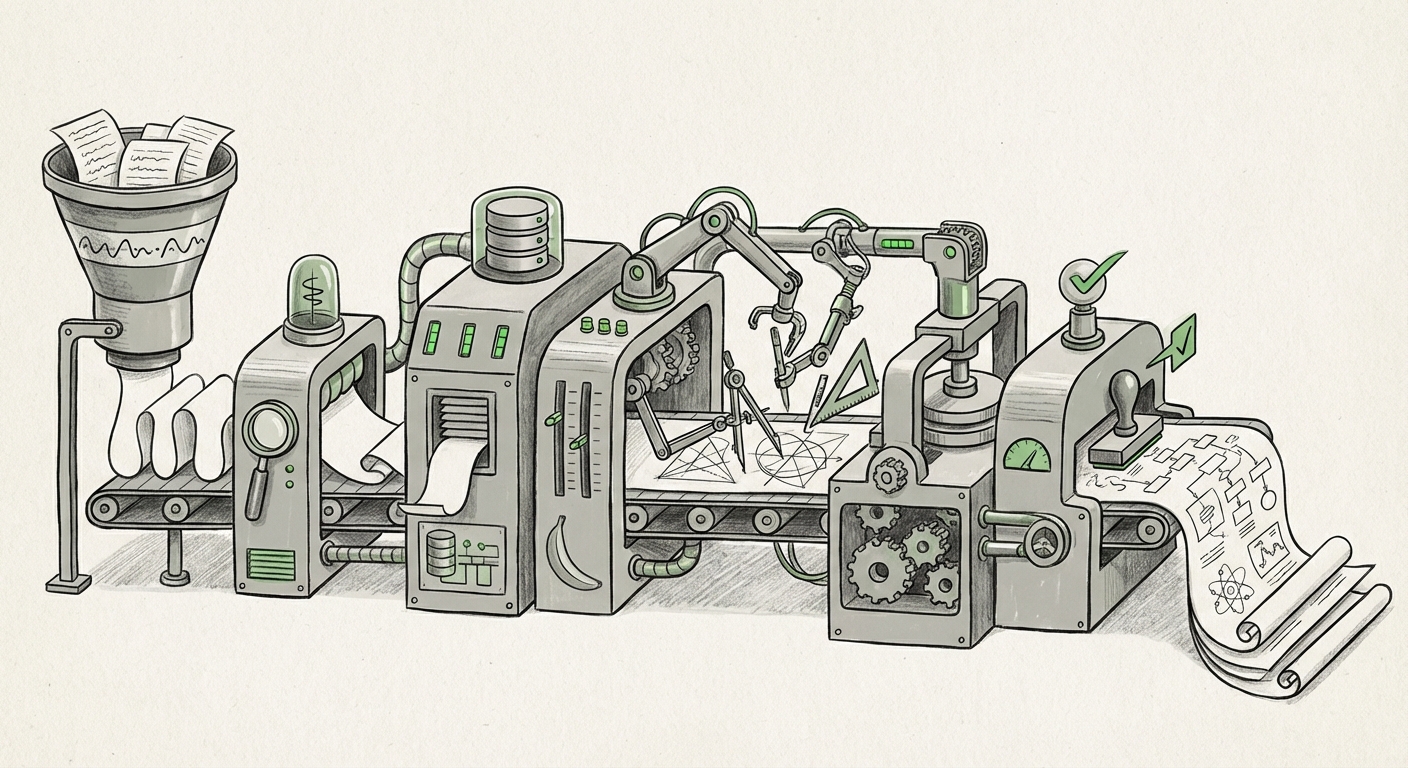
No single algorithm makes this work. It is a stack of small systems, each handling one job. Here is what such a stack looks like in plain terms.
Sense and See
Cameras, radar, and other sensors feed the machine. AI models turn that raw data into a picture of the world: here is the ground, here is a wall, here is a person, here is a wire. This is called perception, and it is the base layer of every useful autonomous system.
Plan and Replan
Route-finding software picks a path. When something changes, a new obstacle, a sudden threat, the system recalculates in seconds. Older software needed a human to redo the plan. Modern planners adjust on their own and then ask for approval.
Fly Steady
Control systems keep the machine level and stable even when wind, weight shifts, or damage push it around. These are the unsung heroes. They are old technology, but AI has made them far more tolerant of messy real-world conditions.
Watch the Patient
Sensors can monitor the person being carried, movement, position, and in some setups vital signs. If something looks wrong, the system can flag the medical team before arrival. That turns a ride into the start of care.
Keep the Human in Charge
The most important layer is not technical. It is the decision layer. A human sets the mission, approves the pickup, and can take over at any moment. Good design makes that handoff smooth and obvious.
Put together, this stack is what engineers call a human-supervised autonomous system. It does not need to be fully self-driving to be useful. It just needs to be reliable enough that a person is willing to trust it with something that matters.
From Battlefield to Business: The Real Shift
It is tempting to file this story under defense news and move on. That would be a mistake. The pattern here, machines taking on high-risk physical tasks that used to require people, is about to repeat across many industries.
Consider what makes evacuation a good fit for autonomy. The task is dangerous. It is repetitive in structure but unpredictable in detail. It has a clear success measure: the person arrives alive. And there is a strong moral case for not sending humans into the same risk.
Now look at other jobs that match those traits:
- Search and rescue. Finding people after earthquakes, floods, or fires, in places too unstable for rescue teams to enter quickly.
- Disaster logistics. Moving medicine, water, and blood to cut-off areas when roads are gone.
- Remote medicine. Carrying supplies, or eventually patients, between clinics and hospitals where ground transport is slow.
- Industrial inspection. Sending machines into confined spaces, high places, or toxic zones instead of people.
- Wildfire and hazmat work. Getting close to danger without putting a crew in the middle of it.
In each case, the value is not that the machine is cheaper. The value is that the machine can do something people should not have to do. That is the most durable business case for autonomy, because it is about risk, not just cost.
Trust Is the Bottleneck, Not the Technology
Here is the uncomfortable truth for anyone building in this space: most of the technology already works. The hard part is trust.
People will not hand over a life to a system they do not understand. So the winners in this field will be the teams that solve the human side as carefully as the engineering side.
Three trust problems to solve
- Explainability. The operator needs to know why the machine chose a route. A black box that just says "trust me" will get switched off.
- Graceful failure. What happens when the link drops or a motor fails? Systems that fail safely, hover, land, return, will be adopted far faster than systems that fail dramatically.
- Clear authority. Everyone in the chain must know who can override what, and when. Confusion about control is how accidents happen.
Consent and dignity matter too, especially in medical settings. A wounded person should know what is carrying them, and a clinician should be the one making care decisions. AI can carry a patient. It should not decide who gets carried first.
Rules, Risk, and the New Paperwork
Every new kind of machine brings new rules. Expect three areas to grow quickly as heavy drones move into rescue and logistics.
Airspace and ground rules. Heavy drones flying over people need clear corridors, clear separation from crewed aircraft, and clear rules for emergencies.
Liability. If a machine is involved in an injury, who is responsible? The operator, the maker, the software supplier, or the buyer? Insurers will demand answers before they write policies. Companies that document their safety cases well will get coverage first.
Certification. Regulators will want proof that a system behaves safely in bad conditions, not just good ones. Testing in realistic, messy environments will become a competitive advantage.
Five Trends to Watch Next
- Heavier lift, longer range. The same progress that made this evacuation possible will push payload and distance further, opening more logistics missions.
- Teamwork between machines. One drone to scout, one to carry, one to relay the signal. Swarms of specialized units will beat single general-purpose ones.
- Better human interfaces. Simple controls and clear displays will let medics and field staff, not just trained pilots, run missions.
- More medical payloads. Blood, medicine, and monitoring gear moving by air will arrive before autonomy is trusted with patients in every case.
- Civilian spillover. Mountain rescue, island medical runs, and rural delivery will adopt the same hardware once it is proven and cheap enough.
What Leaders Should Do Now
Whether you run a hospital network, a logistics firm, an insurer, or an engineering team, the practical steps are similar.
- Map your dangerous tasks. List the jobs where people face real physical risk. That list is your shortlist for autonomy pilots.
- Start with supervision, not autonomy. Run remote-controlled or partly autonomous missions first. Build trust and data before removing the human.
- Design the handoff. Spend real effort on the moment a human takes over. It is where most failures happen.
- Write the safety case early. Document how your system fails safely. Regulators and insurers will ask, and early paperwork shortens timelines later.
- Keep clinical and ethical decisions human. Let machines carry, sense, and report. Let people decide.
The Bigger Picture
The first drone evacuation is a small event with a large meaning. It shows that autonomous systems are no longer just tools for watching and striking. They are becoming tools for carrying and caring.
That is the direction the whole field is heading. The most important AI stories of the next few years will not be about chatbots getting smarter. They will be about machines doing physical work that is too dangerous, too remote, or too fast for people, and doing it well enough that we let them.
War has a way of speeding up technology and then handing it to the rest of us. The heavy drone that carried one wounded soldier out of danger is a test case. The question now is how quickly the same idea reaches a burning building, a flooded valley, or a mountain trail, and how well we handle the trust, rules, and responsibility that come with it.