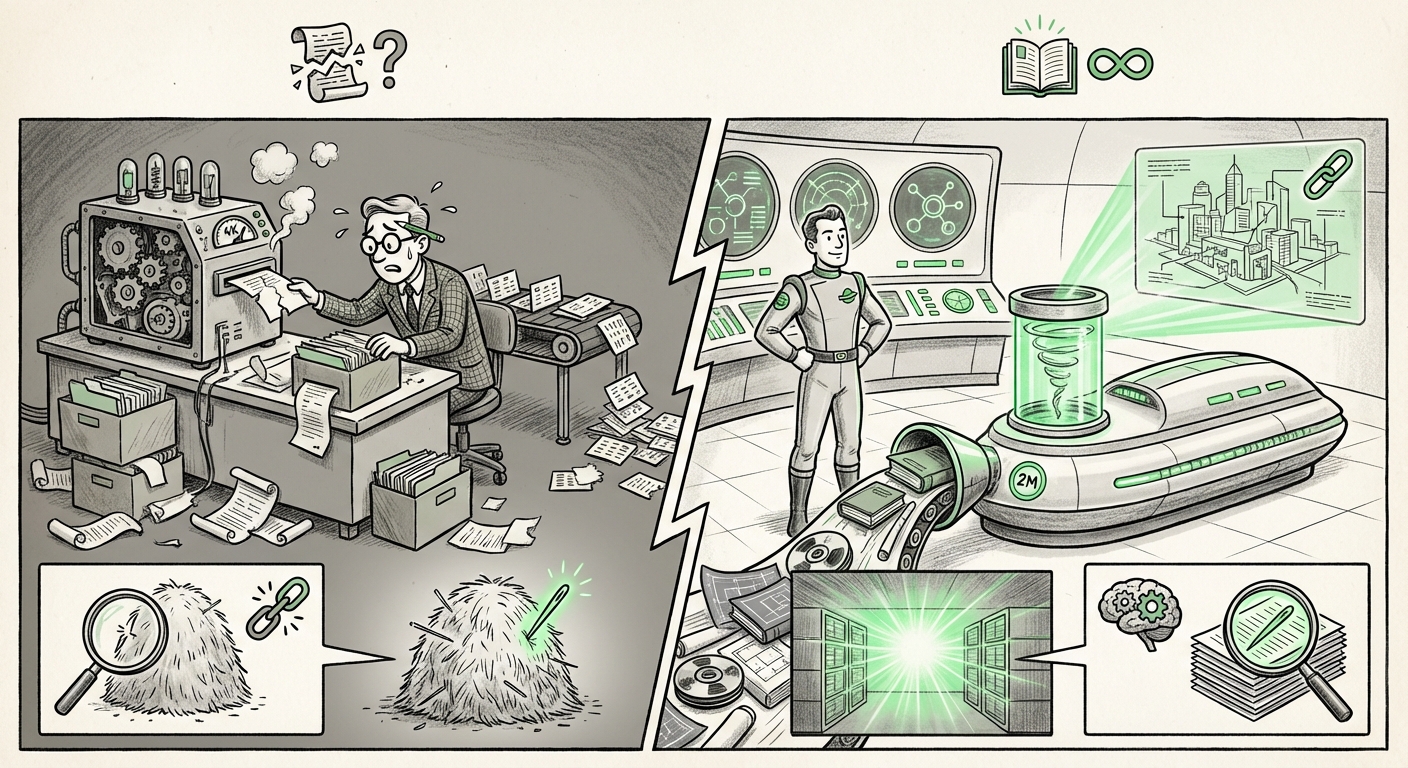
AI Breakthrough Cuts Energy Use by 100x While Boosting Accuracy: What It Means for the Future of AI
A new AI breakthrough has achieved something the industry has long hoped for but rarely seen: it slashes energy consumption by a factor of 100 while actually improving accuracy. That is not a small tweak. It is a fundamental shift that could reshape how AI is built, deployed, and used across every sector.
For years, the story of artificial intelligence has been a trade-off. Bigger models delivered better results, but they consumed massive amounts of electricity. Data centers grew hungrier. Costs climbed. And the environmental footprint of AI became a growing concern. This new development flips that trade-off on its head. Less energy, better performance. The implications are enormous.
The Energy Problem That Has Been Holding AI Back
Training and running large AI models is expensive. Not just in dollars, but in watts. A single advanced model can use as much electricity as a small town. Companies spend millions on power and cooling. Governments and utilities are wrestling with the strain on grids. And as AI spreads into more products, the energy demand only grows.
This energy burden has real consequences. It limits who can afford to build and use AI. It raises operating costs for businesses. It makes real-time AI on small devices difficult because of battery life. And it contributes to carbon emissions at a time when sustainability is a top priority for many organizations.
Many researchers have tried to make AI more efficient. Most efforts produce small gains, maybe 10 percent or 20 percent. A 100x improvement is a completely different category. It is the difference between a car that gets 30 miles per gallon and one that gets 3,000 miles per gallon. It changes the math entirely.
What a 100x Energy Cut Actually Means
To understand the scale, imagine an AI system that currently uses 100 units of energy to perform a task. With this breakthrough, the same task would use just one unit. That is a 99 percent reduction. For a data center that spends $1 million a month on electricity, the bill could drop to $10,000. For a smartphone running AI features, battery life could stretch from hours to weeks.
This kind of efficiency unlocks things that were previously impractical. AI could run continuously on small sensors in remote locations. Smart devices could process data locally without sending everything to the cloud. Large-scale AI services could operate at a fraction of the cost, making them affordable for smaller businesses and developing regions.
The breakthrough also means that AI can be deployed in places where power is scarce or expensive. Think of agricultural sensors in rural areas, medical devices in field clinics, or environmental monitors in remote forests. These applications become viable when energy use drops by 100x.
The Surprising Bonus: Better Accuracy
What makes this breakthrough even more remarkable is that it does not sacrifice performance. In fact, accuracy improves. That is counterintuitive. Usually, when you make a system more efficient, you cut corners and lose precision. Here, the opposite happened.
This suggests that the method is not just about using less power. It is about using power more intelligently. Perhaps it eliminates redundant computations. Perhaps it focuses resources on the most important parts of a problem. Whatever the underlying mechanism, the result is a system that is both leaner and sharper.
For businesses, this means better AI results at lower cost. For users, it means faster, more reliable responses. For society, it means we can have more AI without the environmental penalty.
Implications for Businesses
Lower Operating Costs
Energy is one of the biggest hidden costs of AI. Companies pay for power, cooling, and hardware. A 100x reduction in energy use translates directly into savings. Those savings can be reinvested in innovation, passed on to customers, or used to scale AI to more use cases. Small and medium-sized businesses that could never afford large-scale AI now have a path forward.
Edge AI and Real-Time Processing
When AI uses 100 times less energy, it can run on small devices without draining batteries. This enables edge AI, processing data right where it is collected. A security camera can recognize faces without sending video to the cloud. A factory sensor can predict equipment failure on the spot. A hearing aid can filter background noise in real time. These applications become practical when power demands plummet.
Sustainability and ESG Goals
Many companies have made public commitments to reduce their carbon footprint. AI has been a growing part of that footprint. This breakthrough offers a way to expand AI use while actually lowering emissions. That is a rare win-win. It also helps companies meet regulatory requirements and satisfy investors who care about environmental performance.
Implications for Society
Democratizing AI Access
Energy costs are a barrier to entry. Only rich companies and countries can afford to train and run the largest AI models. A 100x efficiency gain lowers that barrier dramatically. Startups, universities, and nonprofits can compete. Developing nations can build AI infrastructure without massive power plants. The result is a more diverse and inclusive AI ecosystem.
Environmental Impact
Data centers already consume about 1 percent of global electricity, and that share is growing. If AI becomes 100 times more efficient, the growth in AI use may not translate into a proportional growth in emissions. In fact, we could see AI energy use decline even as adoption skyrockets. That would be a major victory for climate efforts.
New Applications
When energy is no longer a constraint, creativity takes over. We could see AI in places we never imagined: smart clothing that monitors health, tiny drones that navigate forests, implantable devices that assist with daily tasks. The 100x factor turns science fiction into engineering roadmaps.
What to Watch Next
The breakthrough raises important questions. How quickly can it be scaled? Is it a lab result or a production-ready technique? What hardware does it require? Will it work for all types of AI, or only certain models? These are the details that will determine real-world impact.
Also watch for competitive responses. If one team has achieved 100x efficiency, others will race to match or beat it. The pace of innovation in AI efficiency could accelerate rapidly. That is good news for everyone.
Finally, watch for new business models. Cheap, efficient AI could enable subscription services that were never profitable before. It could make AI embedded in everyday objects, from furniture to appliances, a standard feature rather than a luxury.
Actionable Insights
- For business leaders: Start planning for a future where AI is dramatically cheaper to run. Revisit your AI roadmap and consider use cases that were previously too expensive.
- For developers: Keep an eye on efficiency techniques. The tools you use today may become obsolete if a 100x improvement becomes widely available.
- For policymakers: Update energy regulations and incentives to reward efficient AI. Encourage research into sustainable computing.
- For investors: Look for companies that are leading in AI efficiency. They will have a cost advantage and a sustainability edge.
- For consumers: Expect AI to become more pervasive, more responsive, and less taxing on your devices and the environment.
The breakthrough is a reminder that AI is still in its early days. The biggest gains may come not from bigger models, but from smarter, more efficient ones. A 100x energy cut with better accuracy is a signal that the next wave of AI will be leaner, greener, and more accessible. That is a future worth building.