FairStress: Why Deeper Fairness Testing Is the Next Big Step for AI Decision-Making
Large language models are no longer just chat toys. They are being used to screen job applicants, flag suspicious transactions, recommend medical treatments, and decide who gets a loan. When AI systems make decisions that affect people’s lives, fairness is not a nice-to-have. It is a must.
A new evaluation approach called FairStress is drawing attention to a critical gap: most fairness tests for LLMs are too shallow. They check a model on a single dataset, with one or two sensitive attributes, and call it a day. But the real world is messy. People have overlapping identities. Language shifts. Context changes. A model that looks fair in a lab can quietly fail in production.
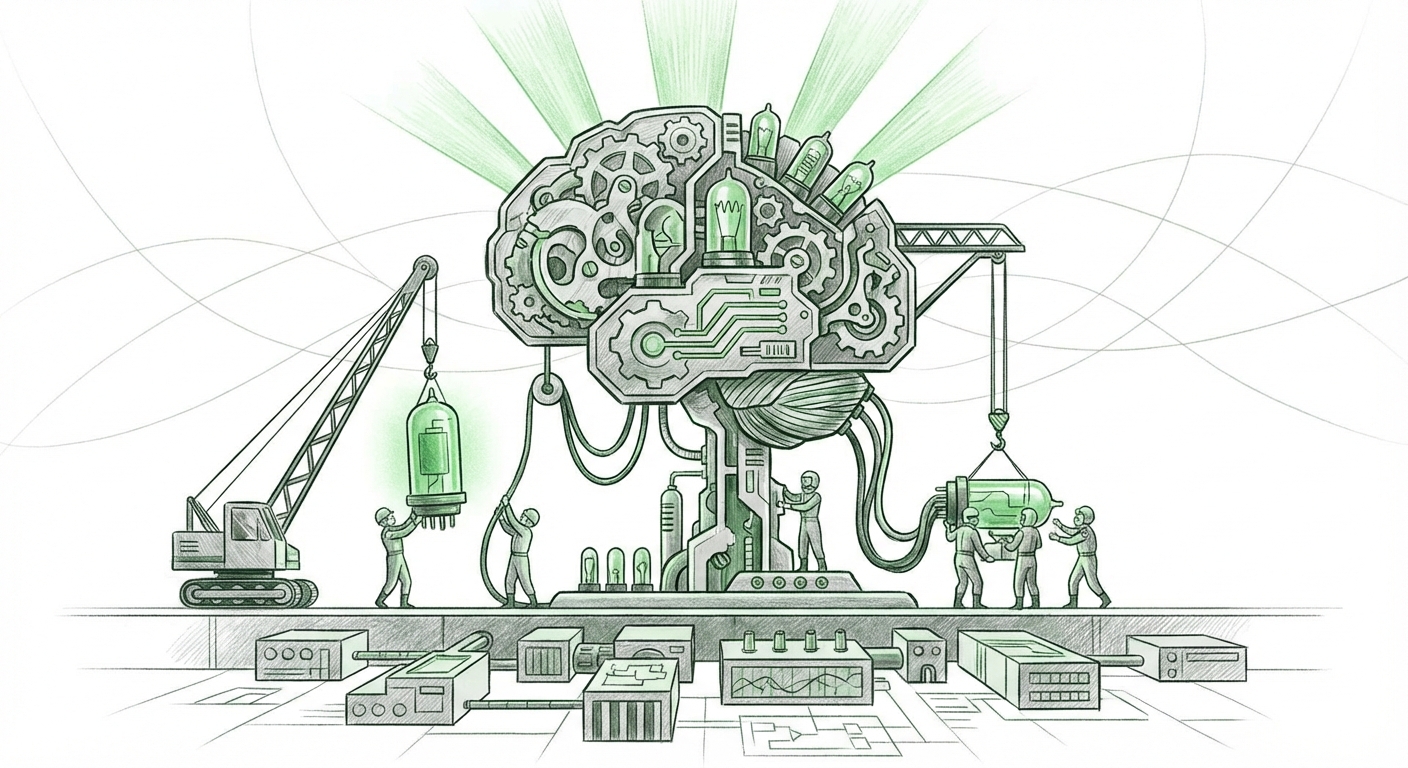
FairStress, as the name suggests, is about putting fairness under stress. It is a deeper way to evaluate whether LLM decision-making holds up when the conditions get tough. The core idea is simple but powerful: if an AI system is going to make high-stakes decisions, we need to test it the way we test bridges, by pushing it past its comfort zone.
Why Fairness in LLM Decision-Making Is So Hard
Fairness is not a single number you can optimize. It means different things in different contexts. Sometimes it means equal treatment regardless of gender, race, or age. Sometimes it means equal outcomes. Sometimes it means correcting for historical disadvantages. These goals can conflict. A model can be fair by one measure and unfair by another.
LLMs make this harder because they are general-purpose. The same model can write a poem, answer a legal question, and score a resume. Fairness in one task does not guarantee fairness in another. A model might be fair when summarizing news but biased when recommending salaries.
Worse, LLMs are sensitive to how you ask a question. Change a few words in a prompt and the model’s decision can flip. That means a fairness test that uses only one phrasing is dangerously incomplete. If a hiring model treats “software engineer” candidates fairly but treats “software developer” candidates unfairly, a simple test will miss it.
Finally, real-world data drifts. The population a model sees in deployment is rarely the same as the population in its training data. A model that is fair on last year’s data may be unfair on this year’s. Deeper evaluation must account for that drift.
What “Deeper Evaluation” Actually Means
A deeper fairness evaluation like FairStress moves beyond the basics. It asks harder questions:
- Robustness under perturbation: Does the model stay fair when inputs are slightly changed, typos, synonyms, different formats, or adversarial phrasing?
- Intersectional fairness: Does the model treat people fairly when multiple sensitive attributes combine, such as race and gender together, or age and disability?
- Distribution shift: Does fairness hold when the model meets new populations or new contexts it did not see during testing?
- Counterfactual fairness: If you change only a sensitive attribute, like swapping “he” for “she” in a resume, does the decision stay the same?
- Stress testing: Can the model be pushed into unfair behavior by unusual but realistic inputs, such as ambiguous requests or edge cases?
These tests are more expensive and more complex than a single fairness score. But they are far more realistic. They mirror how AI systems actually fail in the wild, not with a dramatic crash, but with subtle, context-dependent bias that slips through simple checks.
The name FairStress captures this well. It is not just about measuring fairness at rest. It is about measuring fairness under load. That is the kind of evaluation that regulators, auditors, and responsible AI teams are starting to demand.
The Bigger Trend: From Checkbox Audits to Continuous Stress Testing
FairStress fits into a broader shift in AI evaluation. For years, fairness was treated as a checkbox. A team would run a bias audit, get a score, and move on. But as AI systems spread into high-stakes domains, that approach is falling apart.
Regulators are catching on. New AI laws and guidelines in many regions now require ongoing risk monitoring, not just one-time tests. Courts and consumers are less forgiving of “we tested it once” excuses. And companies themselves are realizing that a fairness failure can destroy trust, trigger lawsuits, and tank a brand.
The result is a move toward continuous stress testing. Instead of a single audit, teams are building fairness checks into the entire AI lifecycle, during design, before deployment, and after launch. They are testing models with diverse scenarios, monitoring outputs for drift, and creating feedback loops when problems appear.
FairStress is a signal of where the field is heading. Deeper evaluation is not a luxury. It is becoming the baseline expectation for any AI system that makes decisions about people.
What This Means for Businesses
If you are deploying LLMs in hiring, lending, healthcare, education, or customer service, fairness stress testing should be on your roadmap. Here is what that looks like in practice:
- Test beyond the obvious. Do not rely on a single fairness metric or a single dataset. Use multiple metrics, multiple sensitive attributes, and multiple phrasings of the same request.
- Build adversarial fairness tests. Have a red team try to break your model’s fairness with tricky inputs, ambiguous cases, and edge scenarios.
- Document your stress tests. Regulators and partners will ask how you validated fairness. Keep records of what you tested, what failed, and what you fixed.
- Monitor after deployment. Fairness can drift. Set up alerts for when model decisions start diverging across groups in production.
- Involve diverse teams. The people who build the tests should include those who understand the communities affected by the decisions.
Businesses that treat fairness as a one-time audit will be caught off guard. Those that adopt deeper stress testing will be better prepared for regulation, better protected from reputational risk, and more likely to build AI products that people actually trust.
What This Means for Society
Fairness in AI is not just a technical problem. It is a question of power. When an LLM decides who gets a job interview or a loan, it is exercising authority. That authority needs to be accountable.
Deeper evaluation approaches like FairStress help make accountability real. They give auditors, advocates, and policymakers a way to ask harder questions: Did you test this model under realistic conditions? Did you check for intersectional bias? Did you stress test it before you put it in charge of people’s lives?
They also expose a hard truth: there is no such thing as a perfectly fair model. Every model has trade-offs. The goal is not to find a model with zero bias. The goal is to build systems that are transparent about their trade-offs, robust under stress, and continuously monitored for harm.
That is a more mature conversation than “is this model fair or not?” It is a conversation about how to govern AI in a way that earns public trust. FairStress, by pushing for deeper evaluation, helps move that conversation forward.
Actionable Insights: How to Get Started
You do not need a massive team to start deeper fairness testing. Here are practical steps:
- Map your use case. Identify where LLM decisions affect people. Rank those decisions by risk.
- Choose multiple fairness definitions. Decide which fairness metrics matter for your context, and test against more than one.
- Create a stress test suite. Build a set of challenging prompts, edge cases, and counterfactuals that probe for bias.
- Run regular tests. Make fairness testing a routine part of model updates, not a one-off event.
- Track results over time. Compare fairness across versions. Watch for regressions.
- Get outside review. Invite external auditors or community representatives to review your methods and findings.
These steps are not easy. They require time, resources, and a willingness to find problems. But they are far cheaper than the alternative: a fairness failure that makes headlines and hurts real people.
The Future of Fairness Evaluation
FairStress is a step toward a future where fairness evaluation is as rigorous as performance evaluation. In that future, no one would dream of deploying a model without stress testing its fairness, just as no one would deploy a bridge without testing its load capacity.
That future is not guaranteed. It depends on researchers building better tests, businesses adopting them, and regulators demanding them. But the direction is clear. Deeper evaluation is where the field is going. FairStress is a useful name for a necessary idea: fairness must be tested under pressure, not just in ideal conditions.
As LLMs take on more decision-making power, the stakes will only rise. The question is not whether we will need deeper fairness evaluation. It is whether we will do it before the next failure, or after.