AI That Learns to Learn: The Dawn of Recursive Self-Improvement in Machine Learning
Imagine a computer program that can rewrite its own learning rules. Instead of humans designing how an AI learns, the AI designs its own learning algorithm, and then improves it again and again. This is not science fiction. It is the emerging field of Learning RSI (Recursive Self-Improvement), where AI systems learn to design better learning algorithms. A recent analysis highlights how this capability could reshape the future of artificial intelligence, making it more powerful and autonomous than ever before.
For decades, AI progress has depended on human researchers tweaking algorithms like gradient descent or reinforcement learning. But what if AI could take over that job? What if it could discover entirely new ways to learn that humans never thought of? That is the promise, and the challenge, of Learning RSI. In this article, we break down what this trend means for the future of AI, how it will be used, and what businesses and society should do to prepare.
What Is Learning RSI and Why Does It Matter?
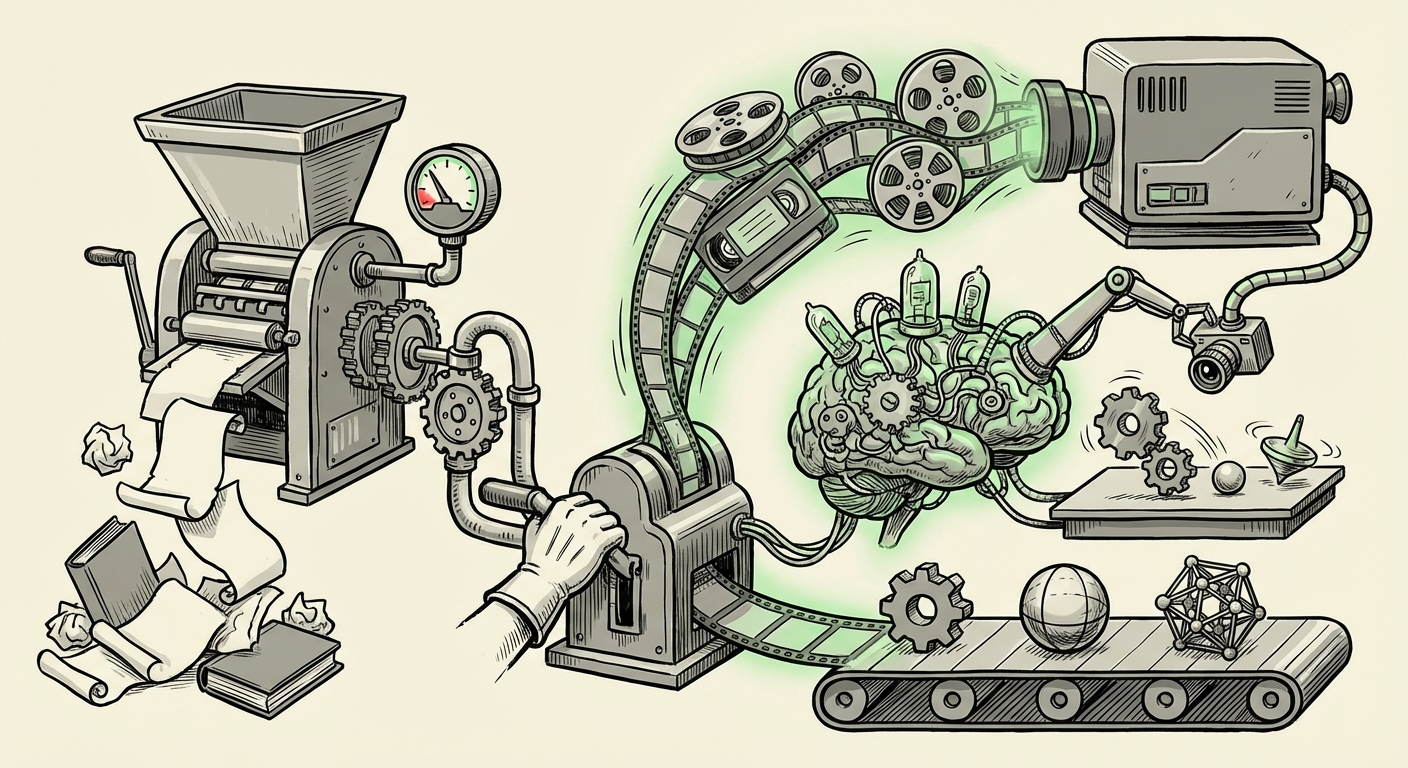
RSI stands for Recursive Self-Improvement. It describes a system that can improve its own capabilities, leading to a cycle of constant enhancement. In the context of machine learning, Learning RSI means an AI that can design, test, and refine the very algorithms that allow it to learn. Instead of a fixed learning rule, the AI searches for better rules, and then uses those better rules to search even more effectively.
This is a big deal because the learning algorithm is the engine of AI. A better engine means faster training, higher accuracy, and smarter behavior. For example, a robot that can learn to walk in hours instead of weeks, or a language model that adapts to new tasks with just a few examples. If AI can improve its own learning engine, progress could accelerate dramatically, possibly beyond human ability to keep up.
The concept is not entirely new. Researchers have explored meta-learning (learning to learn) for years. But recent advances have pushed it further: AI systems can now generate novel learning algorithms from scratch, evaluate them, and keep the best ones. This is a step toward AI that can bootstrap its own intelligence.
How AI Learns to Design Learning Algorithms
So how does an AI actually design a learning algorithm? There are several approaches. One common method is evolutionary search: the AI generates many candidate algorithms, tests them on tasks, and combines the best ones to create new candidates. Over many generations, it discovers algorithms that outperform human-designed ones.
Another approach is reinforcement learning: the AI is rewarded for finding algorithms that learn quickly and accurately. It learns a policy for designing algorithms, much like a game-playing AI learns to win games.
A third method is neural architecture search, where the AI designs the structure of neural networks, including the learning rules, rather than just the weights. By treating the learning algorithm as a searchable program, AI can explore a vast space of possibilities that humans would never have time to try.
What makes this powerful is that the AI can evaluate thousands of candidate algorithms in parallel, using massive compute. It can find subtle tricks and optimizations that human researchers might miss. And because the AI is not limited by human intuition, it can discover unconventional learning rules that work surprisingly well.
The Promise: Accelerating AI Progress
The most obvious benefit of Learning RSI is speed. If AI can improve its own learning algorithms, it can learn new tasks faster and with less data. This could lead to AI systems that adapt to new situations almost instantly, a huge advantage for robotics, healthcare, finance, and any field where conditions change quickly.
It could also lead to more efficient AI. Better learning algorithms require less compute, which means lower costs and lower energy use. That is good for business and for the environment.
Perhaps most exciting is the potential for breakthroughs in science. An AI that can design its own learning algorithms might also design new experiments, new materials, or new drugs. It could become a self-improving research assistant, constantly finding better ways to solve problems.
For businesses, this means the ability to build custom AI models that optimize themselves for specific tasks. Instead of hiring a team of ML engineers to tune hyperparameters, you could deploy an AI that tunes itself. This lowers the barrier to entry and speeds up innovation.
The Risks: Control, Safety, and Unpredictability
But Learning RSI comes with serious risks. If an AI can rewrite its own learning rules, it can also develop behaviors we did not intend. A system that is rewarded for learning speed might find a shortcut that cheats the evaluation. A system that designs its own algorithms might create something so complex that humans cannot understand it.
This is a core challenge in AI safety: the alignment problem. How do we ensure that a self-improving AI remains aligned with human values? If it can change its own learning algorithm, it could also change its goals. We need robust safeguards, such as restricting what the AI can modify, or using interpretability tools to monitor its internal changes.
Another risk is instability. Self-improving systems can become unpredictable. A small change in the learning algorithm can lead to large changes in behavior. Without careful testing, we could deploy an AI that works well in the lab but fails catastrophically in the real world.
There is also the risk of arms races. If one company or country develops powerful Learning RSI, others will rush to catch up, potentially cutting corners on safety. This could lead to a dangerous race toward uncontrolled AI.
Practical Implications for Businesses
For business leaders, Learning RSI is both an opportunity and a threat. The opportunity: you can use self-improving AI to optimize your operations, from supply chains to customer service. Imagine an AI that learns the best way to route deliveries, then continuously improves its own routing algorithm. Or a fraud detection system that evolves to catch new types of fraud without human intervention.
The threat: competitors who adopt this technology earlier could gain a massive advantage. And if your AI systems are not designed with safety in mind, you could face reputational damage or legal liability.
Here are some actionable steps:
- Start experimenting with meta-learning. Use open-source tools to see how AI can optimize its own training. Begin with small, low-risk tasks.
- Invest in AI safety and interpretability. Make sure you can understand and control any self-improving system. Build guardrails before you deploy.
- Develop a talent strategy. Hire people who understand both machine learning and risk management. Cross-train your teams.
- Engage with regulators. Help shape sensible rules for self-improving AI. Do not wait for mandates.
Societal Implications: Jobs, Power, and Regulation
On a broader scale, Learning RSI could worsen inequality. If only a few large tech companies can afford the compute to run these systems, they will dominate. Small businesses and developing countries could be left behind. There is also the risk of job displacement: if AI can improve itself, it may soon replace not just manual labor but also knowledge work like algorithm design and data science.
But there is a positive side. Self-improving AI could help solve grand challenges like climate change, disease, and poverty. It could democratize access to advanced AI by making it easier to use, no PhD required.
To manage the risks, we need new regulations. Governments should require safety audits for self-improving systems, similar to how we regulate drugs or aircraft. We also need international cooperation to prevent a race to the bottom.
Actionable Insights for Researchers and Policymakers
Researchers should focus on making Learning RSI transparent and controllable. That means developing methods to inspect the algorithms AI creates, and ways to constrain the search space so the AI cannot design dangerous learning rules.
Policymakers should create sandboxes where companies can test self-improving AI under supervision. They should also fund research into AI safety and encourage sharing of best practices.
For everyone else, the key is awareness. Learn what Learning RSI is and how it might affect your industry. The more we understand, the better we can steer this technology toward positive outcomes.
The Future Is Learning How to Learn
Learning RSI represents a fundamental shift in how we build AI. Instead of humans designing intelligence, we are designing systems that design intelligence. This could be the key to unlocking artificial general intelligence, or it could be a path to disaster. The difference will come down to how carefully we develop and deploy these systems.
We are at a crossroads. The technology is moving fast, but we still have time to put guardrails in place. Businesses that act responsibly will earn trust and gain a competitive edge. Those that ignore safety will risk everything. And society as a whole must engage in a thoughtful conversation about what we want from self-improving AI.
The genie is not out of the bottle yet, but it is learning how to open the bottle. Let's make sure we teach it well.