Why AI Agents Need Workflows: Turning Smart Software Into Reliable Business Tools
AI agents are the next big step for artificial intelligence. Instead of just answering questions, an agent can plan, use tools, take actions, and work through a task on its own. That is a powerful idea. But there is a catch. A smart agent without a clear process is like a very talented new hire with no training, no checklist, and no manager. It might do something amazing. It might also do something expensive, slow, or wrong.
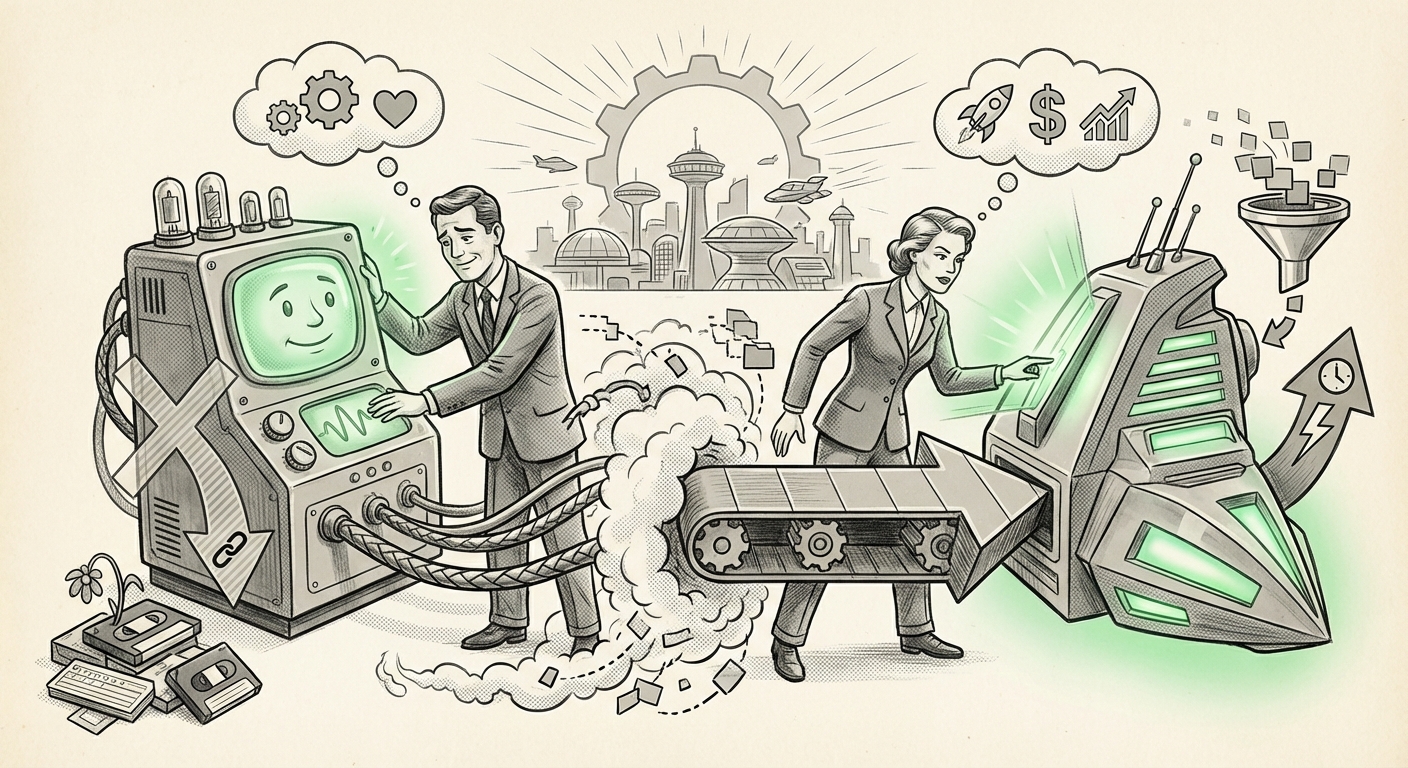
The future of AI at work is not just about smarter models. It is about better systems around those models. That is why AI agents need workflows. Workflows turn a clever demo into a reliable business tool. They are the missing link between “wow” and “we can actually use this every day.”
The Agent Promise vs. the Production Reality
Agents are exciting because they can act. A chatbot can suggest an email. An agent can send it. A chatbot can explain a refund policy. An agent can look up an order, check the rules, and start the refund. That move from talk to action is what makes agents valuable.
But real work has rules. It has steps that must happen in order. It has approvals, security checks, and records. It has failure cases. A raw agent given a goal and a set of tools may wander. It may try the same step twice. It may use a tool it should not use. It may cost more than expected. It may take an action that cannot be undone.
In a demo, one good result is enough. In production, you need a good result every time, or at least a clear, safe path when things go wrong. That is a workflow problem, not just a model problem.
What Is an AI Workflow?
An AI workflow is a defined path for getting work done. It says what starts the process, what steps must happen, what data is needed, who or what makes each decision, and what happens when something fails. Some steps may use AI. Some may use plain software rules. Some may need a human.
Think of an assembly line. The line does not make the worker less skilled. It gives the worker a clear place to stand, the right parts at the right time, and a way to catch mistakes. A workflow does the same for an AI agent. It focuses the agent’s intelligence on the step where it adds the most value.
A good workflow includes triggers, guardrails, handoffs, checks, and fallbacks. Triggers start the work. Guardrails set limits. Handoffs move work between people and software. Checks catch errors. Fallbacks give a safe path when the agent gets stuck.
Why Autonomy Alone Breaks Down
Agents are powered by large language models and other AI systems. These systems are powerful, but they are not perfectly predictable. The same input can produce different outputs. A small mistake early in a task can grow into a big problem later. This is called compounding error. Workflows help stop small errors from becoming big ones.
There are other reasons raw autonomy is risky:
- Cost and speed: An agent may loop, retry, or overthink. Workflows set step limits and budgets.
- Security: An agent with broad tool access can do broad damage. Workflows give least-privilege access at each step.
- Audit and accountability: Businesses need to know who did what, when, and why. Workflows create records.
- Integration: Real systems need order. You cannot update a record before you check it. You cannot send a message before it is approved.
- Trust: People trust systems they can inspect. A clear workflow is easier to explain, test, and improve.
None of this means agents should be tightly controlled at every moment. It means autonomy should live inside a structure. The structure is the workflow.
The Rise of Agentic Workflows
The most useful pattern is not “agent replaces workflow.” It is “agent joins workflow.” This is often called an agentic workflow. It mixes deterministic steps, fixed rules that always run the same way, with probabilistic steps where AI reasoning helps.
Consider a customer support process. A workflow can classify the request, pull the right account data, let an agent draft a response, run a policy check, require human approval for high-risk cases, send the reply, and log the outcome. The agent does the language work. The workflow does the coordination, limits, and records.
This pattern works in many areas: claims processing, invoice matching, IT help desks, sales research, compliance reviews, and supply chain exceptions. The agent is not the whole system. It is a skilled part inside a larger system.
The Orchestration Layer Becomes the Product
As agents move into real work, the important layer is not just the model. It is the orchestration layer around the model. Orchestration means routing work, managing memory, controlling tool access, applying guardrails, and watching what happens. It is the difference between a pile of smart parts and a working machine.
This changes what companies should look for. The best agent product will not just brag about model scores. It will show how work is controlled. Can you set step limits? Can you require approvals? Can you see a full trace of every action? Can you test a change before it goes live? Can you roll back? These are workflow questions, and they will decide which agents businesses trust.
We are also likely to see more focus on “agent ops”, the practice of running agents in production. That includes versioning prompts, testing against real cases, monitoring drift, tracking cost, and reviewing failures. Agents are software, and software needs operations. Workflows make those operations possible.
Practical Implications for Businesses
For business leaders, the message is clear: do not start with “How can we add an agent?” Start with “Which workflow needs help?” Pick a process that is high-volume, well-understood, and painful. Then ask where AI can make a step faster, cheaper, or better.
A strong approach looks like this:
- Map the process first. Write down the steps, owners, data, and failure points before adding AI.
- Define success in numbers. Use measures like time per case, error rate, cost per task, and customer satisfaction.
- Start narrow. Pick one workflow and one clear outcome. Do not try to automate the whole department at once.
- Put humans where risk is high. Use human approval for money, legal, safety, and customer-impacting actions.
- Give least-privilege access. An agent should only have the tools it needs for the step it is doing.
- Set budgets and limits. Control how many steps, how much time, and how much money an agent can use.
- Instrument everything. Log inputs, decisions, tool calls, and outputs so you can review and improve.
- Plan for failure. Every workflow needs a safe stop, a retry path, and a person to call when needed.
Vendors should be asked hard workflow questions. How do you prevent runaway loops? How do you handle permissions? How do you test changes? How do you show an audit trail? How do you hand off to a human? The answers will separate serious tools from impressive demos.
What This Means for Society and Work
AI agents will not replace most jobs all at once. They will take over tasks inside jobs. Workflows make those handoffs clear. They show which parts are done by software and which parts need people. That clarity is good for workers and for the people who depend on the work.
But workflows also raise new questions. If an agent makes a mistake inside a workflow, who is responsible? If a workflow is too rigid, does it block good judgment? If it is too loose, does it let bad actions through? These are not just technical questions. They are governance questions. Society will need clear rules for transparency, appeal, and accountability.
Workflows can help. They create records. They create checkpoints. They make it possible to inspect what happened. That is the base for trust. Without that base, AI agents will stay stuck in pilots. With it, they can become part of everyday work.
Actionable Insights
If you are building or buying AI agents, here are practical steps to take now:
- Treat the workflow as the product. The model is an engine. The workflow is the steering, brakes, and dashboard.
- Design for the unhappy path. Spend as much time on errors, exceptions, and handoffs as on the happy path.
- Use deterministic steps where possible. If a rule can be plain code, use plain code. Save AI for steps that need language, judgment, or messy data.
- Make work visible. Every agent action should leave a trace that a human can review.
- Test with real cases. Use past examples, edge cases, and adversarial inputs before going live.
- Train people for new roles. Workflow designers, agent supervisors, and AI reviewers will matter as much as prompt writers.
- Review and improve. Set a monthly review of outcomes, costs, and failures. Workflows should get better over time.
The Future: From Agents to Agent Teams
The next wave will not be single agents. It will be teams of agents working together inside larger workflows. One agent may research, another may draft, another may check. That makes workflows even more important. Teams need shared rules, clear handoffs, and a way to resolve conflicts.
In that future, the winning companies will not be the ones with the most autonomous agents. They will be the ones with the most reliable systems for putting agents to work. The model will keep getting smarter. But smart is not the same as dependable. Dependable comes from design.
The real question is not “How smart can AI agents get?” The real question is “How well can we wrap them in workflows that make them safe, useful, and accountable?” Answer that, and agents move from interesting demos to real tools. Ignore it, and they stay stuck at the edge of work.
Workflows are not a brake on AI progress. They are the path to it. They let businesses use agent power without losing control. They let people trust what the system does. And they turn the promise of AI agents into something that actually works, day after day.