AI Is Distorting Archaeology and Flattening Indigenous Knowledge, Here’s What That Means for the Future of AI
Artificial intelligence is moving quickly into the study of the human past. It can sort thousands of artifact photos, scan satellite images for signs of old settlements, and turn messy field notes into tidy summaries. Those abilities are tempting for museums, researchers, and cultural heritage groups that face growing piles of data and shrinking budgets.
But there is a serious problem. When AI is used in archaeology without deep care, it can distort what we know about the past. It can also flatten Indigenous Knowledge, the rich, place-based, community-held systems of understanding that have been built over generations. The risk is not just academic. It is an early warning for every industry that uses AI to handle human knowledge.
The core issue is simple: AI systems are very good at finding patterns in data. They are much weaker at understanding context, consent, authority, and meaning. Archaeology and Indigenous Knowledge are full of all four. When those things are stripped away, the results can look clean and confident while being wrong in important ways.
Why AI Looks So Useful in Archaeology
Archaeology is a data-heavy field. Researchers work with maps, soil samples, artifact catalogs, old photos, museum records, oral histories, and site reports. Much of this material is incomplete, inconsistent, and stored in different formats. AI can help connect the dots.
Computer vision can group pottery or stone tools by shape. Machine learning can flag patterns in satellite or drone imagery. Large language models can draft summaries, translate notes, or help organize archives. These tools can save time and reveal patterns that people might miss.
For businesses, this mirrors what is happening everywhere. AI is being used to mine old records, automate research, and turn unstructured knowledge into searchable data. The appeal is obvious. The danger is that the output can look more certain than the input deserves.
How AI Distorts Archaeology
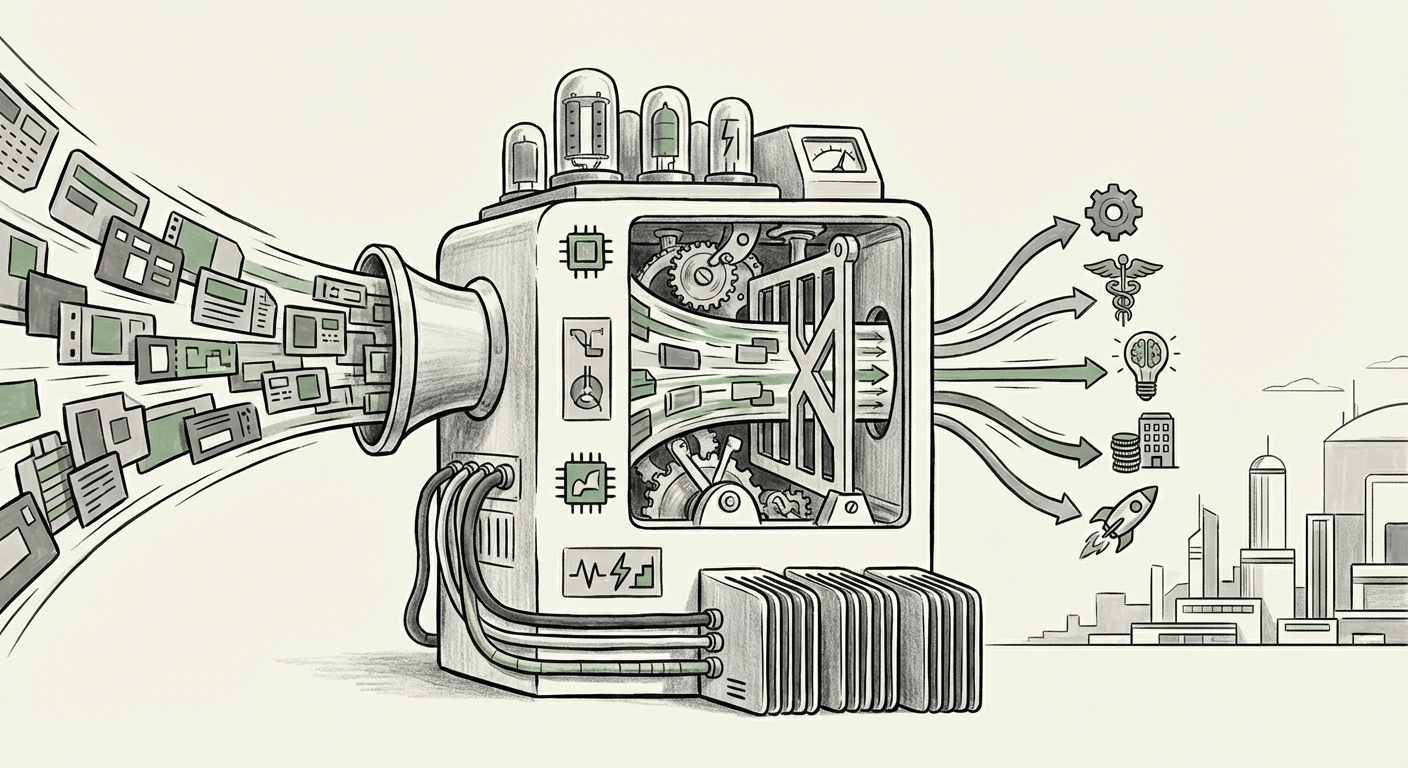
AI does not discover the past in a neutral way. It learns from whatever data it is given. In archaeology, that data often comes from old colonial records, uneven museum catalogs, and past digs that ignored local voices. If those records are biased, the model learns the bias and can make it look scientific.
There are several common failure points:
- Bad labels, bad results. If artifacts were labeled quickly or through outdated categories, the model repeats those mistakes at scale.
- Lost context. A model may classify an object by shape while missing where it was found, how it was used, and what it means to a community.
- False confidence. AI tools often give a single answer or a neat map. They may not show uncertainty or explain why a pattern was flagged.
- Feedback loops. Researchers may trust AI output, publish it, and create new data that trains the next model. Errors can become part of the record.
- Sensitive site exposure. Predictive models can point to places that should be protected. If those results are shared openly, they can invite looting or damage.
The result is not just technical error. It is a shift in who gets to define the past. When a model’s categories become the default, other ways of knowing can be pushed to the side.
How Indigenous Knowledge Gets Flattened
Indigenous Knowledge is not a pile of facts waiting to be uploaded. It is often relational. It is tied to land, language, ceremony, season, family, and responsibility. It may be governed by rules about who can know what, when, and for what purpose. It may live in stories, songs, and practices rather than in tables and documents.
AI systems tend to prefer data that can be stored, sorted, and scored. That pressure can flatten Indigenous Knowledge in several ways:
- Context is removed. A story or place name becomes a data point. The relationships that give it meaning disappear.
- Consent is skipped. Data may be scraped, inherited from old archives, or shared without clear permission from the community.
- Categories do not fit. A model may force knowledge into boxes like “site,” “artifact,” or “folklore” that do not match local concepts.
- Authority is misplaced. A model summary can be treated as more reliable than a community elder or knowledge keeper.
- Benefit is not shared. Communities may see their knowledge used to build products, maps, or research careers while they get little in return.
This is what “flattening” means. Many rich, layered ways of knowing get reduced to one machine-readable layer. The output may be useful to an outsider. It may also be incomplete, misleading, or harmful to the people who hold the knowledge.
What This Means for the Future of AI
The archaeology problem is not a niche issue. It is a preview of what happens when AI is pointed at any body of human knowledge that is complex, political, and owned by communities. The same risks show up in health records, legal archives, education, language tools, and corporate knowledge systems.
The future of AI will not be decided only by better models. It will be decided by better data governance. That means knowing where data came from, who consented to its use, what it means, and who benefits. It means building systems that can say “I don’t know” or “this needs a human review.” It means treating some knowledge as protected rather than public by default.
There is also a trust issue. If AI tools are seen as extracting and flattening Indigenous Knowledge, communities will have good reason to refuse to share data. That refusal is not a barrier to innovation. It is a signal that the innovation is poorly designed. The most useful AI systems of the future will be built with communities, not just about them.
For technical teams, this changes the evaluation question. Accuracy alone is not enough. A model can be accurate on its own test set and still cause cultural harm. Teams will need to measure context preservation, consent, provenance, access control, and benefit sharing. Those are not soft issues. They are product requirements.
Practical Implications for Businesses and Society
Companies that use AI to handle cultural, historical, or community data should expect more scrutiny. That includes media, education, travel, gaming, mapping, insurance, and any business that uses archives or heritage imagery. The risks are legal, reputational, and operational.
Legal risk can come from data protection rules, intellectual property claims, and cultural heritage laws. Reputational risk can come from being seen as taking knowledge without permission. Operational risk can come from building products on data that communities later challenge or withdraw.
There is also an opportunity. Organizations that handle cultural data well can build trust that competitors cannot copy. They can create products with community partners, use clear consent labels, and show how benefits are shared. That is a stronger long-term position than scraping first and asking questions later.
Actionable Insights: A Practical Playbook
For AI and data teams
- Map provenance before modeling. Record where every dataset came from, who created it, and what permissions apply.
- Build “do not use” lists. Some knowledge should not be used in training or products. Make that explicit.
- Add community review. Create a real review step with knowledge keepers, not a one-time consultation.
- Show uncertainty. Design tools that display confidence levels and missing context instead of a single clean answer.
- Test for context loss. Ask whether the model’s output would still be true or respectful if the original community saw it.
For heritage and research organizations
- Do not publish sensitive site predictions openly. Use access controls and review before release.
- Fund community-led data projects. Support local tools, languages, and archives rather than only extracting from them.
- Document categories. Explain why a label exists and who chose it. Avoid forcing local concepts into foreign boxes.
- Train staff on data sovereignty. Make consent and benefit sharing part of everyday practice.
For policymakers and investors
- Require provenance and consent records for AI systems that use cultural or community data.
- Support benefit-sharing agreements so communities gain from uses of their knowledge.
- Ask vendors hard questions about training data, review processes, and cultural risk.
- Treat data sovereignty as infrastructure, not as an afterthought.
The Bigger Lesson: AI Needs Plural Knowledge
The promise of AI is often described as scale. More data, more automation, more speed. But in archaeology and Indigenous Knowledge, scale without context is a trap. The goal should not be to turn every story into a dataset. It should be to build tools that help people understand the past without erasing the people who carry it.
That will require a different kind of AI practice. Slower at the start, more careful with data, more willing to share control. It will require technical teams to work with historians, elders, language keepers, and community leaders. It will require businesses to see cultural knowledge as something to steward, not just extract.
The distortion of archaeology and the flattening of Indigenous Knowledge are not inevitable. They are design choices. The future of AI will be shaped by whether the industry treats those choices as a warning, or waits until the damage is already in the record.