How AI Is Changing the Way We Measure Personal Growth
Personal growth has always been one of those things everyone believes in and almost nobody can measure. We say we are "getting better" at something, or that a year has "changed us," and we mostly mean it. But we rarely have evidence. We have a feeling, a memory, and maybe a journal we stopped writing in three weeks after New Year's.
That is starting to shift. As artificial intelligence becomes woven into the tools people already use, calendars, writing apps, fitness trackers, learning platforms, work dashboards, a new possibility is opening up. Growth can be observed continuously, recorded quietly, and reflected back to us in ways that were never practical before. The question is no longer whether we can measure personal growth. It is whether we should, and what happens to people and businesses when we do.
Why Personal Growth Has Always Been Hard to Measure
There are three reasons growth has resisted measurement. First, it is slow. Real improvement happens in small increments that are invisible day to day. A person who writes for twenty minutes each morning is not obviously better on day nine, only on day nine hundred. Second, it is private. Most of the signals that show growth live in our heads, in rough drafts, in half-finished attempts we never show anyone. Third, growth is multi-dimensional. Someone can grow in patience while shrinking in ambition, or get better at shipping while getting worse at listening.
Traditional measurement tools handle none of this well. A test measures one moment. A performance review measures one quarter, filtered through one manager. A certificate proves attendance, not change. We have been using annual snapshots to describe a process that is continuous, private, and complicated, and then wondering why the picture feels wrong.
From Snapshots to Signals
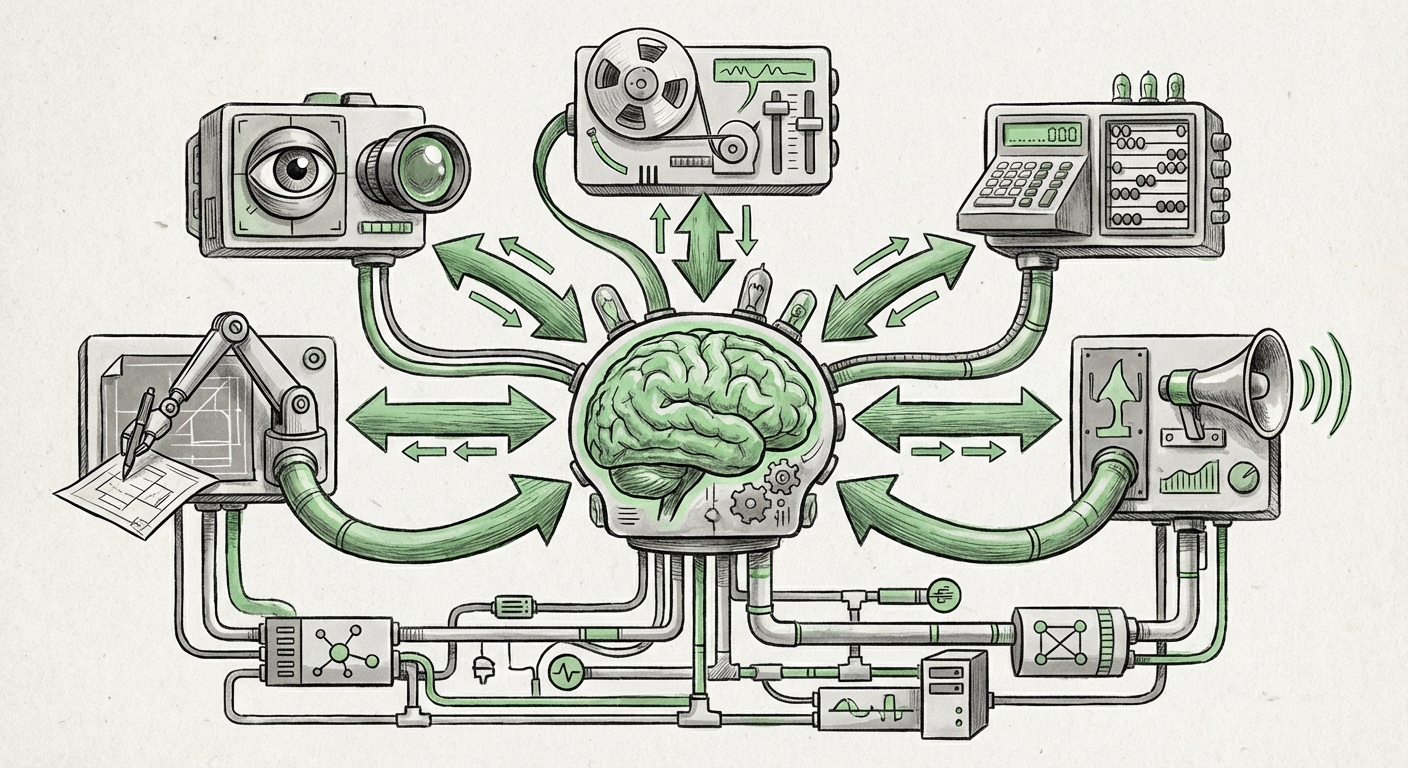
The core shift AI introduces is from periodic judgment to continuous signal. Most of what people do today already leaves a trace: drafts written, practice sessions logged, questions asked, code committed, lessons completed, messages refined. Historically those traces were scattered and unreadable. AI systems are good at the unglamorous work of pulling scattered traces together and finding patterns inside them.
What that looks like in practice is less dramatic than it sounds, and more useful. A writing assistant can notice that your sentences have gotten shorter and clearer over six months. A learning platform can tell you that you now solve a category of problem in a fraction of the attempts it used to take. A workplace tool can show that the documents you produce need fewer rounds of edits than they did a year ago. None of these are "scores." They are observations, and observations are what growth conversations have always been missing.
There is a second, subtler change. AI can measure the things that were previously too expensive to measure. Capturing feedback on a person's progress used to require a human observer with time to spare. That is a scarce resource. When reflection becomes cheap, it can happen far more often, and frequency is what turns a measurement into a habit.
The Feedback Loop That Never Sleeps
The most important consequence is not measurement itself. It is the loop measurement creates.
Think about how people actually get better at things. They try, they get feedback, they adjust, they try again. The bottleneck in almost every skill is the feedback step, it arrives late, or vaguely, or only when someone else bothers to give it. An AI system that can give feedback in the moment removes that bottleneck almost entirely.
This is where the language of "measuring personal growth" starts to matter for the future of AI as a product category. The valuable thing is not a dashboard that tells you how you are doing. It is a system that tells you what to try next, based on what it has watched you try before. Measurement is the input. Coaching is the output. The companies that get this right will not sell analytics. They will sell momentum.
Three things that become possible
- Trend detection instead of judgment. Rather than rating a person once, a system can describe a direction of travel, improving here, flat there, slipping somewhere else, which is far more actionable than a grade.
- Personal baselines. Growth can be measured against a person's own past rather than against a crowd, which sidesteps the demoralizing effect of comparing a beginner to an expert.
- Early warning systems. A drop in practice frequency, or a pattern of abandoned drafts, is a signal of disengagement long before it shows up as a result. Catching that early is worth more than any annual review.
The Risk: When the Metric Becomes the Goal
None of this is free of danger, and the biggest danger is an old one. When a number becomes the target, people optimize the number instead of the thing it was supposed to represent. If an AI system rewards "lessons completed," people will complete lessons. If it rewards "hours practiced," people will sit with the app open. The measurement will improve while the growth does not.
There is a second risk that is more specific to AI: opacity. If a system tells you that you are improving, and you cannot see why, you are being asked to trust a verdict rather than examine evidence. Good measurement should be legible. It should show its work, the artifact from March next to the artifact from September, so the person can agree, disagree, or laugh at it.
And there is a third risk, quieter than both: the risk of measuring only what is easy to see. Practice logs and edit counts are convenient. Patience, judgment, and taste are not. A world that measures personal growth with AI will inevitably over-attend to the measurable and under-attend to the rest, unless the people building these systems are deliberate about what they choose to leave unmeasured.
What This Means for Businesses
For organizations, the practical implications are large and arrive quickly.
Training stops being an event. Most corporate learning is still structured as a course followed by a certificate. Continuous measurement turns that into something closer to a living process, where skill development is visible as it happens and interventions arrive before a performance problem hardens.
Managers get better inputs. A manager who has one conversation per quarter with an employee is working with almost no information. A manager who has continuous, legible signals about how someone's work is evolving is having a different conversation entirely, one about trajectory rather than ranking.
Hiring and internal mobility change shape. If growth is observable, it becomes easier to spot someone quietly becoming ready for a bigger role before they announce it. That is a real competitive advantage, and it works in both directions: it also makes it harder to hide stagnation behind a good interview.
New obligations arrive with the capability. Systems that track human development are systems that hold sensitive data about people. The same tool that helps someone grow can be used to rank, punish, or surveil them. Businesses adopting these tools will need clear rules about who sees what, and what the data can never be used for.
What This Means for Society
Zoom out and the stakes get more interesting. Most of our institutions, schools especially, are built around periodic measurement. Grades, exams, and terms are all snapshots. If AI makes continuous growth measurement practical, the institution that measures you four times a year starts to look arbitrary.
The optimistic version of this future is a world where people get credit for trajectory, not just for position. Someone who started far behind and improved dramatically is invisible to a snapshot system and obvious to a continuous one. That is a meaningful change in who gets seen.
The pessimistic version is a world where every hour of your life becomes a data point in someone else's dashboard, and the pressure to show improvement never switches off. Growth is supposed to be intrinsic. A permanent measurement layer can turn it into another performance.
Which version wins depends less on the technology than on design choices: whether measurement is opt-in, whether it belongs to the person or the institution, whether it is used to open doors or to close them, and whether it leaves room for the kind of growth that never shows up in a log at all.
Actionable Insights
- Measure trajectory, not position. Compare people to their own past more often than to each other. It is more motivating and more informative.
- Keep the evidence visible. Any AI system that reports growth should be able to show the underlying examples. If it cannot, treat the verdict as a hint, not a fact.
- Design for frequency over precision. Rough feedback delivered weekly beats perfect feedback delivered annually. Build for the loop, not the report.
- Decide what stays unmeasured. Explicitly protect the qualities you do not want optimized. Otherwise the system will quietly decide for you.
- Let people own their data. Growth records are personal records. Systems that let individuals hold and export them earn trust that institutional dashboards never will.
- Watch for gaming early. If a metric starts rising faster than the underlying skill, assume the metric has become the target and change the metric.
The Next Decade of Growth Tracking
The direction of travel seems clear. Measurement is becoming cheap, continuous, and conversational. The tools are moving from telling you what you did to telling you how you are changing, and eventually to telling you what to try next. The organizations that win will not be the ones with the most elaborate dashboards. They will be the ones that built honest, legible, human-centered feedback loops, and then got out of the way.
The harder question is the one that has always sat underneath the idea of personal growth: what counts as better? AI can measure change with extraordinary precision. It cannot tell you which changes you should want. That part remains stubbornly human, and it is probably the most important thing about us that will never end up on a dashboard.