Agentic AI Architecture Explained: How Autonomous AI Agents Will Reshape Work, Software, and Business
Artificial intelligence is moving past the chat box. The next big shift is not just about better answers. It is about AI systems that can take action, make plans, use tools, remember what happened, and work toward goals with less human hand-holding. This is the world of agentic AI. And the key to making it useful, safe, and reliable is agentic AI architecture.
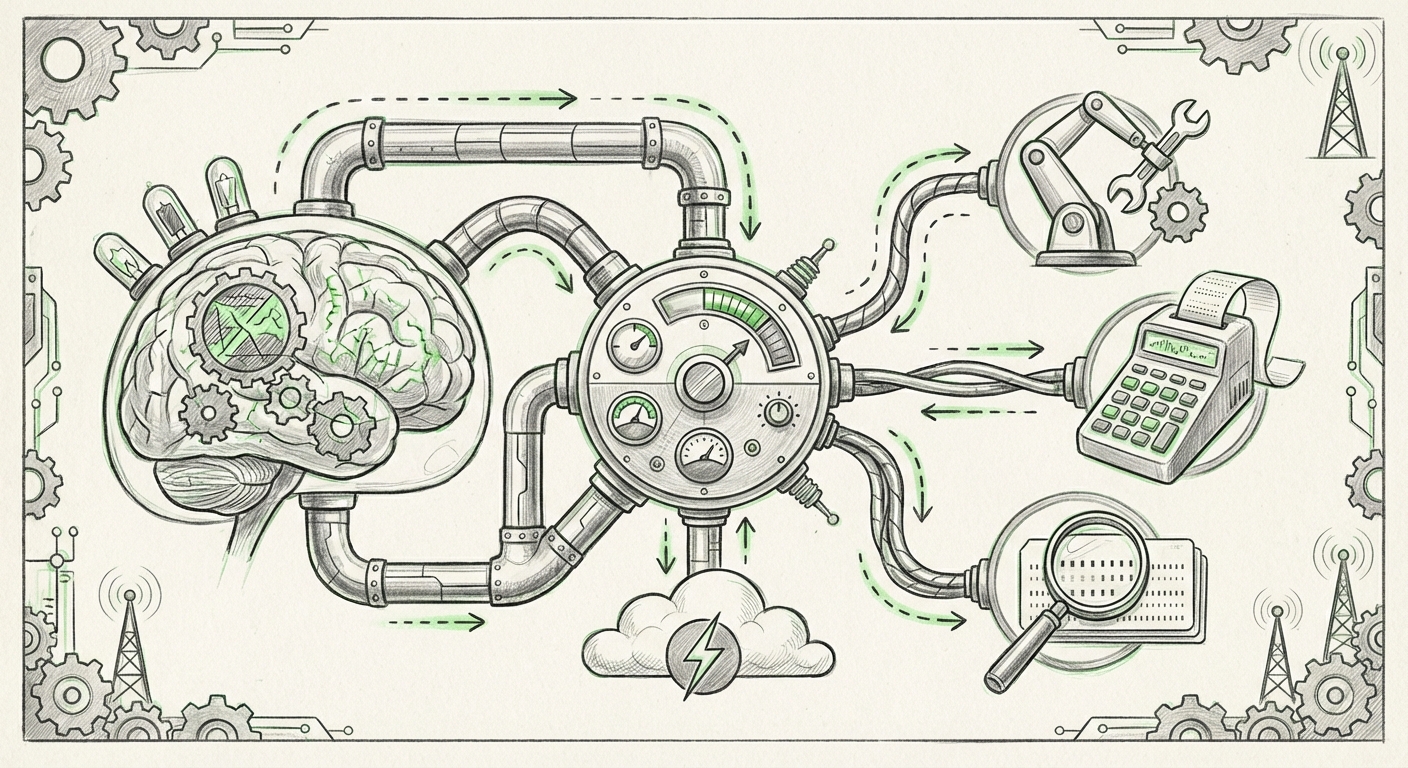
Agentic AI architecture is the set of design choices that turn a language model into a working agent. It covers how the system sees the world, remembers things, decides what to do next, calls tools, checks its own work, and stays within safe limits. As more teams move from experiments to real deployments, architecture is becoming the difference between a clever demo and a trusted business system.
This article breaks down what agentic AI architecture means, why it matters now, and how businesses and society should prepare. It is written for both technical teams building these systems and business leaders deciding where to invest.
What Is Agentic AI Architecture?
An AI agent is a software system that can pursue a goal over time. Instead of answering one question and stopping, an agent can break a goal into steps, choose actions, use external tools, observe results, and adjust. A simple example is an agent that researches a topic, drafts a report, checks facts against a database, and sends the finished draft to a reviewer.
Agentic AI architecture is the blueprint for how all those pieces fit together. It defines the parts of the agent, how they communicate, what data they can access, and what rules they must follow. Good architecture makes an agent more capable and more predictable. Poor architecture makes an agent fragile, hard to audit, and risky to deploy.
The shift matters because raw model intelligence is not enough. A powerful model without memory, tools, and guardrails is like a brilliant worker with no desk, no files, and no manager. Architecture gives the model a workplace. It turns raw language ability into repeatable action.
The Core Layers of an Agentic System
While implementations vary, most agentic AI architectures share a set of core layers. Each layer has a job, and each layer creates practical questions for builders.
1. Perception and Input Handling
Agents need to understand the situation. This layer takes in user requests, documents, messages, database records, API responses, and other signals. It cleans and structures that input so the agent can reason about it. In business settings, this often means connecting to email, calendars, customer records, and internal knowledge bases.
2. Memory and Context
Memory lets an agent keep track of what it has learned and what it has done. Short-term memory covers the current task. Long-term memory stores useful facts, preferences, and past outcomes. Architecture must decide what to remember, where to store it, how long to keep it, and who can see it. Memory is powerful, but it also raises privacy and accuracy concerns.
3. Planning and Reasoning
The planning layer turns a goal into steps. It may use a single model or a mix of models and rules. Good planning includes the ability to revise the plan when something fails. For example, if a data source is down, the agent should try another path or ask for help rather than repeat the same failed action.
4. Tool Use and Action
Tools are how agents affect the world. A tool could be a search API, a calculator, a database query, a payment system, or a software workflow. This layer is where agentic AI becomes truly useful. It is also where risk grows. An agent that can send emails, move money, or change records needs strong permissions and clear limits.
5. Orchestration
Orchestration coordinates the other layers. It decides which model runs, which tool is called, when to stop, and when to hand work to a human. In complex systems, multiple agents may work together. One agent might research, another might write, and a third might review. Orchestration keeps that teamwork from turning into chaos.
6. Guardrails and Evaluation
Guardrails are the safety and quality controls. They include policies, permission checks, content filters, approval steps, logging, and tests. Evaluation checks whether the agent is doing its job well over time. This layer is often the least exciting to build in early pilots, but it is the most important for production.
Why Architecture Is the Real Breakthrough
The excitement around agentic AI often focuses on model capability. But in practice, architecture is what makes agents dependable. A model may be able to write code, plan a trip, or analyze a contract. Yet without the right architecture, it may forget key details, call the wrong tool, or fail to notice its own mistake.
Architecture also makes agents easier to improve. When a system is built in clear layers, teams can test one part at a time. They can swap models, add tools, tighten permissions, and measure results. That is much harder when everything is tangled together in one large prompt.
For businesses, this has a direct lesson. The winning agentic systems will not always be the ones with the most advanced model. They will be the ones with the best architecture for the job: clear goals, reliable tools, strong memory, sensible guardrails, and human oversight where it matters.
From Pilots to Production: What Businesses Must Get Right
Many companies are experimenting with agents. Fewer have moved them into daily operations. The gap is usually not model quality. It is architecture, process, and trust.
Start With Narrow, High-Value Workflows
The best early agentic projects are focused. They solve a specific problem with clear success criteria. Examples include triaging support tickets, preparing sales briefs, reconciling invoices, or monitoring compliance alerts. Narrow scope makes it easier to measure value and control risk.
Design for Human Handoffs
Agents should know when to ask for help. A good architecture includes clear escalation paths. For high-stakes actions, a human should approve before the agent acts. For lower-risk tasks, the agent can proceed but log what it did. This balance keeps speed high without removing accountability.
Treat Tools as Products
An agent is only as good as the tools it can use. Teams should design tools with clear inputs, outputs, error messages, and permission rules. A messy internal API becomes a messy agent. Clean tools make agents more reliable and easier to debug.
Measure More Than Accuracy
Traditional AI metrics like accuracy are not enough. Agentic systems also need measures for task completion, time saved, cost per action, escalation rate, and safety incidents. These metrics show whether the agent is truly useful in the flow of work.
Security, Trust, and Guardrails
Agents that take action create a new security surface. They may have access to sensitive data and systems. They may be tricked by malicious input. They may make mistakes that spread quickly. Architecture must assume that something will go wrong and build in containment.
- Least privilege: Give agents only the access they need for the task.
- Approval gates: Require human sign-off for high-impact actions.
- Audit logs: Record what the agent did, why, and with what data.
- Sandboxing: Test agents in safe environments before live use.
- Input validation: Protect against prompt injection and bad data.
- Kill switches: Make it easy to stop an agent that behaves badly.
Trust is not a feature that can be added at the end. It has to be designed into the architecture from the start. Organizations that treat guardrails as a core layer will move faster over time because they can expand agent use without losing control.
The Workforce and Society Impact
Agentic AI will change how work gets done. It will not simply replace jobs in a straight line. It will shift tasks. Routine coordination, research, drafting, and checking can be partly handled by agents. Human workers will spend more time setting goals, reviewing outcomes, handling exceptions, and building relationships.
This makes architecture a workforce issue, not just a technical one. When agents are designed well, they can take over repetitive steps and free people for higher-value work. When they are designed poorly, they create new cleanup work, hidden risks, and frustration.
Society will also need new norms. People should know when they are interacting with an agent. Organizations should be clear about what agents can decide on their own. And there should be ways to appeal or correct an agent's action. These are not just legal questions. They are design questions that architecture can help answer.
Actionable Insights for Leaders and Builders
For business leaders: Pick one workflow where speed and accuracy matter. Map the steps, the data, and the risks. Then ask whether an agent can take a clear role with human oversight. Do not start with the broadest possible goal. Start with a bounded task that can show real value in weeks, not years.
For technical teams: Build the architecture before scaling the model. Start with clean tools, strong logging, and simple guardrails. Make it easy to test the agent against real scenarios. Design for failure, because agents will fail in unexpected ways. The teams that can observe, debug, and improve quickly will win.
For everyone: Expect agentic AI to become part of everyday software. The question is not whether agents will be used. The question is whether they will be built with care. Architecture is how we turn autonomous action into accountable action.
Conclusion: The Architecture Decides
Agentic AI is a major step in how software works. It moves AI from answering questions to pursuing goals. That shift opens huge opportunities for productivity, creativity, and better services. It also raises real risks around control, privacy, and trust.
The future of agentic AI will not be shaped by model headlines alone. It will be shaped by architecture: how agents perceive, remember, plan, act, and stay safe. Businesses that treat architecture as a first-class discipline will be better prepared to deploy agents that work. Society will benefit most when those systems are transparent, bounded, and built for human oversight.
The agentic era is arriving. The organizations that master the architecture will be the ones that turn autonomous AI into trusted, useful work.