Apple's Biggest Keynote in Years: What It Means for the Future of AI and How It Will Be Used
Every September, the tech world stops to watch Apple take the stage. But this year feels different. The company's fall event on September 10, 2026 is being billed as its biggest keynote in years, and the reason is not a new color of aluminum or a thinner phone. It is the quiet, steady shift of artificial intelligence from a novelty feature into the operating layer of everything Apple sells.
For anyone building a business, running a team, or simply trying to figure out where AI is actually going, this event matters far more than a typical product refresh. Apple does not usually invent new categories. What it does better than almost anyone is take an idea that is already floating around in labs and make it feel normal, safe, and unavoidable. When that happens with AI, the ripple effects will reach well beyond people who own an iPhone.
Why This Keynote Carries So Much Weight
Apple has spent the last several years doing something unusual for a company built on bold product launches: it has been the careful follower in AI. Rivals raced ahead with chatbots, giant cloud models, and flashy demos. Apple talked about machine learning quietly, in the background, tucked into photo search and keyboard suggestions.
That patience is now reaching its payoff point. The company's entire hardware lineup, phones, tablets, computers, watches, earbuds, is a network of sensors, chips, and personal context that no other firm really matches. If AI's next chapter is about personal, always-available assistants that know your life, Apple already owns the living room, the pocket, and the wrist.
That is why a keynote described as the biggest in years deserves attention. It signals that the company is ready to stop being the cautious one.
The Big Shift: AI Moves From the Cloud to Your Pocket
The most important idea in this keynote is not any single product. It is the direction of travel. For the past three years, most AI has lived in massive data centers. You typed a question, it traveled across the internet, a giant model answered, and the reply came back. That works well, but it has real costs: latency, bandwidth, privacy questions, and a monthly bill.
Apple's approach has been to push as much intelligence as possible onto the device itself. The reasoning is simple and powerful:
- Speed. An answer that never leaves your phone arrives instantly. No waiting for the network.
- Privacy. Data that stays on the device cannot be leaked by a third party, because it never left home.
- Cost. Running a small model locally is nearly free at the margin, which means features can be given away rather than sold as a subscription.
- Availability. On-device AI works on a plane, in a tunnel, or on a spotty connection.
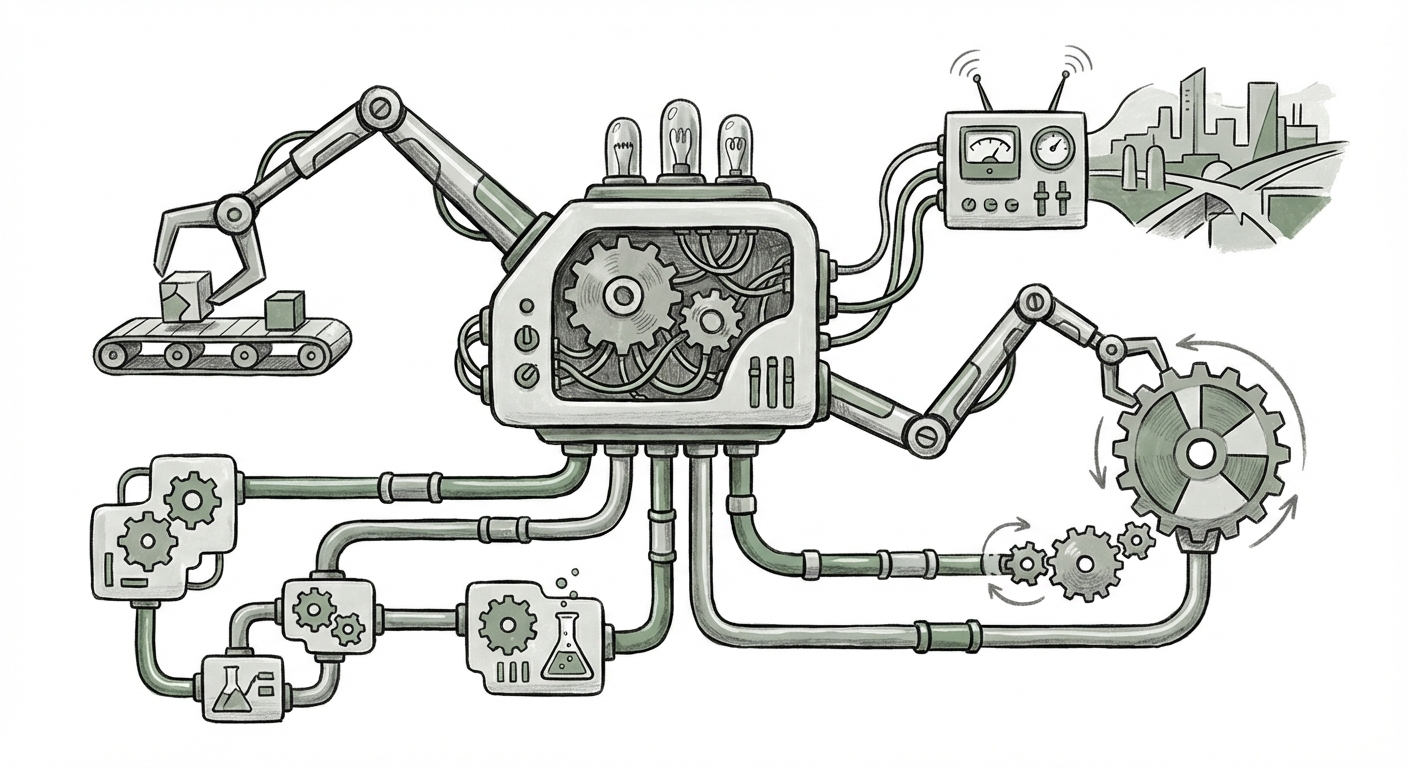
The trade-off is that small models cannot do everything a giant cloud model can. So the real architecture of the future is a hybrid: local models handle the fast, private, everyday tasks, and the cloud is called in only when a question truly demands it. This keynote is likely to be the clearest public statement yet that hybrid AI is the default, not a compromise.
That single design choice reshapes the entire industry. If the most popular consumer devices in the world run capable AI locally, then developers will build for local AI first. Cloud providers will shift toward handling the hard, rare, expensive requests. And the "AI subscription" model that many companies are betting on starts to look fragile.
Privacy Becomes a Product, Not a Policy
Apple has always sold privacy as a feature, but AI makes that pitch far more valuable. People are openly nervous about what happens to their conversations, photos, health data, and work documents once AI starts reading them. Regulators in multiple regions are circling the same question.
By building AI that runs locally wherever possible, Apple turns a compliance headache into a marketing advantage. For business leaders, this is the takeaway that matters most: privacy is becoming a purchasing criterion, not a footnote. Employees and customers will increasingly ask where their data goes before they ask what a feature can do.
Expect this to push the rest of the market. Companies that cannot explain their data handling in one sentence will lose deals to those that can.
Silicon Is the Real Story
None of this works without chips. The unsung hero of on-device AI is the custom silicon that Apple designs in-house, which now includes dedicated hardware for running neural networks efficiently. Every generation of that chip widens the gap between what runs smoothly on a device and what does not.
This is a strategic moat that is hard to copy. Competitors can license the same model. They cannot as easily license a decade of chip design, thermal engineering, and battery optimization. And because AI performance is now the main reason people upgrade a phone or a laptop, that moat translates directly into sales.
The wider signal: AI competition is no longer just a software race, it is a hardware race. Expect more investment in efficient inference chips, memory bandwidth, and power management across the entire industry, not only at Apple.
What This Means for Developers and the App Layer
Every platform shift creates a new gold rush. When the iPhone opened its App Store, entire companies were born overnight. On-device AI is the same kind of moment, but with a twist: the intelligence is a shared utility provided by the operating system, not something each app has to build from scratch.
That changes what a "good app" looks like. Instead of adding a chatbot window, developers will be expected to weave intelligence into the flow of the app itself. A calendar that reschedules your week. A notes app that finds the meeting you half-remember. A photo library you can search by describing a feeling. The winners will be the apps that make AI disappear into the experience.
For teams planning 2027 budgets, the practical guidance is straightforward:
- Stop building chatbots, start removing steps. The value is in fewer taps, not more conversation.
- Design for local-first. Assume the device can do more than you think, and reserve cloud calls for the heavy lifting.
- Plan for voice and intent. As assistants get better at taking actions across apps, users will start with a request rather than an icon.
- Treat AI features as table stakes. Within a couple of product cycles, "does it have AI" will sound as strange as "does it have Wi-Fi."
The Enterprise View: A Quiet Standardization
Business adoption rarely happens because of a keynote. It happens when the tools people already use get better, and IT teams can approve them without a legal fight. Apple's privacy-first, on-device design is built for exactly that path.
We should expect AI features to spread through organizations not as a top-down rollout, but as a bottom-up habit. An employee uses a smarter assistant on their phone, then wants the same on their laptop, then asks why the internal tools feel so far behind. That pressure is what moves enterprise budgets.
The risk is fragmentation. If the intelligence layer differs across devices and platforms, companies will need a strategy for consistency. The smart move now is to document where AI touches customer data, standardize on a few approved tools, and train staff on what not to paste into an assistant, because the convenience will arrive faster than the guardrails.
Society, Trust, and the Invisible Interface
There is a bigger cultural story here too. The most successful AI will be the AI you never notice. A suggestion before you search. A summary before you read. A reminder that arrives at exactly the right moment.
That invisibility is powerful and a little unsettling. It shifts the question from "is this AI good?" to "who decided what I see first?" For consumers, the answer will depend on trust in the brand. For regulators, it will depend on how transparent these systems can be made without breaking them.
The keynote's real legacy may be normalizing this idea: that AI is not a destination you visit, but a layer underneath everything you already do. Once that becomes the expectation, every product category gets re-evaluated, cars, appliances, retail, healthcare, education.
Actionable Takeaways for the Next 12 Months
If you take nothing else from this moment, take these practical steps:
- Audit where AI already touches your business. Most teams have more AI in their stack than they realize, often hidden in third-party tools.
- Assume on-device capability doubles roughly every cycle. Build features that get cheaper and faster as hardware improves.
- Make privacy a selling point in your own pitch. Customers are starting to ask, and the ones who can answer clearly will win.
- Invest in the boring parts: data quality, permissions, and evaluation. Fancy models fail on messy inputs.
- Watch the platform announcements closely. What large device makers standardize becomes the default your customers will compare you against.
Conclusion: The Starting Gun, Not the Finish Line
Apple's biggest keynote in years is unlikely to be remembered for a single spec or slogan. Its importance lies in what it signals: that AI has finished its demo phase and entered its infrastructure phase. The intelligence is moving into the device, the chip, the operating system, and eventually into the background of daily life.
For the AI industry, that means the next competitive battle will not be won by whoever has the largest model. It will be won by whoever makes intelligence feel effortless, private, and useful in the exact moment it is needed. Apple has been setting up for that contest for years. On September 10, 2026, it finally showed its hand, and the rest of the market will spend the following months responding.