AutoSynthData: How Synthetic Training Data Will Power the Next Wave of Enterprise AI Agents
Enterprise AI agents are poised to transform how businesses operate, automating complex workflows, answering customer questions, and making decisions at scale. But there is a hidden bottleneck: these agents need vast amounts of high-quality training data, and that data is often expensive, scarce, or locked behind privacy walls. A new concept called AutoSynthData, focused on generating training data for enterprise agents, points to a solution that could unlock the full potential of AI in the workplace. The idea is simple but powerful: instead of relying solely on real-world data, automatically synthesize the examples an agent needs to learn. This development signals a shift that will reshape how companies build, deploy, and trust AI agents.
The Enterprise Agent Data Crunch
AI agents are software programs that can perceive their environment, make decisions, and take actions to achieve goals. In an enterprise setting, they might handle IT support tickets, process invoices, or guide customers through complex purchases. To learn these tasks, agents typically train on examples: thousands of real conversations, documents, or transaction logs. But gathering that data is harder than it sounds.
Real enterprise data is often sensitive. It may contain personal information, financial details, or trade secrets. Using it to train AI raises privacy and compliance concerns. Even when data is available, it may be messy, incomplete, or biased. And for rare or new scenarios, like a never-before-seen customer complaint, there may be no examples at all. The result is a data crunch that slows down agent development and limits what agents can do.
The emergence of AutoSynthData, a name that combines “automatic” and “synthetic data”, directly addresses this crunch. The concept suggests a system that can automatically generate realistic training examples for enterprise agents, reducing dependence on scarce real data. While the full details of how AutoSynthData works are not yet public, the focus on automated synthesis is a clear signal of where the industry is heading.
What AutoSynthData Represents
At its core, AutoSynthData represents the next step in synthetic data generation. Synthetic data is artificially created information that mimics the statistical patterns of real data. It has already been used in fields like computer vision and healthcare, where privacy rules make real data hard to share. Now, the same idea is being applied to the text, dialogue, and action sequences that enterprise agents need.
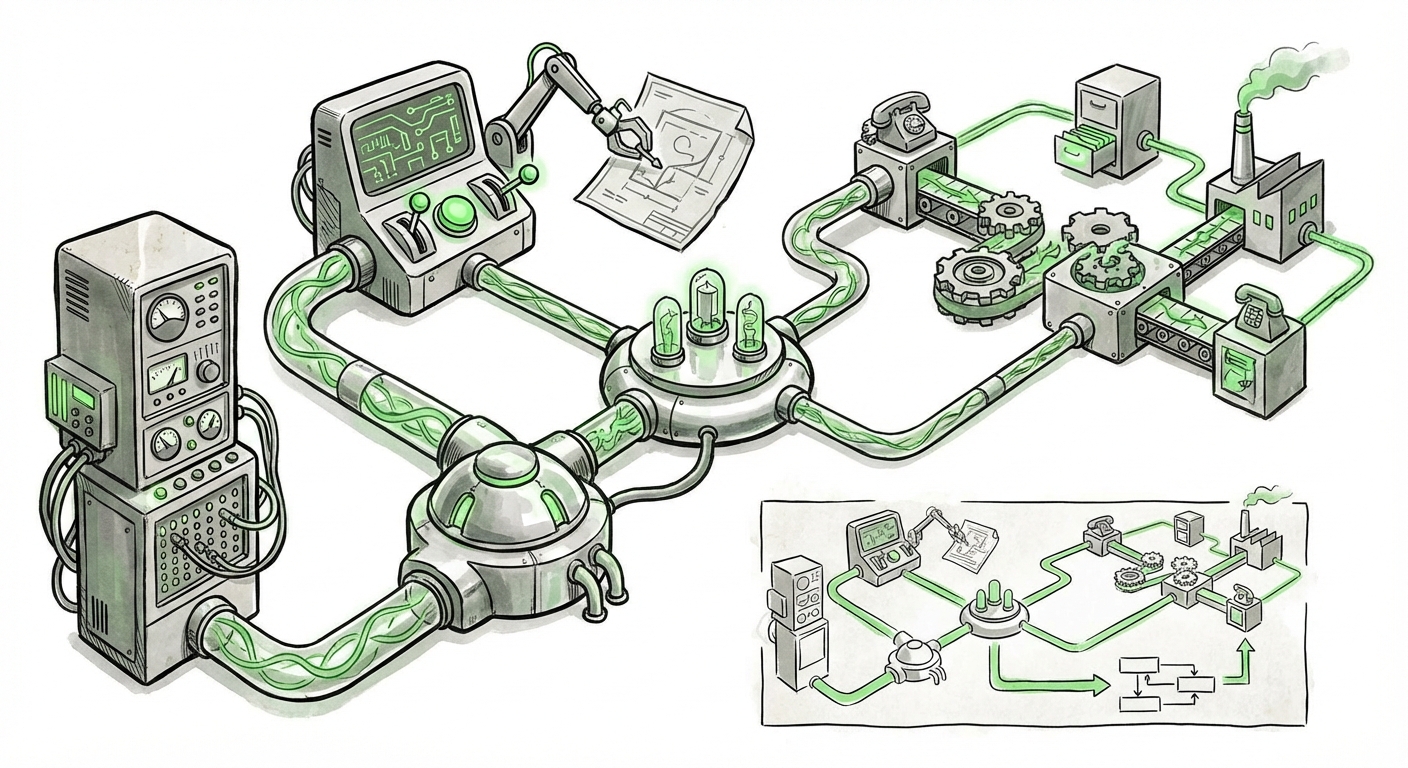
The “auto” part is key. Traditional synthetic data generation often requires human experts to design templates or rules. AutoSynthData implies a more automated pipeline: perhaps using large language models or other generative AI to create diverse, realistic examples with minimal human effort. This could dramatically speed up the training process. Instead of spending months collecting and labeling data, a company could generate thousands of synthetic scenarios in hours.
For enterprise agents, the ability to synthesize training data is especially valuable because business processes are often unique. A bank’s loan approval workflow differs from a retailer’s return process. AutoSynthData would let each organization generate data tailored to its own systems, policies, and customer language, without exposing real customer records.
How Synthetic Data Generation Works
To understand why AutoSynthData matters, it helps to know the basics of synthetic data generation. The process usually involves training a generative model on a small set of real data, then using that model to produce new, artificial examples. For text-based agents, this might mean generating realistic customer questions, agent responses, and decision paths.
There are several approaches. One is to use large language models to write new dialogues based on prompts. Another is to combine real data fragments in new ways, like mixing and matching parts of different conversations to create novel scenarios. A third is to simulate environments where agents can practice tasks and learn from the results, similar to how a flight simulator trains pilots.
AutoSynthData likely combines these techniques into an automated workflow. The goal is to produce data that is not only realistic but also diverse and balanced, covering both common cases and rare edge cases. This is crucial because AI agents often fail when they encounter situations they have never seen before. Synthetic data can fill those gaps.
Why This Matters for the Future of AI
The rise of AutoSynthData has implications far beyond one product or project. It points to a future where AI development is less constrained by data availability. Here are the key trends it signals:
- Faster deployment of enterprise agents. Companies will be able to spin up new agents for niche tasks without waiting to accumulate years of real interaction data. This could democratize AI, allowing smaller businesses to benefit.
- Better privacy protection. By training on synthetic data, organizations can avoid exposing sensitive customer information. This reduces legal and reputational risk.
- More robust and fair agents. Synthetic data can be designed to include diverse perspectives and edge cases, reducing bias and improving performance across different user groups.
- Continuous learning. Agents could be retrained frequently using fresh synthetic data that reflects changing business rules or market conditions, without needing to collect new real-world examples each time.
- New evaluation methods. Synthetic data can also be used to test agents before deployment, simulating tricky scenarios that would be risky or expensive to recreate in real life.
In short, AutoSynthData represents a move toward data-centric AI, where the quality and quantity of training data become a competitive advantage. The companies that master synthetic data generation will be able to build better agents faster.
Practical Implications for Businesses
For business leaders, the message is clear: synthetic training data is no longer a research curiosity, it is becoming a practical tool. Here is what that means in practice.
1. Rethink Your Data Strategy
Instead of hoarding real data, start thinking about how to generate synthetic data that complements it. Identify the tasks where real data is scarce or sensitive, and explore whether synthetic data could fill the gap. This may require new tools, skills, and partnerships.
2. Invest in Evaluation
Synthetic data is only useful if it accurately reflects reality. Businesses will need robust ways to test whether synthetic examples are representative and whether agents trained on them perform well in the real world. This means building evaluation pipelines and setting clear quality standards.
3. Address Governance Early
Generating synthetic data raises questions: Who owns it? How do you ensure it does not inadvertently leak real information? What are the rules for using it in regulated industries? Companies should develop policies now, before synthetic data becomes widespread.
4. Train Your Teams
Data scientists and engineers will need to learn how to design and manage synthetic data pipelines. This includes understanding generative models, bias detection, and privacy-preserving techniques. Upskilling is essential.
5. Start Small, Then Scale
Pilot AutoSynthData-style approaches on a single use case, like a customer support chatbot, before rolling out across the enterprise. Learn what works and what doesn’t, then expand.
Risks and Governance Challenges
No technology is without risks. Synthetic data can be a double-edged sword. If generated poorly, it can introduce new biases or fail to capture important nuances. There is also a danger of “model collapse,” where training on synthetic data degrades the model’s performance over time. And if synthetic data is not clearly labeled, it could be mistaken for real data, leading to faulty decisions.
Governance will be critical. Organizations need to track the provenance of synthetic data, ensure it meets quality standards, and audit its use. Regulators may also step in, especially in sectors like finance and healthcare. The companies that build strong governance frameworks early will be best positioned to benefit.
Actionable Insights
Here are concrete steps any organization can take to prepare for the synthetic data era:
- Map your data gaps. Identify where real data is missing, expensive, or sensitive. These are prime candidates for synthetic generation.
- Experiment with generative models. Try using large language models or other generative AI to create small synthetic datasets for a pilot project. Measure how well an agent trained on that data performs.
- Build a cross-functional team. Include legal, compliance, and domain experts alongside engineers to ensure synthetic data is used responsibly.
- Track and document. Keep records of how synthetic data was generated and used. This will help with audits and continuous improvement.
- Stay informed. The field is moving fast. Follow developments in synthetic data, enterprise agents, and AI governance to avoid being left behind.
Conclusion
AutoSynthData is more than a clever name, it is a signpost toward the future of enterprise AI. As agents become more capable, the demand for training data will only grow. Real-world data alone cannot meet that demand without compromising privacy, speed, or fairness. Synthetic data, generated automatically and tailored to business needs, offers a way forward. The organizations that embrace this shift will build smarter, safer, and more adaptable AI agents. Those that wait may find themselves struggling to keep up. The data crunch is real, but so is the solution. The future of enterprise AI will be synthesized.