Capital One's Strong Quarter and the Discover Deal: What It Means for the Future of AI in Banking
A bank stock moving higher after earnings usually isn't an AI story. This one is.
Capital One posted a strong quarter and showed real progress in folding Discover into its business. Wall Street liked what it saw and rewarded the company. On the surface, that's a story about credit costs, card spending, and the messy work of merging two large financial firms.
But look one layer down and something more important is happening. The reason this kind of merger matters, and the reason investors are willing to pay up for it, has a lot to do with data, models, and the quiet build-out of machine learning as the core operating system of consumer finance.
What Happened, in Plain Terms
The headline is simple. Capital One reported a strong quarter. Its work to absorb Discover is moving forward. Investors responded by pushing the stock up.
That combination, good numbers now, plus proof that a big acquisition is actually coming together, is what the market wanted to see. Bank mergers have a habit of looking great on paper and turning into a multi-year slog in practice. So when integration progress shows up alongside solid results, it reads as a sign that management knows what it's doing.
What the market is really pricing, though, is not just cost savings. It's capability.
Why AI People Should Care About a Card Company's Earnings
Modern consumer finance runs on models. Every time you tap a card, several things happen in milliseconds. A fraud model scores the transaction. A credit model has already shaped your limit. A marketing model decided which offer you saw last week. A service model routed your last chat to a bot before a human ever saw it.
None of that is new. But the scale and speed of it is. Banks that can run these systems well win on loss rates, approval rates, and cost per customer. Banks that can't, lose on all three at once.
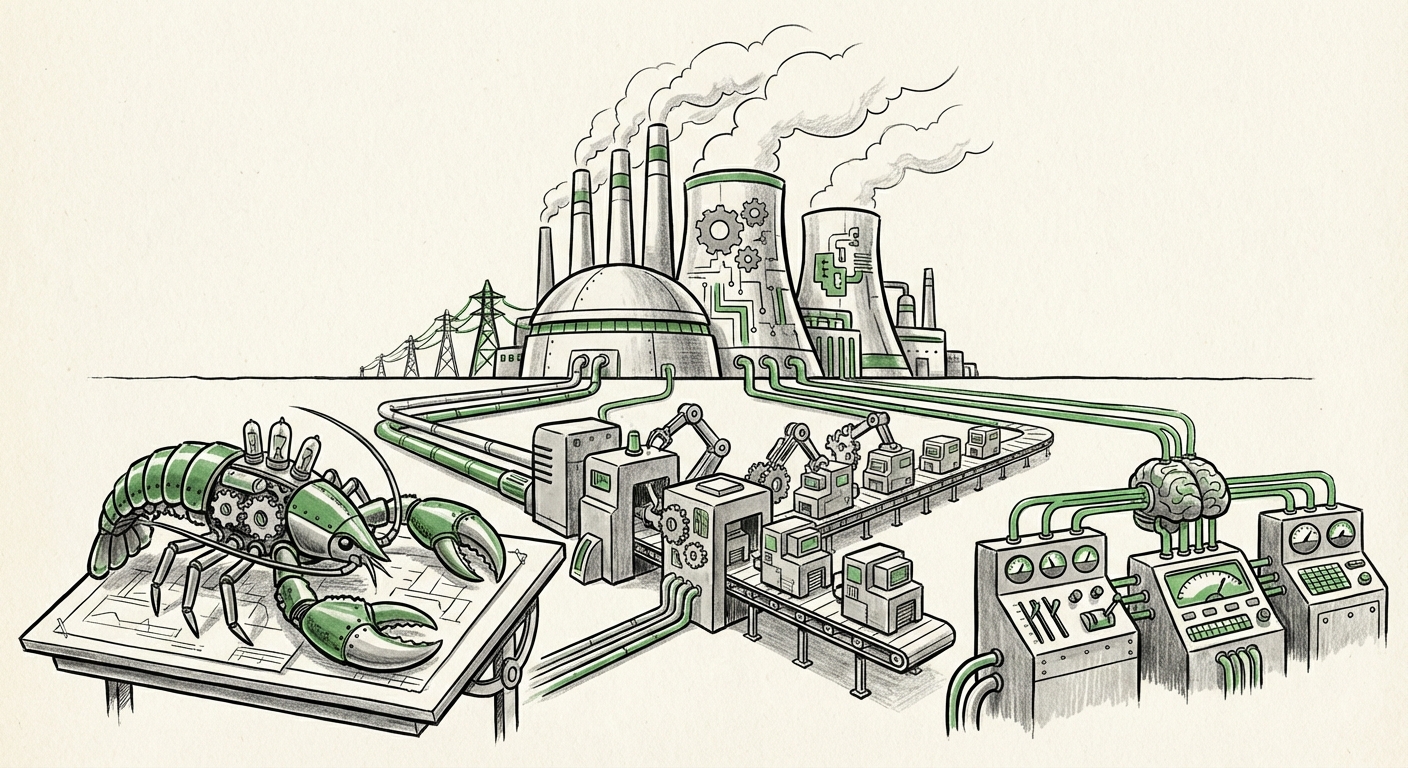
Capital One has long had a reputation for treating data as a product rather than a byproduct. That matters here because the Discover integration isn't only a finance problem. It's a plumbing problem. Two companies, two tech stacks, two sets of models, two data warehouses, and one customer who expects everything to work the same on Monday morning.
Integration is an AI operations problem as much as a balance-sheet problem. The companies that pull off these mergers are the ones that can migrate models without downtime, without breaking compliance, and without losing the history that makes those models useful in the first place.
The Data Moat: Why Owning a Card Network Changes the Game
Here's the part that's easy to miss. A card issuer sees its own cardholders. A card network sees something much wider, transactions across many issuers and merchants, flowing through one set of rails. Bringing network-level visibility together with issuer-level visibility creates a feedback loop that's hard to copy.
More signal means better models. Better fraud models mean fewer false declines, which means fewer annoyed customers and more approved spending. Better transaction data means sharper merchant-level insight, smarter rewards design, and a clearer picture of where a customer's money actually goes.
In AI terms, this is the difference between training on a snapshot and training on a live stream. The closer a company sits to the raw flow of transactions, the faster it can learn.
That said, data alone is not a moat. Plenty of firms are sitting on piles of information they can't use. What turns data into an advantage is unglamorous: clean pipelines, strong governance, a clear feature store, and enough engineering talent to keep it all running. The merger makes that harder before it makes it easier, but if it works, the payoff compounds.
Where the AI Actually Shows Up
1. Fraud and Risk
This is the fastest place to see returns. Real-time scoring on a larger, richer transaction stream can cut losses while reducing the number of good customers who get blocked. For a card business, that's revenue and trust in the same improvement.
2. Underwriting and Credit Lines
More granular data supports more precise credit decisions. But this is the most tightly regulated corner of the business. In many markets, lenders must be able to explain why someone was denied or given a lower limit. That pushes banks toward models that are accurate and explainable, a constraint that shapes which AI techniques are actually deployable.
3. Customer Service
Voice and chat automation, plus agent-assist tools that surface answers and suggested replies, are now standard in large consumer banks. The metric that matters is not how clever the bot sounds. It's handle time, resolution rate, and whether customers come back to the same channel next time.
4. Marketing and Rewards
Rewards programs are a data business dressed up as a loyalty perk. Predicting which offer a customer will use, which points will go unredeemed, and when someone is about to drift to a competitor is classic prediction work, and a merged portfolio gives the models more to chew on.
What This Means for Everyone Else
The competitive pressure here is real, and it runs in two directions.
Scale players pull ahead. Firms with proprietary transaction data and the engineering muscle to use it will compound their advantage. Each improvement in loss rates funds the next round of investment.
Mid-sized players have to rent intelligence. Most banks cannot build frontier models. They will buy tools, use cloud platforms, and partner with vendors. That's a perfectly good strategy, but it means the differentiator shifts from "do we have AI?" to "can we integrate and govern it better than our peers?"
Fintechs have to rethink their edge. A slick app used to be enough. Increasingly, the advantage belongs to whoever holds the data rights and the regulatory license. Expect more partnerships between app-first companies and balance-sheet-heavy institutions.
Card networks become AI platforms. When a network also operates a large issuer, the boundary between "rails" and "product" blurs. That will draw scrutiny, and it will also push rivals to invest harder in their own data capabilities.
Actionable Takeaways for Business Leaders
- Audit what data you own versus what you rent. If your most valuable signal lives inside a partner's system, you don't have a moat. You have a subscription.
- Build a model inventory before you need it. Every model should have an owner, a purpose, a training dataset, and a retraining schedule. Companies that can't list their models can't merge, audit, or improve them.
- Measure AI in business units, not in demos. Loss rate, approval rate, handle time, resolution rate, cost per interaction. If a project can't move one of those numbers, it isn't a project, it's a pilot that should end.
- Keep a human in the loop where the stakes are high. Credit denials, account closures, and fraud flags all need a path to review. Automation without appeal is a complaint generator.
- Plan for model decay. Models trained in calm times misbehave in turbulent ones. Budget for monitoring and retraining the same way you budget for maintenance.
- Start where payback is clearest. Fraud and servicing usually beat moonshots on measurable return. Prove the operating model there, then expand.
- Document everything for regulators. Explainability, fair-lending testing, and audit trails are not paperwork. They're the price of admission for using AI in regulated decisions.
The Risks Worth Watching
A strong quarter does not erase risk. Three stand out.
Model risk in a downturn. Credit models are trained on the past. When the economy shifts, historical patterns stop holding, and models that looked sharp can quietly degrade. The firms that catch this early are the ones with monitoring in place before the stress arrives.
Fairness and explainability. The more complex the model, the harder it is to justify a decision to a customer, a regulator, or a court. Any bank scaling AI in lending has to solve this, not defer it.
Integration drag. Mergers fail on culture and systems far more often than on strategy. Every month spent reconciling duplicate data pipelines is a month the combined model portfolio underperforms its potential.
The Bigger Picture
We are entering a phase where consolidation and intelligence reinforce each other. Deals get justified by cost savings, but the durable value often comes from combining datasets and upgrading the models that sit on top of them. That logic will push more mergers in financial services, and it will make the quality of a company's data infrastructure a board-level topic rather than an IT footnote.
The winners in this next stretch won't be the loudest AI marketers. They'll be the operators: the ones with clean data, honest metrics, working governance, and the patience to migrate a thousand small systems without breaking anything. A strong quarter and a progressing integration is exactly what that kind of competence looks like from the outside.
For everyone else, the lesson is straightforward. The AI advantage in financial services is not a model you download. It's a plumbing system you build, and then keep building.