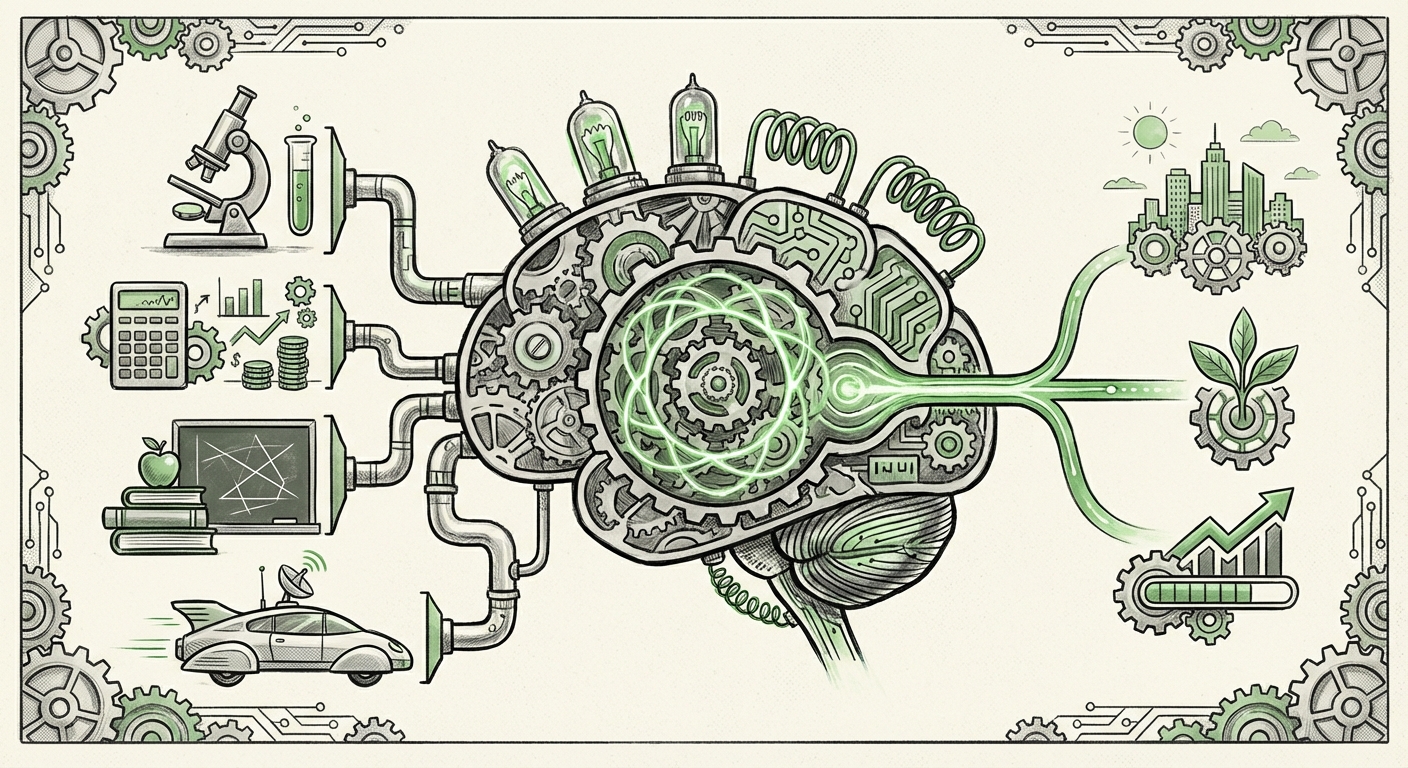
From Messy Notes to a Clear Road Map: How AI Is Turning Chaos Into a Plan
Every team has one. A shared folder full of half-finished documents. A chat thread where the real decision got buried under forty replies. A notebook with arrows, question marks, and a to-do list that was never finished. Somewhere in all of that is the actual plan, the tasks, the owners, the order of operations, but nobody can see it.
That gap between what we know and what we can act on is one of the most expensive problems in modern work. And it is now one of the clearest targets for artificial intelligence. The shift we are watching is simple to describe and huge in impact: AI is moving from "help me write things" to "help me make sense of the things I already wrote." In other words, turning messy notes into a clear road map.
The Hidden Cost of Scattered Thinking
Most knowledge work does not produce clean, structured output. It produces fragments. A call recording. A whiteboard photo. A rough outline typed on a phone at 11 p.m. Three different documents that each hold a piece of the answer.
The problem is not that people are disorganized. It is that capturing information and organizing information are two different jobs, and almost nobody has time for the second one. So notes pile up. Meetings repeat ground already covered. Decisions get re-litigated because nobody remembers why the first decision was made. Projects stall not from lack of effort, but from lack of a shared picture.
Human teams have tried to fix this with templates, project management software, and elaborate folder systems. These tools help, but they all share the same weakness. They require a person to do the sorting first. You must decide what belongs where before the tool becomes useful. That is exactly the step people skip when they are busy.
What "Notes to Road Map" Actually Means
This is not about making prettier documents. It is about a change in the shape of the information itself.
Notes are unstructured. They are chronological, repetitive, and full of side comments. A road map is structured. It has phases, dependencies, owners, priorities, and open questions. It separates what is decided from what is still being argued.
The AI task here breaks down into four moves:
- Extraction. Pulling out the real commitments, dates, names, and decisions buried in free-form text.
- Clustering. Grouping related fragments together, even when they use completely different words.
- Sequencing. Figuring out what has to happen before what, the actual order of work.
- Gap finding. Spotting what is missing. No owner. No deadline. Two tasks that clearly depend on each other but nobody linked them.
That fourth step is the one that changes the game. A simple summary tells you what you already said. A road map tells you what you have not yet figured out.
Why This Is a Bigger Deal Than It Sounds
Most of the visible progress in AI so far has been about generation. Write this. Draft that. Create an image. That work is impressive, but it often starts from a blank page, and blank pages are not where most business value lives.
The harder and more valuable problem is transformation: taking the messy reality of how a team actually works and converting it into something usable. This is the work that has always been done by the best project managers, the best operations leads, the best analysts. It is expensive, slow, and does not scale, because it depends on a person holding a lot of context in their head.
When AI can do the structuring step reliably, several things change at once. The cost of turning thought into action drops sharply. Small teams can run with the clarity of large ones. Handoffs between people and departments stop losing information. And the institutional memory of a project stops living inside one person's notebook.
Where It Shows Up First in Business
Meetings That End With a Plan Instead of a Transcript
The most immediate use case is the one everybody has lived through: a meeting ends, and someone is supposed to write up next steps. Usually that person is busy, so the summary arrives late and vague. AI can turn the raw conversation into a structured list of decisions, action items, owners, and open questions, a mini road map, delivered while the meeting is still fresh. The value is not the transcript. It is the reduction in "wait, who was doing that?"
Project Kickoffs and Strategy Sessions
Early planning is naturally messy. Ideas get thrown out, half-accepted, merged, abandoned, and revived. Turning that creative sprawl into a phased plan with clear priorities is genuinely hard work. AI is well suited to it, because it does not get attached to any one idea. It can propose groupings, flag conflicts, and show where two workstreams are quietly competing for the same resources.
Research and Competitive Analysis
Analysts drown in fragments: interview notes, articles, survey comments, observations. The step from "I have a hundred pages of raw material" to "here is a clear narrative with a sequence of recommendations" is where most of the time goes. AI-assisted structuring compresses that step dramatically.
Client and Sales Conversations
A sales call contains requirements, objections, timelines, and promises. Without structure, that intelligence evaporates. With structure, it becomes a delivery plan and a follow-up roadmap that the customer can actually see.
The Risks Nobody Should Ignore
This capability is genuinely useful, which is exactly why the failure modes matter.
Confident Invention
When an AI turns notes into a plan, it may fill gaps with plausible guesses. A deadline that was never agreed. An owner who never volunteered. The output looks clean and authoritative, which makes it more dangerous than an obviously messy note. Every road map produced this way needs a human check on the specific facts, names, dates, commitments, even if the overall structure is sound.
Losing the Nuance
Messy notes contain doubt. "Maybe we should…" "I'm not sure if…" "This might break if…" Compression into clean bullet points can turn uncertainty into false certainty. The best tools preserve open questions as open questions rather than resolving them silently.
Over-Trust in Structure
A well-formatted plan can create a feeling of progress that is not real. Teams may spend more time polishing the road map than doing the work it describes. Structure is a tool for action, not a substitute for it.
Privacy and Context Leakage
Notes are often the most sensitive document a team owns. They contain candid opinions, half-formed plans, and information about people. Any organization adopting these tools needs clear rules about what can be processed, where it lives, and who can see the output.
Actionable Insights for Teams Getting Started
- Start with your worst document, not your best. The clearest value comes from the messiest input. Try it on the meeting that always produces a confusing summary.
- Define what "good" looks like before you test. Decide in advance whether you need a summary, a task list, a decision log, or a phased plan. Vague goals produce vague output.
- Always separate facts from inferences. Ask for anything the AI inferred to be marked as inferred. This one habit prevents most of the damaging errors.
- Keep a human gate on commitments. Dates, budgets, and staffing decisions should never reach a shared plan without a person confirming them.
- Treat the output as a draft for a conversation, not a finished document. The highest-value moment is when the team reads the draft road map and says "wait, that's not what we meant", that is where hidden misalignment surfaces.
- Close the loop. The real test of a road map is whether it gets updated. Build a rhythm where notes feed the plan regularly, so it stays a living document instead of a decaying one.
What This Means for the Future of AI
The direction of travel is clear. The next wave of useful AI is not just about producing more text. It is about turning the byproducts of work into structure that other systems can act on.
That has three big implications.
First, memory becomes the product. The tools that win will not just be the ones that write well in the moment. They will be the ones that remember what was decided last month, notice when a new note contradicts an old plan, and keep the road map current without being asked. Continuity, not cleverness, is where the real loyalty will come from.
Second, unstructured text becomes a data source. Once notes can be reliably converted into structured plans, the enormous archive of human conversation, calls, chats, documents, reviews, stops being a graveyard and starts being fuel. That opens the door to real measurement of how work actually progresses, not just how it was supposed to.
Third, the boundary between planning and doing gets thinner. A road map that a machine can read is a road map a machine can help execute. Tasks can be routed, dependencies monitored, and blockers flagged automatically. We are moving from "AI as a writing assistant" to "AI as the connective layer between thinking and action."
For society, the practical effect is a shift in what skills matter. Being a good note-taker becomes less valuable than being a good decider, someone who can look at a structured plan and judge whether the priorities are right. The bottleneck moves from organizing information to exercising judgment about it. That is a healthier place for humans to sit, but it requires people to be comfortable working from a draft rather than from their own private understanding of a project.
Conclusion
Every organization already has the raw material for better planning. It is sitting in inboxes, notebooks, chat logs, and call recordings, waiting for someone to have the time to sort it out. That time is exactly what AI is now able to give back.
The important thing to understand is that this is not really a story about note-taking. It is a story about the cost of confusion, and about what becomes possible when the distance between a thought and an executable plan shrinks from days to minutes. Teams that learn to use that capability well, with clear rules about verification and privacy, will move faster not because they are working harder, but because they will finally be able to see what they already know.