AI and the Art of the Deal: What Witkoff's Moscow Trip Means for the Future of AI in Diplomacy
High-stakes diplomacy still looks old-fashioned. A senior envoy boards a plane, sits across a table from a head of state, and tries to find the narrow strip of ground where two sides can stand together. In October 2026, that is exactly the picture: U.S. negotiator Steve Witkoff is traveling to Russia for direct talks with President Vladimir Putin, even as Ukrainian President Volodymyr Zelenskyy insists on a hard rule, nothing about Ukraine without Ukraine.
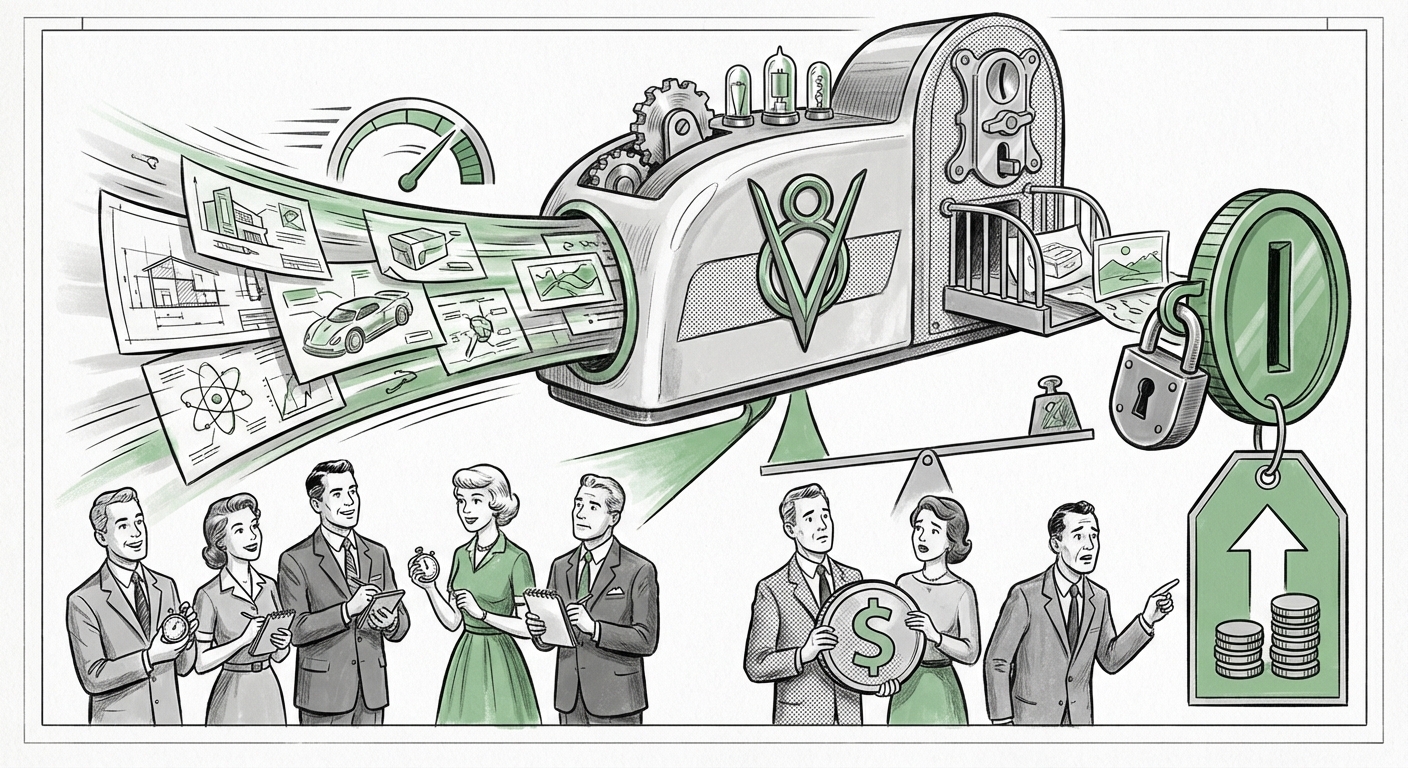
So why is an AI publication writing about a plane ticket to Moscow? Because the machinery behind that plane ticket has quietly changed. The prep work, the translation, the reading of the other side's intent, the drafting of options, the monitoring of what actually happens on the ground, a growing share of that work now runs through machine learning systems. The Witkoff mission is a useful stress test for a simple question: when the stakes are this high, how much of the thinking do we hand to a model?
The New Backchannel Is Partly Machine
Modern negotiation teams walk into a room with more than briefing binders. They arrive with pattern-analysis tools that scan years of public statements, treaty language, and official transcripts to flag where the other side's position has shifted and where it has held firm. Language models summarize thousands of pages in minutes and draft three versions of a proposal before the coffee gets cold.
This is not science fiction. It is the same technology stack businesses already use for contract review, competitive intelligence, and customer research, pointed at the highest-stakes conversation on Earth. The difference is that a hallucinated clause in a vendor agreement costs money. A misread signal in a peace negotiation costs lives.
That gap is where the real story sits. Diplomacy is becoming one of the last great proving grounds for AI, and the lessons learned there will flow downhill fast into corporate boardrooms, legal teams, and government affairs offices.
"Nothing About Ukraine Without Ukraine", and the AI Sovereignty Parallel
Zelenskyy's insistence that no deal can be struck over Ukraine's head is more than a negotiating position. It is a statement about who gets a seat at the table when decisions are made. That same question is now being asked about AI itself.
Countries are increasingly unwilling to accept AI systems built elsewhere and tuned to someone else's values, laws, and interests. They want their own models, their own data rules, and their own voice in how the technology develops. The phrase "nothing about us without us" has migrated from geopolitics into technology policy, and it is reshaping how governments buy, build, and regulate AI.
For companies, the practical takeaway is blunt: AI governance is now foreign policy. Where your model is trained, whose data it learns from, and which legal system it answers to are no longer back-office details. They are negotiating chips. Firms operating across borders should expect to be asked, in procurement meetings and regulatory filings alike, to prove that their AI respects local sovereignty, not just local law.
Verification Is the Hard Part, and AI's Biggest Opening
Any agreement reached through shuttle diplomacy lives or dies on one thing: whether both sides believe the other is keeping its word. That is the verification problem, and it is where AI has the most to offer.
Satellite imagery analysis, sensor networks, open-source intelligence, and acoustic monitoring can now be processed by models that flag anomalies faster than human analysts can read the raw feed. Machine translation makes local reporting accessible in real time. Forecasting tools can estimate the likelihood that a specific commitment holds over the next thirty, sixty, or ninety days.
None of this replaces human judgment. But it changes the shape of it. Instead of asking, "Do we trust them?" negotiators can ask, "What does the evidence say, how confident are we, and what would change our minds?" That is a healthier question, and it is precisely the question good businesses should be asking about their own AI systems.
Where AI genuinely helps
- Speed of synthesis: compressing weeks of reading into hours of informed discussion.
- Consistency: catching contradictions across drafts that tired humans miss.
- Translation quality: reducing the accidental insults and lost nuances that derail talks.
- Monitoring at scale: watching more ground, more continuously, than any team could staff.
- Scenario planning: mapping second- and third-order consequences before a proposal is tabled.
Where it fails badly
- Confident wrongness: models that invent details with total assurance.
- Bias baked in: training data skewed toward louder, better-documented voices.
- Opacity: a recommendation nobody can explain is a recommendation nobody will trust at a critical moment.
- False precision: a percentage that looks like knowledge but is really a guess in a suit.
The Information War Runs on the Same Pipes
Every negotiation is also a messaging contest. Narratives about who is reasonable, who is stalling, and who broke faith are shaped in public long before they are settled in private. Generative AI has supercharged that contest, producing persuasive text and imagery at a volume no human team can match.
The consequence is a trust tax. When anyone can manufacture convincing content, everyone becomes slower to believe anything. Negotiators now have to spend time authenticating statements that a decade ago would have been taken at face value. Businesses face the same problem: forged invoices, cloned voices on a call, fabricated screenshots in a dispute.
The response is not to reject the technology but to pair it with verification habits. Provenance tracking, signed communications, out-of-band confirmation for high-value instructions, and a healthy rule that anything urgent and unusual gets a second channel check, these are cheap, boring, and remarkably effective.
What This Means for Businesses and Society
The Moscow trip is a reminder that the world's hardest problems are solved by a mix of human relationship and machine-assisted preparation. That blend is coming to your industry, whether you sell software, logistics, healthcare, or financial services.
Three shifts are worth planning for now.
1. Negotiation becomes an analytical discipline
Deals will be prepared with model-assisted analysis of counterparties' public behavior, past contracts, and stated priorities. Teams that can turn that analysis into clear, defensible recommendations will out-negotiate teams that rely on instinct alone. Invest in the data hygiene that makes such analysis trustworthy in the first place.
2. Compliance and verification get automated, and audited
If AI is used to monitor commitments, someone will eventually question its conclusions. Build the paper trail now: what the model saw, what it flagged, who reviewed it, and what changed as a result. Explainability is not a nice-to-have; it is the difference between an insight and an accusation.
3. Local trust becomes a product feature
Buyers increasingly want to know where their AI comes from and who governs it. Expect questions about data residency, model provenance, and human oversight in every serious procurement. Companies that can answer clearly will win deals their competitors lose in the first meeting.
The Risks Nobody Should Wave Away
Automation bias is the quiet danger. When a model produces a crisp recommendation, people tend to defer, even when their gut says otherwise. In a negotiation, that deference can mean missing the human tells that no dataset captures: the hesitation before an answer, the changed tone, the things left unsaid.
There is also escalation risk. Faster analysis means faster decisions, and speed without restraint can turn a manageable standoff into a crisis. The most valuable AI deployment in high-stakes settings may be the one designed to slow things down, surfacing doubts, forcing a second opinion, and asking what evidence would prove the model wrong.
What to Watch Next
- Whether verification mechanisms become a formal part of any agreement, and whether AI-based monitoring is named explicitly.
- How quickly governments publish rules on foreign-built models in security-sensitive sectors.
- Whether negotiation-support tools move from intelligence agencies into mainstream enterprise software, following the well-worn path of satellite imaging and predictive analytics.
- How companies respond to the trust tax, with real verification infrastructure, or with slogans.
The Bottom Line
Witkoff's trip to Moscow will be judged by whether it moves two entrenched positions closer together. The AI angle will not make headlines, and it should not. But the systems humming in the background, reading, translating, modeling, monitoring, are quietly becoming part of how peace is attempted and how deals are done.
The lesson for the rest of us is not that machines will replace negotiators. It is that the humans who use these tools well, and who know exactly where to stop trusting them, will hold a real advantage. In diplomacy and in business alike, the future belongs to people who can combine judgment with machine-assisted clarity, and who insist, always, that the important decisions are made by the people they affect.