Critical Web Security Flaws Spark Global Alarm: What Google, OpenAI and Amazon's Response Means for the Future of AI
Something about the way the internet is built has gone wrong, and the companies building artificial intelligence are the first ones being asked to explain it. Critical web security flaws have triggered alarm across the industry, and the reaction was immediate: Google, OpenAI and Amazon all moved into response mode at once. That trio matters. These are not just three big tech companies. They are three of the organizations whose software now sits between ordinary internet users and the tools they depend on every day.
When three companies of that size respond to the same category of web security failure in the same moment, it stops being an engineering story. It becomes a story about trust. And trust is the one resource the AI boom cannot afford to run short of.
The bigger question is not what broke. It is what the response tells us about where AI is heading, and how it will be used. Because the security flaws driving this alarm reveal something uncomfortable: the systems we are handing more and more decisions to are still standing on the fragile foundations of the open web.
Why AI Companies Are Suddenly on the Front Line of Web Security
For most of the internet's history, security was a job for a specific kind of specialist, the network engineer, the firewall administrator, the person who patched servers at 2 a.m. Web flaws were real and dangerous, but they lived in a contained world. Your bank's website had problems. Your company's login page had problems. Those problems stayed mostly where they started.
AI changed that geometry.
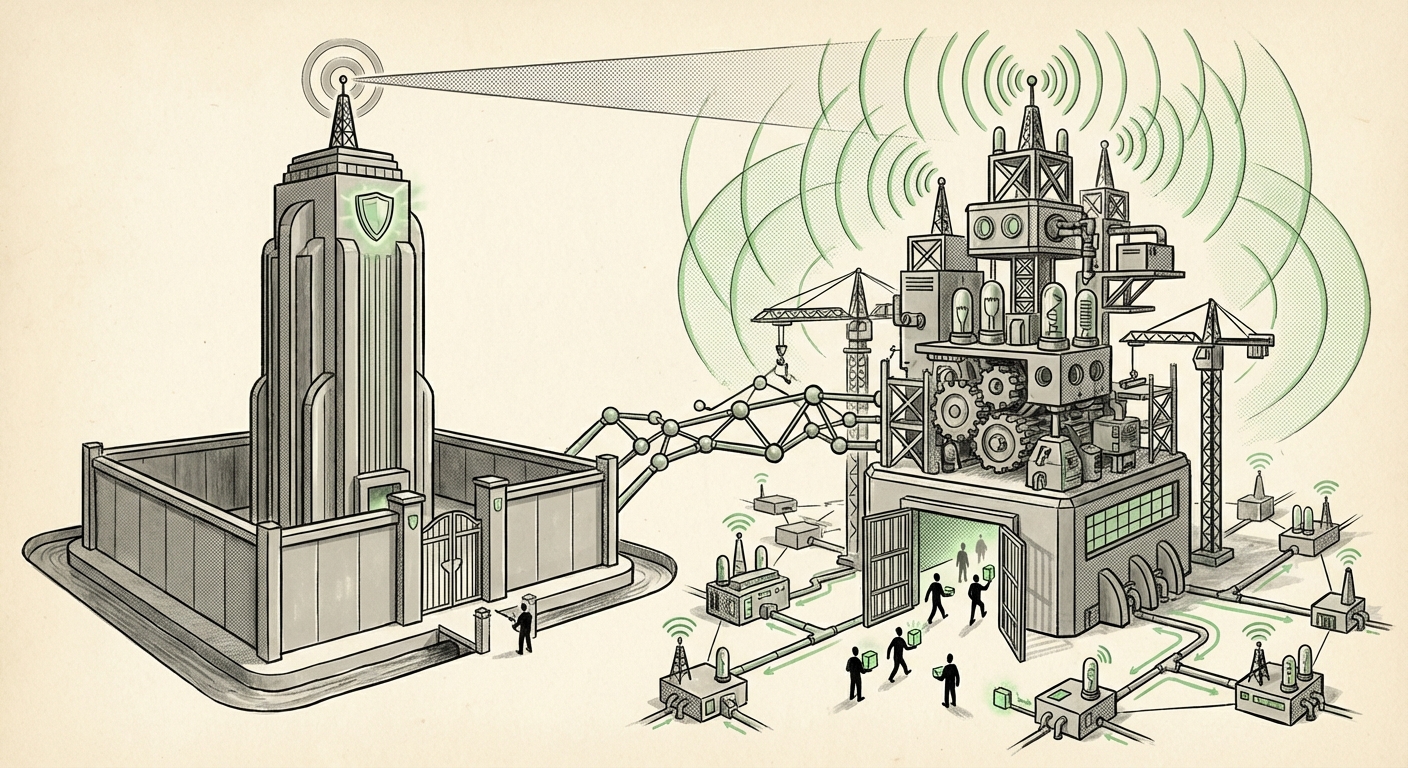
Modern AI tools do not sit quietly in a box. They read web pages, browse the internet, pull in documents, connect to third-party services, and act on behalf of users. An assistant that can look something up online is, from a security standpoint, a highly trained reader of untrusted content. And anything a machine reads, it can also be tricked by.
That is why the current alarm has spread so fast. A critical web flaw is no longer a flaw in one website. It is potentially a flaw in every source that an AI system touches, and every user who relies on that system to summarize, translate, decide, or act. The blast radius of a web bug has grown to match the reach of the AI tools layered on top of it.
The compounding problem
There is a second layer. AI products are usually built from many moving parts: cloud infrastructure, third-party model hosting, data pipelines, plugin marketplaces, and public-facing APIs. Each of those parts inherits the weaknesses of the web protocols and services underneath it. When a critical flaw is found in one place, engineers must ask a genuinely difficult question, how far did it travel?
Answering that question takes days. Announcing that you are answering it takes minutes. That gap is exactly where public alarm lives.
What "Responding" Actually Looks Like, and Why It Matters
When Google, OpenAI and Amazon respond to a security crisis, they are rarely doing just one thing. The response shape is usually consistent, and each piece of it carries a signal about how seriously the industry is treating this class of risk.
- Disclosure and transparency. Publishing what is known, what is not known, and what customers should do, while the investigation is still incomplete. This is the fastest way to shrink panic and the hardest thing to do well.
- Patching and mitigation. Closing the immediate hole, adding a stopgap, or temporarily disabling a feature rather than risk exposing users. Turning something off is an underrated security tool.
- Perimeter review. Asking the uncomfortable question: what else looks like this? Security teams quietly assume that where there is one flaw of a given type, there are others nearby.
- Customer communication and guidance. Telling businesses what to check, what to rotate, what to monitor, and where to look for signs of misuse.
- Longer-term architectural change. The slowest and most important response, redesigning how the system assumes bad input, rather than hoping bad input never arrives.
The fact that these five steps can be described so cleanly is itself the story. Web security has shifted from a niche craft to a core competency for AI companies. The organizations that handle the next decade of AI adoption will be judged on how well they do this in public, under pressure, with incomplete facts.
The Uncomfortable Truth: AI Inherits the Web's Weaknesses
The deepest risk raised by critical web security flaws is not that a specific product gets breached. It is that AI systems are being trained and tuned on a web that is unreliable, manipulable, and sometimes hostile.
Consider what an AI system actually consumes. It reads pages. It follows links. It absorbs text written by strangers. It may ingest documents uploaded by users with no verification of origin. Every one of those inputs is a potential attack path. A flaw in how web content is delivered or handled becomes, in effect, a flaw in what the model believes.
This is the difference between traditional software security and AI security. In traditional software, a flaw lets an attacker in. In AI, a flaw can let an attacker influence, shaping what the system says, what it recommends, and what it does on the user's behalf. That is a far more subtle and far more dangerous failure mode, because it can look completely normal from the outside.
Trust becomes the product
For businesses weighing AI adoption, this reframes the whole buying decision. Feature lists are cheap. The real question is: what happens on the day something goes wrong? Does the vendor warn you quickly, in plain language? Do they tell you what to check? Do they have a plan that assumes failure rather than denying it?
The companies responding to this alarm are, in a sense, auditioning for that trust in public. Their technical fixes matter. Their communication discipline may matter more.
What This Means for Businesses Right Now
For most organizations, the practical fallout from a wave of critical web security flaws is not dramatic. It is administrative, and it is urgent. The companies that come through incidents like this in good shape are almost never the ones with the best technology, they are the ones with the shortest gap between hearing about a problem and checking whether it applies to them.
That gap is widening as AI tools spread through organizations. A single AI assistant connected to a company's documents, email, and internal wiki is a single point through which untrusted web content can enter a trusted environment. Most businesses have no inventory of those connections. Many do not know which employees have connected third-party AI tools to company data.
Security teams are now being asked to secure a surface they did not build, cannot fully see, and did not approve. That is the new normal.
Actionable Insights: A Practical Checklist
For business leaders
- Inventory your AI connections. Know which AI tools touch company data, who approved them, and what they can access. If you cannot answer that in an hour, that is the finding.
- Demand a security contact, not a security page. Ask vendors who tells you about flaws, how fast, and through what channel. Vague answers are answers.
- Write the incident playbook before you need it. A one-page plan for "a vendor we rely on has a critical flaw" beats a scramble later.
- Treat vendor responsiveness as a buying criterion. Speed of disclosure is a better predictor of long-term safety than any certification badge.
For technical teams
- Assume untrusted input everywhere. Any content an AI system reads from the open web should be treated as potentially adversarial, including text that looks harmless.
- Limit what AI tools can do without a human check. Read-only access is a security control. So is a confirmation step before anything irreversible happens.
- Log what your AI systems consume. If you cannot reconstruct what a model read before it produced an output, you cannot investigate an incident.
- Patch on a schedule, not on a mood. The vast majority of real-world damage from web flaws comes from systems that were simply never updated.
For individuals
- Keep software current on the devices and browsers you use for anything sensitive.
- Be skeptical of AI answers that touch money, health, or identity, verify against a second, independent source.
- Watch for the ordinary stuff. Unusual login prompts, password reset emails you did not request, and unexpected account changes are the signals that matter most.
The Bigger Picture: Security Is Now the AI Trust Battleground
Look past the immediate headlines and a pattern appears. The AI industry has spent years competing on capability, bigger models, faster responses, more impressive demos. That competition is reaching a point of diminishing returns in the eyes of buyers. What differentiates vendors next is not what their systems can do, but whether those systems can be relied upon when the internet underneath them misbehaves.
That shifts power in interesting ways. Companies with mature security operations, transparent disclosure habits, and the discipline to say "we do not know yet" will pull ahead. Companies that treat security as a marketing page will be found out, not because they are uniquely bad, but because the web's flaws do not respect brand size.
It also raises a policy question that will not go away. If AI systems depend on the open web, and the open web is structurally fragile, then AI safety is partly a web infrastructure problem. Expect more pressure for shared disclosure norms, faster coordinated patching, and clearer expectations for how AI providers handle vulnerability reports. The alternative, every company improvising its own response in public, produces alarm without producing resilience.
What Comes Next
The response from Google, OpenAI and Amazon will be judged in stages. First on speed, then on honesty, then on whether the underlying architecture actually changes. Only that third stage prevents the next alarm.
Meanwhile, the rest of us get a useful signal. Every time a critical web security flaw forces the biggest AI companies into coordinated response, it is a reminder of how much of the AI revolution rests on decades-old foundations that were never designed for machines that read, reason, and act. Building on those foundations is not a mistake. Pretending they are solid is.
The organizations that internalize that, that assume the web is hostile, that assume vendors will sometimes fail, that build in checks and logs and confirmation steps, will use AI confidently. Everyone else will keep discovering, at the worst possible moment, that the ground beneath the boom was always a little softer than it looked.