Before You Automate Systems, Decide Which Data Wins
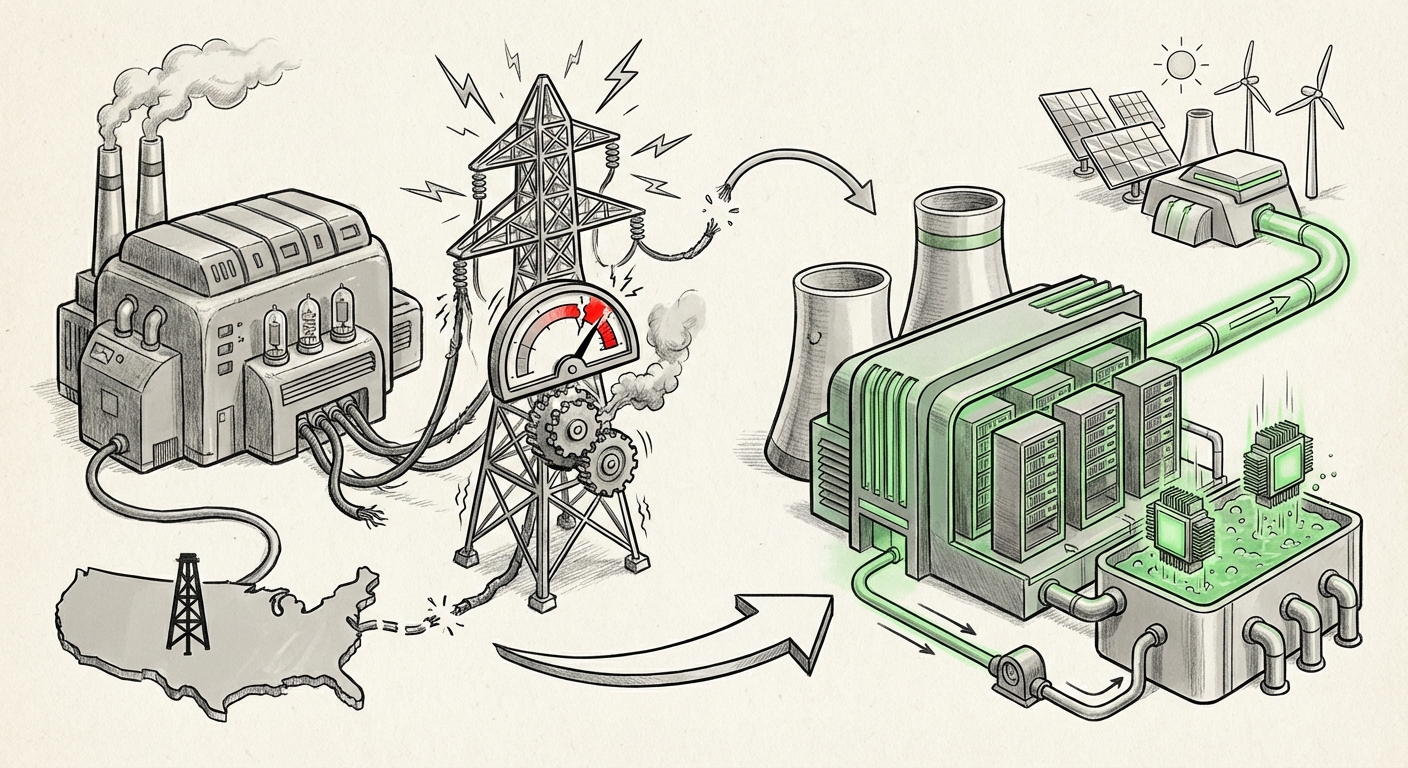
Most automation projects do not fail because the software was bad. They fail because two systems disagreed about a fact, and nobody had decided which one was right. The customer's address in the billing tool says one thing. The address in the shipping tool says another. The support ticket has a third version. A human used to notice the gap and fix it quietly. The moment you automate the process, that quiet fix disappears, and the wrong data starts moving at machine speed.
That is the real lesson behind a principle now spreading through AI and automation teams: before you automate systems, decide which data wins. It sounds small. It is not. It is the difference between automation that compounds value and automation that compounds errors. And as AI agents move from answering questions to actually taking actions, the stakes climb fast.
Automation Does Not Fix Bad Data, It Multiplies It
Here is the uncomfortable math of automation. When a person touches a record, they bring judgment. They pause at a blank field. They notice that a price looks wrong. They ask a coworker. They fix things as a side effect of doing their job.
Automation has none of that. It follows the rule you gave it. If the rule says "send the invoice to the address on file," it sends the invoice to the address on file, even if that address came from an import in 2019 and the customer moved twice since then.
This is why teams often see a strange pattern in their first year of automation. Throughput goes up. So do escalations. Support tickets look different. Instead of "I need an update," they become "why did the system do this?" The automation did exactly what it was told. The problem was upstream, in a decision nobody made out loud: which version of the truth was allowed to win.
What "Which Data Wins" Actually Means
The phrase is shorthand for a governance decision. Every organization has multiple systems that store overlapping facts. Customer names. Product prices. Inventory counts. Employee roles. Contract terms. Delivery dates. Each system was built for a purpose, and each one is slightly right and slightly wrong about everything else.
When humans are in the loop, the conflicts stay hidden. When software is in the loop, the conflicts become events. So before you automate, you have to answer a set of plain questions:
- Which system is the master for each fact? If two tools both store a price, one of them is the source and the other is a copy.
- What happens when they disagree? Does the master simply overwrite the copy? Does the system pause and flag it? Who gets told?
- How fresh does the data need to be? A nightly sync is fine for a mailing list and unacceptable for inventory on a checkout page.
- Who owns the fix? When a conflict is detected, a named team has to be responsible for resolving it, not a shared inbox.
- What is allowed to be automated first? Low-risk, high-volume, well-understood steps should go first. Ambiguous decisions should wait.
Systems of Record vs. Systems of Action
A useful way to think about it is to separate two kinds of software. Some systems are systems of record, they hold the official version of a fact. Others are systems of action, they use that fact to do something, like ship a package, approve a loan, or trigger a payment.
Automation and AI mostly live in the second group. They are fast, they are tireless, and they are only as accurate as the record they read. That is why mature teams stop treating data cleanup as a boring prerequisite and start treating it as part of the automation design itself. The question is no longer "is our data good?" It is "is our data decided?"
Write the Rules Down Before the Code Goes Live
The single highest-leverage artifact in an automation program is a short, plain document that lists each important fact, its master system, its refresh rate, and its conflict rule. No jargon required. Something a new hire could read and follow.
This document does something subtle. It turns hidden assumptions into visible decisions. When a conflict appears six months later, the team is not arguing about who is right, they are checking the rule. When an AI model produces an odd output, the team can trace it back to an input that was never meant to be trusted for that purpose.
The AI Layer Raises the Bar
For years, automation meant deterministic scripts: if this, then that. Modern AI changes the shape of the problem. Large language models and agentic systems do not just follow rules; they read context, choose tools, and take multi-step actions. That flexibility is exactly what makes data conflicts so dangerous.
A rule-based system will fail the same way every time, which makes bugs easy to find. An AI agent may handle a messy record in a slightly different way each time, especially when it is pulling from several sources with different values. Ask an agent to "check the order status" and it may look at three systems, find three answers, and pick one based on wording or recency, not on business importance.
This is the new version of an old problem. The agent is not being careless. It simply was never told which data wins. It made a reasonable guess. Reasonable guesses are not a governance strategy.
Three Things That Change When AI Is In the Loop
First, conflicts become more frequent. Agents often retrieve from more places than a traditional workflow did, documents, tickets, wikis, databases. More sources means more collisions.
Second, errors become harder to explain. When a model combines sources, the output can be plausible and still wrong. Without clear precedence rules, you cannot easily reconstruct why it chose what it chose.
Third, the cost of a wrong answer goes up. A chatbot that gives a slightly wrong answer is annoying. An agent that acts on that answer, issuing a refund, changing a shipping address, closing a ticket, is a business event.
The fix is not to slow down AI adoption. The fix is to give the AI a clear map of what to trust. Agents work better when they are told, explicitly, which source is authoritative for which question, and what to do when sources disagree. That single design choice removes a huge share of the weird failures that make teams distrust AI systems.
What This Means for the Future of AI
The next wave of enterprise AI will not be won by the company with the most models. It will be won by the company with the clearest data hierarchy. As agents become more autonomous and more connected to real systems, the competitive edge shifts from "can we automate this?" to "can we trust what our automation reads?"
Expect three shifts.
Precedence becomes a product feature. Vendors and internal platforms will increasingly ship with visible rules for source priority, freshness, and conflict handling, rather than burying them in integration code. Teams will ask "who wins?" in the sales demo, not in the postmortem.
Data contracts get simpler and more human. The old approach was heavyweight documentation nobody read. The new approach is a short, living agreement between teams: this is my fact, here is how fresh it is, here is how I will notify you when it changes. Small, readable, enforced.
AI evaluation moves upstream. Instead of only testing model outputs, teams will test the inputs, the retrieval sources, the joins, the precedence rules. A model can only be as reliable as the data ranking it was given.
There is a broader social implication too. As automated decisions touch credit, hiring, benefits, and healthcare scheduling, the question of "which data wins" becomes a question of fairness. If the wrong system wins by default, the harm is not random, it tends to fall on the people whose records are messiest, which often means the people with the least time to fix them. Deciding precedence deliberately is not just an engineering nicety. It is a form of accountability.
A Practical Playbook
You do not need a giant program to start. You need a short list and a few honest conversations.
- Pick the ten facts that matter most. The ones that, if wrong, cause money loss, compliance risk, or an angry customer.
- Name the master for each one. One system, one owner. If two systems both claim to be the master, that is your real project.
- Write the conflict rule in one sentence each. "If billing and CRM disagree on address, billing wins; CRM is updated within an hour."
- Automate the boring, well-defined paths first. Prove the data holds before you hand over judgment-heavy steps.
- Build a conflict queue, not a conflict email. Conflicts should be visible, counted, and assigned, a metric, not a surprise.
- Give every AI agent the same rules your document gives people. If the agent cannot look up precedence, it will invent one.
- Review monthly. Sources change. Integrations drift. The rules need a calendar entry, not just a wiki page.
The Question to Ask in Your Next Planning Meeting
Before the roadmap discussion, ask one question about the process you are about to automate: when our systems disagree, which one wins, and who decided that?
If the room goes quiet, you have found the real first task. It is cheaper to answer that question now than to explain a strange automated outcome to a customer later. The teams that get this right do not automate more slowly. They automate with fewer surprises, and they get to keep the trust they built.
Automation is a promise that the same thing will happen every time. Data governance is what makes that promise safe to keep. Decide which data wins, write it down, and then let the machines run.