IBM Shares Fall Despite Results: What the Pullback Really Says About AI's Future
On October 21, 2026, IBM's stock slipped after the company reported its latest quarterly results. The numbers, on their own, were not enough to steady the stock. Instead, a broader wave of worry about the technology sector washed over the reaction, and that worry has a name: artificial intelligence spending and whether it will ever pay off.
That single trading day tells a much bigger story than one company's quarter. IBM is one of the oldest and most established names in enterprise technology. It sells software, cloud services, and consulting to banks, hospitals, governments, and manufacturers. When IBM's results and its stock stumble, it is usually a signal about how the buyers of technology are feeling, not just the sellers.
Here is what that signal means for the future of AI, and what businesses should do about it right now.
What Actually Happened, and Why It Matters
The headline is simple: IBM shares fell as its results failed to offset broader tech worries. In plain terms, investors looked at the company's performance, then looked at the wider market mood, and decided the mood mattered more. They sold.
This is not a story about a company in trouble. It is a story about a shift in what investors are willing to pay for. For the past few years, the market has rewarded almost anything connected to AI. Announce a new AI platform, and the stock goes up. Mention AI on an earnings call, and analysts nod along. That phase is ending.
We are moving into what could be called the "show me" era. Investors now want proof. They want to see AI spending turn into revenue, margin, and repeat customers. When a major enterprise vendor reports results and the stock still falls, it means the market has already priced in the promise, and is now waiting for the delivery.
The Real Tension: Heavy Spending Meets Impatient Money
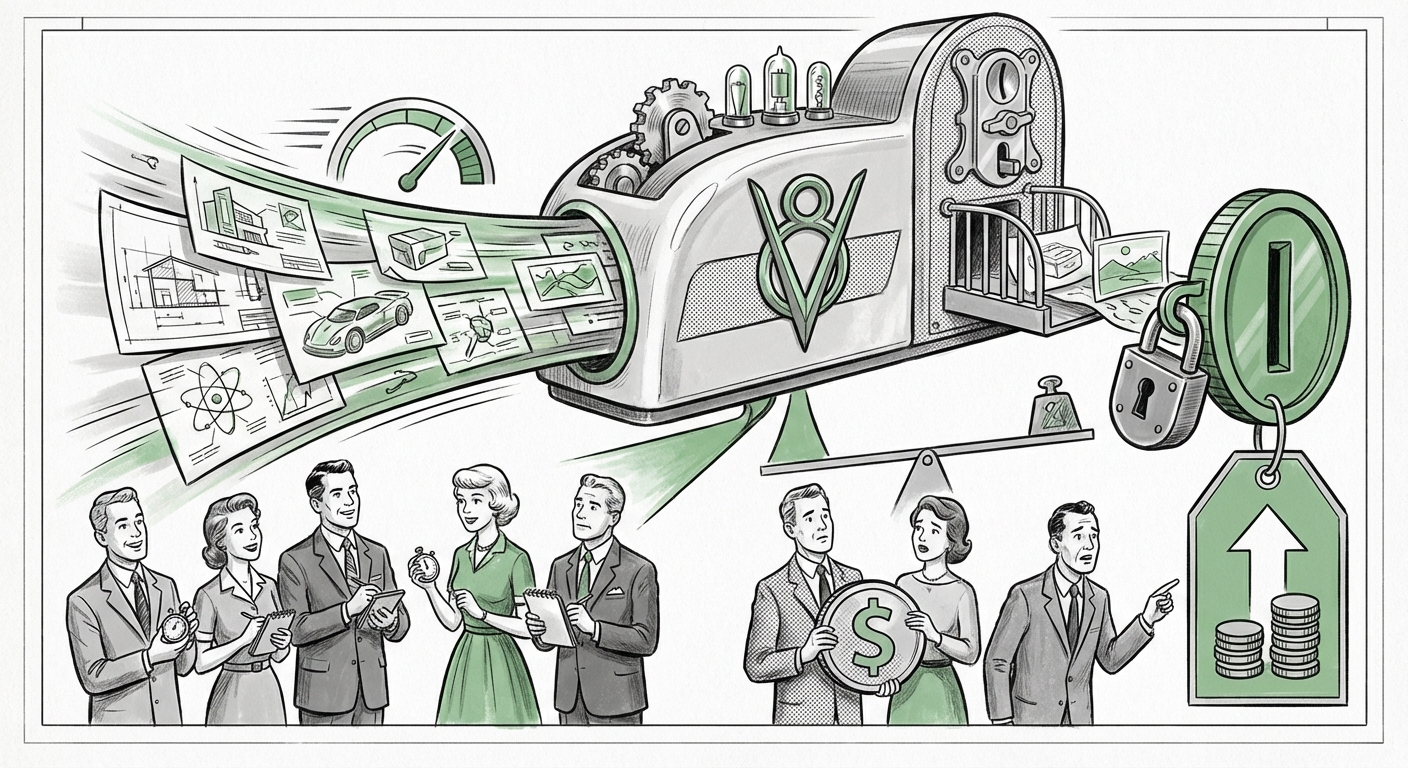
Think of the tech industry right now as a giant construction site. Enormous sums are being poured into data centers, chips, power, and software. The bet is that AI demand will keep climbing for years. But construction costs money today, and the returns arrive later.
That timing gap is the source of the "broader tech worries" that dragged on IBM's shares. The concerns stack up in a predictable order:
- Cost: Building and running AI systems is expensive, compute, energy, talent, and data all cost more than traditional software.
- Payback: It is hard to point to a clear, measurable return on many AI projects so far.
- Pace: The technology changes fast. A tool bought this year may look outdated next year.
- Concentration: A large share of AI value flows to a small number of infrastructure players, leaving the rest to fight over thinner margins.
When those four pressures sit on top of a whole sector, even a solid quarter from a company like IBM can get lost in the noise. That is what happened here.
Why Enterprise AI Is Harder to Prove Than to Promise
IBM's position makes this moment especially revealing. The company does not sell AI to consumers who tap a button and get a chatbot reply. It sells to organizations that must justify every dollar to a board, a regulator, or a taxpayer.
That kind of buyer is careful. Enterprise AI deals involve long pilots, security reviews, data cleanup, staff training, and integration with systems that are decades old. A deal can take many months to close and even longer to show results. Meanwhile, the market wants quarterly proof.
This is the central tension of the next phase of AI. The technology is genuinely powerful, but the path from "we bought AI" to "AI improved our bottom line" is longer and messier than the hype suggests. Companies that ignore that gap get burned. Companies that plan for it win.
The Three Things Every AI Project Must Answer
Whether you run a small business or a large enterprise, the questions investors are now asking of tech giants are the same ones your leadership should ask of you:
- What did this replace? A manual process, an outside vendor, an error rate, a queue time. If AI replaced nothing, it is probably a science project.
- What does it cost to keep running? Model usage, storage, monitoring, and human oversight all carry ongoing costs. Many early AI budgets covered only the launch.
- Who owns it after the pilot ends? Projects without a clear owner quietly die. Projects with an owner get measured, and measured projects get better.
What This Means for the Future of AI
The pullback in IBM shares, set against wider tech anxiety, points to four shifts that will shape the next chapter of AI.
1. The race moves from models to deployment
For a few years, the story was about who had the biggest, smartest model. That race is now largely settled among a handful of leaders. The next contest is about who can install AI into real workflows, billing systems, supply chains, claims processing, patient records. This is slower, less glamorous work, and it favors companies with deep enterprise relationships. IBM has spent years building exactly that kind of business, which is why its stock reaction is worth watching.
2. Smaller, cheaper, more targeted AI gains ground
When money is tight, efficiency wins. Expect more focus on compact models tuned for one job, running on modest hardware, rather than giant general systems for every task. This is good news for cost control and good news for privacy, since more work can happen on a company's own systems.
3. AI agents become the new battleground
The most promising path to real returns is automation of multi-step work, an agent that reads an invoice, checks a contract, and files a ticket. These projects have clear baselines and clear savings. They are also the easiest to measure, which matters enormously when investors are demanding proof.
4. Consolidation and vendor shakeout
When the market stops rewarding announcements and starts demanding returns, weaker AI vendors fade. Buyers will favor fewer, more integrated platforms that can show real customers and real results. The "AI washing" era, slapping an AI label on ordinary software, is ending.
Practical Implications for Businesses
The good news is that the current mood rewards discipline, not recklessness. Here is how to act on it.
Build a business case before you build anything else
Write down the number you expect to move, cost per claim, hours per hire, error rate, response time. If you cannot name the number, you are not ready to spend. A one-page business case beats a six-month pilot with no target.
Start narrow and finish something
A finished small project does more for your credibility than three half-built ambitious ones. Pick one workflow with high volume and low risk. Automate it. Measure it. Then repeat.
Budget for the boring parts
Data cleanup, permissions, integrations, and staff training usually cost more than the AI tool itself. Teams that skip this step are the ones whose projects quietly stall. Put money and headcount behind it from day one.
Design human review into the system
Trust is earned in steps. Keep a person in the loop for high-stakes decisions, and build a clear way to flag and fix mistakes. This also satisfies regulators, who are paying closer attention every quarter.
Treat AI cost like any other operating cost
Usage-based pricing can surprise you. Track spend per workflow, set limits, and review monthly. An AI project that works but costs too much to scale is not a success.
Consolidate your vendors
Fewer platforms mean fewer integration headaches, simpler security reviews, and more bargaining power. In a tighter market, vendors are more willing to negotiate, use that.
What to Watch Next
Three signals will tell us whether this pullback was a blip or a turning point. First, watch whether enterprise AI deals get larger and longer or shrink into small pilots. Second, watch the ratio of AI spending to AI revenue at the major platform companies, that gap is the market's real worry. Third, watch how often AI shows up in ordinary earnings discussions as a cost saver rather than a growth story. When AI starts showing up as savings, the skepticism fades.
For now, the message from the market is clear and healthy: the era of easy AI money is over, and the era of proof has begun. That is not bad news for AI. It is the moment AI stops being a story and starts being a tool. Companies that build real, measurable systems now will be the ones still standing, and still growing, when the mood turns again.
Conclusion
IBM's falling shares on October 21, 2026 were not really about IBM. They were about a sector-wide recalibration: investors are no longer satisfied with AI promises, and they are starting to price in the cost and the waiting. For businesses, that is an invitation to be more practical, not more cautious. Choose one problem, define how you will measure it, fund the unglamorous groundwork, and ship something real. The companies that treat AI as an operational discipline rather than a marketing slogan will be the ones who turn this nervous moment into a durable advantage.