Modular Diffusers Explained: Why Composable Building Blocks Are the Future of AI Image Pipelines
AI image generation has grown up fast. What started as a single, giant model that turns text into a picture is now turning into something much more like a construction set. The arrival of Modular Diffusers, Composable Building Blocks for Diffusion Pipelines marks a clear shift: instead of shipping one massive pipeline you have to swallow whole, the building blocks are being separated out so anyone can mix, match, swap, and rebuild them.
That might sound like a small engineering detail. It is not. It is the difference between buying a fixed dinner and owning the whole kitchen. And it tells us a lot about where AI is heading next.
What Modular Diffusers Actually Is
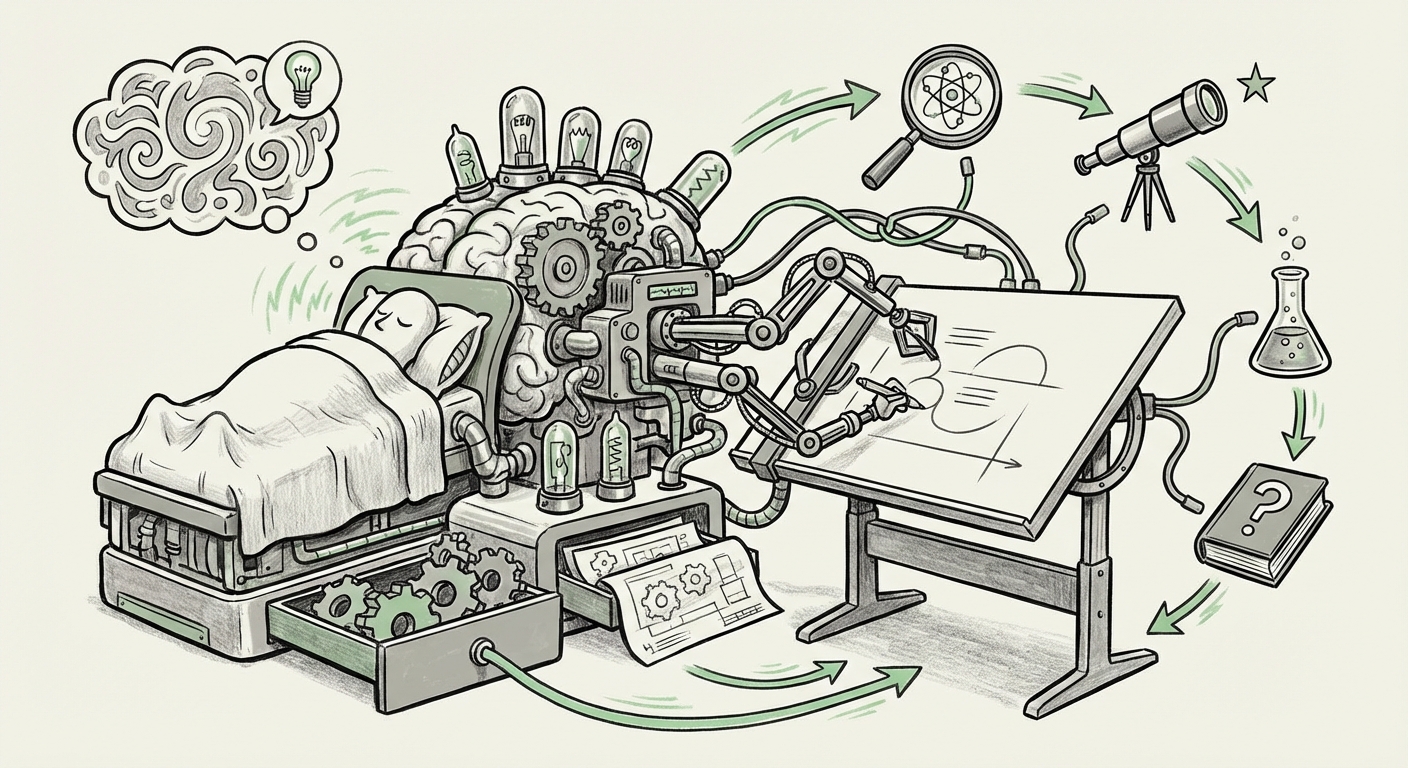
A diffusion pipeline is the assembly line behind most modern AI image tools. Text goes in one end. A model slowly adds detail to random noise, step by step, until a finished image comes out the other end. Inside that line there are many moving parts: the text encoder that reads your prompt, the scheduler that decides how to step through the noise, the main model that does the heavy lifting, and the decoder that turns the final result into pixels.
In the older, monolithic way of working, those parts were welded together. If you wanted a different scheduler or a lighter encoder, you often had to rebuild the whole thing, or wait for someone else to release a new all-in-one package.
Modular Diffusers breaks that apart. The idea is simple to state and powerful in practice: each stage of the pipeline becomes an independent, composable building block. Blocks can be replaced, reused, stacked, or shared. A researcher experimenting with a new stepping strategy can drop it in without touching the rest of the line. A product team can swap in a faster component without rebuilding their entire tool.
The construction-set analogy
Think of it like a set of toy bricks. Before, you bought a finished model of a car. Now you get the bricks. You can build the car, then take it apart and build a truck, or a bridge, or something nobody has built before. The bricks stay the same. The possibilities do not stay the same at all.
Why the Old Way Hit a Wall
The all-in-one pipeline worked well when AI image generation was new. Everyone wanted roughly the same result, and speed mattered more than flexibility. But three things changed.
1. Different jobs need different tools
A quick thumbnail sketch and a high-end product photo do not need the same machinery. One needs speed, the other needs polish. A rigid pipeline forces both jobs through the same mold. Modularity lets a team build a lean setup for the fast job and a heavy setup for the detailed job, using the same shared components.
2. Innovation happens at the edges, not in the middle
Most of the exciting new ideas in diffusion do not replace the whole system. They replace one piece of it, a better way to guide the generation, a cleverer scheduling method, a lighter text encoder. When the system is modular, those small innovations can plug in right away instead of waiting for a full rebuild.
3. Maintenance becomes a nightmare
Big fixed pipelines are hard to update. Change one thing and you risk breaking five others. When components are separate, you can test them on their own. If something fails, you know exactly where to look.
The Bigger Trend: AI Is Going Modular Everywhere
This is not happening in isolation. The whole AI field is drifting toward modular design, and image generation is just the latest stop on that road.
- Tool use and agents. Instead of one model doing everything, we now chain small specialized models together with tools and APIs between them.
- Retrieval systems. Language models are paired with separate search and database layers that can be swapped out independently.
- Model routing. Systems send easy requests to small, cheap models and hard ones to large, capable models, a modular choice made at runtime.
- Open component ecosystems. Shared libraries of parts let teams build on each other's work instead of starting from zero.
The pattern is the same in every case. Split the system into pieces, then let the pieces be recombined. Modular Diffusers applies that logic to the diffusion pipeline itself.
What This Means for the Future of AI
Faster progress, shared across the field
When components are interchangeable, a breakthrough in one block lifts everyone using that block. Progress stops being a race to build the biggest single model and becomes a shared effort to improve the parts. That compounds. A small gain in the scheduler plus a small gain in the encoder plus a small gain in the decoder can add up to a big gain in the finished product.
Custom systems become the norm
In a few years, the idea of using one default image pipeline for everything will look as odd as using one default website template for every business. Companies will expect to tune the pipeline to their own needs: their own look, their own speed limits, their own hardware.
Smaller players get to compete
Building a full diffusion system from scratch is expensive. Building one excellent component is far more achievable. Modular pipelines lower the barrier, which means a small team with one great idea can end up inside thousands of downstream products.
Hardware flexibility improves
Not every device can run a heavy pipeline. But most devices can run a trimmed-down one. When you can swap in lighter parts, more of the work can move to laptops, phones, and edge machines instead of always relying on a distant data center.
Practical Implications for Businesses
If you use or build AI image tools, modularity changes your decisions in a few concrete ways.
You buy capabilities, not packages
Instead of choosing one vendor's whole image system, you can mix a strong generator from one place with a better control layer from another. Procurement gets more flexible, and lock-in gets weaker.
Costs become tunable
Modular design lets you dial quality up or down per use case. Most requests in most companies do not need the most expensive setup. Being able to choose a lean path for routine work and a rich path for hero assets can meaningfully cut operating cost.
Upgrades stop being scary
Because components are tested separately, you can update one part, measure the impact, and roll back if needed. That is a normal software practice finally arriving in AI image systems.
Compliance and safety get more precise
Safety filters, watermarking, and content checks can live in their own blocks. That means they can be updated quickly when rules change, without touching the core generator. For regulated industries, that separation is valuable.
What Developers and Teams Should Do Now
You do not have to rebuild everything tomorrow. But a few moves make sense today.
- Map your pipeline. Write down every stage of your current image workflow and what it does. You cannot make something modular until you can see its seams.
- Separate the interfaces. Define clear inputs and outputs for each stage. If a component can be described in one sentence, it can probably be swapped.
- Build a benchmark harness. Track quality, speed, and cost per stage. Modularity is only useful if you can measure whether a new block is actually better.
- Keep a component registry. Note which versions you use and why. Swap-friendly systems need good bookkeeping.
- Start with one block. Pick the least risky piece, often the scheduler or a pre-processing step, and try replacing it first.
- Ask vendors about interfaces. If a tool cannot be broken into parts, ask why. That answer tells you how locked in you are.
The Risks Worth Watching
Modularity is not free. When everything is a building block, you get more combinations, and more ways for a system to behave in ways nobody tested. Two components that each work fine can clash when paired.
There is also a support problem. If a bug shows up, is it the encoder, the scheduler, or the way they were joined? Good tooling and clear contracts between blocks become essential, not optional. Teams that skip this step will find that flexibility turns into chaos.
Finally, modularity can spread responsibility thin. When many hands build the parts, someone still has to own the finished system and stand behind what it produces. That ownership does not disappear, it just moves up a level.
The Road Ahead
The shift toward composable building blocks is one of the most important quiet changes in AI right now. It does not produce a flashy demo. It produces something more lasting: a system that gets better because anyone can improve any part of it.
For the people building AI products, this is a nudge to stop thinking in terms of finished machines and start thinking in terms of parts. For the people buying them, it is a nudge to ask better questions about what can be swapped, measured, and replaced.
Diffusion pipelines were the first big wave of AI you could see. Modular diffusion pipelines are the beginning of AI you can assemble. And assembled systems tend to outlast the ones that arrive sealed in a box.