New AI Builds for 7 October 2026: Why Quiet Release Notes Now Tell the Real AI Story
On 7 October 2026, a new set of builds was announced. That is the whole headline. No giant keynote. No dramatic stage reveal. Just a dated notice that fresh builds are ready.
And that, right there, is the story. Because the most important thing happening in AI right now is not a single dramatic breakthrough. It is the steady drumbeat of small, frequent releases, and what that rhythm does to products, teams, and entire industries over time.
This article breaks down what a builds announcement like this one really means. It looks at why the industry moved from yearly mega-launches to weekly and monthly drops, what that shift does to businesses trying to keep up, and how to build a team that actually benefits from it instead of drowning in it.
The Shift From Big Bangs to Small Drops
Not long ago, AI releases were events. A company would spend months teasing a model, then launch it with a countdown clock and a press tour. Everyone would stop, watch, and then wait another year for the next one.
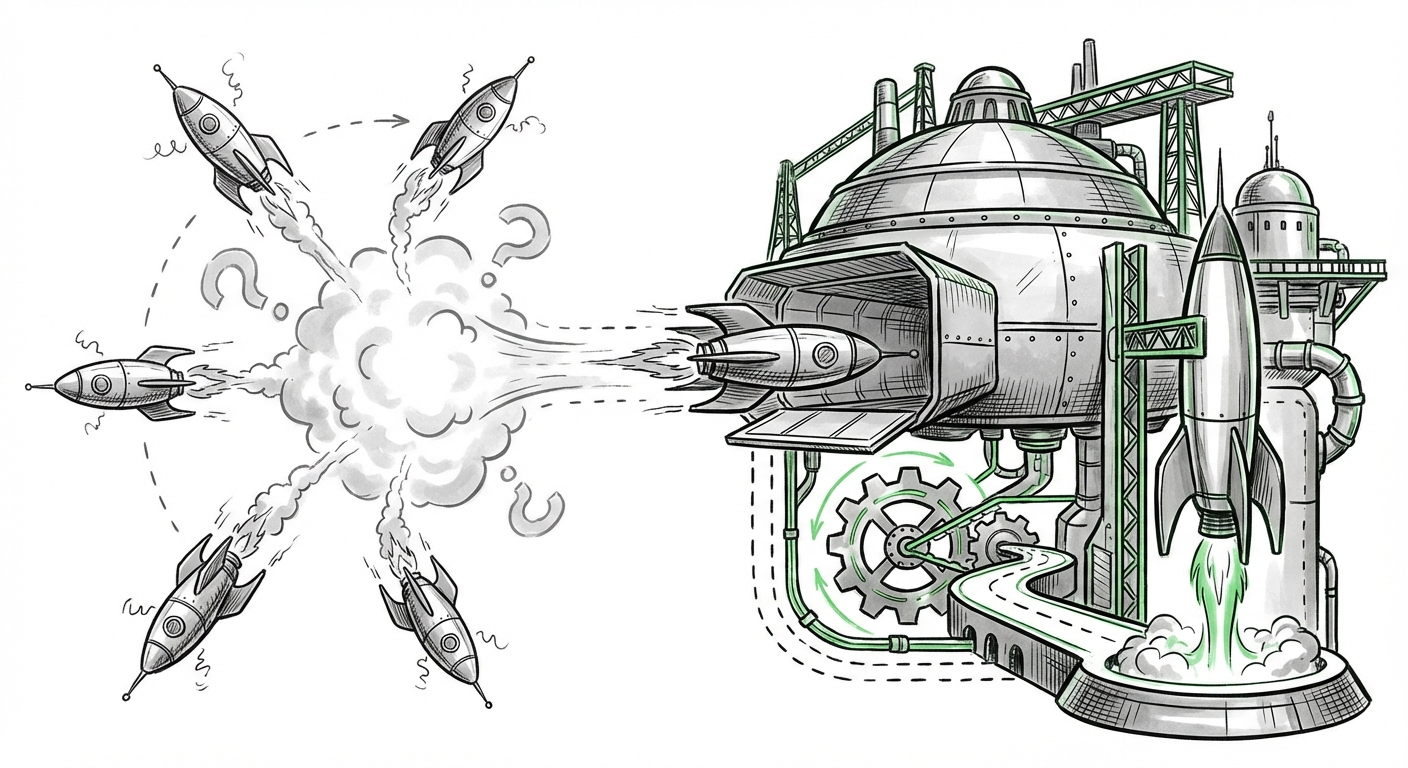
That pattern is gone. Today the norm is a continuous build cadence, regularly scheduled releases, often with a fixed date attached, like the builds dated 7 October 2026. Sometimes these notes are long. Sometimes they are short. Either way, the message is the same: the product is a moving thing, not a finished thing.
There are good reasons for this.
- Small changes are safer. A tiny adjustment can be tested, measured, and undone. A giant one-off launch is a gamble you only get to take once.
- Users give better feedback on live systems. Real usage reveals what a demo never will.
- Competition sets the pace. If one team ships every two weeks, everyone else feels the pressure to match it.
- Infrastructure is now boring enough to be routine. Deployment pipelines that once took heroics are now automatic.
The result is that the AI industry has started to look less like a series of moon shots and more like the software industry it always secretly was. And that has real consequences for anyone using these tools.
Why a Dated Builds Notice Is a Signal, Not a Detail
It is easy to scroll past a short release note. But a builds announcement carries several signals worth reading carefully.
1. The cadence is stable
A dated release schedule tells you the team has a repeatable process. Repeatable processes mean fewer surprises. For a business, predictability is worth almost as much as raw capability. You can plan a testing window around a known date. You cannot plan around chaos.
2. Change is continuous, not episodic
If new builds arrive on a regular schedule, then the version of the tool your team evaluated last quarter is not the version running today. That is a quiet but enormous operational fact. It means evaluation is never finished. It is a habit you maintain, not a project you complete.
3. The gap between release and dependency is shrinking
When updates come often, teams start to depend on them. A workflow tuned to last month's behaviour can drift without anyone noticing. Silent drift is one of the most underrated risks in modern AI operations.
4. Documentation becomes a competitive asset
Frequent releases force teams to get good at explaining change. The teams that publish clear, honest, complete notes are the ones you can safely build on. Vague release notes are a warning sign, not a minor annoyance.
What This Means for the Future of AI
The steady-build era points toward several trends that are already visible and likely to harden in the months ahead.
Improvement will be incremental and compounding
Most gains will not arrive as a single dramatic jump. They will arrive as dozens of small improvements, faster responses, fewer errors, better handling of edge cases. Each one is unremarkable alone. Stacked together over a year, they change what is possible. This is why teams that keep up quietly outperform teams that wait for the "next big thing."
Evaluation becomes the core skill
When the product changes every few weeks, the winner is not the team with the most tools. It is the team that can measure them. Building a small, reliable test set of your own real tasks, and running it against every new build, will matter more than any vendor comparison chart.
Interfaces will stabilise while behaviour shifts
A common pattern in regular releases: the outside of the product stays familiar while the inside gets smarter. That is good for stability but tricky for intuition. Your team's mental model of "how it behaves" goes stale faster than its knowledge of "where the buttons are."
Governance has to move at build speed
Compliance reviews, security checks, and data-handling policies were often designed for annual software cycles. A build schedule that runs many times a year will break those processes unless they are redesigned to be lighter and more frequent. Expect governance-as-a-continuous-process to become a standard part of AI operations.
Practical Implications for Businesses
Here is where it gets concrete. If releases arrive on a regular schedule, several things need to change in how organisations operate.
Pin, test, then promote
Do not let production systems jump to every new build the moment it lands. Use a simple three-step flow: pin to a known build, run your evaluation set against the new one, and only then promote it. This single habit removes most of the risk of a quiet release breaking a working workflow.
Build a rollback plan before you need one
Frequent change means occasional regressions. Teams that can revert in minutes treat releases as low-stakes. Teams that cannot treat every release as a threat. The difference in organisational confidence is enormous.
Write your own release notes
Vendor notes describe what changed. They do not describe what changed for you. Keep a short internal log: which build you are on, what you tested, what broke, what you gained. After six months, that log becomes the most valuable document your team owns.
Train people on principles, not on quirks
If you teach staff the exact wording that works today, that training expires. If you teach them how the tool reasons, how to check its output, and when to distrust it, that training lasts. Shift your enablement budget accordingly.
Budget for continuous change, not one-time rollout
Many organisations still fund AI adoption as a project with a start and an end. In a steady-build world, there is no end. Allocate ongoing time for review, retraining, and re-testing, even a few hours a month per team prevents a slow drift into stale practice.
What This Means for Society and Workers
The quiet-release model has broader effects beyond the enterprise.
First, it makes public understanding harder. Big launches get headlines. Small builds do not. So the tools people use every day improve without public discussion of what changed. That gap between actual capability and public awareness is a real challenge for regulators, educators, and journalists alike.
Second, it changes the skills that matter. The people who thrive will not be those who memorised a product at launch. They will be those who can adapt to a moving tool, curious, sceptical, and quick to re-test their assumptions.
Third, it puts pressure on transparency. Regular releases should come with regular, readable explanations. When they do, trust grows. When they do not, users are left guessing about behaviour they depend on daily. The organisations that treat release notes as a public service, not paperwork, will earn loyalty that features alone cannot buy.
A Quick Checklist for Teams
If a new batch of builds has just landed, here is a short, practical routine.
- Read the notes properly. Not a skim. Highlight anything touching behaviour you rely on.
- Run your evaluation set. Even twenty real tasks beat gut feel.
- Check the boring stuff. Logging, error handling, latency, cost per task.
- Ask what got worse. Every release trades something. Find the trade.
- Update your internal log. Which build, which date, what changed for you.
- Tell your users. A two-line note to staff prevents a week of confusion.
The Bigger Picture
A builds announcement dated 7 October 2026 will not be remembered. It will be one of many. And that is exactly the point.
The future of AI is not a single moment of arrival. It is a long, unglamorous series of small steps, delivered on a schedule, reviewed by teams who have learned to keep pace. The organisations that win will not be the ones that caught the biggest launch. They will be the ones that built the habit of checking, measuring, and adapting every time a new build lands.
So the next time a short release note appears in your inbox, treat it as the important document it is. The quiet notes are where the real progress lives.