Building AI for the Long Haul: What Plane Finder's Q&A Reveals About the Future of AI
In a tech world obsessed with the next big thing, a quiet Q&A from Plane Finder stands out. The flight tracking company recently shared how it set itself up for the long haul. That phrase, long haul, might not sound exciting. But it's exactly what the AI industry needs to hear right now.
Plane Finder is a service that tracks flights in real time. It has been around for years, quietly doing its job while other tech darlings rise and fall. In the Q&A, the team discussed their approach to building systems that last. They didn't talk about chasing hype or jumping on every new trend. Instead, they focused on durability, reliability, and solving a real problem for the long term.
That's a sharp contrast to the current AI landscape. Every week brings a new model, a new benchmark, a new startup promising to change everything. But how many of these AI systems will still be useful in five or ten years? Plane Finder's long-haul mindset offers a valuable lesson: the future of AI isn't just about bigger models, it's about building systems that last.
The Long Haul Mindset vs. Short-Term Hype
Most AI companies today are built for speed. They launch fast, raise money, and try to capture attention. That's not necessarily bad, innovation needs energy. But the long haul requires something different: patience, steady investment, and a focus on fundamentals.
Plane Finder's Q&A highlights this difference. The company didn't set out to create a flashy AI demo. It set out to track flights accurately, day after day, for years. That means handling massive amounts of data, dealing with outages, and keeping costs under control. These are unglamorous problems, but they're the ones that determine whether a service survives.
For AI, the lesson is clear. Many AI projects fail not because the model isn't smart enough, but because the surrounding systems aren't robust. Data pipelines break. Models drift. Costs spiral. A long-haul approach means planning for these challenges from the start.
Implication: Move from demos to dependable systems
AI has spent the last few years in the demo phase. Chatbots, image generators, and code assistants have wowed us. But to deliver real value, AI must move into dependable, everyday systems. That means focusing on reliability, maintainability, and cost-effectiveness, not just raw performance.
Data Infrastructure Is the Backbone
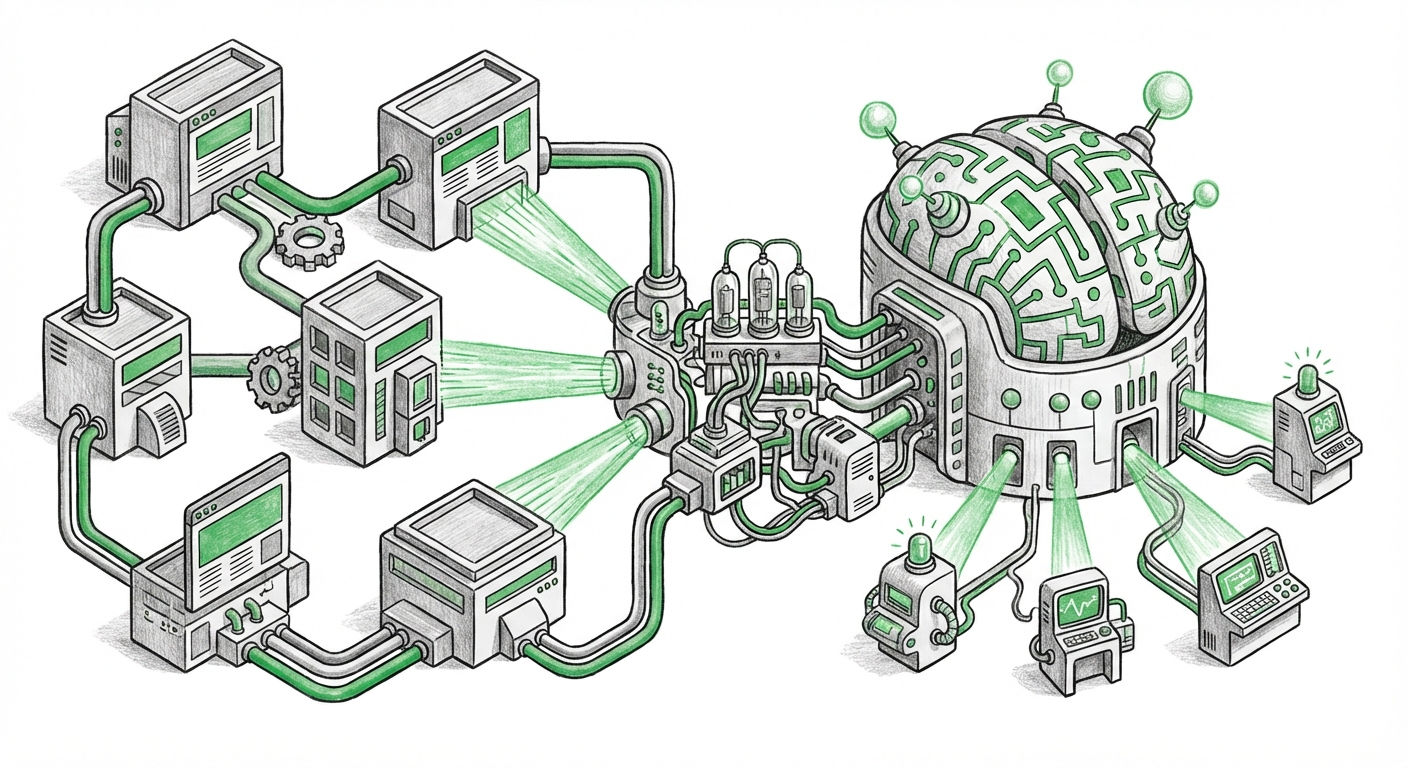
Plane Finder's core challenge is data. Flight tracking requires ingesting signals from thousands of aircraft, processing them in real time, and serving accurate results to users. Without a solid data infrastructure, the service would collapse.
The same is true for AI. Every AI system is only as good as the data it runs on. Yet many companies treat data as an afterthought. They rush to build models without cleaning their data, setting up pipelines, or planning for governance.
A long-haul approach flips that. It starts with data quality, data lineage, and data security. It means building systems that can handle messy, real-world data, not just clean benchmark datasets. And it means planning for scale, so that when usage grows, the data layer doesn't break.
Actionable insight: Invest in data foundations first
Before you build an AI model, ask: Is my data reliable? Can I trace where it came from? Can I handle it at scale? If the answer is no, fix that first. Plane Finder's long-term success likely rests on getting these basics right.
Incremental Innovation Over Radical Disruption
The tech industry loves disruption. But disruption is often messy, and it rarely lasts. Plane Finder's Q&A suggests a different path: incremental innovation. The company probably didn't rebuild everything from scratch every year. Instead, it made steady improvements, added features, and optimized performance.
AI can learn from this. Instead of trying to replace entire workflows with AI overnight, businesses should integrate AI gradually. Start with a specific problem, like predicting flight delays or detecting anomalies in flight data. Prove the value. Then expand.
This approach reduces risk and builds trust. It also creates a feedback loop: as the AI system learns from real-world use, it gets better. Over time, these small improvements add up to something powerful.
Actionable insight: Start small, scale carefully
Pick one high-value use case for AI. Build a minimum viable product. Measure results. Then iterate. Don't try to boil the ocean.
Reliability and Trust in AI Systems
Flight tracking is a safety-critical domain. If Plane Finder's data is wrong, it could have serious consequences. That's why reliability is non-negotiable. The Q&A likely touched on how the company ensures uptime, handles failures, and maintains accuracy.
AI systems increasingly face similar demands. As AI moves into healthcare, finance, transportation, and other critical areas, reliability becomes essential. A model that works 95% of the time isn't good enough when lives are on the line.
Building reliable AI means designing for failure. It means having fallbacks, monitoring for drift, and validating outputs. It also means being transparent about limitations. Users need to trust the system, and trust is earned through consistent, dependable performance.
Actionable insight: Build for trust, not just accuracy
Accuracy on a test set is just the beginning. Real-world reliability requires continuous monitoring, explainability, and human oversight. Plan for these from day one.
Scalability and Cost Management
Plane Finder tracks flights globally, which means handling huge volumes of data. The Q&A probably discussed how the company scales its infrastructure without breaking the bank. That's a challenge every AI company faces today.
Large AI models are expensive to train and run. Many companies are now struggling with the cost of inference, serving predictions to users at scale. A long-haul approach means optimizing for cost efficiency, not just peak performance.
This could mean using smaller, specialized models instead of giant general-purpose ones. It could mean caching results, batching requests, or using edge computing. The key is to design systems that can grow sustainably.
Actionable insight: Treat cost as a first-class metric
Track the cost per prediction, cost per user, and cost per month. Optimize for the long term, not just the launch.
The Role of AI in Aviation and Beyond
While the Q&A focused on Plane Finder's infrastructure, it's worth considering how AI could enhance flight tracking. Predictive analytics could forecast delays. Anomaly detection could spot unusual flight patterns. Computer vision could analyze satellite imagery.
These applications show AI's practical value in niche domains. They're not about building artificial general intelligence, they're about solving specific problems better. And that's where AI will likely have the biggest impact in the near term.
Businesses in every industry should look for similar opportunities. Where can AI improve accuracy, reduce costs, or unlock new insights? The answers are often in the unglamorous, data-heavy corners of the business.
Practical Implications for Businesses
So what can companies learn from Plane Finder's long-haul approach? Here are a few takeaways:
- Start with a real problem. Don't adopt AI because it's trendy. Adopt it because it solves a specific, valuable problem.
- Invest in data infrastructure. Clean, reliable, well-governed data is the foundation of any successful AI system.
- Embrace MLOps. Machine learning operations, the practice of deploying and maintaining models, is just as important as model development.
- Plan for maintenance. AI models degrade over time. Budget for retraining, monitoring, and updates.
- Prioritize trust. Build systems that are transparent, reliable, and safe. Trust is hard to earn and easy to lose.
Society and AI: Trust, Safety, and Long-Term Impact
The long-haul mindset isn't just good for business, it's good for society. As AI becomes more integrated into our lives, we need to think about its long-term effects. Will it be safe? Will it be fair? Will it respect privacy?
Plane Finder's approach suggests that these questions should be answered through design, not afterthought. By building systems that prioritize reliability and transparency, we can create AI that people trust.
This is especially important as AI spreads into areas like healthcare, education, and public services. A short-term hack mentality could lead to harmful outcomes. A long-haul mentality could lead to AI that genuinely improves lives.
Conclusion: The Future of AI Is Built to Last
The AI industry is at a crossroads. We can continue chasing hype, or we can start building for the long haul. Plane Finder's Q&A is a quiet reminder that the most successful technologies are often the ones that just keep working, year after year.
The future of AI won't be defined by the biggest model or the flashiest demo. It will be defined by systems that are reliable, scalable, and trustworthy. It will be defined by companies that invest in data infrastructure, embrace incremental innovation, and plan for maintenance.
In other words, the future of AI will be built by those who think like Plane Finder: focused on the long haul, not the short sprint. That's a lesson every business, and every AI practitioner, should take to heart.