Real PMIDs, Wrong Papers: Why AI Medical Fact-Checkers Cite the Right ID for the Wrong Study
Imagine a research assistant who always hands you a real library card catalog number, but often for a book that has nothing to do with what you asked. It looks perfect. It checks out. And it is completely wrong.
That is the core problem at the heart of new work on biomedical claim-verification agents, AI systems built to check whether a medical statement is supported by published science. The central phrase from this research, "real PMIDs, wrong papers," describes a failure mode that is far more dangerous than the AI hallucinations everyone already worries about.
PMIDs are PubMed IDs, the unique numbers that identify papers in the world's largest biomedical literature database. For years, the standard test of an AI's honesty was simple: did it make up a citation? A fake PMID was easy to catch. A real PMID attached to the wrong study is not.
The Old Problem Was Fake Citations. The New Problem Is Worse.
When a language model invents a paper that doesn't exist, a quick database search exposes it. The invention is embarrassing, but it is also self-revealing. The system produces a citation that leads nowhere, and a suspicious reader notices.
The failure described in this research is different in kind. An agent that produces a real PMID and the wrong paper has cleared the only check most people run. The link resolves. The paper exists. The ID is genuine. What has gone wrong is the match between the claim and the study, the agent has fastened a genuine identifier onto evidence that does not actually say what is being claimed.
This is the plausibility trap. It defeats the visual check, the link check, and often the skim of the abstract. Only a careful reader who opens the paper and reads the methods and results will catch it. In a research workflow, that is exactly the step that gets skipped when a citation "looks right."
For anyone building or buying AI tools for medicine, pharma, health journalism, or regulatory work, this single finding reframes the whole question. The interesting question is no longer can the AI find a source? It is can the AI prove the source actually supports the sentence it just wrote?
What "Harness Design" Means, and Why It Matters More Than the Model
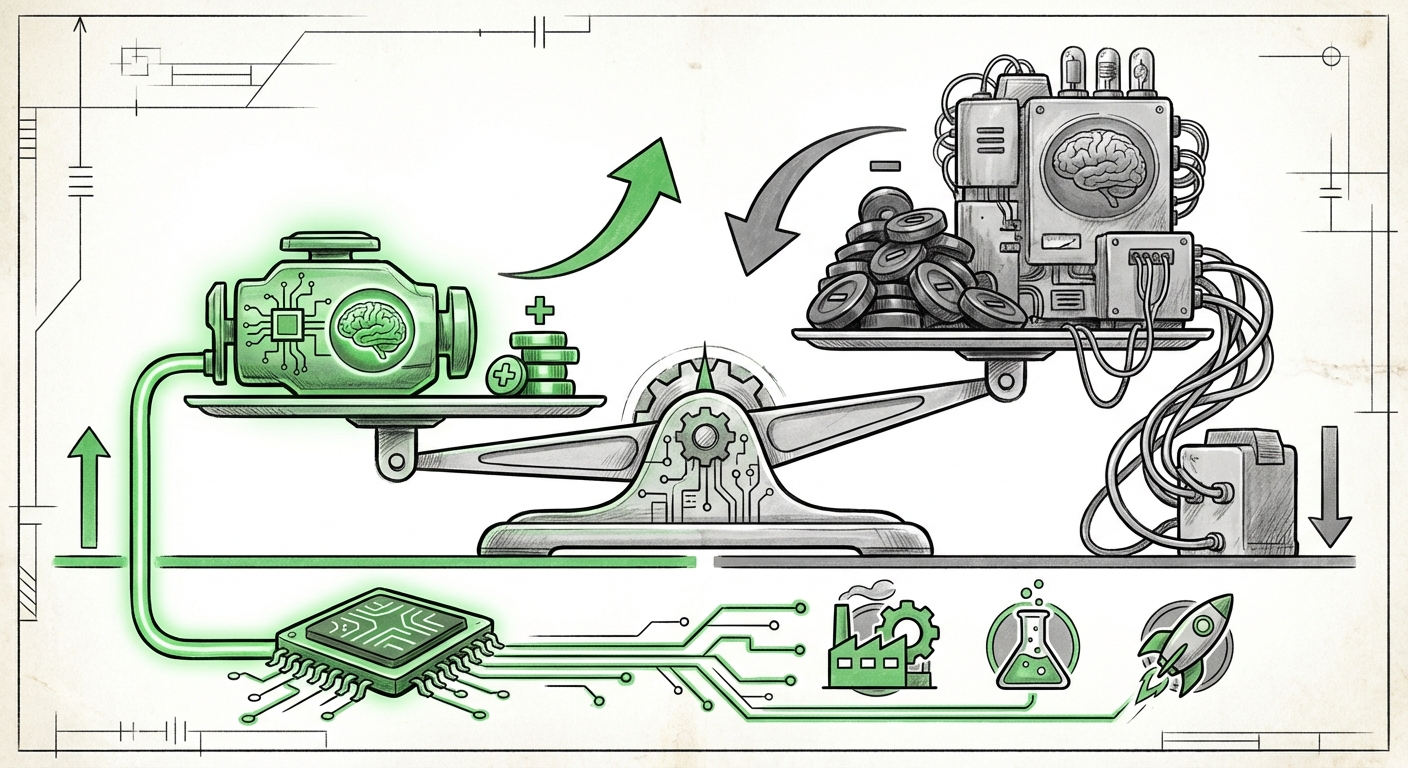
The research frames the problem in terms of harness design. The harness is everything wrapped around the language model: the retrieval tools, the search steps, the rules for when to check, the way evidence is stored, and the way a final answer is assembled and inspected.
This is a crucial distinction for business readers. Most organizations obsess over which model they use. Model choice matters, but the harness is where trust is actually manufactured or lost. A stronger model with a weak harness will still hand you confident, well-formatted, wrong answers. A well-designed harness can catch and correct many of the failures a model produces on its own.
The phrase "harness design" tells us something important: citation fidelity is an engineering problem, not a personality problem. You do not fix it by telling the model to "be careful." You fix it by building a process that makes sloppy matching hard to do and easy to catch.
Why Biomedical Claims Are the Hardest Test Case
Biomedical literature is a brutal environment for verification agents, and that is exactly why it makes a good proving ground. Consider what a verification agent is up against:
- Enormous overlapping vocabulary. Thousands of papers discuss the same drug, gene, or pathway in slightly different ways. The right-sounding paper is everywhere.
- Subtle distinctions that change everything. A study in mice is not a study in humans. A trial with a surrogate endpoint is not a trial with a hard outcome. An association is not a cause.
- Dense, hedged writing. Abstracts are full of qualifications, and a confident-sounding claim can be built by dropping them.
- Volume. No human reads everything. That is why people wanted the agent in the first place.
In this environment, a system that retrieves a topically related paper and treats topical proximity as support will look impressive and fail quietly. It will find a real paper about the same drug. It just won't be the paper that shows what the claim says it shows.
What a Verification Harness Actually Has to Do
Reading the "real PMIDs, wrong papers" framing as a design brief, several practical requirements fall out for anyone building claim-checking systems. These are the components that separate a citation-generator from a genuine verification tool.
1. Separate the searching from the judging
Finding evidence and deciding whether evidence supports a claim should be different steps, ideally with different instructions and different passes. When one step does both, the system tends to justify the claim it already has.
2. Verify the claim, not the topic
The harness must ask a targeted question, does this specific paper support this specific sentence?, rather than the easy question, is this paper about this subject? This is the single distinction that separates a real check from theater.
3. Read past the title and abstract
Claims often hinge on details buried deeper in the paper: population, sample size, comparator, endpoint, direction of effect. A harness that only touches titles and abstracts is guessing about the most important part.
4. Preserve the exact span of text
Support should be pinned to a quoted passage, not to a whole document. If the agent cannot point to the sentence in the paper that backs the claim, it has not verified anything.
5. Allow "insufficient evidence" as an answer
Systems fail when they are scored on always producing a citation. The harness must make it easy and acceptable to return no supporting evidence found, and must treat that as a success, not a failure.
6. Log everything for review
Every retrieval, every match decision, and every rejection should be recorded. When something slips through, you need to know whether the search missed the paper or the judgment call went wrong. Those are different bugs with different fixes.
7. Test with wrong-paper traps
The most useful evaluation set is not a set of claims with obvious fake citations. It is a set of claims where perfectly real, closely related, subtly mismatched papers are easy to grab. That is the test that mirrors real-world failure.
What This Means for the Future of AI
The broader lesson reaches well beyond medicine. Every industry that runs on sourced claims, legal research, financial analysis, insurance, regulatory compliance, journalism, scientific publishing, is heading toward the same wall. AI agents are now good enough to produce professional-looking, well-cited work at enormous speed. The bottleneck has shifted from producing the work to trusting it.
Three shifts are likely to follow.
First, verification becomes a product category of its own. Just as spell-check and plagiarism detection became standard layers, "evidence binding", proving that each claim in a document maps to a real, correctly read source, will become a standard layer in professional writing and research tools. The market for checking AI output will grow alongside the market for generating it.
Second, harness quality becomes a buying criterion. Enterprises will stop asking only "which model is inside?" and start asking "what does the wrapper check, and can you show me the audit log?" Vendors who can demonstrate claim-level traceability will win deals that pure model quality cannot.
Third, accountability moves to the process. When an AI-assisted report contains an error, the question will not be whether the model was smart enough. It will be whether the organization built a harness that required the evidence to be read. That is a standard a company can meet, or fail, deliberately.
Practical Steps for Teams Using AI Today
You do not need to build a research lab to act on this. A few changes to how you use AI tools reduce exposure right away.
- Never accept a citation on appearance. A resolving link is step one, not proof. Open the paper and confirm it says what the AI claims.
- Ask for the supporting sentence, not just the source. If the tool cannot quote the passage, treat the claim as unverified.
- Rate your tools on precision, not volume. Reward systems that decline to answer when evidence is thin. A tool that says "I couldn't confirm this" is more valuable than one that always finds something.
- Spot-check by re-reading, not re-searching. The failure mode here survives a search. It only dies when someone reads the source.
- Keep a human in the loop for anything consequential. Medical, legal, and financial claims need a named reviewer who checked the evidence, not just a signature on the output.
The Bottom Line
The most useful thing about "real PMIDs, wrong papers" is that it names a failure precisely enough to engineer against it. It moves the conversation past the tired debate over whether AI "hallucinates" and into a sharper question: what does the system actually verify, and how would we know?
That question is the future of applied AI. In a world where generating plausible text is nearly free, the scarce and valuable thing is a provable chain from claim to evidence. The organizations that build that chain, and refuse to accept citations they haven't read, will be the ones trusted with the work that matters.