Sundar Pichai’s AI Agent Team: The Future of Work Is Already Being Managed
Sundar Pichai recently explained how a team of AI agents helps him run his company. That single detail is easy to miss in a news cycle full of flashy demos. But it marks a real turning point. AI is moving from a tool you open to a team you manage. The most important shift in the next phase of artificial intelligence is not a bigger chatbot. It is the rise of agentic AI, software that can take a goal, break it into steps, use other tools, and report back.
Pichai’s description matters because it comes from the top of a large organization. When a CEO says AI agents are part of how the company runs, the technology has crossed a line. It is no longer only an experiment in a lab or a productivity trick for individuals. It is becoming part of the operating system of the business itself. That has big effects on how work gets done, how teams are built, and what leaders need to learn.
What Pichai’s AI Agent Team Signals
The key word in Pichai’s explanation is team. A team of AI agents is not the same as one all-purpose assistant. A team implies roles, handoffs, and coordination. One agent might gather information. Another might draft a summary. Another might check facts or track follow-ups. The human stays in charge, but the human is no longer doing every step by hand.
This is a shift from copilots to coworkers. Early AI tools sat beside you and suggested text. Agentic systems can carry out a sequence of actions across software. They can read, write, search, schedule, and monitor. They can work in the background and bring back results. That changes the job of a leader from doing tasks to directing work.
For years, the promise of AI was “automate the boring parts.” Pichai’s example goes further. It suggests that AI agents can support the coordination work that fills an executive’s day, the endless flow of information, decisions, and follow-ups. That is a much bigger prize. Coordination is where large organizations lose time. If agents can help with that, the impact is not just faster typing. It is faster sense-making.
From Chatbots to Coworkers: The Agentic Shift
A chatbot answers a question. An agent pursues an outcome. That difference sounds small, but it changes everything about how the software is built and governed. An agent needs memory, planning, tools, and a way to check its own work. It also needs boundaries. A chatbot that makes a mistake is annoying. An agent that takes the wrong action can cost money or leak data.
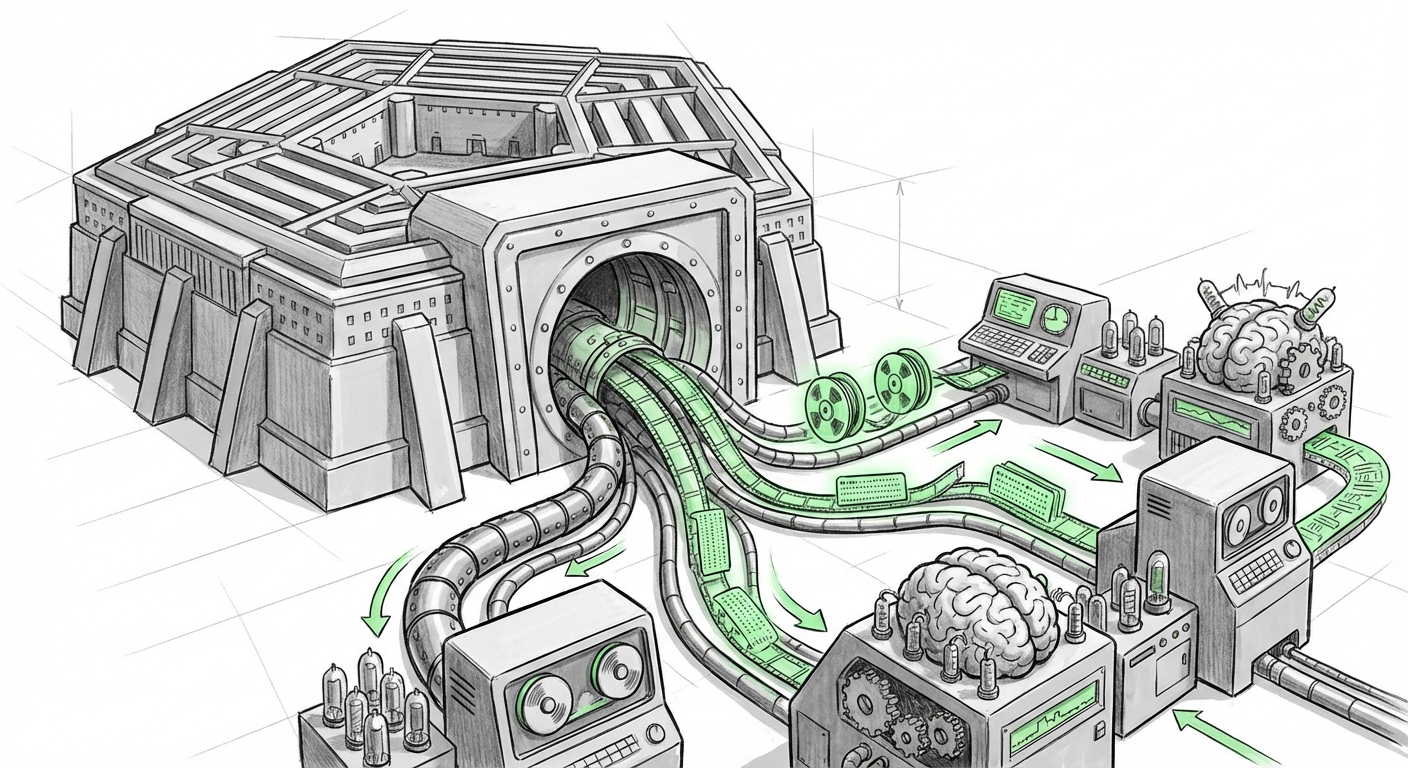
This is why the “team of agents” idea is so important. A single agent with broad access is risky. A team of narrow agents with clear roles is easier to control. Each agent can have its own permissions, its own tools, and its own audit trail. The team can be designed like a real organization chart: research, analysis, drafting, review, and follow-up. The human manager sets the goals and approves the sensitive steps.
The market is already moving in this direction. Companies are building agent platforms, agent marketplaces, and orchestration layers. The winning products will not just be the smartest models. They will be the ones that make agents reliable, observable, and safe to deploy at scale. That means logs, permissions, human approval gates, and clear escalation paths. In other words, the unglamorous plumbing will decide who wins.
How an Executive Agent Team Actually Works
Pichai did not describe a science experiment. He described a working setup. While the details of his personal system are not public, the pattern is becoming clear across early adopters. An executive agent team usually has a few layers.
- Intake and triage: Agents sort incoming information, flag what matters, and route items to the right place.
- Research and synthesis: Agents gather context from documents, messages, and reports, then produce short briefs.
- Drafting and preparation: Agents create first drafts of memos, agendas, and talking points.
- Monitoring and follow-up: Agents track commitments, deadlines, and changes, then send reminders.
- Review and escalation: Humans approve high-stakes actions and correct the agents when they drift.
The magic is not in any one agent. It is in the handoffs. A good agent team passes work along a chain with clear rules. It also knows when to stop and ask a human. That is the difference between a demo and a dependable system. The demo shows what is possible. The system shows what is safe enough to use every day.
The orchestration layer becomes the new battlefield
Behind every agent team is an orchestration layer. This is the software that decides which agent does what, in which order, with which data. It is the conductor of the orchestra. As agents become more common, orchestration will become a core part of enterprise software. Companies will need to manage identities for agents, set spending limits, and review logs. They will need to answer a simple question: who approved this action?
That question sounds boring until something goes wrong. Then it becomes the most important question in the room. The organizations that treat agent governance as a first-class problem will move faster with less risk. The ones that skip it will learn hard lessons in public.
The New Skills of Managing AI Agents
If AI agents are a team, then managing them is a skill. It looks a lot like managing people, but with important differences. You cannot motivate an agent with a pep talk. You must give it clear instructions, good context, and a way to verify success. You must also know when to step in.
The best agent managers will be good at three things:
- Briefing: Writing clear goals, constraints, and examples of good work.
- Reviewing: Checking outputs for accuracy, tone, and risk before they go out.
- Escalating: Knowing which decisions must stay human and which can be delegated.
This is a big change for knowledge workers. For decades, the most valued skill was doing the work. Now, more value will come from designing the work and checking the work. That does not mean expertise matters less. It matters more. You cannot review an agent’s legal analysis if you do not understand the law. You cannot catch a bad financial summary if you do not know the numbers. Agents raise the ceiling on what one person can do, but they also raise the bar for judgment.
What This Means for Businesses of Every Size
The CEO example is dramatic, but the lesson applies far beyond the executive suite. Small businesses can use agent teams to compete with larger ones. A solo founder can have agents for customer follow-up, research, and scheduling. A mid-sized company can use agents to handle repetitive back-office work. A large company can use them to connect fragmented systems.
But the benefits do not come automatically. The businesses that win will start with narrow, high-friction workflows. They will pick one process that is slow, rule-based, and easy to measure. They will run a pilot, measure the results, and expand only when the agent proves reliable. They will keep humans in the loop for anything sensitive. This is not glamorous, but it works.
The bigger risk is “agent sprawl.” If every team buys its own agent tool, companies end up with a mess of overlapping systems and unclear accountability. The fix is a central playbook: approved tools, shared standards, clear data rules, and regular reviews. The companies that treat agents like IT infrastructure rather than office toys will get the most value.
Jobs will change before they disappear
Every major automation wave creates fear about job loss. That fear is understandable. But the early evidence from agentic AI points to a more complex story. Many jobs will be redesigned rather than eliminated. The tasks that get automated are often the ones people like least: repetitive coordination, status updates, and information gathering. The tasks that remain are the ones that need context, trust, and accountability.
That means workers need new skills. They need to learn how to write good instructions, evaluate AI output, and manage risk. They need to understand what the agent is doing and why. This is not a small training challenge. It is a management challenge. Companies that invest in it will get more from their agents. Companies that ignore it will get more mistakes.
The Risks Hiding Behind the Hype
Agentic AI is powerful, but it is not magic. The risks are real and well known. Agents can make things up. They can follow malicious instructions hidden in documents. They can leak sensitive data if permissions are too broad. They can take actions that are hard to undo. And they can create a false sense of confidence because their output looks polished.
These risks do not mean companies should wait. They mean companies should design for failure. Good agent systems assume something will go wrong. They log every action. They limit access. They require human approval for money, legal, and external communication. They test agents against tricky cases before wide deployment. They also have a clear way to turn an agent off.
The most important safeguard is accountability. If an agent sends a bad email or makes a wrong payment, a human must own the outcome. That is not a technology problem. It is a management problem. The sooner leaders accept that, the sooner they can use agents safely.
The Road Ahead: Agent Orchestration Becomes Standard
Pichai’s description is a preview of where enterprise software is going. In the near future, most knowledge work will involve some mix of humans and agents. Agents will not replace entire teams overnight. They will take over specific steps, then specific roles, then whole workflows. The organizations that learn to orchestrate this mix will have a real advantage.
We should expect three things to happen next. First, agent-to-agent communication will become standardized, so agents from different vendors can work together. Second, evaluation will become a product category, because companies will need to prove their agents are reliable. Third, regulation will focus on transparency and liability, because the public will want to know when an AI is acting on someone’s behalf.
The CEOs who talk about agents today are sending a signal. They are saying this is not a side project. It is a core part of how the company will operate. That signal will push vendors, workers, and regulators to catch up. The result will be a new layer of the economy: the agent workforce.
Actionable Insights for Leaders
If you want to act on this trend, start small and stay serious. Here are practical steps:
- Pick one workflow that is slow, repetitive, and easy to measure. Do not start with your most sensitive process.
- Define success before you deploy. Use clear metrics like time saved, error rate, and cost per task.
- Keep a human in the loop for anything that touches money, legal, customers, or public communication.
- Log everything so you can review what the agent did and why.
- Train your team on how to brief, review, and correct agents. This is a new core skill.
- Create a central playbook for agent use, permissions, and data access. Avoid tool sprawl.
- Review and retire agents that do not prove their value. More agents is not the goal. Better outcomes are.
The future of AI at work is not a single super-assistant that does everything. It is a team of specialized agents, guided by humans, working inside clear guardrails. Pichai’s example shows that this future is already here at the highest level. The rest of us now have a clear model to follow: start with a real problem, build a small team of agents, measure the results, and keep humans accountable. That is how AI moves from hype to habit.