When AI Teams Fail: New Research Tackles the 'Which Agent Blames' Problem in Multi-Agent LLM Systems
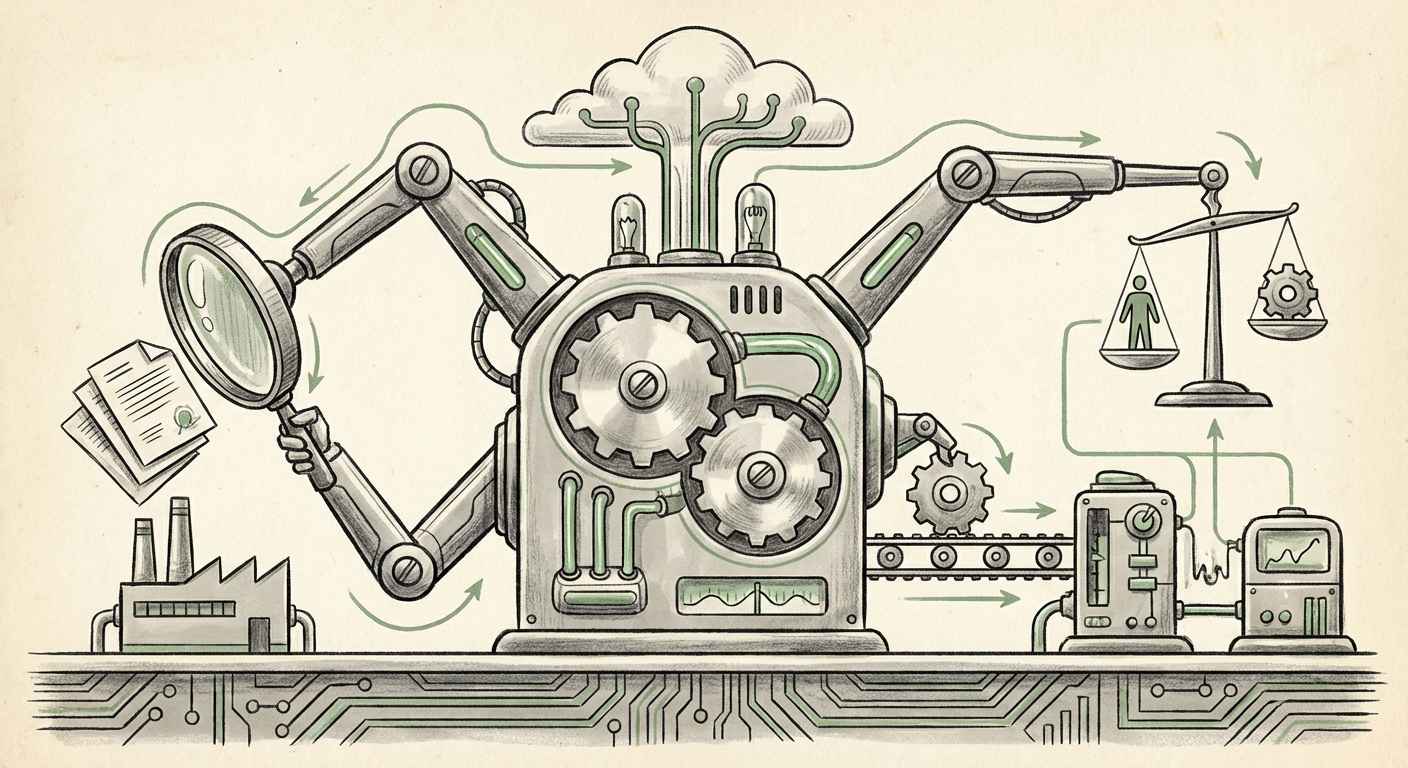
Imagine a team of AI agents working together to handle a complex customer service issue, write a piece of software, or conduct a research project. Each agent has a specific role: one gathers information, another writes code, a third checks for errors. This is the promise of multi-agent systems built on large language models (LLMs). They can be more powerful and flexible than a single AI assistant. But when something goes wrong, and it often does, who do you blame? Which agent made the mistake, and exactly when did it happen? That's the question at the heart of new research from PSU and Duke, which explores automated failure attribution for LLM multi-agent systems.
This might sound like a technical detail, but it has huge implications for the future of AI. As businesses and societies increasingly rely on AI teams to get work done, the ability to quickly find and fix failures will determine whether these systems are trusted, safe, and widely adopted. In this article, we'll break down what this research direction means, why it matters, and how it will shape the way AI is used in the coming years.
The Rise of Multi-Agent AI Systems
For years, most AI applications relied on a single model to answer a question or perform a task. But as LLMs have become more capable, researchers and companies have started linking multiple agents together. Each agent can be given a different role, a different set of tools, or a different perspective. Together, they can tackle problems that are too big or too complex for one model alone.
For example, in software development, one agent might design the architecture, another writes the code, and a third runs tests. In customer service, one agent could handle billing questions while another deals with technical support, and a supervisor agent coordinates them. The possibilities are endless. Multi-agent systems are already being used in research labs, startups, and large enterprises.
But this teamwork comes with a catch. When a single AI model fails, you can look at its input and output and often spot the problem. When a team of agents fails, the cause could be anywhere: a miscommunication between two agents, a bad decision by one agent early on, a tool that didn't work as expected, or a coordination breakdown. The failure might be delayed, showing up only after several steps. This is the accountability gap of multi-agent systems.
The Accountability Gap: Why Failure Attribution Matters
Today, if a multi-agent system produces a wrong answer or takes a harmful action, developers often have to manually dig through logs and re-run the system to figure out what happened. This is slow, expensive, and often unreliable. Worse, it erodes trust. If users can't understand why an AI system failed, they're less likely to rely on it for important tasks.
Failure attribution is the process of identifying which agent caused a failure and when it happened. It's like being a detective for AI. You need to trace the chain of events, examine each agent's actions, and determine the root cause. Doing this automatically is a major challenge, and it's exactly what the researchers from PSU and Duke are exploring.
Why is this so important? Because without automated failure attribution, multi-agent systems remain a black box. Businesses can't debug them efficiently, regulators can't audit them, and users can't hold anyone accountable. As these systems become more autonomous, the need for attribution will only grow.
What Automated Failure Attribution Entails
At a high level, automated failure attribution for multi-agent systems must answer two questions: which agent is responsible? and at what point did the failure occur? This is harder than it sounds. Here's why:
- Non-determinism: LLMs don't always produce the same output for the same input. A failure might be a one-time fluke or a systematic bug.
- Emergent behavior: Agents can interact in unexpected ways. A small mistake by one agent can cascade into a big failure later, making the root cause hard to see.
- Long trajectories: Multi-agent tasks can involve dozens or hundreds of steps. Finding the failure means analyzing a huge amount of data.
- Lack of ground truth: In many cases, there's no clear "correct" answer, so defining what counts as a failure is itself tricky.
To tackle these challenges, researchers are likely exploring a mix of techniques. These might include tracing (recording every agent's actions and communications), causal analysis (using statistical methods to infer cause and effect), counterfactual testing (re-running the system with one agent's output changed to see if the failure goes away), and anomaly detection (flagging unusual behavior). The PSU and Duke work is an important step toward building these tools.
The PSU and Duke Research Direction
The research from PSU and Duke, titled "Which Agent Causes Task Failures and When?", directly addresses this problem. While the full details of their approach are still emerging, the title itself signals a shift in the AI research community: from building multi-agent systems to making them debuggable and accountable.
This is a natural next step. As multi-agent systems move from labs to real-world products, the inability to attribute failures becomes a bottleneck. The PSU and Duke researchers are likely proposing new methods, benchmarks, or frameworks for automated attribution. Their work could lead to tools that automatically flag the responsible agent and the exact moment of failure, saving developers countless hours and making AI systems more reliable.
It's also a sign that the field is maturing. Early research focused on making agents work together at all. Now, the focus is shifting to making them work together well, and to understanding what happens when they don't.
Practical Implications for Businesses
For companies deploying multi-agent systems, automated failure attribution is not just an academic curiosity. It has direct business value:
- Faster debugging: Instead of manually sifting through logs, teams can quickly pinpoint the failing agent and fix the issue. This reduces downtime and development costs.
- Better reliability: By understanding failure patterns, businesses can design more robust systems. They can add safeguards, improve prompts, or adjust agent roles.
- Clear accountability: In regulated industries, being able to show why an AI system failed and who was responsible is crucial for compliance and liability.
- Increased trust: Customers and partners are more likely to adopt AI systems that can explain their failures. Transparency builds confidence.
Actionable insight: If you're building or buying multi-agent AI systems, demand observability features. Ask vendors how they handle failure attribution. Start logging agent interactions in a structured way. And consider investing in internal tools for tracing and analysis. The ability to debug AI teams will become a competitive advantage.
Broader Societal and Ethical Implications
The ability to attribute failures in AI systems goes beyond business efficiency. It touches on fundamental questions of accountability and safety.
Consider a multi-agent system used in healthcare to recommend treatments, or in finance to approve loans. If the system makes a harmful decision, we need to know which agent was responsible and why. Without attribution, it's impossible to hold anyone accountable, whether that's the developer, the deployer, or the AI itself. Automated failure attribution provides the evidence needed for oversight and justice.
It also helps with safety. If an agent starts behaving erratically, attribution can flag it early. This could prevent accidents in autonomous systems, from self-driving cars to industrial robots. As AI agents become more autonomous, the ability to trace failures will be a cornerstone of safe deployment.
Regulators are starting to take notice. Around the world, new AI laws are being proposed that require transparency and accountability. Automated failure attribution could become a standard requirement for high-risk AI systems. The PSU and Duke research is helping to lay the groundwork for that future.
The Future of AI and How It Will Be Used
Looking ahead, multi-agent systems will become more common and more capable. They will handle complex workflows, collaborate with humans, and make decisions with less supervision. But this autonomy will only be trusted if we can understand and fix their failures.
Automated failure attribution will enable a new era of self-healing AI. Imagine a system that not only detects a failure but automatically identifies the responsible agent and takes corrective action, maybe by re-prompting the agent, rolling back its last step, or routing the task to a different agent. This kind of resilience will be essential for AI to operate in dynamic, real-world environments.
It will also create new roles and tools. "AI reliability engineer" could become a common job title. Companies will build dashboards that show agent performance, flag failures, and suggest fixes. The entire lifecycle of AI systems, from design to deployment to maintenance, will be shaped by attribution technology.
Moreover, failure attribution will accelerate research. By understanding why multi-agent systems fail, researchers can build better architectures, better prompts, and better coordination strategies. It's a feedback loop that drives progress.
Actionable Insights
Here's what different groups can do to prepare for this future:
- For developers: Design multi-agent systems with observability in mind. Log every agent's input, output, and internal reasoning (where possible). Use structured formats so that automated analysis is easier. Build or adopt tracing tools early.
- For businesses: When evaluating AI vendors, ask about failure attribution capabilities. Pilot multi-agent systems on low-stakes tasks first, and set up monitoring to catch failures. Invest in training for your team on how to debug AI teams.
- For researchers: Develop standard benchmarks for failure attribution. Create open datasets of multi-agent failures. Collaborate with industry to ensure your methods solve real problems.
- For policymakers: Consider requiring failure attribution for high-risk AI systems. Support research in this area. Encourage transparency standards that include attribution information.
The work from PSU and Duke is a clarion call: if we want AI teams to work for us, we need to be able to figure out when they don't. Automated failure attribution is not just a technical nicety, it's a foundation for trust, safety, and progress.
Conclusion
Multi-agent LLM systems are poised to transform how work gets done, but their complexity brings a new set of challenges. The question of "which agent caused the failure and when" is central to making these systems reliable and accountable. The research from PSU and Duke marks an important step toward answering that question automatically. As this field develops, it will unlock faster debugging, stronger trust, and safer AI. For businesses and society, the message is clear: the future of AI depends not just on building smarter agents, but on building systems that can explain their mistakes.