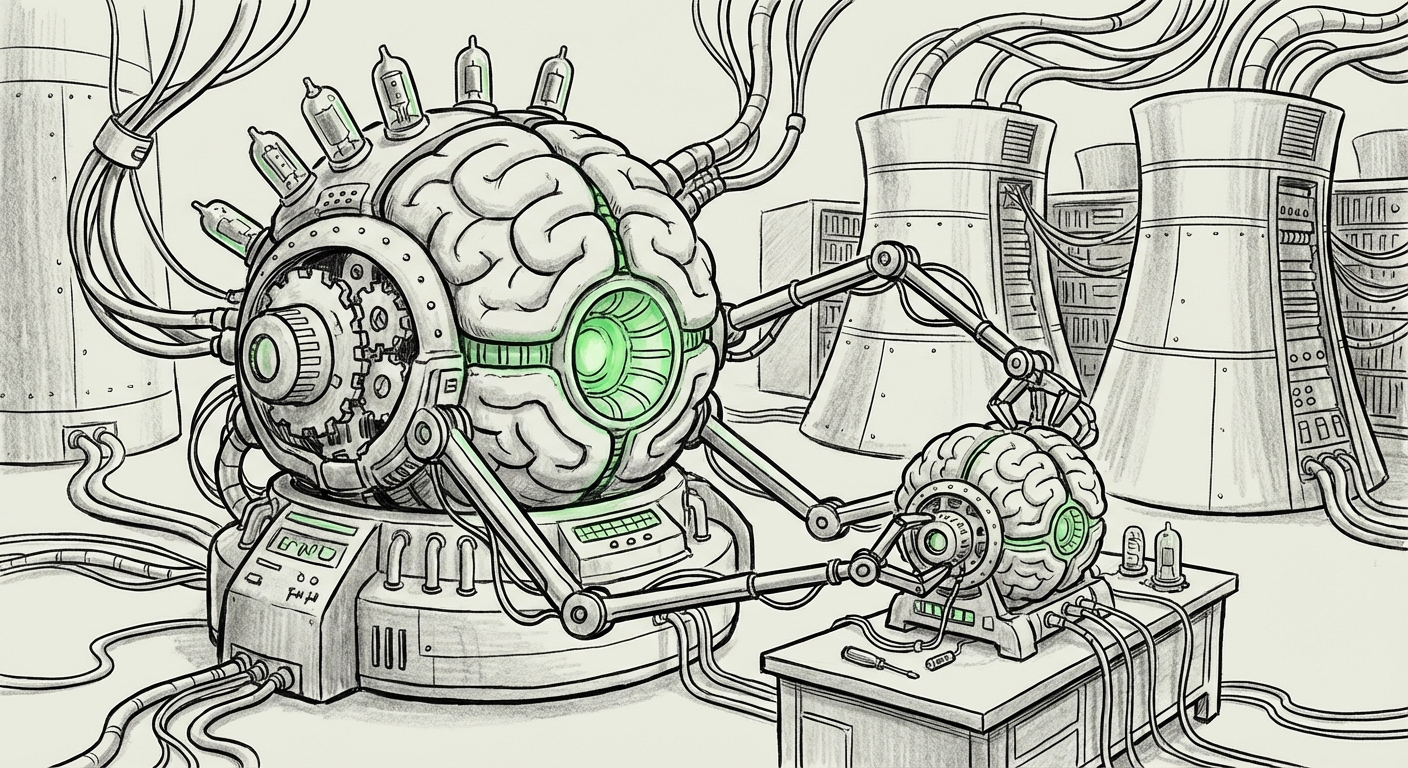
California Just Crashed a Robot Fight Club, and It Signals the Next Big Fight in AI
California has done something that sounds like the plot of a science fiction B-movie: it stepped in and shut down a robot fight club. Machines built to trade blows, cheered on by a crowd, suddenly found themselves on the wrong side of state regulators. Nobody in the audience was hurt. No robot achieved consciousness. And yet this small, strange story may end up being one of the most important signals of the year about where artificial intelligence is heading next.
Because once robots stop being screensavers and start being physical objects in public spaces, the rules change. Not just legally, but commercially. Every company building humanoid machines, autonomous delivery bots, warehouse arms, or AI-driven hardware just got a preview of what's coming for them, and it looks a lot like paperwork.
What Actually Happened
The short version: a robot combat event in California drew the attention of regulators, and the state moved to shut it down. Not because the robots were dangerous in a sci-fi sense, but because the event sat in a gap where no clean rulebook existed. Who insures a machine fight? Who certifies that the hardware won't throw debris into the third row? What happens when a robot with a learning component is given autonomy inside a crowd-facing arena?
Those questions sound niche. They are not. They are the exact same questions that come up the moment an AI system gets arms, legs, and a motor.
Part of what makes robot combat compelling is the same thing that makes it a regulatory headache: these machines are pushed to failure on purpose. They are stressed, overloaded, and knocked around until they break. In a lab, that's called testing. In a rented venue with ticket sales, that's called an unpermitted public hazard.
Robot Combat Is an AI Stress Test Nobody Authorized
Here is the uncomfortable truth that regulators clearly noticed: a fight club is one of the most rigorous hardware tests you can run, and almost none of it happens under a certified safety framework.
Consider what a machine in that arena has to do. It has to balance and recover from impacts. It has to make split-second decisions about movement and momentum. It may be teleoperated by a human, semi-autonomous, or fully self-directed. It has to operate next to other fast-moving machines and, presumably, within range of spectators.
That is a real-world robotics lab with no sign-off, no incident reporting, and no insurance standard. To a safety engineer, that is fascinating. To a regulator, that is a liability the state wants to close before someone else's headline closes it for them.
Teleoperation versus autonomy is the real question
The single biggest fork in the road here isn't the robot. It's who is driving. A human-operated machine is basically a very expensive remote-controlled toy, risky, but a well-understood category of risk. A machine that decides for itself when to lunge, spin, or swing is a different beast entirely. The moment even a fraction of the decision-making is handed to a model, you've crossed from "equipment" into "autonomous system," and the regulatory world has much less practice with that.
California's intervention effectively asks the industry a question it has been dodging: at what point does an AI-controlled machine become something that needs a license?
The Regulatory Gap: No Rulebook for Machines That Compete
Most safety rules were written for humans doing things, or for machines doing one narrow, predictable thing. Robot combat doesn't fit either mold. It's a sport, an engineering showcase, and a hardware torture test at the same time.
That means there's no obvious agency to call. Is it an entertainment permit issue? A workplace safety issue, since the builders are essentially technicians in a hazardous environment? A product liability question, since the machines were designed to fail? A public safety issue, since there were spectators?
The answer, awkwardly, is probably all of them. And that's exactly why the state's move matters. When regulators can't find the right door, they use the front door, a closure, a citation, a stop order. The result is that a whole category of activity gets paused while everyone argues about jurisdiction.
What This Means for Businesses Building Physical AI
If you run a company that puts AI into hardware, this story should be on your desk. Here's why.
1. Entertainment is where AI hardware meets the public first
Warehouses are private. Factories are fenced. But entertainment is public by design, crowds, cameras, and volunteers who signed a waiver they didn't read. That makes entertainment the first place ordinary people will see autonomous machines up close, and it will therefore be the first place regulators are forced to write rules. Set the precedent in an arena, and it echoes into every delivery robot and warehouse bot that comes after.
2. Insurance will move faster than legislation
Lawmakers are slow. Underwriters are not. The moment a public robot event becomes a question mark, insurers will either price it out of existence or demand detailed engineering documentation: incident logs, failure-mode analysis, proof of human override, and clear operational limits. If you can't produce that paperwork, you can't get the policy, and without the policy, you can't run the show.
3. Human override is becoming a design requirement, not a feature
Expect "can a human take control instantly, and is that documented?" to become the default question from regulators, insurers, and enterprise buyers. Robots that can't answer it will be locked out of public spaces long before they're locked out of labs.
4. Compliance is becoming a competitive moat
The companies that build safety documentation early will move faster later, because they'll be the only ones allowed to operate in public. This is the same pattern that played out with drones, autonomous vehicles, and medical devices. The early movers who treated safety as overhead eventually discovered it was a moat.
Actionable Insights: How to Prepare Now
- Map your failure modes before someone else does. Write down what happens when your AI hardware is pushed past its limits, not in the lab, but in public.
- Document your human-in-the-loop plan. Who can hit stop, from where, and how fast? Put it in writing and test it.
- Talk to an insurer early. Ask what evidence they'd need to cover a public demonstration. Treat their answer as your product roadmap.
- Separate autonomous from teleoperated modes clearly. Clearly label which parts of your system are AI-driven and which are human-driven. Ambiguity is a regulatory magnet.
- Build incident reporting before you need it. A simple log of what broke, when, and why is cheap now and priceless in a hearing.
- Engage regulators before they engage you. A proactive safety conversation is far cheaper than a shutdown.
The Bigger Picture: Spectacle Is the Front Line
There's a temptation to treat this as a quirky one-off, a fun headline about fighting robots getting a slap on the wrist. That misses the point.
Robots in a fight club are doing what AI is increasingly going to do everywhere: operating in the physical world, at speed, near people, with consequences that can't be undone with a rollback. Software can be patched. A twelve-hundred-pound machine that misjudges its footing cannot.
For a decade, the AI conversation has been about what models can do. The next decade's conversation is about what they're allowed to do, and where. California just made the first move in that argument, and it didn't happen in a courtroom or a standards body. It happened at a fight night.
That's a warning worth taking seriously. The most interesting AI regulation of the next few years probably won't come from a sweeping federal law. It will come from small, local, oddly specific interventions, a permit denied here, a venue closed there, that quietly define what counts as acceptable behavior for a machine. Companies that read those signals early will shape the rules. Companies that ignore them will spend the next five years reacting to them.
Conclusion: The Fight Over Robots Is Really a Fight Over Trust
California didn't kill robot combat. It put it on notice. And in doing so, it drew a line that every builder of physical AI now has to stand behind: show us you can operate safely in public, or don't operate in public at all.
That's not an anti-technology message. It's the messy, necessary step that every powerful technology goes through on the way to becoming ordinary. Cars got seatbelts. Planes got air traffic control. Drones got registration. Robots that punch each other for entertainment are now getting their turn.
The future of AI won't be decided only by who builds the smartest model. It will be decided by who can prove their machine behaves itself when things go wrong in front of a crowd. The robot fight club just learned that the hard way, and the rest of the industry should be taking notes.